New OIV report paints a dark picture. Is a price increase for wine inevitable?

New OIV report paints a dark picture. Is a price increase for wine inevitable?

By Joseph Temple

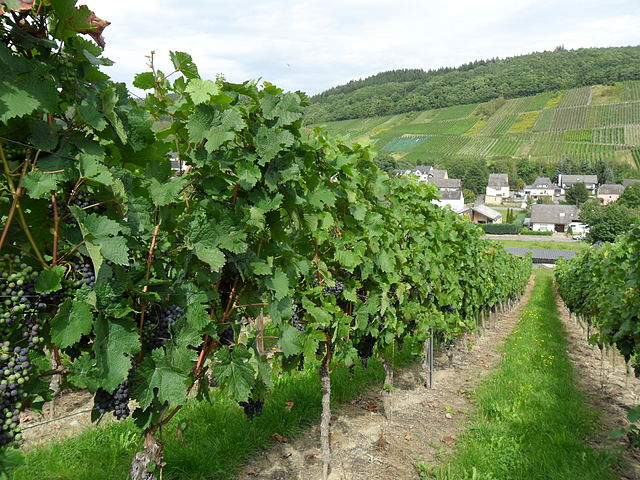
A report released by the International Organisation of Vine and Wine (OIV) this month sheds new light on what Mother Nature did across Europe last year as a brutal combination of spring frosts, summer heat, droughts, and various storms resulting in a record 60-year low in total output as global wine production fell to 250 mhl (millions of hectoliters).  This represents a drop of approximately 23.6 mhl from 2016.

The countries hit the hardest were Spain, Italy and France; Europe’s big three producers comprising over half of the global wine trade. During the past year, those nations experienced a drop of 20%, 17% and 19% respectively as extreme weather took its toll. This should come as no surprise to those following current events in the world of wine as countless news reports have chronicled the problems vintners experienced last year. According to one high-end wine merchant interviewed by The Guardian, “the total acreage of Bordeaux – has been ravaged … like the overall harvest across Italy and Spain, [the Bordeaux harvest] has been decimated but it tends to be more flat lying, higher volume production land that has been hit.” Furthermore, last week’s blog entry about the situation in Spain highlighted that country’s need to focus more on cheaper bulk wine in order to compensate for this loss.

Looking deeper into the report, we see that it is a tale of contrasting continents. While Europe was rocked, the United States remained relatively stable, experiencing only a one percent drop in production. And below the equator, Argentina has reason to celebrate as it rebounded from a disastrous harvest in 2016 stemming from El Niño as production levels spiked by 25%. Likewise, other countries in the southern hemisphere such as Australia and South Africa saw increases as well.

Moving from supply to demand, worldwide consumption levels saw a slight gain at 243 mhl, up 1.8 mhl from 2016. The globe’s biggest consumer remains the United States which represents roughly 13% of all wine sales. But an up and comer is China, which purchased 17.9 mhl, a 3.5% jump from last year, showing a faster rate of growth than its American competitor. In comparison, France, Italy and Germany –Europe’s three biggest consumers—all remained relatively static at -0.4%, 0.9% and 0.3% respectively.

One interesting fact from the OIV’s report pertains to sparkling wine, which saw the biggest growth in both volume at 11.2% and total value at 8.9%, making bubbly nearly a fifth of the global market. Additionally, despite countries like Spain turning to cheap wine in these troubled times, bulk exports actually fell sharply.

With demand up and supply down, the logical outcome from all these figures is a price increase that consumers are likely see in the near future.  With erratic weather conditions now becoming par for the course, the European Academies Science Advisory Council released a document stating: “[The EASAC found] evidence for overall increases in the frequency and economic costs of extreme events, which emphasized the importance of society adapting its future planning to allow for these new extremes.” Might be time to stock up.


You might also like:

Will what's happening in Europe lead to price increase in wine?

View Results

Loading ... Loading ...

Ask Sid: Malbec better grown at higher elevation?

Ask your question here

better grown at higher elevation?

Question: What are your thoughts Sid on vineyard elevation for growing Malbec grapes?

Answer: I like your question. Many grape varieties seem to produce much better fruit at higher elevations as contrasted to being planted on the hotter valley floor. This is especially so now with increased global warming. However I do think there really is something magical to the Malbec variety specifically obtaining much better balance if you can grow it at higher altitude. Laura Catena in her excellent book Vino Argentino points out about their Malbec plantings in the 1990s “The Adrianna vineyard lies in a beautiful location on the westernmost border of Tupungato, in a small district called Gualtallary, flanked by a small hill that shields it from winds, and so close to the mountains that one has the sense that the peaks are looking out over the vineyard. Some of our best Malbec is produced here at Adrianna. It’s hard to believe that at one time no one in Mendoza thought the varietal could ripen above 4500 feet (1370 m) of elevation. But it did – and spectacularly.” This idea that higher elevation is crucial for best Malbec was confirmed this month at a tasting-dinner at the new Victor restaurant in the Parq Vancouver hosted by Spring Valley Vineyard in Walla Walla, Washington. Winemaker Serge Laville told me his Malbec grown on vineyards between 1200-1500 feet consistently produced the very best fruit at the very highest elevations. Q.E.D.


You might also like:

Vancouver Restaurant Awards 29th Annual

Vancouver Restaurant Awards 29th Annual

Your scribe is a long time judge (one of 14) for the Vancouver Magazine Restaurant Awards #VanMagAwards which just released their 2018 winners on April 16, 2018. This recognition of excellence, service and leadership has turned into the top hospitality event of the year in Vancouver with some 700 industry guests attending at the Sheraton Wall Centre Grand Ballroom for tapas and desserts from 1pm-3pm (Best Patisserie Thomas Haas prepared 600 individual chocolate treats!) followed by the formally announced presentations of the 41 gold awards. This year for the 29th edition all profits are donated in benefit of Dining Out For Life (alovingspoonful.org). Enjoyed as well attending three celebratory after parties at Joey, Boulevard & CinCin. Some award highlights among the many worthy winners:

St. Lawrence: Winner of both Best New & Restaurant of the Year by Chef JC Poirer and his team bringing home Quebecois comfort food.

Alex Chen: Chef of the Year and his gold award Boulevard Kitchen and Oyster Bar for Best Upscale and Best Seafood.

Burdock and Co.: Chef Andrea Carlson’s unique approach to both Best West Coast and Best Brunch.

Lifetime Achievement: Anthony von Mandl the amazing entrepreneur of Mission Hill Family Estate wines.

Jill Spoor: Sommelier of the Year as Wine Director of Fairmont Hotels and Botanist Restaurant Best New Design.

More information and photos at vanmag.com & cbc.ca.


center


You might also like:

Spanish wine at a crossroads?

bulk wine bottled wine export Spanish Spain wine

By Joseph Temple

“Spain as a wine country was vast but antediluvian,” according to wine writer Oz Clarke. “Whereas France had developed sophisticated export markets in northern Europe and North America, which demanded high quality and encouraged experimentation and improvement, Spain relied on a famously undemanding Spanish-speaking ex-empire and an undemanding local population.”  Fast forward to more than a century later and the latest statistics on Spanish wine show that while many advances and innovations have been made, the above statement still rings true.

According to the Spanish Observatory of Wine Markets (OEMV), a new report released this month shows that Spain is currently the world’s biggest exporter of wine, selling an estimated 22.8 million hectolitres abroad last year.  This places the kingdom ahead of both Italy at 21 million hectolitres and France at 15 million hectolitres. However, before any hispanophile decides to celebrate by popping the cork on their favorite bottle of Cava, it’s important that they also learn about this vital caveat.

While Spain is definitely number one when it comes to volume, in terms of revenue, the country earned a reported €2,850 million, placing them well behind France at €9,000 million and Italy at €6,000 million annually. In fact, at an average of €1.25 per litre, only South African wines are sold cheaper on the global marketplace. The reason for this disparity between volume and revenue is bulk wine, which represents more than half of Spain’s total sales in 2017.

In an article published on the site EuroNews, the author writes, “The main challenge facing Spain is reducing the sales of cheap, mass-produced wine, which is flooding the market despite a lack of internal structures to deal with its distribution.”

Unfortunately, that task is easier said than done. With 12.6 million hectolitres shipped overseas last year, more than two thirds of Spanish production is sent to foreign markets.  And while Germany remains Spain’s biggest customer followed by the United States and France, China has now become the kingdom’s fifth largest customer with bulk wine exports seeing the highest growth rate at 36.2 percent.

Compounding the problem was last year’s late spring frost followed by the intense summer heat, leading to a 56-year low for global wine production. Having the highest vineyard area in the world at one million hectares, Spain clearly felt the tremors of Mother Nature from La Rioja to Andalusia. In an article published on the Drinks Business website, Richard Cochrane, managing director of Félix Solís UK stated: “The harvest in Spain is down 30% on average and some producers might run out of wine. There is an enormous amount of bulk wine coming out of Spain and it remains the go to place during a wine shortage.”

Topping it off, the domestic market continues to nosedive, causing foreign demand to dictate the industry’s direction.  For nearly four decades, Spanish wine consumption has declined, making it now lower per capita than the United Kingdom. And according to Decanter magazine, those domestic figures included 70 million tourists!  So if Beijing and Berlin are demanding bulk wine for the foreseeable future, a change in direction seems highly unlikely.

Added all up, we can see that Spain is clearly at a crossroads. Certainly there are many vineyards of distinction (one 2015 Spanish wine was called one of the world’s greatest by esteemed critic James Suckling) but in order for the country to compete as global powerhouse in terms of both quality and quantity, a major overhaul in how Madrid looks at its wine industry is desperately needed.


You might also like:

Ask Sid: Difference between Pinot Gris & Pinot Grigio?

Ask your question here

Ask Sid: Difference between Pinot Gris & Pinot Grigio?

Question: What is the difference between a Pinot Gris & and a Pinot Grigio wine?

Answer: No difference really because both wines use the same grape variety. However the name Pinot Gris is used in Alsace for their fuller richer style while Pinot Grigio in Italy has a lighter vibrant fruit freshness. Germany has the name Grauburgunder for this grape. Many countries now using both names but Pinot Gris is more prominent.


You might also like:

Did you know the difference?

View Results

Loading ... Loading ...