Question: Is the Malbec grape allowed in wine from the Loire Valley of France?
Answer: Yes but limited. The popular red grape in the Loire is cabernet franc used famously in Bourgueil & Chinon among other regions. Malbec is an important grape in Argentina plus in Bordeaux, Cahors and south-west France – often called Auxerrois. Malbec is a permitted grape for inclusion in the Loire Valley wines of Touraine roses & reds – where it goes under the original name of Cot.
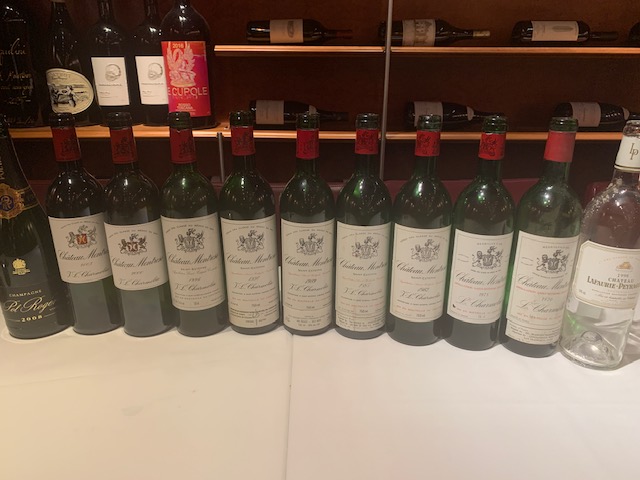
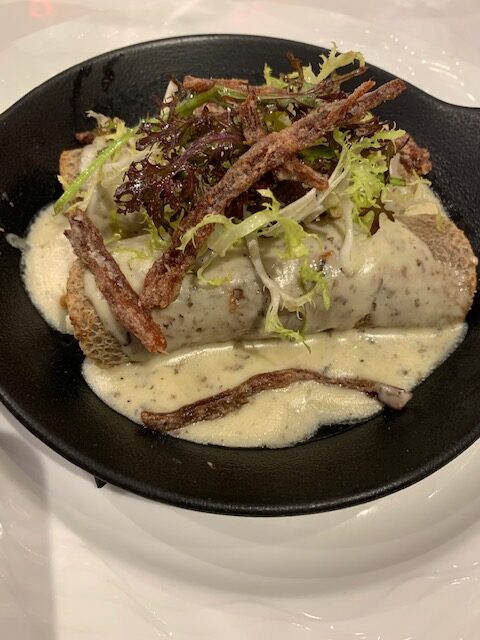
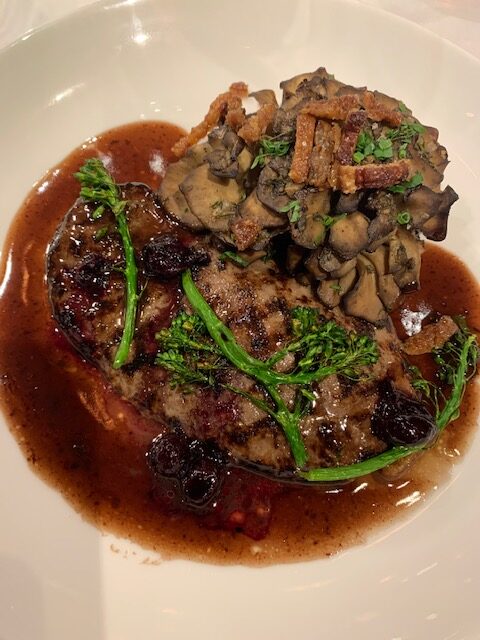
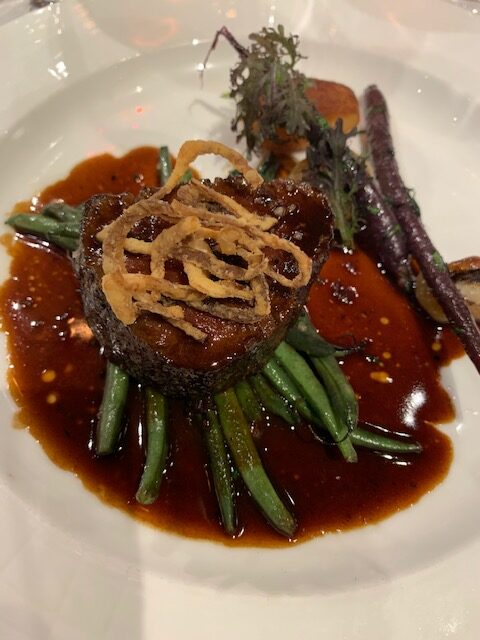
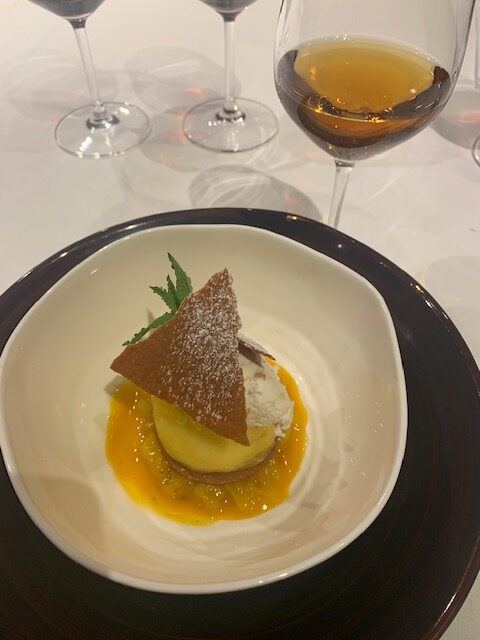
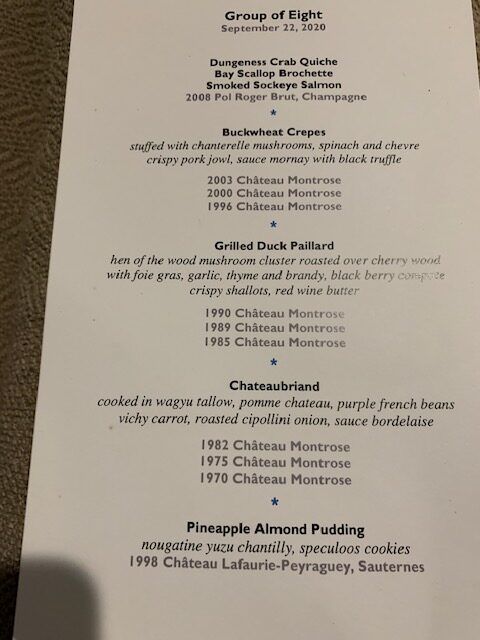
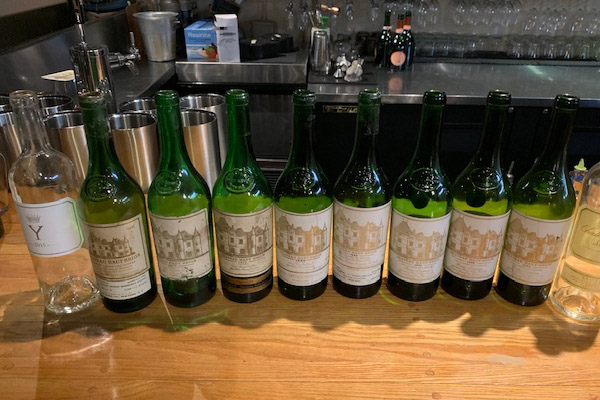
So much safer to organize smaller groups for wine dinners now rather than the previously more common “banquet style” events. Our Group of 8 worked out perfectly in 2 smaller groups of 4 each with only one person on each side of two large square tables at Blue Water Cafe in Vancouver on September 22, 2020. More difficult to do this for an IWFS Branch meeting but suggest you try it out in some modified way with no reception but for immediate sit down at your place. This occasion was to study, compare, and enjoy some key 9 vintages of Château Montrose from St. Estephe ranging from 2003 back to 1970. Once again this property showed the impressive big dense concentrated terroir of their site plus an amazing ability to age and develop complexity over time. The dinner commenced with 2008 Pol Roger Brut both an outstanding house and vintage that is delightfully approachable now but also displaying such a fine future with perfect balance.
The nine vintages of Château Montrose were served in three flights from youngest to oldest with accompanying food courses served each time after an appropriate 10 minutes first for studied wine reflection. A few brief impressions by your scribe:
2003 CHATEAU MONTROSE: Highly touted because the clay soils of St. Estephe retained their moisture better during that infamous Summer heat year. Deep dark colour with atypical ripe opulent almost jammy cassis mocha notes with lower acidity. Intense long and enticing but softer textures and tannins than normal from this property. Likeable & already approachable.
2000 CHATEAU MONTROSE: Dense darkest fruits but just starting to open up. Firmer more structured with buckets of classic fruit and polished tannins. So powerful yet balanced. Wonderful now but could use more cellaring to become one of their best vintages of all time. What a future!
1996 CHATEAU MONTROSE: Palest of first flight with a browning rim. Open evolving herbal red fruits. Not a big rich tannic St. Estephe but leaner more ready to pair with food presently. Very good but in very tough company here in this first flight against those super stars 2003 & 2000.
1990 CHATEAU MONTROSE: Fun to compare again this celebrated 1990 with the twin 1989. Your scribe always prefers the 1990 and here it is darker deeper and so very impressive. Maybe not 100 points but most worthy of very high recognition indeed. Extra mid-palate intensity and pure sweetness here! Seems to be meshing together better with more complexity ever time tasted as the years go by. Winner.
1989 CHATEAU MONTROSE: Good depth but a slightly more paling edge. Bouquet has floral herbal notes with almost a touch of eucalyptus – where did that come from? Can start to enjoy this now but no rush. Would drink it before your treasured 1990. Excellent but over-shadowed again this time next to that magnificent 1990.
1985: CHATEAU MONTROSE: Much lighter and easier drinking here. Produced during the less dense more merlot period by Montrose from 1976 to 1985 inclusive. However still shows some of that typical 1985 vintage charm which is so likeable. Simpler herbal softer styling but enjoyable nonetheless. Surprised with the duck course
1982 CHATEAU MONTROSE: Dark looking with a good clean bottle on the nose presented here. This Montrose always showed well early on but still is on a beautiful plateau today. Nice freshness here and underrated. Enjoy.
1975 CHATEAU MONTROSE: Have tried more of this vintage of Montrose than any other. Tends to be bottle variable but recently have enjoyed some stellar very St. Estephe examples. Always like the very high cabernet sauvignon (70%+) this year provides but strong old style austere tannins can be forceful. This bottle is quite brown and disappoints as slightly musty. Wine has lots of structure if stored well preserving the drying out fruit.
1970 CHATEAU MONTROSE: Blend of 65/25/10 cab sauv/merlot/cab franc at 50 years old. Looks dark and much more youthful. So much fruit left and showing the class of a second growth here. Tried many bottles of this over the decades and find it so consistent. One of the treasures from 1970 and a true classic.
Reinforces my long held opinion on the deserved second growth status of this property. Some of the best preserved older wines from Bordeaux IMHO have been Chateau Montrose with very fond personal memories recalled among others of that superb pair of 1953 & 1952, 1945, 1928, and 1870. A good cellar investment in great vintages for sure.
Question: I am a American who has been invited by some Aussie friends to attend an Australian wine tasting and want to fit in with them using some appropriate slang words. Any ideas?
Answer: That’s an unusual one. Words about wine can be pretty similar the world over. However off the top of my head a few I would throw in for fun at an appropriate moment would include these:
FAIR DINKUM – for some good real wine that seems genuine and true to the growing region.
RIPPER – the best wine of the evening!
AS at the end of a word for added emphasis – eg.Lovely AS or Sweet AS etc.
A SPLASH OF FRUIT – for a wine that is showing a lot of big fruit
CLEAN SKINS – with reference to buying a terrific value wine (often described just by variety & region) because it has no producer listed on the label – a really popular deal in Melbourne.
GOOD ONYA MATE – For someone who makes a great point about a wine at your tasting.Should be an interesting experience.
Get back to us with some more words you discovered.
Your scribe has appreciated this enforced down time during 2020 to study some older vintages of British Columbia wines. Yours truly has been a major cheerleader internationally for decades of the BC wine industry hoping for the global recognition it is now starting to receive. Sometimes I feel my jaded palate has tasted more BC wines than it wanted to or could fairly process. In the early days there were far too many unripe very high acidity unbalanced examples followed later on by an over abundance of ripe overly extracted big alcoholic ones. Now climate change concerns but refined viticulture & winery know-how combined with the benefits of older vines has allowed everything to be put together so much better in producing many fine world class wines. Generally the reds have been aging far better than the whites with surprising treasures to be found among older delicious pinot noir, syrah, merlot, and other varieties & blends. Also sparkling. Whites less so though old plantings from 1968 of chenin blanc, and 1978 riesling have definitely shone brightly. Therefore it was a delightful surprise and inspiration to learn what an undiscovered gem they may have with aged chardonnay. Who in their right mind is cellaring New World Chardonnay? Not many of us though I must say I enjoyed recently an old bottle from the seventies of a brilliantly made Stony Hill Napa California chardonnay. Most of us are even sceptical now about aging top white Burgundy worried of pre-mox issues. Recently the safest course of action is usually to buy and drink chardonnay early on to enjoy the bright fresh fruit of this classy varietal. On the other hand there is a minority argument that can be made to give some of the best ones more time in bottle to develop more nuances and complexity in the bouquet and flavours.
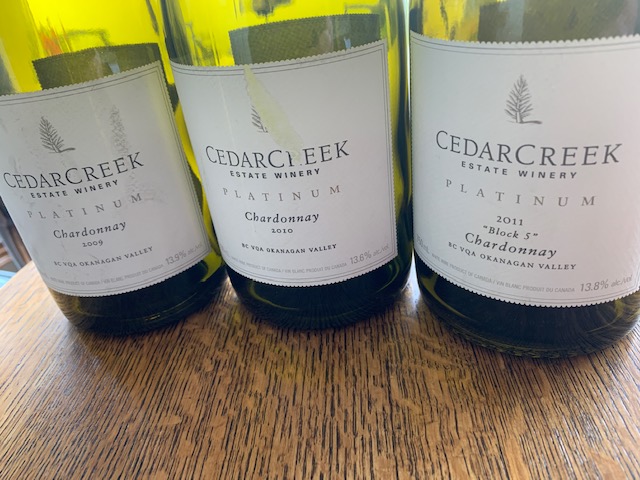
In my recent studies it was revealed that CedarCreek Estate Winery is under appreciated for the success they have achieved with chardonnay in their Block 5 Platinium releases. This special site is cooler and higher up the slope directly below what used to be the winemaker’s front porch before the new winery was built. Now it is at the top of the Home Block Vineyard. Fun to compare in September 2020 three consecutive vintages of 2009, 2010, and 2011. All are still bright fresh and lively but presently quite different in their style too:
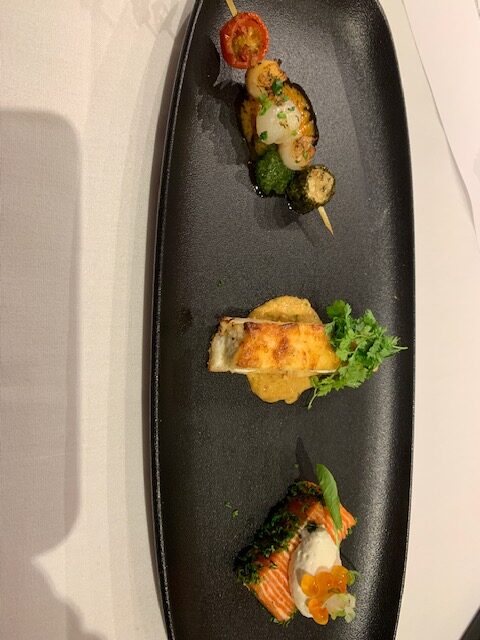
2009: Back label by then respected proprietor D. Ross Fitzpatrick presents wonderful detailed information – “Made from clones 76, 96, and Washington whole berry cluster pressed & 100% barrel fermented. Hand harvested at CedarCreek, Greata Ranch, Mauz, and Duncan Vineyards aged 10 months in French oak from coopers Francois Freres, Mercurey, Berthomieu, Remond, and Dargaud & Jaegle.” Not yet using only Block 5 grapes but 13.9 alcohol in a rich full textured mature forwardly rare treat perfect with Dungeness crab! Well done.
2010: Cooler year coming in at 13.6 using for the first time only Block 5 vines but not shown as such on the front label. Again excellent back label info provides “made from Clone 76” with berries, B-F, oak and coppers all the same as 2009. However the wine is dramatically different. Fresher very lively with ample quality fruit balanced by excellent acidity. Would shine brightly paired with most fresh fish dishes. Amazing effort.
2011: First Block 5 on the front label at 13.8 alcohol. Back label repeats from 2010 info with 2 differences – now 11 months in French oak instead of 10 and using both “oak barriques and puncheons”. This 2011 was another cool year but so different yet again – a true marvel. Unbelievable high acidity more than you would expect from a younger Premier Cru Chablis. So fresh and alive with complex nuances on the nose. Super vibrant lift. Match this with fresh oysters and enjoy the experience!
Your scribe hasn’t tasted 2012-2016 this month but is quite familiar with them from earlier tastings. More wine making refinement has been taking place but still at reasonable alcohol levels under 14 and always showing bright fruit. 2012 was quite tart to enjoy on release but has those underlying citric floral notes that are being helped by cellaring; 2013 very bright pure fruit with no malo (acidity preferred again) and gentler oak from those 500 litre puncheons; 2014 was the sale to VMF Estates (Anthony von Mandl) with “Single Vineyard” added to the front label and a still informative redesigned back label of “rich, ripe fruit in 2014”; 2015 was sunny with more rounded tropical notes but nonetheless not too soft for the vintage; 2016 back label has a useful map of vineyard Blocks including showing Block 5 “Elevation 460m, Slope 15%, Aspect Northwest, Soil Composition Loam & Stone, and Age of Vines 11 Years”.
The new focused team led by talented winemaker Taylor Whelan are making great strides with all the CedarCreek wines aided also by a brand new state of the art winery. The farming practices are changing too with 2018 Platinum Chardonnay being the “second year farming it organically”. The result is riper phenolics in the grapes but with less brix sugar turning into alcohol as it comes in at only 12.9. Harvest September 19 at low pH 3.15 but 8 g/l acidity used 100% wild fermentation in barrique & puncheons with 14 months on the lees. Smart by them to let the finished wine sit in stainless steel for 6 additional months to help integration of components before bottling. Bargain for $35. Like their emphasis on single vineyards and Blocks plus even small lot single clone pinot noirs. Your scribe admires their proven abilities to craft all their wines with a touch of distinctive finesse. Less is often more. If the Platinum Chardonnays from 2009 on are aging so brilliantly you have to have real assured confidence in how the more recent vintages will turn out! Encourage you all to try aging more top Chardonnays from BC – and also those limestone beauties from Ontario. Making a quality statement!
Question: Regarding stocking a wine cellar for an IWFS Chapter can you recommend a resource? We have a cellar but I would like to see it stocked in a strategic manner. For example- what percentages should be:
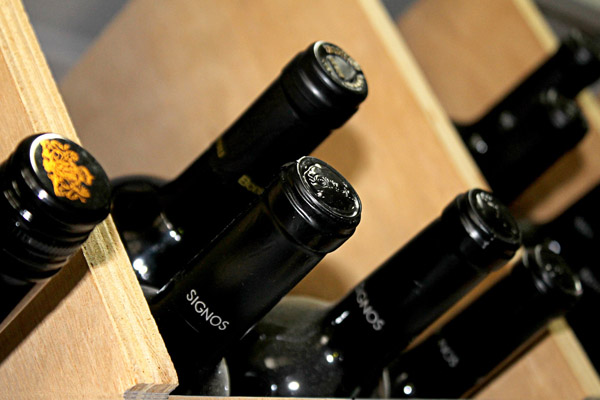
Answer: Always an important but difficult question with no standard correct answer. Lots of informative useful articles out there on a web search for “strategy in stocking a wine cellar”. I don’t think you can arbitrarily assign percentages to any particular wine or category of sparkling, white, red or dessert. I think the best first question is how do you expect to use the wines acquired in the future. You need to examine closely the type of events you have held for your IWFS Branch plus project forward as to the wine and food events you have in mind for the next while. Some Branches focus mainly on just wine tastings while many incorporate a dinner as well. How many people normally attend? Number of bottles that will be needed per event becomes crucial. We have found for one group that usually has around 40 attending that collecting 3 bottle lots works well for instructive tastings. Another group has decided to go for more expensive wines in the cellar because they are now so costly to buy and you can try the more reasonably priced ones on your own dollar. This of course brings into debate higher wine assessment fees. Some wines such as Sparkling are always useful as being the perfect reception wine. However these bubbles and other white wines (and dessert) are generally widely available for functions on immediate purchase as fresh enjoyable ones without needing to cellar them. Of course if you want your members to experience aged vintage Champagne or older Riesling & Chardonnay among many ageable whites you would need to buy earlier. Often specific lots needed can be obtained at auction or retail. My main recommendation for you would be to start with buying good ageable diverse reds which will improve with cellaring for future events and will be increasing in value too. There are so many excellent reds from around the world that could be cellared for improvement and provide the basis for a “theme” region event in the future. This stocking of wine is a fun adventure for sure. Good luck in your research.