menu
Member Sign In
  • IWFS Homepage
  • Blog Home
  • Forums Home
  • Global Forum
  • Contact Us
Close
  • IWFS Homepage
  • Blog Home
  • Forums Home
  • Global Forum
  • Contact Us
    Member Sign In
  • Blog Home
  • Forum Home
  • Global Forum

Follow Us

Recent Posts

  • TOP DROP WINE FESTIVAL FEATURING TERROIR + CRAFT IS A SUCCESS
  • Ask Sid: What is Muschelkalk?
  • 2026 VANCOUVER MAGAZINE RESTAURANT AWARDS
  • Ask Sid: How is vintage 2025 Bordeaux?
  • CHATEAU HAUT-BAILLY VERTICAL CONFIRMS OUTSTANDING BALANCED WINES WITH ELEGANT PRECISION!

Archives

  • May 2026
  • April 2026
  • March 2026
  • February 2026
  • January 2026
  • December 2025
  • November 2025
  • October 2025
  • September 2025
  • August 2025
  • July 2025
  • June 2025
  • May 2025
  • April 2025
  • March 2025
  • February 2025
  • January 2025
  • December 2024
  • November 2024
  • October 2024
  • September 2024
  • August 2024
  • July 2024
  • June 2024
  • May 2024
  • April 2024
  • March 2024
  • February 2024
  • January 2024
  • December 2023
  • November 2023
  • October 2023
  • September 2023
  • August 2023
  • July 2023
  • June 2023
  • May 2023
  • April 2023
  • March 2023
  • February 2023
  • January 2023
  • December 2022
  • November 2022
  • October 2022
  • September 2022
  • August 2022
  • July 2022
  • June 2022
  • May 2022
  • April 2022
  • March 2022
  • February 2022
  • January 2022
  • December 2021
  • November 2021
  • October 2021
  • September 2021
  • August 2021
  • July 2021
  • June 2021
  • May 2021
  • April 2021
  • March 2021
  • February 2021
  • January 2021
  • December 2020
  • November 2020
  • October 2020
  • September 2020
  • August 2020
  • July 2020
  • June 2020
  • May 2020
  • April 2020
  • March 2020
  • February 2020
  • January 2020
  • December 2019
  • November 2019
  • October 2019
  • September 2019
  • August 2019
  • July 2019
  • June 2019
  • May 2019
  • April 2019
  • March 2019
  • February 2019
  • January 2019
  • December 2018
  • November 2018
  • October 2018
  • September 2018
  • August 2018
  • July 2018
  • June 2018
  • May 2018
  • April 2018
  • March 2018
  • February 2018
  • January 2018
  • December 2017
  • November 2017
  • October 2017
  • September 2017
  • August 2017
  • July 2017
  • June 2017
  • May 2017
  • April 2017
  • March 2017
  • February 2017
  • January 2017
  • December 2016
  • November 2016
  • October 2016
  • September 2016
  • August 2016
  • July 2016
  • June 2016
  • May 2016
  • April 2016
  • March 2016
  • February 2016
  • January 2016
  • December 2015
  • November 2015
  • October 2015
  • September 2015
  • August 2015
  • July 2015
  • June 2015
  • May 2015
  • April 2015
  • March 2015
  • February 2015
  • January 2015
  • December 2014
  • November 2014
  • October 2014
  • September 2014
  • August 2014
  • July 2014
  • June 2014
  • May 2014
  • April 2014
  • March 2014
  • February 2014
  • January 2014
  • December 2013
  • November 2013
  • October 2013
  • September 2013
  • August 2013
  • July 2013
  • June 2013

Meta

  • Log in
  • Entries feed
  • Comments feed
  • WordPress.org

Author Archive

Older Entries
Newer Entries

Book Review: The Salt Fix

August 6th, 2018 by Joseph Temple

Salt Fix book review health

By Joseph Temple

Have you ever been at the dinner table and wanted to reach for the salt shaker? You know all those tiny white crystals will greatly enhance the flavor of the food you’re about to eat—but then all of a sudden, you hesitate. You hesitate because, for years, society has told you that too much salt consumption will lead to high blood pressure, chronic diseases, and a possible stroke. Knowing all this, you decide to continue eating your food salt-less.

Sound familiar?

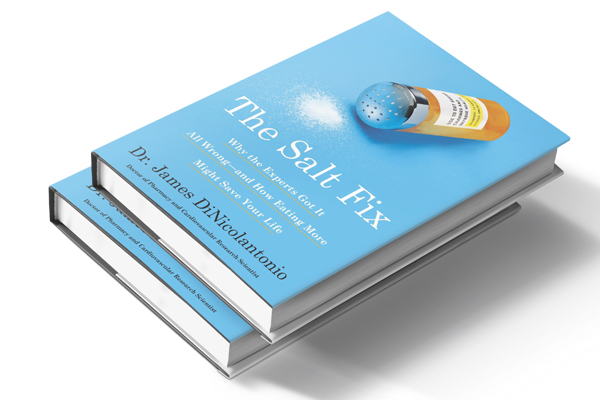
But according to a recent book by Dr. James DiNicolantonio, a cardiovascular research scientist and a doctor of pharmacy, all that we were taught about salt from the medical community and official government dietary guidelines were misleading at best.  Published in 2017, The Salt Fix dispels all the conventional wisdom we had about this mineral, arguing that if anything, we should be consuming more of it.

“We cry salt, we sweat salt, and the cells in our bodies are bathed in salty fluids,” writes DiNicolantonio. “Without salt we would not be able to live.” Using examples from history dating back millions of years ago, he presents a convincing case that human beings did not evolve as a species on a low-salt diet. Interestingly, by the eighteenth century, Europeans were consuming an estimated 70 grams per day–nearly seven times the amount consumed today by the average American. And although no records about hypertension existed during that period, the book begins to reveal some fascinating data once it starts looking at the twentieth century.

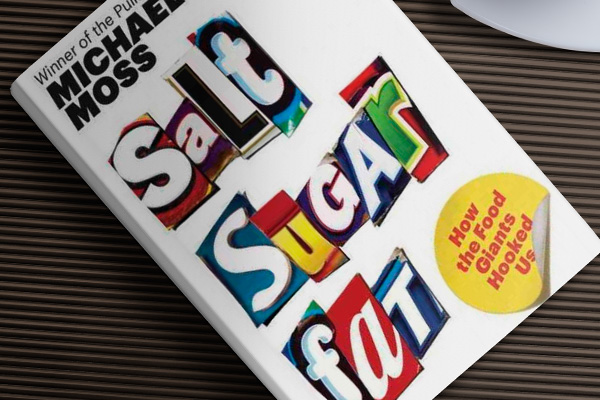
While today one in three American adults suffers from hypertension, for the first half of the 1900s, that number was only around 10 percent.  As DiNicolantio argues, how can high blood pressure be three times as high “despite salt intake remaining remarkably stable over the last fifty years”?  All signs point to another white crystal known as sugar, which saw a spike in consumption beginning in the late 1980s to 120 pounds a year per person or 150 grams a day. So why did salt get such a bad reputation while sugar escaped such scathing criticism until very recently?

Going back to the first “salt is bad” report in 1904 by two French scientists, the author dismantles the most prominent studies used by the medical community, showing that they were either based on inappropriate study designs, research misinterpretation, or a lack of evidence to support their conclusions. Yet despite these flaws, numerous magazine articles and television news reports continue to remind us that salt consumption leads to high blood pressure.

One strength you’ll find in The Salt Fix is the section dealing with official government dietary guidelines and how they can easily be manipulated by lobbyists. For example, while salt was being raked over the coals, the 1985 Dietary Guidelines for Americans stated: “Contrary to widespread belief, too much sugar in your diet does not cause diabetes.” In fact, it wasn’t until the year 2000 that those guidelines linked sugar consumption to heart disease and diabetes—a product of intense lobbying by the sugar industry despite a plethora of medical evidence to the contrary.

So does a low-salt diet really reduce the risk of developing any of these diseases? A resounding no according to the author who points to South Korea where the average person eats over 4,000 milligrams of sodium daily. “They [Koreans] feast on … grilled meat marinated in a sea of sodium-packed soy sauce … Yet Koreans manage to somehow have one of the world’s lowest rates of hypertension, coronary heart disease, and death due to cardiovascular disease.” Nor is this an anomaly as DiNicolantonio shows that a diverse set of other nations from Japan to Canada and Australia all consume high-sodium diets and yet they all have a lower rate of death due to heart disease than the United States.

With a well-researched debunking of the whole “salt is bad” argument, the author then moves on to show that increased salt consumption has a number of health benefits.  These include helping to manage shock, kidney problems, and inflammatory bowel disease. Interestingly, those who exercise regularly are probably the one’s who need the most salt since a person can excrete nearly 3000 milligrams of sodium while working out in a warm climate. By increasing your salt consumption, according to the author, you’ll retain more water and thus, reduce both fatigue and muscle cramping.

Challenging the conventional wisdom most of us had about this mineral, The Salt Fix offers readers a thorough critique of the low-salt diet by uncovering the many flaws of over a hundred years of research into this subject. And by showing us the many positives that salt can offer us, you may never have to think twice before reaching for that shaker.


You might also like:
Ask Sid: TV Program For Fish Preparation?

August 1st, 2018 by Joseph Temple
Ask your question here

good tv fishing show

Question: I am an amateur cook looking for new fish preparation ideas I could watch on TV. Your recommendation?

Answer: Well lots of video out there including on line at the YouTube website and others. I seem to be always setting my VCR to record cooking shows on PBS and The Food Channel and trying to find time to watch them. Though the best program for fish recipes I have enjoyed over the last year is Fish The Dish by Chef Spencer Watts on Gusto (315 on Telus). He is very entertaining in preparing fish dishes but full of good recipe ideas too. It is a worthwhile series each with a special theme on preparing fish in different ways like with Seeds, Garlic, Wrapped, Stuffed, Cold, Oil, Butter, Breaded etc. Check it out.


You might also like:

Ask Sid: What is Selection de Grains Noble?

July 25th, 2018 by Joseph Temple
Ask your question here

wine Selection de Grains Noble?

Question: What is selection de grains noble?

Answer: Vendanges Tardivea (VT) & Selection de Grains Nobles (SGN) are terms used in Alsace pioneered first by Hugel (the indomitable late Johnny Hugel) back in 1976 for late harvest wines. Grapes for SGN have reached even higher sugar levels than for VT resulting in a special wine made by successive picking selection of individual over-ripe grapes affected by noble rot (botrytis cinerea) and is only produced in the best years where favourable conditions allow it. The single grape varieties that are possibly able to  achieve this level are usually Riesling, Gewurztraminer, Pinot Gris, or sometimes Muscat d’Alsace. Wines produced with a SGN label are usually sweeter intense powerfully structured complex treasures with a long finish on the palate that seem to age forever. In my IWFS Blog earlier this week you will see reference to 3 bottles of this spectacular first SGN in 1976 from Gewurztraminer grapes. What a joy to taste!  Seek them out.


You might also like:

LeBron James: Wine & Gold

July 22nd, 2018 by Joseph Temple

LeBron James wine passion interest

By Joseph Temple

Earlier this month, all of the teams in the NBA’s Eastern Conference could breath a little easier when it was announced that LeBron James had signed a lucrative four-year, $154-million-dollar contract with the Los Angeles Lakers.  A three-time NBA champion as part of both the Miami Heat and Cleveland Cavaliers, ‘King James’ proved to be a fine wine this year as the future Hall of Famer carried his team to the finals against the Golden State Warriors.  And despite leaving the wine and gold of Cleveland for sunny California, he certainly won’t be giving up the wine part as LeBron is now less than seven hours away from America’s most prestigious vineyards.

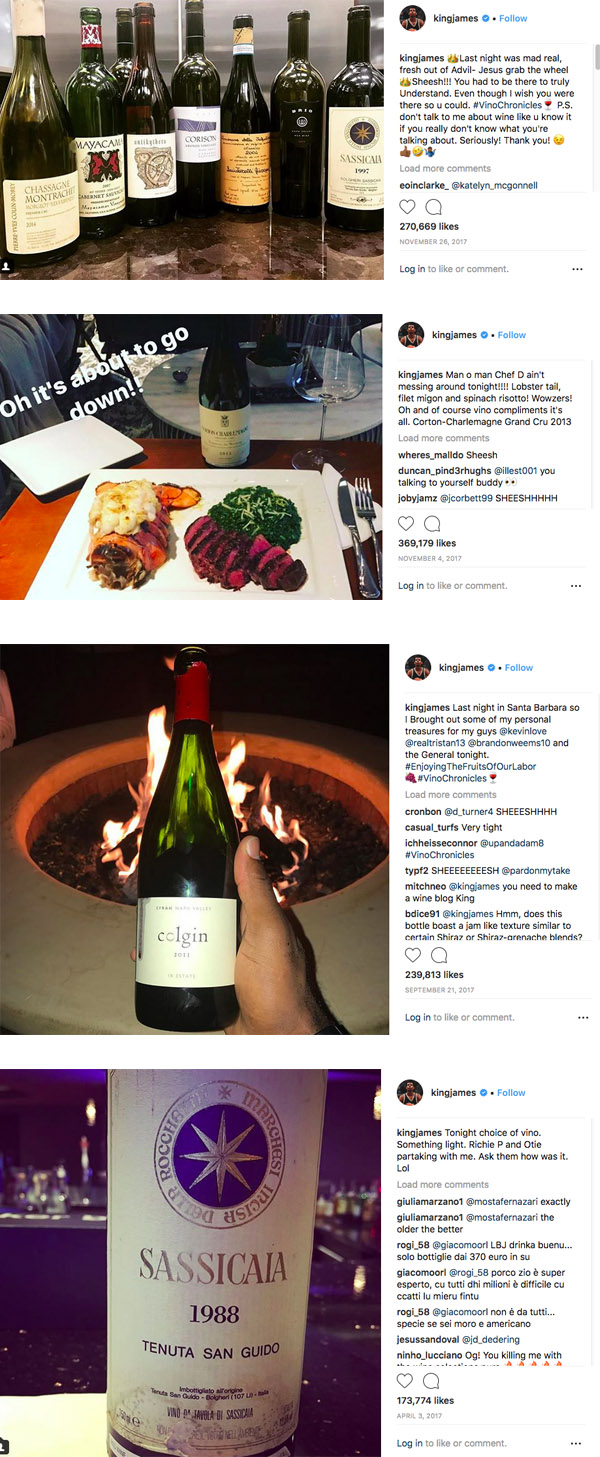
For those who follow James on social media, it’s no secret that he LOVES wine. Confessing that he wasn’t much of a wine guy until he turned 30, LeBron has since gone on to be a passionate oenophile, posting numerous pictures on his Instagram under the hashtag #VinoChronicles.  Over the past three years, the newly signed Laker has tried many bottles including Corton-Charlemagne Grand Cru 2013, Tenuta San Guido Sassicaia 1990, and 2010 Colgin “IX Estate” Napa Valley Syrah. With a preference for California reds, he has also warned his followers online, “Don’t talk to me about wine like u know it if you really don’t know what you’re talking about. Seriously! Thank you!”

Judging by that statement, it shows that LeBron is truly passionate about wine, spending his hard-earned money on bottles that easily cost anywhere from $300-$500 and more. According to DLynn Proctor who was featured in the 2012 film Somm, “LeBron’s got somebody really good in his corner telling what to drink.”  Indeed, as can be seen in a story reported back in 2015 when after losing a bet with Warriors’ forward Draymond Green over who would win between Ohio and Michigan in football, James sent him two cases of 2010 Silver Oak Cabernet. “He knows a young guy like me can’t afford it yet, so he took care of me,” said Green.

“I wanted to learn about it,” said James in one courtside interview. “Everybody was telling me how great it is and the different regions not only here in America but also in Italy, in France, in so many different places.”

And it appears that while playing for the Cavaliers, he spread his cumulative knowledge to his fellow teammates. According to a fascinating article on ESPN.com highlighting NBA players growing interest in wine, Cleveland center Kevin Love said James is like “a supercomputer” when it comes to grapes while Dwyane Wade noted, “when we go out, it’s Bron, what wine we getting? You ask most of the guys on the team who orders the wine, we leave it to him to order.”

So if you live in Northern California wine country, be on the lookout as the 2018-19 season kicks off in October—especially whenever Los Angeles plays either the Warriors or the Kings! LeBron has been known to tour many wineries in Napa so you might just see the Laker (and future member of the International Wine and Food Society?) at a tasting near you.  After all, as he told the press during the 2017 NBA Finals: “I just need some food and some wine and I’ll be alright.”


center


You might also like:

Ask Sid: Value Piedmont for cellaring?

July 18th, 2018 by Joseph Temple
Ask your question here

piedmont wines for your wine collection

Question: Starting a wine cellar and want to add some bottles of a quality Piedmont wine at good value. Would appreciate your wise tip on what I should buy.

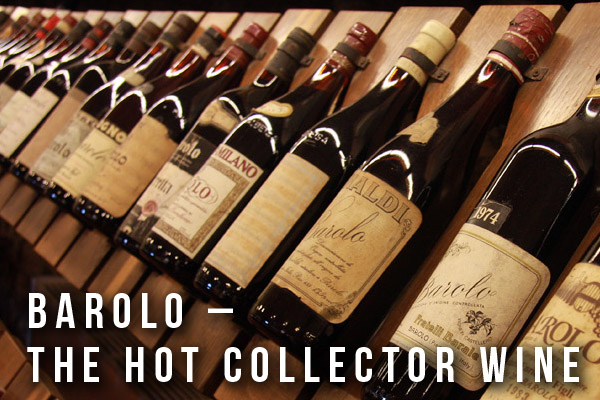
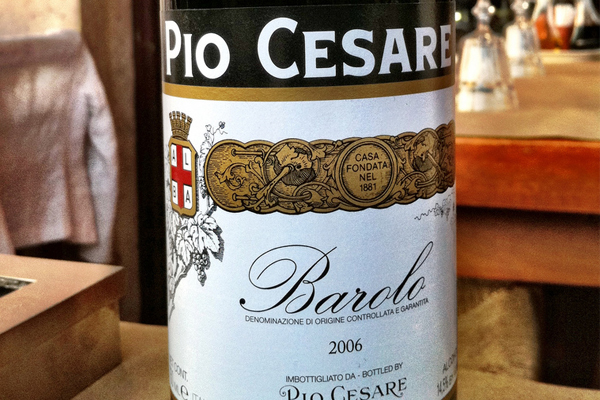
Answer: Good idea. Big fan of the nebbiolo grape from the Langhe and especially Barolo & Barbaresco for long aging. So many quality producers to study and collect some of their wine to get to know better the complex Piedmont terroir. One top choice is the Produttori Del Barbaresco co-op where managing director Aldo Vacca has some 50 growers producing 9 specific crus as special Riservas in only the best vintages. Right now they have released them from the classic 2013 year and all their 9 crus are most worthy of cellaring. Most of them are available at the BC LDB for $64 plus 15% tax (like the structured Montestefano) but my favourite is the fresh vibrant Paje as the best value at $59. Just bought some. Check your own local market. Highly recommend adding some bottles of the 2013 for your exciting new wine cellar.


You might also like:

Older Entries
Newer Entries
The object of the Society is to bring together and serve all who believe that a right understanding of good food and wine is an essential part of personal contentment and health and that an intelligent approach to the pleasures and problems of the table offers far greater rewards than the mere satisfaction of appetite.
Andre Simon Wine & Food Society Founder (1933)
© 2026 The International Wine & Food Society (IW&FS) IW&FS
Credits | Privacy | Accessibility