The Pessac-Leognan (P-L) Appellation d’Origine Controlee (AOC) is relatively new but is now approaching 40 years of age. Its long history dates back to the Romans but this smaller Northern Graves region didn’t have a separate AOC until 1987, thanks to the hard work of Andre Lurton and others. This AOC features distinctive gravelly soils with lots of protective trees, and it now includes over 70 properties. This unique P-L region is located within the City of Bordeaux itself. It features high land values and consistently warmer temperatures, producing top quality whites (roughly 20%) often from clay/limestone soils, but primarily red wines (80%). For many years the two best wines from this region have been Chateau Haut-Brion (the only chateau outside the Medoc in the 1855 Classification – as a First Growth) and Chateau La Mission Haut-Brion. However, many chateaux have improved their quality by leaps and bounds led by Chateau Haut-Bailly among others. For me the best P-L reds feature stony, earthy, gravelly minerals with balance plus the tobacco signature that develops with tertiary age. As loyal followers of this Blog know well your scribe has a soft spot for this outstanding 16th-century property. Elizabeth and the late Robert Wilmers (1934-2017) purchased the property in 1998, leading to major investment and outstanding management by Veronique Sanders-Van Beek. Certainly, IMHO, the wines have gained balance and precision; they better show the complex terroirs of this Estate. As Veronique puts it so well: “Chateau Haut-Bailly now illustrates the evolution of its unique wine style, marrying structure and suppleness, classicism and elegance”. Postings with more details are linked here including those from July 6, 2013 (15 vintages 2012-1998); September 28, 2015 (last VS-VB visit to Vancouver); and October 14, 2024 (2009 Bordeaux at 15). However your scribe has been a devoted fan of Haut-Bailly since the early seventies, recalling a memorable vertical tasting of 12 vintages (1994 back to 1949) conducted by Jean Sanders (Veronique’s grandfather) at the London Wine Trade Fair on May 21, 1997. Jean made many references to Daniel Sanders (Veronique’s great grandfather) while decanting both the 1966 (the first bottle was slightly corked, so he used a backup bottle that showed the outstanding trademark “tobacco” held together by the key 1966 “acidity”) and the 1949 (a ripe vintage that allows the usual Haut-Bailly elegance to come together marvellously fresh with clean finesse, herbs, & tobacco).
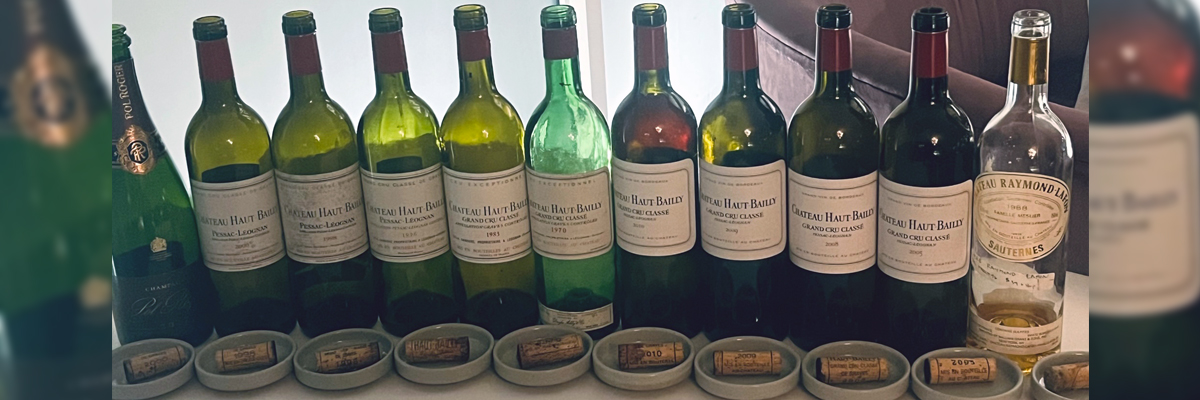
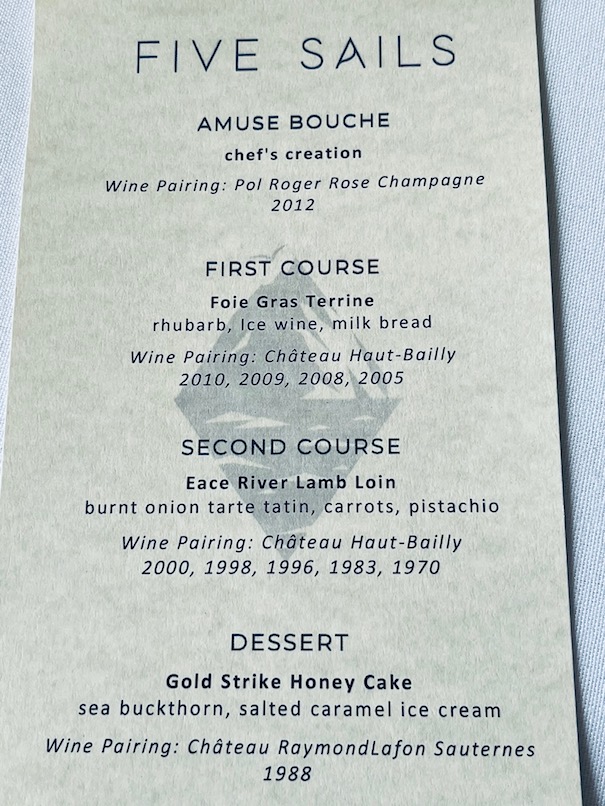
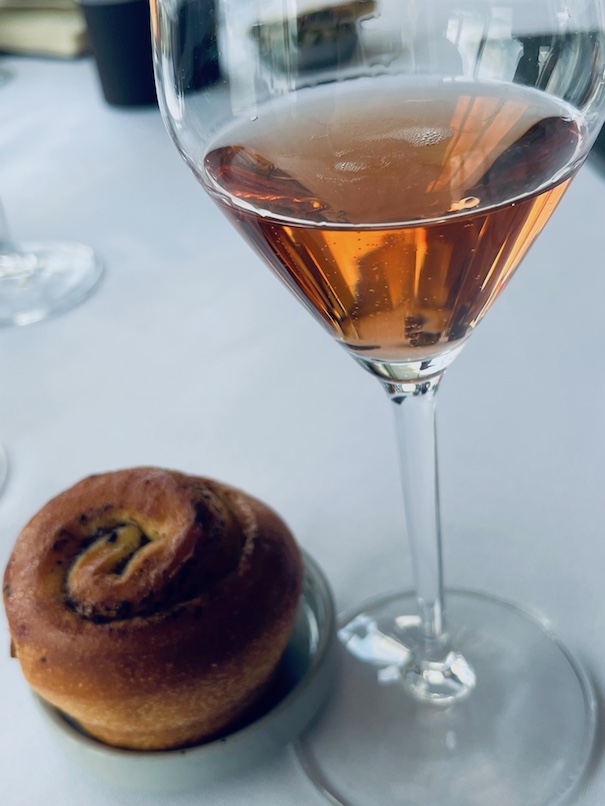
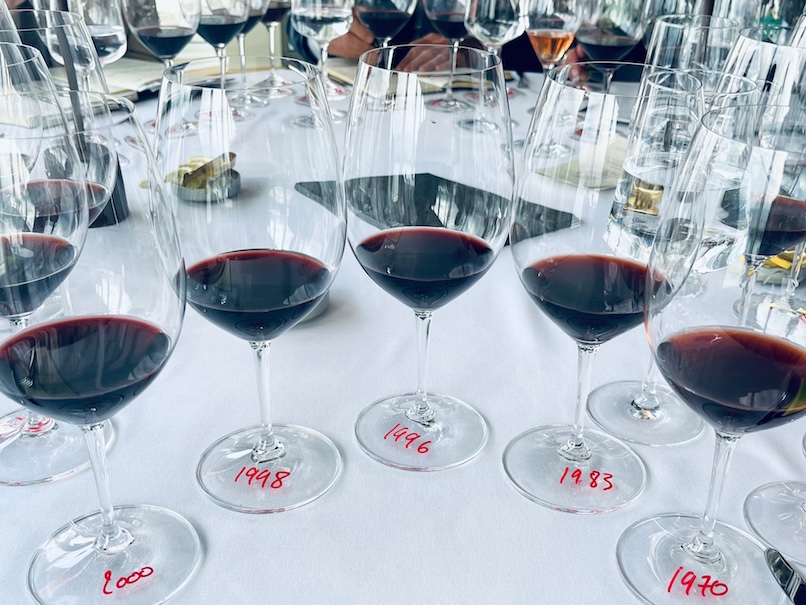
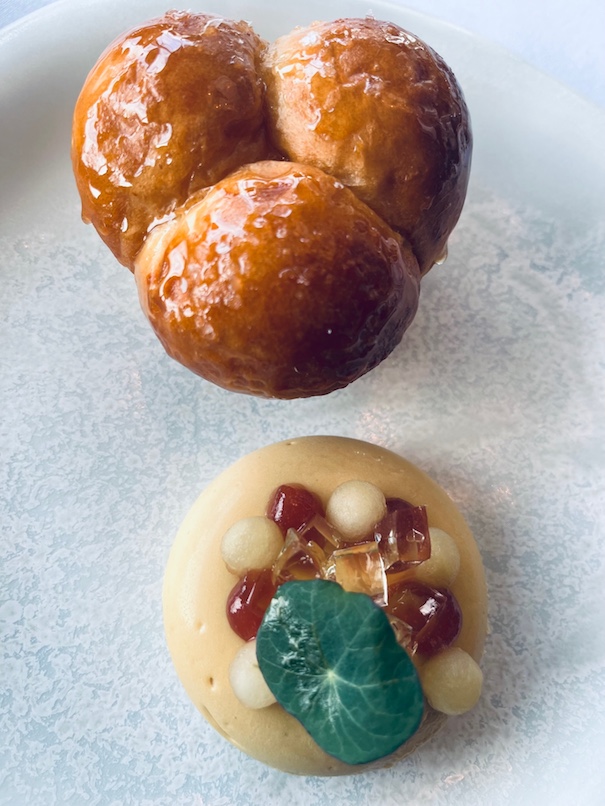
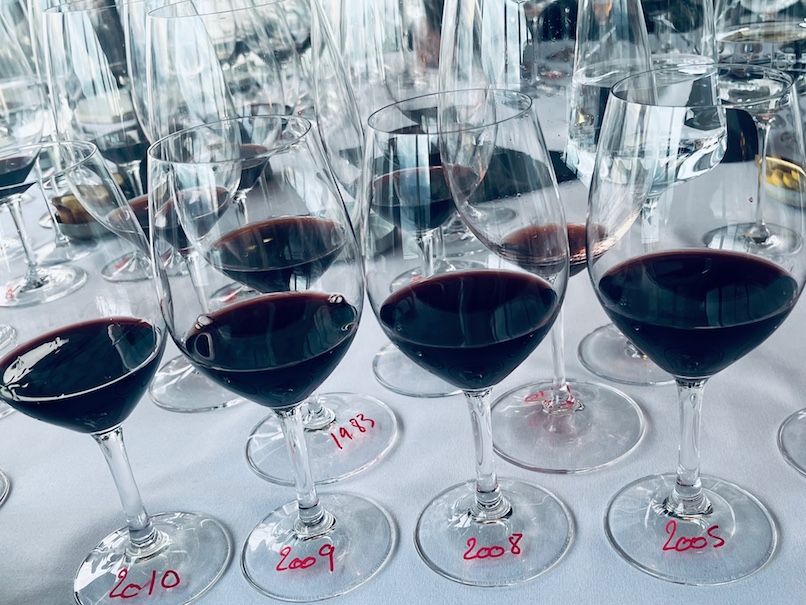
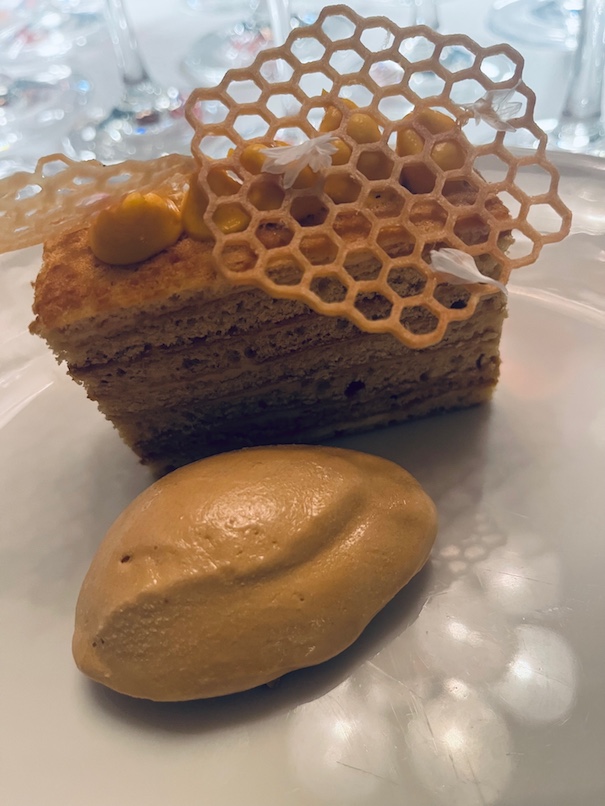
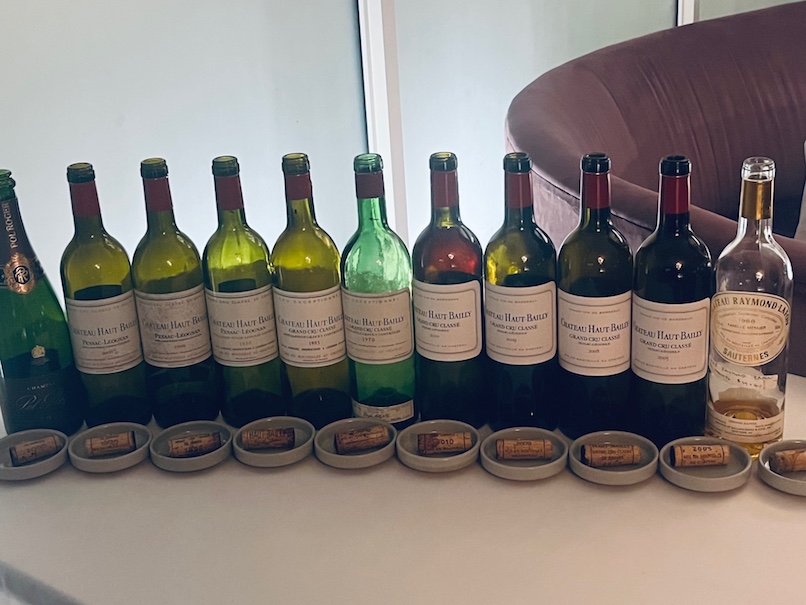
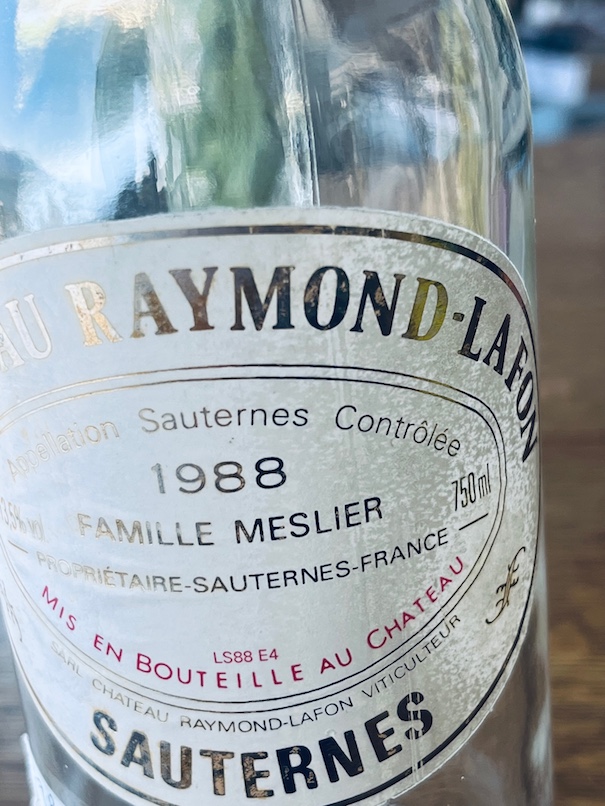
We revisited this wonderful Chateau Haut-Bailly with a vertical tasting of nine wines in two flights, ranging from 2010 back to 1970. We changed our normal procedure from youngest to oldest, which this time worked brilliantly for the more delicate older wines before the bigger-bodied, more intense newer ones. The Vancouver Group of Eight held the dinner-tasting for Event #141 at Five Sails Restaurant on April 28, 2026. We started with 2012 Pol Roger Rosé, which uses a similar blend of 60 % Pinot Noir & 40% Chardonnay as the usual Vintage white blend but with the addition of 15% red wine. The deep (33 metres) cold cellars of POL ROGER always seem to provide helpful backbone structure for their bubbles and the red currants here in this forwardly deep bronze-coloured Rose. We finished with a special low-production, 1988 vintage Sauternes from Chateau RAYMOND-LAFON, which David Kester bought at K&L in San Francisco in March 1996 for $39. The property history dates back a hundred years to Louis Pontellier (the grandfather of the late Paul Pontallier winemaker of Chateau Margaux). It remained with him for 30 years before being sold in 1952 to the Bourdier family and again in the early 1970s to Pierre Meslier (who also managed the neighbouring Chateau d’Yquem). I tasted with Pierre Meslier several times in the seventies at d’Yquem and he prized using a similar formula at R-L for low yields (around 8hl/ha) and blend (80% Semillon & 20% Sauvignon Blanc). Typical intense caramelized apricots with spiced honey and orange peel. Delicious with the honey cake caramel ice cream dessert.
The main event was memorable and here are a few comments:
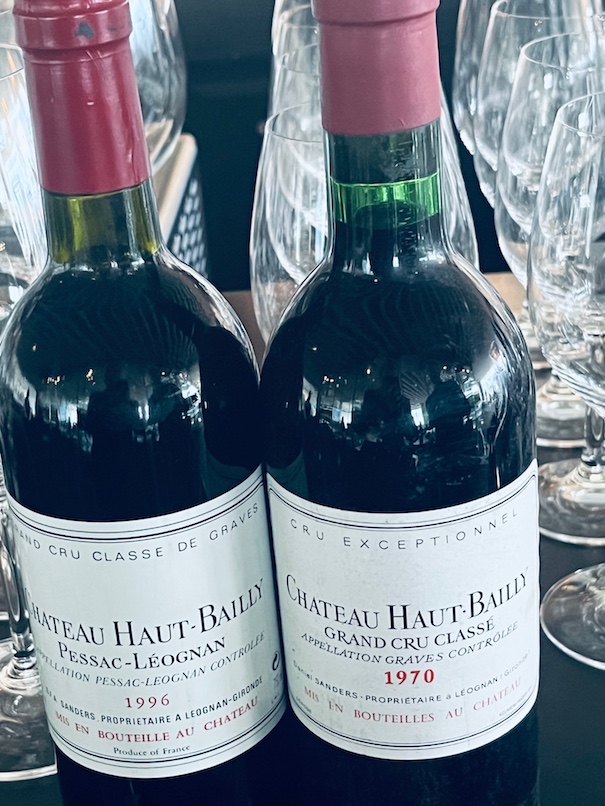
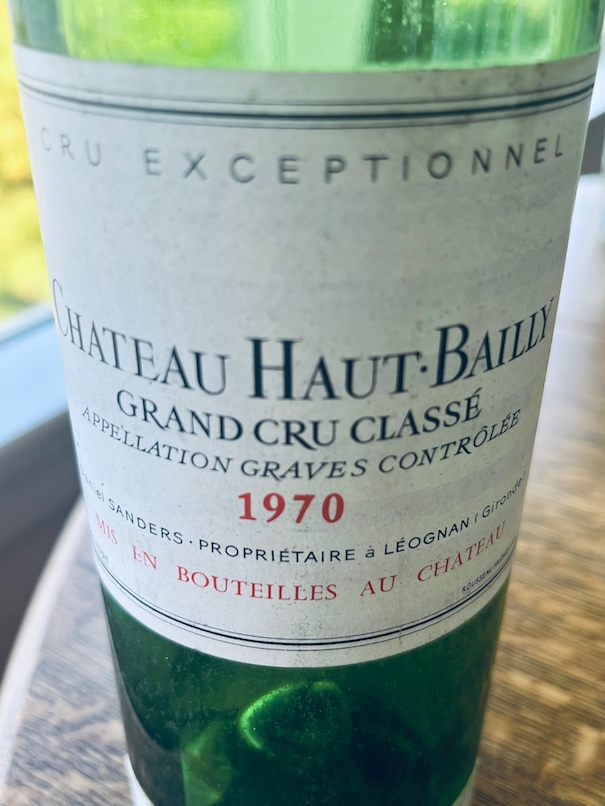
1970 CHATEAU HAUT BAILLY: Surprisingly this 55 year old bottle had the highest fill of all the wines. See the photo. Purchased by your scribe upon release and well stored for over 50 years. Even Five Sails Sommelier Antoine Santini, commented to me that it was “a remarkable, high fill”. Veronique sent me a note stating, “1970 is a beautiful, classic, vintage and very Bordeaux in spirit”. Mature but still bright red tones with a paling rim. It opens with a delightful bouquet displaying red fruits, undergrowth forest floor (sous bois), leather, minerals, and trademark tobacco. Taste is impressively cohesive, featuring sensual fruit rather than just dried-out notes. Ian Mottershead liked the delicacy and elegance. It shows the estate’s ability to age, similar to the ’49, which I tasted in 1997 at 48 years old. Excellence. The surprise of this tasting too!
1983 CHATEAU HAUT-BAILLY: Veronique says “1983 was particularly successful in Margaux and the Graves (Pessac-Leognan did not yet exist) and in some cases surpasses 1982”. Not singing but some dried plummy fruit with spice plus green tea and cocoa. This shows better than the bottle from the 1997 vertical, which was browning in colour with notes of prune and dried tobacco leaf. That bottle needed more fruit depth and was drying out. 1983 was best in the earlier days. Neither of these 1983s has the savoury cherry interest complexity of the 1983 Domaine de Chevalier (which is better than their 1982). Drink up.
1996 CHATEAU HAUT-BAILLY: Veronique advised that “1996 is a very Cabernet driven vintage, with structure, built for long aging”. The blend here is 58% Cabernet Sauvignon, 30% Merlot, and 12% Cabernet Franc. Dark but rather briary earthy black tea with bay leaf and peppercorns. Several of us found it a bit hard edged and metallic on the palate. Lacks charm. Slightly disappoints. It’s not as outstanding as some of the 1996 Saint-Julien and Pauillac wines that feature more late-ripening Cabernet.
1998 CHATEAU HAUT-BAILLY: This 59% Cabernet Sauvignon & 41% Merlot has been called “Merlots blessed by the gods”. They had a dry July and August before the rains came and then harvest started on September 23 using a sorting table for the first time. Successful on the Right Bank. The “Vielles Vignes” are high quality. Toward the rim, it is darker than in 1996, exhibiting a particularly full, smooth, and softer texture. Tribute to “An American-style first vintage for the Wilmers”. Starting on a lovely drinking plateau now.
2000 CHATEAU HAUT-BAILLY: Chateau Haut-Bailly calls this consistently enjoyable Bordeaux vintage “Legendary.” Longer harvest with Merlots starting September 13 and Cabernet from October 3-11. Shows the riper fruit from thicker skins in a good way. Admire the intense, harmonious succulent texture all in balance. You can see improvement starting to be made over their wines produced from the nineties. The elegance is present, and the terroir shows better finesse. This one pairs best with the foie gras starter. Enjoy.
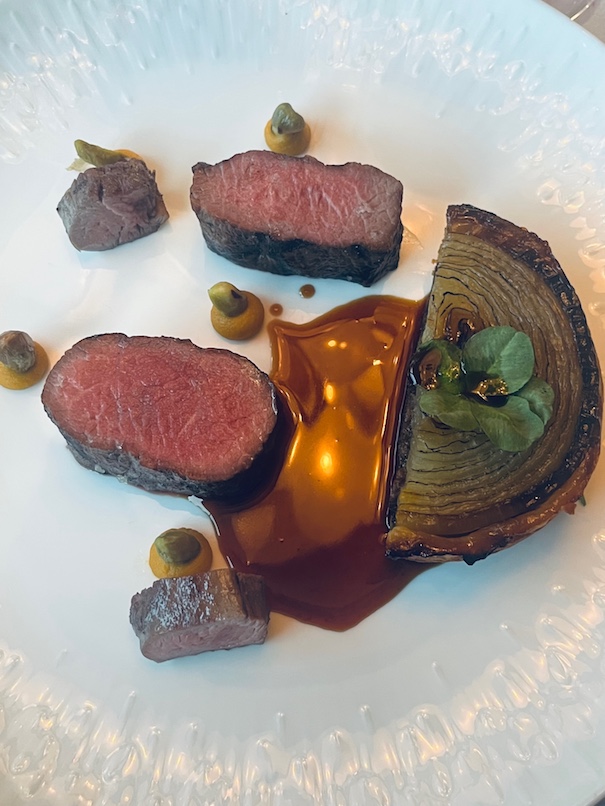
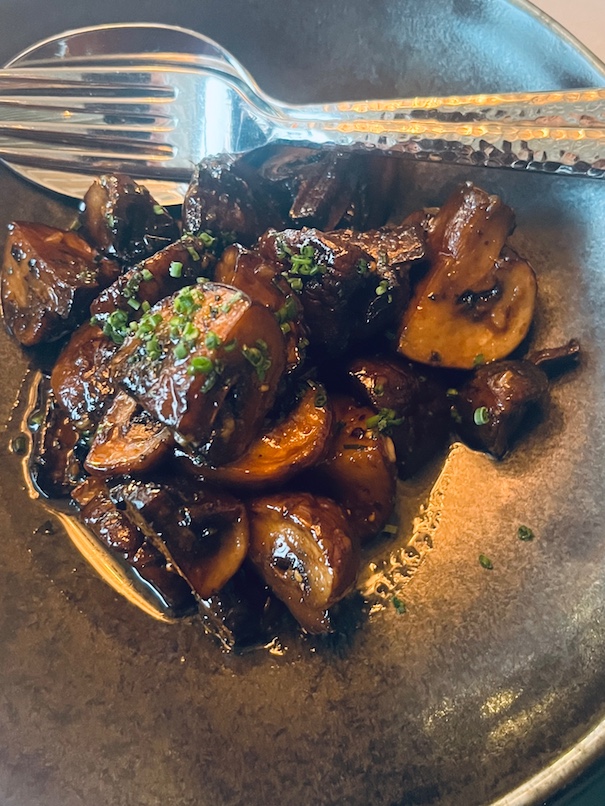
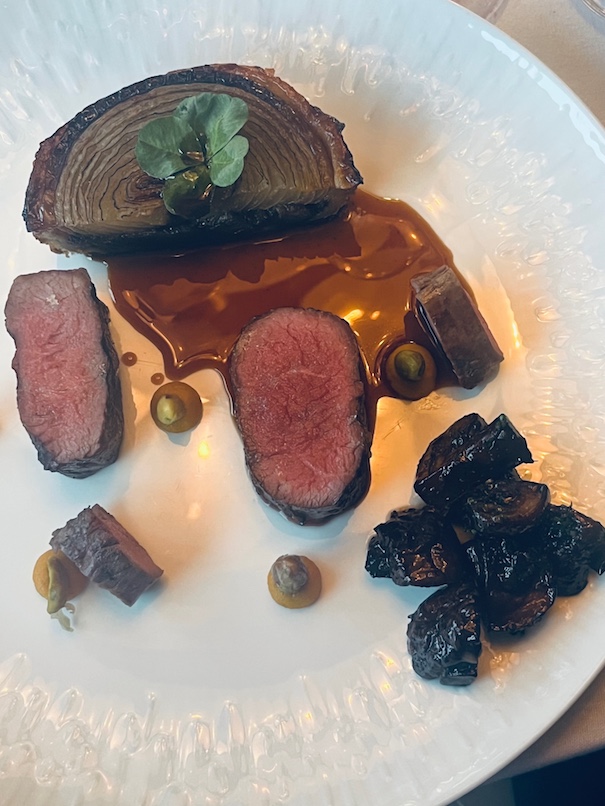
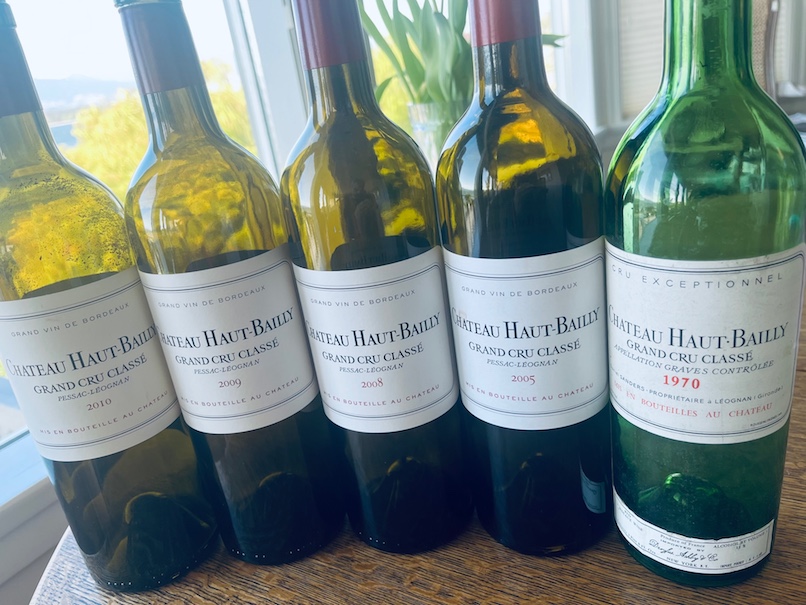
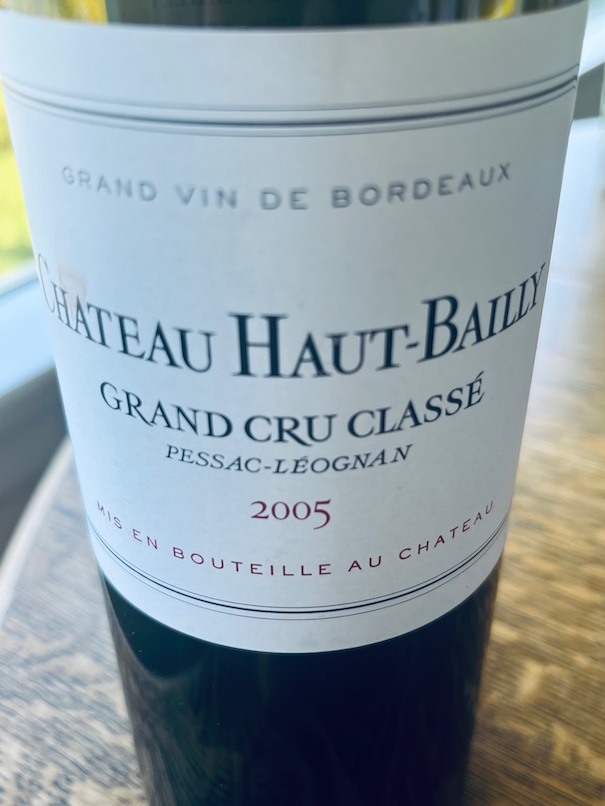
2005 CHATEAU HAUT-BAILLY: Second flight starts on a high note with the also “Legendary” 2005, composed of 58% Cabernet Sauvignon, 36% Merlot, and 6% Cabernet Franc. Dark, with low yields of just over 40 hl/ha and higher natural alcohol levels showing 13% ABV. Respected consultant Emile Peynaud stated “Exceptional vintages have power, freshness, balance, and elegance.” You have all four of those here with a creamy classic texture. Lovely tertiary development just starting at 20+ years. No rush. Superb future. Group likes it. Added dimensions to this vintage paired with the well prepared lamb course, which included mushrooms. Veronique recommended lamb (gigot d’agneau) with mushrooms as resonating nicely with the structure, finesse, and complexity of her wines as they age.
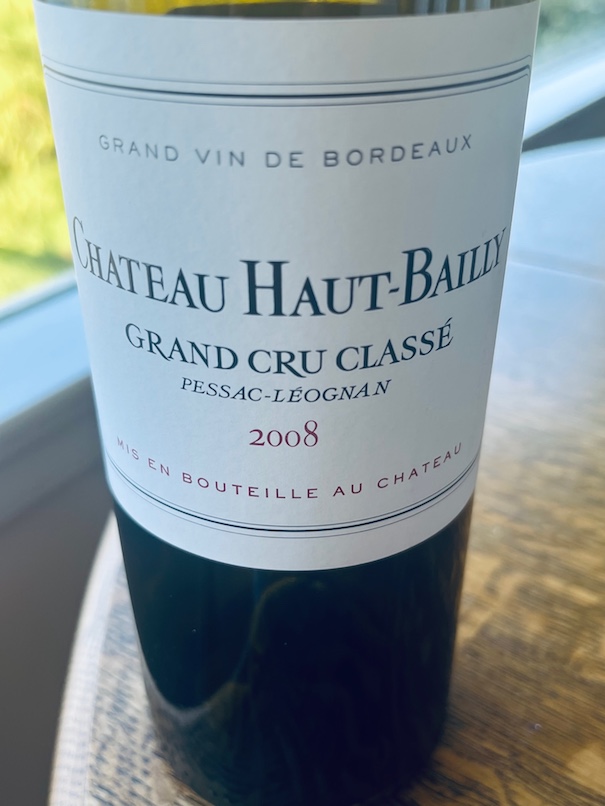
2008 CHATEAU HAUT-BAILLY: “Purity,” this 70% Cabernet Sauvignon & 30% Merlot, faces tough competition against the superstar vintages of 2005, 2009, and 2010. However, this longest and latest harvest from September 25 to October 23 holds its own very well. Like that the largest amount of the best Cabernet Sauvignon, with less Merlot and no Cabernet Franc, went into the Grand Vin. Note that the second wine La Parde was 41% CS, 51% Merlot, and 8% CF. Dark, fresh, with less acidity than expected and not sharp. Softening balance and developing nicely. Less concentrated depth than in 2009 & 2010 but well done indeed at 13% ABV. A less heralded beauty.
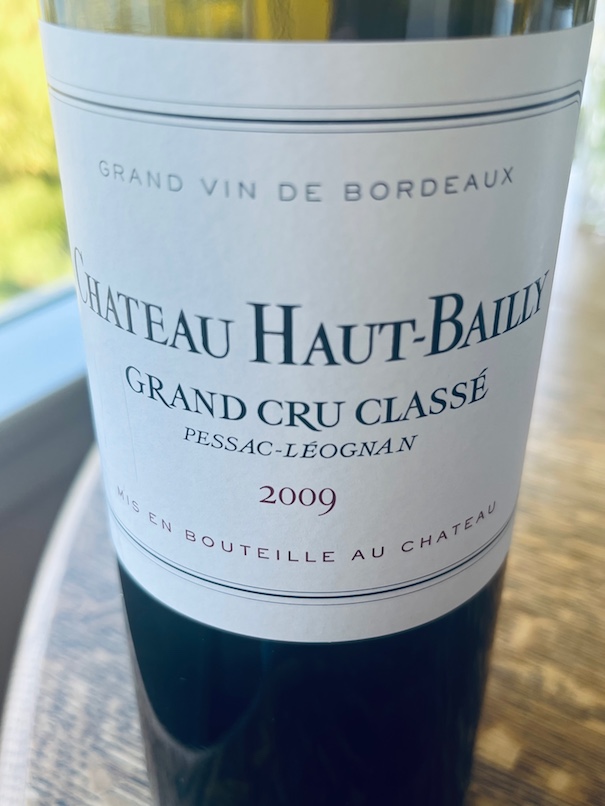
2009 CHATEAU HAUT-BAILLY: Highly acclaimed on release as a powerful very ripe vintage, this is a blend of 60% Cabernet Sauvignon 37% Merlot and 3% Cabernet Franc harvested from September 15 to October 14, described as “a truly great vintage.” Now named “Mythic,” it was well produced by Winemaker Gabriel Vialard and Consultant Denis Dubourdieu (died 2016) using 60% new oak and received several perfect 100 scores. Very dark, but with a slight paling edge, yet so voluptuous and creamy. It’s interesting to compare it with other vintages of Haut-Bailly here, whereas in October 2024 it was compared to other 2009s. Here it seems riper compared to the other vintages but among other 2009s it seemed more balanced, elegant, and refined with graphite notes. That’s because many 2009s are even bigger, riper, and more alcoholic than this Haut Bailly 2009 at 13.5% ABV. Very special.
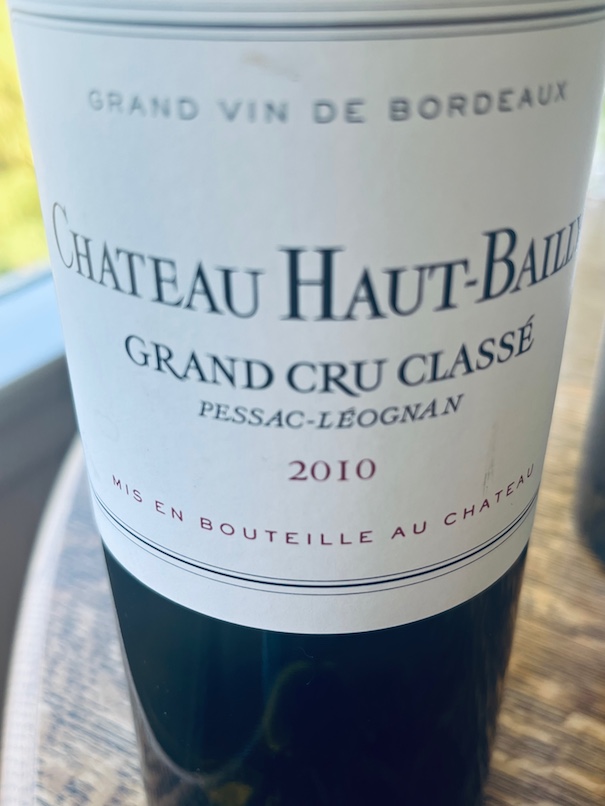
2010 CHATEAU HAUT-BAILLY: What a treat to try the 2010 again side by side with the 2009. The 2010 vintage also received a perfect 100 score from Jane Anson in 2023. She has just published her 2025 Bordeaux reviews; Haut-Bailly received an initial score in barrel of 98-100 (the same as Chateau Margaux & Chateau Mouton Rothschild) which is impressive. The 2010 blend is 62% Cabernet Sauvignon, 36% Merlot, and 2% Cabernet Franc, harvested between September 22 and October 14. Dubbed initially as “a double triumph,” it has evolved as “Excellence” and “Best Ever”. This youngest wine has the darkest deepest look, right to the rim. A concentrated monster with higher phenolics than 2009 due to smaller grapes. It is truly exceptional, with creamy cassis concentration and perfect classic styling from cooler fruit even though the alcohol is higher at 14% ABV. Wow. What a second flight of winners! 2010 is my fav. A property to follow and its recommended wines to buy.
A memorable educational vertical tasting of Chateau Haut-Bailly, for sure.
You might also like:
 |
 |
 |