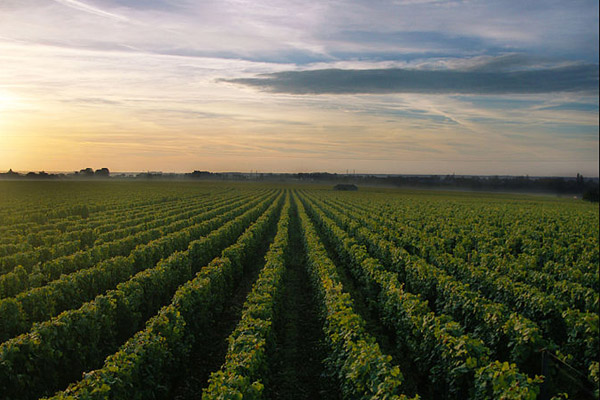
Question: What was the unique significant occurrence during the 2017 growing season in the Bordeaux vineyards?
Answer: The vintage will be remembered for those late frosts on April 27 & 28 which severely damaged some of the Bordeaux vineyards mainly on the cooler terroirs but often resulting in lower yields for 2017.
Answer: A variety used to make white wine with a German origin but grown successfully now elsewhere including Vancouver Island and some Gulf Islands in BC. It is a cross between Muller-Thurgau & Siegerrebe (itself a cross between Madeleine Angevin & Gewurztraminer).
Were you a wine drinker back in the 1970s or 1980s? If so, then you must know what happened every year on the third Thursday of November. Whether one lived in New York City, London, Paris, or Tokyo, that date on the calendar marked the arrival of the latest vintage of Beaujolais Nouveau—also known as Beaujolais Nouveau day—one of the hottest trends in the history of wine and an act of pure marketing genius.
The concept was simple: while other regions across France transferred their annual harvest to casks for months of aging, the vineyards of Beaujolais (located in Burgundy although its climate and geology differs from other areas in the region) could deliver their vin de l’année to the consumer in less than ninety days. From a late summer harvest to the dinner table just in time for the holidays, Beaujolais Nouveau, a fresh light-bodied red wine made from Gamay grapes and intended for immediate consumption became the first crack oenophiles got of that year’s vintage. But unlike the wines from Bordeaux or the Napa Valley, tasting Beaujolais Nouveau became an event like no other!
Beginning in the early 1970s, vintner Georges Duboeuf spearheaded a PR blitz to promote the region and its unique sales pitch. At first, it became a race to Paris as trucks and vans frantically headed out just after midnight on November 15—the fist day they could legally sell the wine—to the various cafes and restaurants. With signs reading “Le Beaujolais Nouveau est arrivé,” competing establishments fought tooth and nail in order to be the first to offer the newest Beaujolais to their customers. As the phenomenon quickly spread to Great Britain and later to North America and Asia, in 1988, Nouveau represented approximately 60% of all the wines produced in the region.
At Kennedy Airport in New York, models and press agents eagerly watched as the first cases arrived from Paris. By the 1980s, it was estimated that nine million bottles were shipped to over a dozen countries in a period of 4 to 5 days making it a logistical nightmare for some. And in order to capitalize on a growing international market, the rules were changed from a start date of November 15th to the third Thursday of that month. Suddenly, Beaujolais Nouveau day became the unofficial kickoff the holiday season where in the United States, this frantically vinified purple-pinkish wine was promoted as the perfect pairing for turkey on Thanksgiving.
For vintners, it was a financial boom. While other wineries would have to wait at least a year for the profits to trickle in, the Beaujolais could sell up to half the year’s crop within weeks of the annual harvest, getting paid immediately for their efforts. It was a gigantic leap from previous decades where the poor and remote region often suffered as its neighbors prospered. In fact, had it not been for its close proximity to Lyon, a city that eventually became a hotbed for gastronomic excellence, few Parisians, let alone millions across the world, may have never even tasted Beaujolais Nouveau.
Unfortunately, what goes up must eventually come down. Although there were plenty of fans, many purists scoffed at the trend, considering it heresy to drink something that had just come off the tarmac. And as the 1990s rolled on, the whole spectacle began to wear thin as Beaujolais Nouveau, described as a happy wine was considered by many to be overhyped. While some still celebrate its arrival each year, it is a shadow of its former glory. However, there is no denying the important role that Nouveau played in opening many new eyes to the wonders of drinking wine in the 70s and 80s. Making it an extravaganza that spread like wildfire across the globe, allowing individuals to partake in a history-making event is something that seems to be sorely lacking throughout the world of wine in the current era.
Sources:
Chapuis, Claude. Sustainable Viticulture: The Vines and Wines of Burgundy. Boca Raton: CRC Press, 2017.
Clarke, Oz. Oz Clarke’s New Wine Atlas: Wines and Wine Regions of the World. Boston: Houghton Mifflin Harcourt, 2002.
Harding, Julia. The Oxford Companion to Wine. Oxford: Oxford University Press, 2015.
Martin, Scott C. The SAGE Encyclopedia of Alcohol: Social, Cultural and Historical Perspectives. Thousand Oaks: SAGE Publications, 2014.
Question: Lots of Rosé wine out there to try but some are called in the Provence style? What does that mean?
Answer: Generally refers to those Rosés made in a style of those wines coming from Provence in southern France. That is they have quite a light pink colour with a drier crisp refreshing taste that exude lovely drinkable charm. In Provence the grapes used include Grenache, Cinsault, Syrah, Mouvedre, Carignan and Tibouren but Rosés from elsewhere often use their own local grape varieties. Enjoy!
A report released by the International Organisation of Vine and Wine (OIV) this month sheds new light on what Mother Nature did across Europe last year as a brutal combination of spring frosts, summer heat, droughts, and various storms resulting in a record 60-year low in total output as global wine production fell to 250 mhl (millions of hectoliters). This represents a drop of approximately 23.6 mhl from 2016.
The countries hit the hardest were Spain, Italy and France; Europe’s big three producers comprising over half of the global wine trade. During the past year, those nations experienced a drop of 20%, 17% and 19% respectively as extreme weather took its toll. This should come as no surprise to those following current events in the world of wine as countless news reports have chronicled the problems vintners experienced last year. According to one high-end wine merchant interviewed by The Guardian, “the total acreage of Bordeaux – has been ravaged … like the overall harvest across Italy and Spain, [the Bordeaux harvest] has been decimated but it tends to be more flat lying, higher volume production land that has been hit.” Furthermore, last week’s blog entry about the situation in Spain highlighted that country’s need to focus more on cheaper bulk wine in order to compensate for this loss.
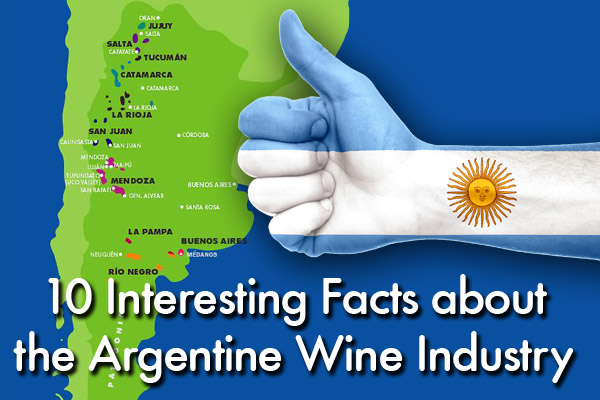
Looking deeper into the report, we see that it is a tale of contrasting continents. While Europe was rocked, the United States remained relatively stable, experiencing only a one percent drop in production. And below the equator, Argentina has reason to celebrate as it rebounded from a disastrous harvest in 2016 stemming from El Niño as production levels spiked by 25%. Likewise, other countries in the southern hemisphere such as Australia and South Africa saw increases as well.
Moving from supply to demand, worldwide consumption levels saw a slight gain at 243 mhl, up 1.8 mhl from 2016. The globe’s biggest consumer remains the United States which represents roughly 13% of all wine sales. But an up and comer is China, which purchased 17.9 mhl, a 3.5% jump from last year, showing a faster rate of growth than its American competitor. In comparison, France, Italy and Germany –Europe’s three biggest consumers—all remained relatively static at -0.4%, 0.9% and 0.3% respectively.
One interesting fact from the OIV’s report pertains to sparkling wine, which saw the biggest growth in both volume at 11.2% and total value at 8.9%, making bubbly nearly a fifth of the global market. Additionally, despite countries like Spain turning to cheap wine in these troubled times, bulk exports actually fell sharply.
With demand up and supply down, the logical outcome from all these figures is a price increase that consumers are likely see in the near future. With erratic weather conditions now becoming par for the course, the European Academies Science Advisory Council released a document stating: “[The EASAC found] evidence for overall increases in the frequency and economic costs of extreme events, which emphasized the importance of society adapting its future planning to allow for these new extremes.” Might be time to stock up.