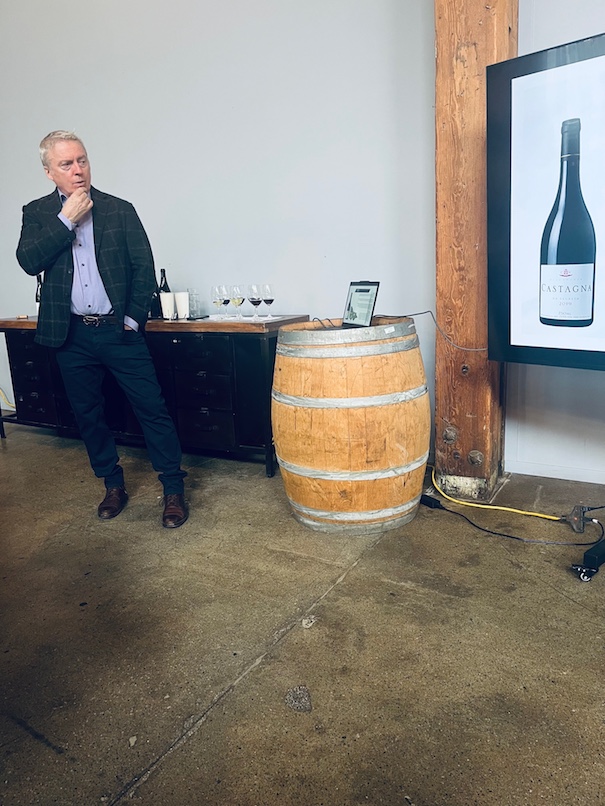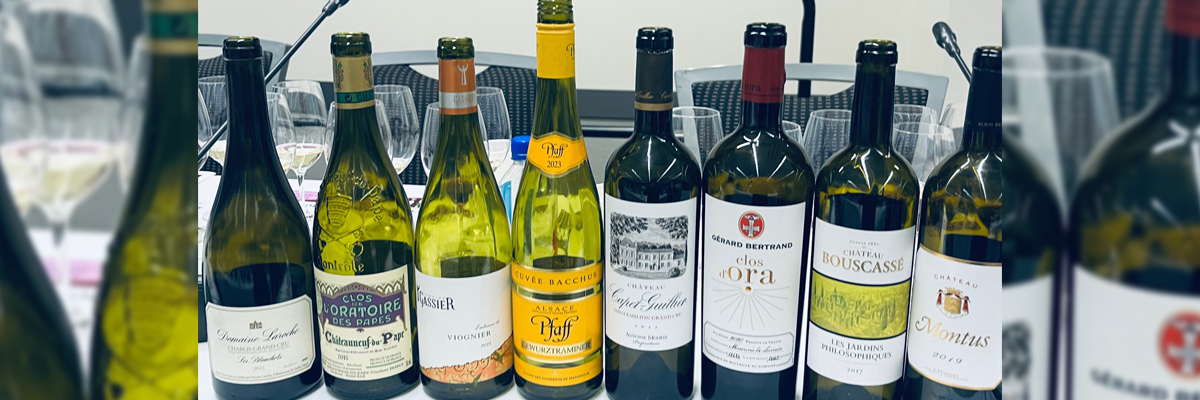
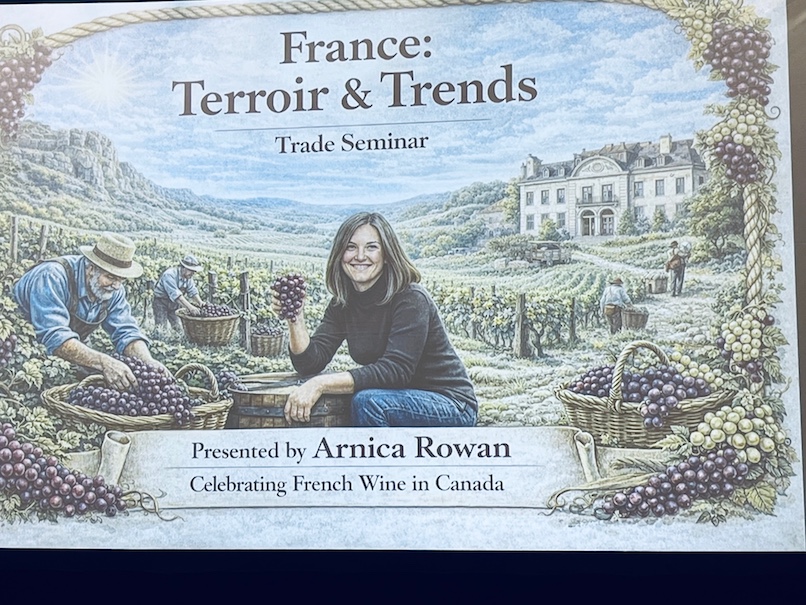
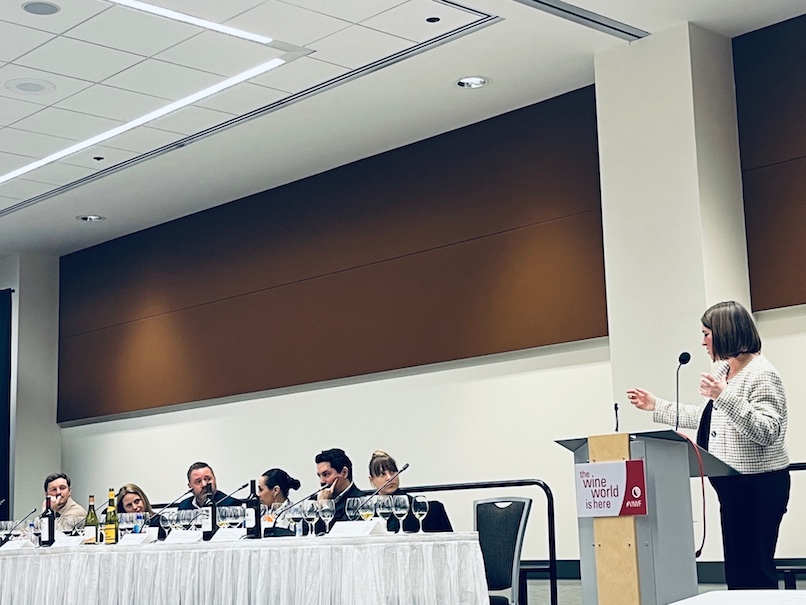
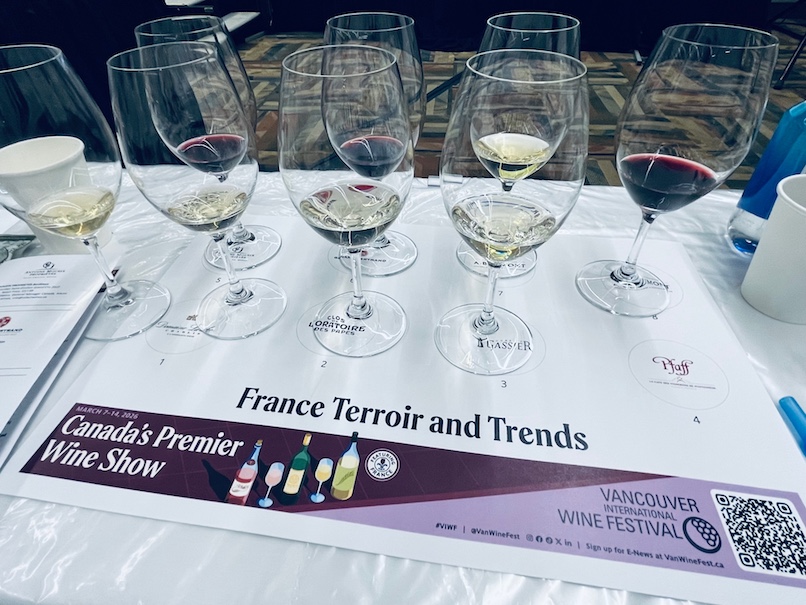
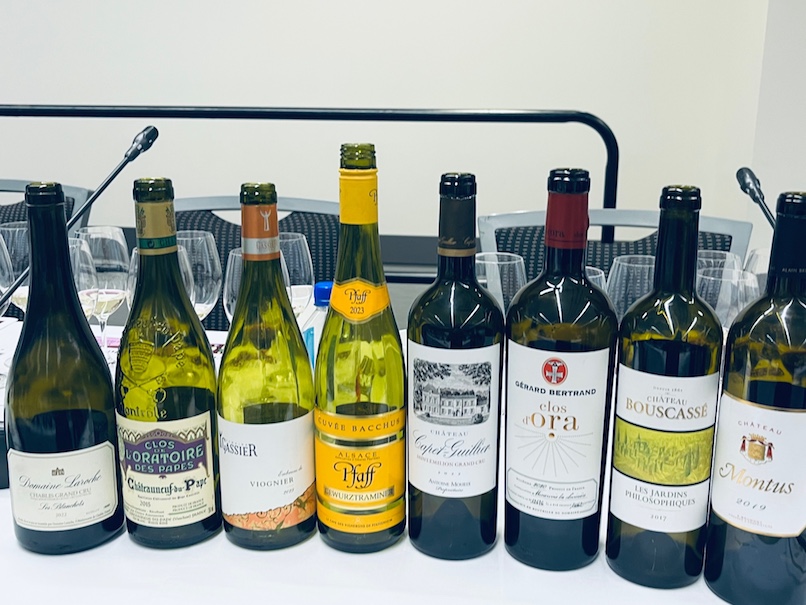
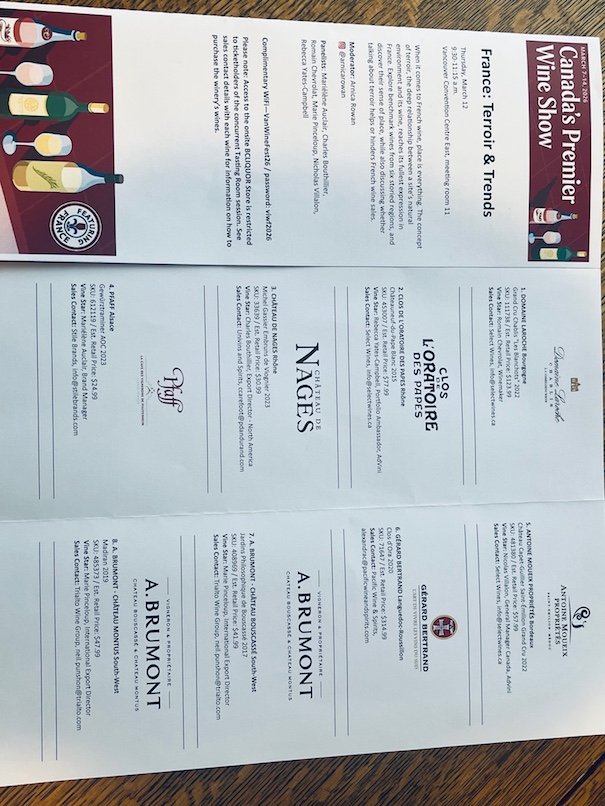
The 47th annual @VANWINEFEST Vancouver International Wine Festival #VIWF has just concluded giving us another educational and insightful week on wine, food and hospitality. This year’s focus was on France, featuring key wines and seminars. The opening Trade event “France: Terroir & Trends,” was held early at 9:30 am on Thursday March 12. Eight French wines from six regions were tasted to discover their terroir or “sense of place,” on a panel well moderated by Arnica Rowan @arnicarowan with knowledgeable comments from winery principals. The presentation was inspired by Andrew Jefford for his ideas plus illustrations created using generative AI (ChatGPT) with a reference to TerroirWine.ca. The organizers do a terrific job assisting you with the helpful detailed program outline set out below. Some comments from your scribe:
1. 2022 CHABLIS LES BLANCHOTS GRAND CRU DOMAINE LAROCHE: What an amazing start with a Grand Cru Chablis! Big fan of Laroche Chablis since the seventies due to the pioneering quality work by Michel Laroche & his wife, Gwenael (now at Le Domaine d’Henri). Domaine Laroche owns over 1/3 of the vineyards in their flagship Blanchots, where the special white clay soil layer over Kimmeridgian limestone provides a lighter more delicate style. They also use the best grape lots from this Grand Cru to make the exciting “La Reserve de l’Obedience,” which has more complex depth and finesse than the regular Blanchots. The 2022 harvest began earlier, at the end of August, yielding a large crop of varying ripeness. Our wine is forwardly light, young, bright, and round, showing lovely Chablis character but it is overall rather soft and needs better structure with more acidity for long aging. I prefer the vibrancy and richer character of their Grand Cru Les Bougerots & Les Clos in 2022 for cellaring.
2. 2015 CHATEAUNEUF-DU-PAPE BLANC CLOS DE L’ORATOIRE DES PAPES: This winery admirably uses organic methods encouraging composting to invite insects, employing cover crops, and implementing active water preservation measures. This ten-year-old Rhône white, sourced from two parcels on limestone soil, blends 30% each of Clairette, Grenache Blanc, and Roussanne with 10% Bourboulenc. It shows an aged yellow-gold color and deep, ripe, sweeter honey peach perfumes. It is uniquely full, rich, and powerful, currently on a wonderful drinking plateau. Nice maturity. Such a dramatic contrast to the Chablis.
3. 2023 EMBUNS DE VIOGNIER DOMAINE GASSIER: This 100% Viognier, organically grown by keen producers Tina & Michel Gassier for Chateau de Nages in the Languedoc as Vin de Pays du Gard has the variety’s typically distinctive spicy apricot fullness. So lush at 13% ABV for a bargain price!
4. 2023 GEWURZTRAMINER CUVEE BACCHUS PFAFF: It combines two soil types in Alsace—limestone and chalky clay—to grow Gewürztraminer grapes, producing a very aromatic, expressive, spicy, floral wine with notes of rose and lychee that is true to the variety. Off-dry at 13.5% ABV with a touch of ginger is so pleasant.
5. 2022 CHATEAU CAPET-GUILLIERE ST. EMILION: Four hectares of deep, compact clay-limestone soils yield a balanced blend of 82% Merlot & 18% Cabernet Franc, offering a fruity Right Bank expression of Grand Cru Saint-Émilion south in Saint-Hippolyte. The estate has used biodynamic practices since 2021. Antoine Moueix Proprietes uses four weeks of maceration, malolactic fermentation in barrique, and aging in 50% new French oak for 12-16 months to produce 18,000 bottles of this floral, plush, easy-drinking red. Another example of improving smaller, valuable properties emerging around Bordeaux.
6. 2020 CLOS D’ORA MINERVOIS LA LIVINIERE GÉRARD BERTRAND: This expensive premium red wine from Languedoc-Roussillon is an organic biodynamic blend of Syrah, Grenache, Mourvèdre, and Carignan, sourced from nine stone walled hectares on limestone marl soils with horse-tended rows. Fermented in concrete and aged one year in French oak this complex wine at a powerful 15.5% ABV features intense blackberries, dark plums & cherries, dominated by an elegant touch of spicy garrigue. This is truly amazing wine from a remarkable producer, Gerard Bertrand, with numbered bottles; it needs further aging to best show its rich depth of fruit quality. An innovator as “L’Art De Vivre Les Vins Du Sud” for sure.
7. 2017 LES JARDINS PHILOSOPHIQUES BLANC CHATEAU BOUCASSE: Two unusual wines from South-West France by Vigneron & Proprietaire Alain Brumont conclude this interesting wine tasting. This white wine is a blend of 70% lesser-known Petit Courbu and 30% Petit Manseng; it ferments in tanks with long lees aging but sees no wood. At 13.5% ABV, it shows very ripe, yet dry, exotic, smooth, and honeyed fruit. Perhaps try pairing with foie gras. Discovered by CostcoUSA and sold for a steal at $13 a bottle, it is still relatively inexpensive in Canada, selling in the low forty-dollar range. Unique.
8. 2019 CHATEAU MONTUS MADIRAN: This protected appellation produces this powerful blend of 60% Tannat with 20% each of Cabernet Sauvignon & Cabernet Franc at 13.5% ABV. Old vines of Bouscasse in Madiran, Gascony, in southwest France. A long 30–45 day maceration on skins and three years in wood results in a grippy, tannic red wine. CostcoUSA also discovered this wine and sold it for a crazy low price of $15 a bottle. Even though the price in Canada is now $48, it is still a low price for a big, full-bodied, distinct terroir Madiran. Good matching for BBQ. This seminar clearly illustrated France’s diverse wines. Thanks.
You might also like:
 |
 |
 |