Question: My wife and I are from NY and traveling to Greece for the first time (ages 48 and 60). We really know nothing about Greek wine and will be touring wineries on Crete and Santorini. Any advice?
Answer: You should have an interesting wine experience in Greece. Go to www.AllAboutGreekWine.com for tips and New York outlets. The wines have improved by leaps and bounds since my last visit. There is a good focus on some unique grape varieties you really must try. I am a big fan of the white Assyrtiko grown on the special volcanic soils of Santorini. Check out the website www.winesfromsantorini.com. Crete is making wonderful progress with a detailed article on “compelling wines of Crete” at www.intowine.com/compelling-wines-crete. Helpful list of wineries at www.winesofcrete.gr. Enjoy your trip!
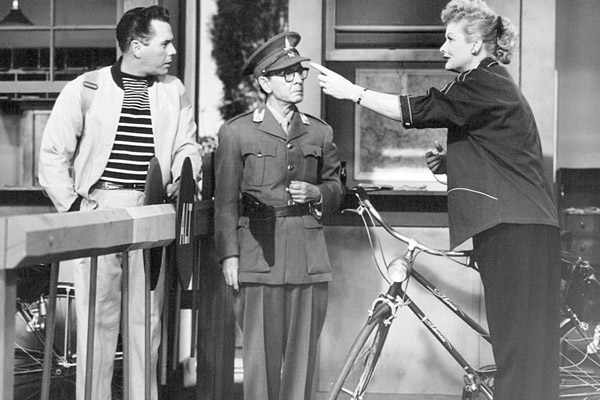
“Did you ever see the I Love Lucy episode where Lucy stomps on the grapes?”
It’s been nearly sixty years since the episode first aired on CBS, and still to this day, people are laughing about it. The hysterical scene where Lucy does battle against a seasoned Italian grape stomper inside a vat has become so memorable that whenever you discuss the winemaking process, somebody eventually makes reference to it. But even more fascinating is the fact that this iconic television moment wasn’t the result of any brilliant script writing or carefully planned out choreography. What took place that day was instead a delightful blend of impromptu method acting mixed with the comedic genius of Lucille Ball.
Airing on the night of April 16, 1956, “Lucy’s Italian Movie” was part of a string of fifth-season episodes where the Ricardo’s and the Mertz’s trek across Europe from London to Paris to Monte Carlo. It was a formula that proved popular in the ratings with many middle-class viewers who were experiencing an unprecedented wave of post-war prosperity which allowed them to travel abroad for the first time in their lives.
Following their stay in Florence, the two couples head south to Rome where Lucy is discovered by an Italian movie producer who wants to cast her as an American tourist in his next motion picture titled Bitter Grapes. Mistakenly thinking her role is that of a grape stomper, she decides to learn the ropes by rolling up her pant legs at a vineyard in Turo. But while in the vat with another stomper, a back and forth brawl ensues causing the audience to laugh uncontrollably throughout the entire ordeal.
Looking back, it’s almost hard to believe that this riotous scene that has stayed in our collective memories for over five decades was never in the original script. According to writer and producer Jess Oppenheimer, “I can’t remember exactly when or how it was added. It might have been that they called us down to the set because they felt it needed more … or they might have just improvised on their own.”
In preparation for this ad hoc moment, real grapes were brought in from a local California vineyard. Remembering what it was like to be in the vat for the first time filled with fruit, Ball described it as “stepping on eyeballs. We started stomping on the grapes, and I made a dance out of it, and then I slipped.” And for the foil, Lucy’s husband/producer Desi Arnaz found an actual grape stomper when most wineries were mechanized. Teresa Tirelli had never acted before and spoke very little English, requiring a translator to be on set to help guide her through the scene. However, with much of the instructions being lost in translation, what transpired between the two women, unknown to viewers at the time was mostly a legitimate fight.
According to author Bart Andrews, Ball had wanted the scene to look as real as possible—and that’s exactly what she got:
“Since we hadn’t worked with the grapes in the vat during rehearsals, I had no idea what I was in store for. Once the fight started, the lady was bent on drowning me. At one point, she literally held my head under water, and I had to fight to get my breath back. A lot of that was edited out of the final print. Looking back, of course, I’m glad it happened that way because the scene was so good.”
When Ball accidentally hit Tirelli during one take, she responded back with full force as a method actor. “Down I went, with Teresa on top of me … She just held me down, hitting me. I thought she was trying to kill me. I had grapes up my nose, up my ears.”
Airing a month after filming, the episode became so famous that many viewers who watched it thought that was how wine was made in the present despite the industry’s numerous technological advances by that time. “They [I Love Lucy] set back the vision of the Italian wine industry 100 years,” wrote author Thomas Pellechia in describing the impact of that one particular episode. And in 2015, the fact that people still talk about it it is a testament to the comedic genius of Lucille Ball who risked her well-being that day in order to create some television magic.
Sources:
Adir, Karen. The Great Clowns of American Television. Jefferson: McFarland & Company, Inc., 1988.
Kanfer, Stefan. Ball of Fire: The Tumultuous Life and Comic Art of Lucille Ball. New York: Knopf Doubleday Publishing Group, 2007.
Oppenheimer, Jess and Oppenheimer, Gregg. Laughs, Luck– and Lucy: How I Came to Create the Most Popular Sitcom of All Time. Syracuse: Syracuse University Press, 1996.
Pellechia, Thomas. The Complete Idiot’s Guide to Starting and Running a Winery. New York: Penguin Group, 2008.
Scott, Michelle. Corked by Cabernet. New York: Penguin Group, 2009.
Question: Travelling to London and the United Kingdom next month and would like your tip Sid on a local wine I should look for during my visit.
Answer: I would recommend looking for some of those Product of England much improved Sparkling wines. I have a soft spot for Nyetimber (www.nyetimber.com) as I know their winemakers Cherie Spriggs & Brad Greatrix who studied at the Wine Research Centre of the University of British Columbia in Vancouver before joining them in 2007. 100% Estate grown Chardonnay, Pinot Noir, and Pinot Meunier from vineyards in Sussex & Hampshire result in complex fresh vintage bubbles as Classic Cuvee, Blanc de Blancs, Rose, Demi-Sec, and single vineyard Tillington – all worth trying! I admire their brave decision not to produce any English fizz at all in 2012 because they decided the quality of their fruit was not good enough. Information on other English wine producers to explore on your visit can be found on their website.
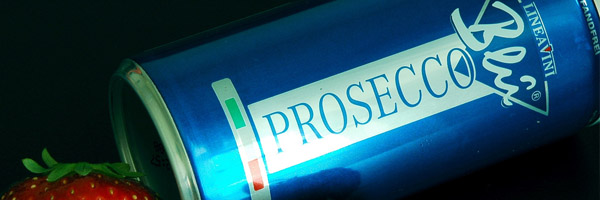
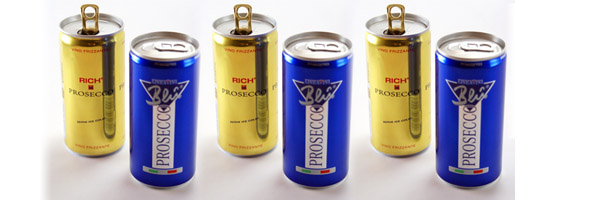
You might have noticed over the past couple of years that more and more people are drinking bubbly Prosecco! Whether as an aperitif or part of a Bellini cocktail, this crisp, refreshing and cost-friendly sparkling wine has taken the world by storm, outselling Champagne for the first time in 2013 with 307 million bottles! In fact, Americans imported approximately 2.3 million cases in one year alone–up dramatically from just 500 cases less than a few decades ago.
So for this week’s entry, let’s have a closer look at this delightful Italian wine:
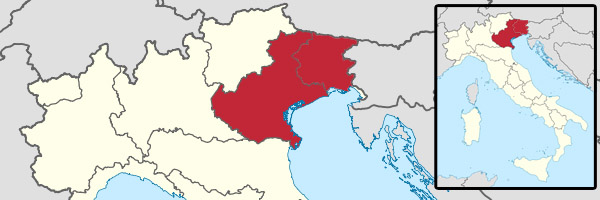
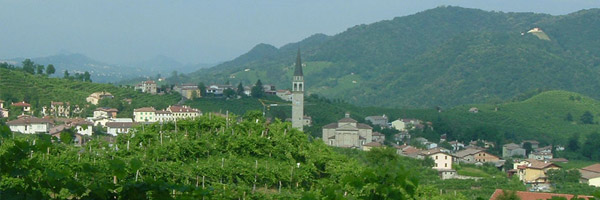
1. DOC & DOCG Prosecco is produced in the northeastern regions of Friuli-Venezia Giulia & Veneto.
blank
2. The two towns known for Prosecco – Valdobbiadene & Conegliano – are both sheltered by the Alps, making the area near and between them ideal for growing Prosecco grapes.
3. Unlike Champagne’s secondary fermentation which takes place in the bottle, Prosecco is fermented in stainless steel tanks, which helps to make it more affordable.
8. This worried Italian vintners, who were very concerned that the Prosecco brand was being exploited just as it was starting to take off internationally.
9. So in 2009, the Italian government declared that in order for a wine to be labelled Prosecco, it would have to be produced in a designated region. Because of this decision, the name of the grape was changed from Prosecco to Glera.
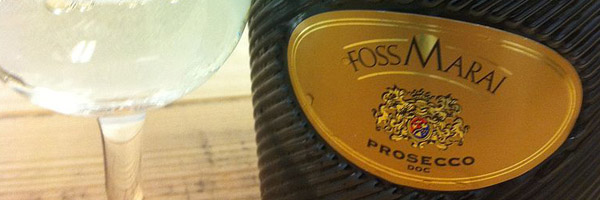
10. When buying a bottle, check the label closely. The absolute best Prosecco is made near the hills between Conegliano and Valdobbiadene and will be labelled DOCG (denominazione di origine garantita). Bottles with a DOC on the label mean that they were probably made on the surrounding flats.
Sources:
Cortese, Amy (2008, Dec 26). Italian Makers of Prosecco Seek Recognition. New York Times. Retrieved from http://www.nytimes.com
Ewing-Mulligan, Mary and McCarthy, Ed. Italian Wine for Dummies. Hoboken: Wiley Publishing Inc., 2011.
Faulkner, Jane (2012, Oct 1). Why prosecco is charming the world. Sydney Morning Herald. Retrieved from http://www.smh.com.au
Kapadia, Milanee (2014, Nov 24). Prosecco tops Champagne in bubbly sales. Yahoo Finance. Retrieved from http://finance.yahoo.com
Kinssies, Richard (2002, Jul 9). On Wine: Proseccos sparkle on their own terms. Seattle Post-Intelligencer. Retrieved from http://seattlepi.com
McCoy, Elin (2015, Feb 25). How to Find Prosecco That Isn’t Terrible. Bloomberg Business. Retrieved from http://www.bloomberg.com
Nowak, Barabara and Wichman, Beverly. The Everything Wine Book: From Chardonnay to Zinfandel, All You Need to Make the Perfect Choice. Avon: Adams Media, 2005.
Question: Thanks Sid for the useful information on French wine appellation “protegee”. Would you kindly please update as well on Italian wine classifications?
Answer: The latest stats at the end of 2014 shows 523 quality wines recognized as follows:
DOCG – 73 with Controlled Designation of Origin Guaranteed These are the highest produced in specific geographic wine regions already classified under DOC for at least 5 years.
DOC – 332 with Controlled Designation of Origin. This certifies that the wine has been produced from grapes harvested from a specific delimited wine area in accordance with specific production protocol.
IGT – 118 for wines with Protected Geographical Indication. These are for quality table wines from wider wine regions with a less restrictive protocol. Note it is also interesting that Italy presently also has 269 food products with recognition:
DOP (PDO in English) – 161 Protected Designation of Origin. Produced, processed and prepared in a given geographical area using recognised
know-how.
IGP (PGI in English) – 106 Protected Geographical Indication. Closely linked to the geographical area with at least one of the stages of production, processing or preparation taking place there.
STG (TSG in English) – 2 Traditional Specialities Guarantee. Traditional character. There is the European brand of the green leaf BIO symbol for Organic agro-food products for foods and since 2010 for wines.






 Loading ...