menu
Member Sign In
  • IWFS Homepage
  • Blog Home
  • Forums Home
  • Global Forum
  • Contact Us
Close
  • IWFS Homepage
  • Blog Home
  • Forums Home
  • Global Forum
  • Contact Us
    Member Sign In
  • Blog Home
  • Forum Home
  • Global Forum

Follow Us

Recent Posts

  • TOP DROP WINE FESTIVAL FEATURING TERROIR + CRAFT IS A SUCCESS
  • Ask Sid: What is Muschelkalk?
  • 2026 VANCOUVER MAGAZINE RESTAURANT AWARDS
  • Ask Sid: How is vintage 2025 Bordeaux?
  • CHATEAU HAUT-BAILLY VERTICAL CONFIRMS OUTSTANDING BALANCED WINES WITH ELEGANT PRECISION!

Archives

  • May 2026
  • April 2026
  • March 2026
  • February 2026
  • January 2026
  • December 2025
  • November 2025
  • October 2025
  • September 2025
  • August 2025
  • July 2025
  • June 2025
  • May 2025
  • April 2025
  • March 2025
  • February 2025
  • January 2025
  • December 2024
  • November 2024
  • October 2024
  • September 2024
  • August 2024
  • July 2024
  • June 2024
  • May 2024
  • April 2024
  • March 2024
  • February 2024
  • January 2024
  • December 2023
  • November 2023
  • October 2023
  • September 2023
  • August 2023
  • July 2023
  • June 2023
  • May 2023
  • April 2023
  • March 2023
  • February 2023
  • January 2023
  • December 2022
  • November 2022
  • October 2022
  • September 2022
  • August 2022
  • July 2022
  • June 2022
  • May 2022
  • April 2022
  • March 2022
  • February 2022
  • January 2022
  • December 2021
  • November 2021
  • October 2021
  • September 2021
  • August 2021
  • July 2021
  • June 2021
  • May 2021
  • April 2021
  • March 2021
  • February 2021
  • January 2021
  • December 2020
  • November 2020
  • October 2020
  • September 2020
  • August 2020
  • July 2020
  • June 2020
  • May 2020
  • April 2020
  • March 2020
  • February 2020
  • January 2020
  • December 2019
  • November 2019
  • October 2019
  • September 2019
  • August 2019
  • July 2019
  • June 2019
  • May 2019
  • April 2019
  • March 2019
  • February 2019
  • January 2019
  • December 2018
  • November 2018
  • October 2018
  • September 2018
  • August 2018
  • July 2018
  • June 2018
  • May 2018
  • April 2018
  • March 2018
  • February 2018
  • January 2018
  • December 2017
  • November 2017
  • October 2017
  • September 2017
  • August 2017
  • July 2017
  • June 2017
  • May 2017
  • April 2017
  • March 2017
  • February 2017
  • January 2017
  • December 2016
  • November 2016
  • October 2016
  • September 2016
  • August 2016
  • July 2016
  • June 2016
  • May 2016
  • April 2016
  • March 2016
  • February 2016
  • January 2016
  • December 2015
  • November 2015
  • October 2015
  • September 2015
  • August 2015
  • July 2015
  • June 2015
  • May 2015
  • April 2015
  • March 2015
  • February 2015
  • January 2015
  • December 2014
  • November 2014
  • October 2014
  • September 2014
  • August 2014
  • July 2014
  • June 2014
  • May 2014
  • April 2014
  • March 2014
  • February 2014
  • January 2014
  • December 2013
  • November 2013
  • October 2013
  • September 2013
  • August 2013
  • July 2013
  • June 2013

Meta

  • Log in
  • Entries feed
  • Comments feed
  • WordPress.org

Author Archive

Older Entries
Newer Entries

Ask Sid: Removing Red Wine Stains in Decanter & Glasses

December 9th, 2015 by Joseph Temple
Ask your question here The International Wine & Food Society

Ask Sid: Removing Red Wine Stains in Decanter & Glasses

Question: What should I do to remove red wine stains in the bottom of my decanters and some of my wine glasses?

Answer: First try a prolonged soak in very hot water with some vinegar, salt, baking soda, denture cleaner or mild powdered detergent. Finish the cleaning with a soft brush. Personally I use and am very happy with the results from Stem Shine an aroma free glass washing detergent that contains a glassware corrosion inhibitor. It is distributed by The Wine Enthusiast Companies in Elmsford New York and can be ordered on line at www.wineenthusiast.com. Works well on fine crystal too and the rapid evaporation is supposed to eliminate streaking. Good luck.


You might also like:

10 interesting facts about the wines from Long Island

December 4th, 2015 by Joseph Temple

10 interesting facts about the wines from Long Island, New York
By Joseph Temple

It’s hard to believe that the flourishing vineyards you see today across Suffolk and Nassau counties were once used for growing simple spuds less than fifty years ago. But in the early 1970s, a watershed moment occurred when academics at Cornell University thought the cool climate influenced by the Atlantic Ocean made Long Island the perfect spot for viticulture in lower New York State. Starting with a few visionary trailblazers who decided to put that theory into practice, the island’s wine industry has grown enormously to over 4000 vineyard acres and 56 wine producers by 2015. Benefiting from a supportive state government while being part of the largest consumer market in North America, Long Island has become more than just a picturesque getaway of palatial summer homes. With three recognized AVA’s, it is now an integral part—along with the Finger Lakes and the Hudson Valley—of New York’s growing wine business. And below are ten facts to get you up to speed on the wines from Long Island.


The first Long Island vineyard was planted in 1973 by Alex and Louisa Hargrave
http://www.cgpgrey.com [CC BY 2.0], via Wikimedia Commons

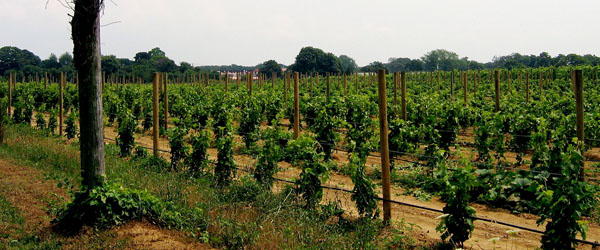
1. Long Island’s first vineyard was started by Alex and Louisa Hargrave in 1973 when they purchased over sixty acres of land in Cutchogue, New York.  Cabernet Sauvignon, Pinot Noir and Sauvignon Blanc were the first grapes to be planted.
blank
blank

Most of Long Island's vineyards are located on the North Fork

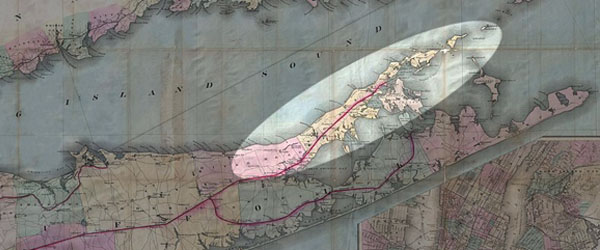
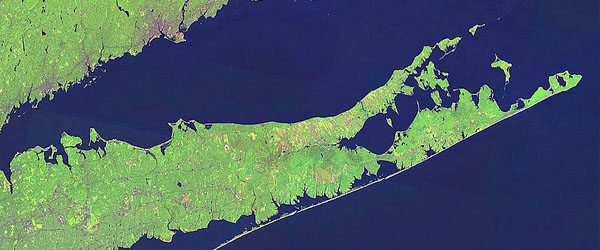
2. The vast majority of Long Island’s vineyards are located on the North Fork of Suffolk County – a thirty-mile peninsula on the island’s east end.
blank
blank

Long Island vineyards benefit from a mdoerate climate
http://www.cgpgrey.com [CC BY 2.0], via Wikimedia Commons

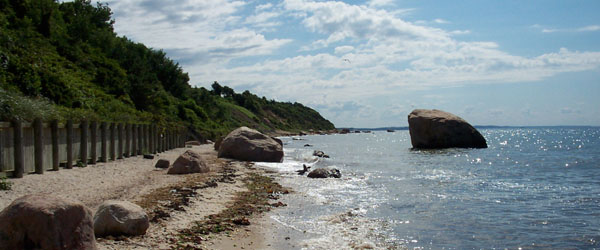
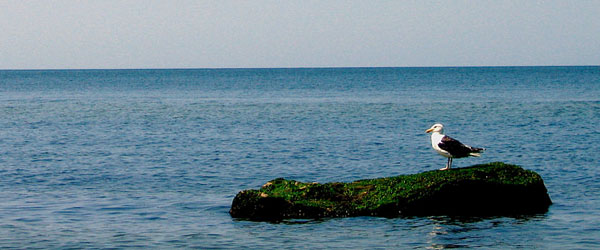
3. On the North Fork, the waters have a moderating effect, cooling the hot summer temperatures while curbing the cold winters of the American northeast.
blank
blank

Long Island is a great place for Merlot and Cabernet Sauvignon
http://www.cgpgrey.com [CC BY 2.0], via Wikimedia Commons

4. The ripening period on the North Fork is two to three weeks longer than it is in the Hamptons, which can get spring frosts as late as May and where the prevailing winds are cooler.
blank
blank

Long Island is known for Merlot wine grapes
By Dianne Patrizzi [CC BY 2.0], via Wikimedia Commons

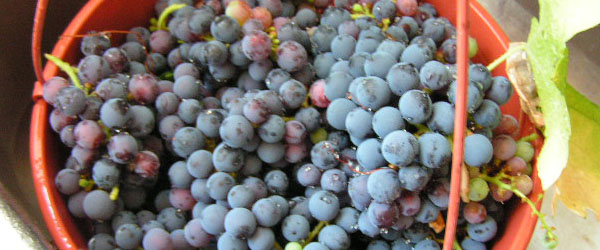
5. Because approximately 2/3rds of New York wines come from the Finger Lakes, the state is often thought of as a white wine region.  However, Long Island is known largely for its red varieties such as Cabernet Sauvignon and Merlot – which can be full of spice, black cherry and blueberry aromas.
blank
blank

Long Island comparison to Bordeaux

6. Due to island’s maritime microclimate and the red wine grapes it’s most known for, local vintners see many similarities between Long Island and Bordeaux.
blank
blank

Expensive to own vineyard land in Long Island

7. With its close proximity to Manhattan, Long Island can be one of the most expensive places to own a winery in North America.
blank
blank

Long Island wine sales
By Mark Jenney (Own work) [CC BY-SA 4.0], via Wikimedia Commons

8. A sizable chunk of Long Island wine sales come from tourists visiting the North and South Forks during the summer season.
blank
blank

Birds attack Long Island vineyards
http://www.cgpgrey.com [CC BY 2.0], via Wikimedia Commons

9. A big threat to Long Island’s wine industry comes from birds. Being on a migratory route for numerous species, they can destroy a vineyard in a matter of days, requiring winemakers to net their vines.
blank
blank

Long Island wine threatened by hurricanes

10. Another threat comes from storms and hurricanes that have caused severe damage throughout the American northeast.


The International Wine & Food Society is proud to have a strong presence across the state of New York with branches in New York City, Long Island and Buffalo. Please click on any of the links to visit their respective websites.

Sources:

Cattell, Hudson. Wines of Eastern North America: From Prohibition to the Present—A History. Ithaca: Cornell University Press, 2013.
Clarke, Oz & Spurrier, Steven. Clarke and Spurrier’s Fine Wine Guide. Boston: Houghton Mifflin Harcourt, 2001.
Harding, Julia. The Oxford Companion to Wine. Oxford: Oxford University Press, 2015.
McCarthy, Ed & Ewing-Mulligan, Mary. Wine For Dummies. West Sussex: Wiley, 2011.

Pinney, Thomas. A History of Wine in America: From Prohibition to the Present, Volume 2. Berkeley: University of California Press, 2005.
Long Island Wine Region Statistics. The Long Island Wine Council. LIWine.com. Retrieved from http://www.liwine.com.


You might also like:

What's your favorite New York wine region?

View Results

Loading ... Loading ...

Ask Sid: Northern Rhone style white grape varieties?

December 2nd, 2015 by Joseph Temple
Ask your question here The International Wine & Food Society

Ask Sid: Northern Rhone style white grape varieties

Question: What white wine variety in the Northern Rhone style do you prefer?

Answer: Traditionally the viognier grape has been the star in Condrieu showing highly perfumed peach and apricot styling & the even smaller appellation of Chateau Grillet delivering more chardonnay-like fruit but really a unique terroir. It is growing well for Chapoutier in Domaine des Granges de Mirabel in the southern Ardeche and in some regions of the New World. I like the marsanne variety showing rich oily deep textures from old Victorian vines planted by Tahbilk in Australia and the more delicate Road 13 Vineyards one grown in Cawston BC. Rousanne is another variety successful in California with more acidity and aromatics that often is even better when blended with marsanne and viognier. Okanagan Valley is having wonderful success with this 3 grape aromatic blend led by among others Ava of Le Vieux Pin Winery & Afraid of the Dark by Moon Curser Vineyards.


You might also like:

What grape variety do you prefer?

View Results

Loading ... Loading ...

A look at 10 Ukrainian dishes

November 27th, 2015 by Joseph Temple

A look at 10 Ukrainian dishes

By Joseph Temple

With the temperature dropping and winter looming, are you looking for something tasty to keep you warm?  If so, you might want to have a look at some delightful dishes from our friends in Ukraine.  While many of us associate this Eastern European country with cabbage rolls and perogies, there is so much more to this nation’s proud culinary history.  So, have some bread with salt (representing hospitality and friendship) and try cooking some of these Ukrainian dishes that are richly steeped in tradition and culture.

Smachnoho!

Borscht
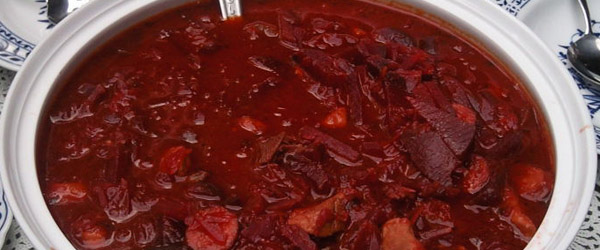
1. Borscht

No list of Ukrainian foods is complete without mentioning Borscht – a staple of every traditional kitchen.  Originally made from cow parsnip, this soup is extremely popular across Eastern Europe, made mostly of beets and rich meat stock.  However, during Christmas, it is served meatless with rye bread.
 

Deruny ukrainian dish
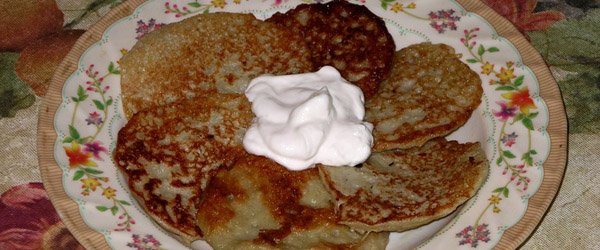
2. Deruny

Deruny are pancakes made of grated potatoes and onions.  Fried in oil until they’re golden brown, sour cream or apple sauce is usually served with this comforting dish.  The Ukrainian version is often thinner than what most Westerners are used to, but still quite filling and delicious.
 

Pyrizhky
Evilmonkey0013 at English Wikipedia [CC BY 3.0], via Wikimedia Commons

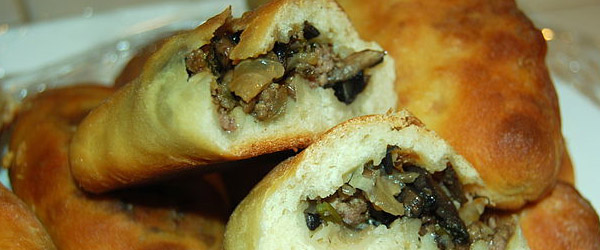
3. Pyrizhky

Sold in train stations and public squares across Ukraine, buns like pyrizhky are stuffed with meat, cabbage or potatoes and either baked or fried before serving.  Like other Ukrainian dishes, sour cream and dill is usually added to this delicious street food.
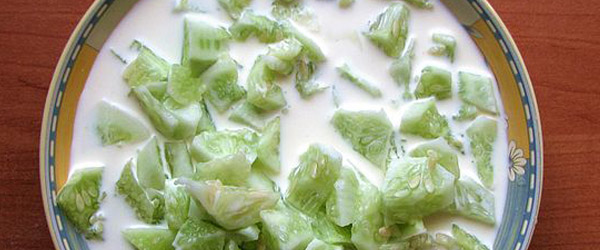
 

Mizeria
By Mariuszjbie (Own work) [CC BY-SA 3.0 or GFDL], via Wikimedia Commons

4. Mizeria

A simple salad consisting of cucumbers in a sour cream dill dressing, mizeria was first invented in Poland where cucumbers were introduced by Queen Bona Sforza.  Its literal translation is misery.  This peasant dish may have been named to reflect the hard times associated with the poverty of the depressed region.
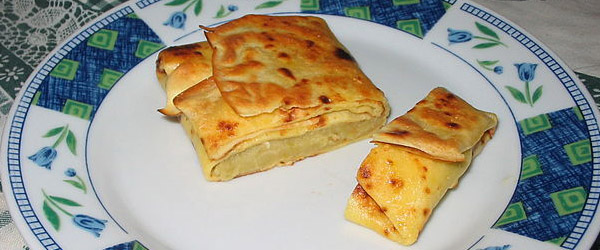
 

nalysnyky ukrainian food
Kagor at the Ukrainian language Wikipedia [GFDL or CC-BY-SA-3.0], via Wikimedia Commons

5. Nalysnyky

A thin crepe filled with meat, mushrooms or sauerkraut, many Ukrainians favor putting sweetened cottage cheese in their nalysnyky.  They also can be made into a thin, multi-layered cake using a savory filling or a simple sweet jam like plum butter for a special treat.

blank
blank
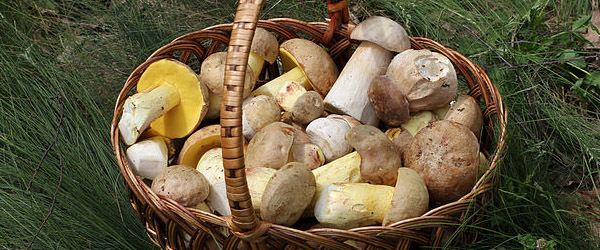
Ukrainian foraged mushrooms

6. Foraged Mushrooms

In Ukraine, mushroom picking is a national pastime with the country’s vast forests providing an excellent selection for those who love to forage.  Once dried (historically to last the winter), these mushrooms are used in countless dishes such as rich gravies, mouth-watering soups or in tiny perogies called yshka which are served with clear borscht on Christmas Eve.
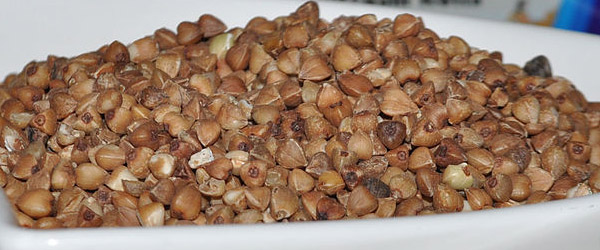
 

Kasha roasted buckwheat
By Candrichuk (Own work) [CC BY-SA 3.0], via Wikimedia Commons

7. Kasha

With potatoes and bread being a bedrock for the nation’s collective diet, it should come as no surprise that Ukrainians have been harvesting wheat from the same land for nearly 7,000 years.  Used in a variety of dishes, a popular grain known as Kasha (or buckwheat) has a number of different applications.  Whether as a meal topped with fried bacon, onions or gravy, it can also be used in cabbage rolls and in liver sausage called a kyshka.


Pickled herring ukrainian dish
By MOs810 (Own work) [CC BY-SA 4.0], via Wikimedia Commons

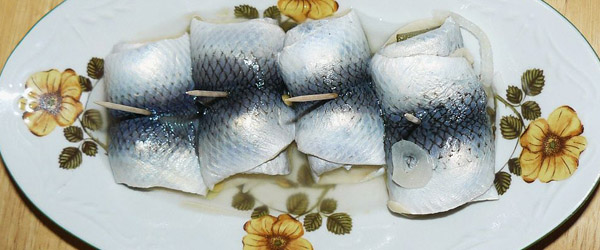
8. Pickled Herring

Often served with sour cream, sliced onions and rye bread, pickled herring works as an appetizer or as part of a salad mixed with potatoes, beets, pickles or chopped apples.  Also, since most Ukrainians strictly observe religious traditions, pickled herring is served on Christmas Eve as one of twelve meatless dishes that symbolize each Apostle.
 

Babka
By Silar (Own work) [CC BY-SA 3.0], via Wikimedia Commons

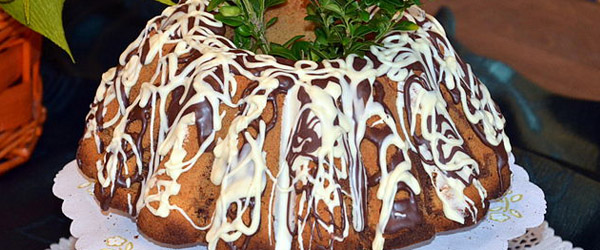
9. Babka

Baked in tall tins, Babka is a dessert of rich yeast bread and lots of eggs.  During Easter, it is often crowned with many decorations such as little dough rosettes, designs of wheat stalks or a symbolic cross.  Sometimes, for a special sweet treat, Babka is flavored with raisins, dried fruit such as citron peel, chocolate or cinnamon and drizzled with fondant.  Don’t tell Baba, but you can even add some colored sprinkles for the kids.
 

Rugelach pastry dish ukraine
By Yair rand (Own work) [CC BY-SA 3.0], via Wikimedia Commons

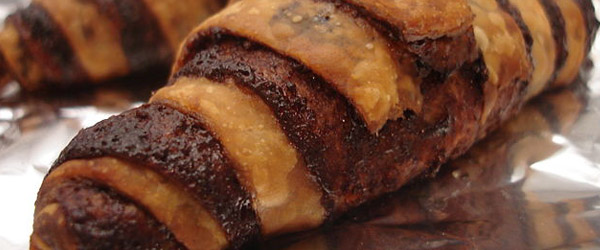
10. Rugelach

Another decadent dessert is rugelach, which is very delicious but quite labor intensive.  These bite sized pastries are filled with either ground walnuts, chocolate, cinnamon, apricots or prune jam.
 

Sources:

Dalton, Meredith. Culture Shock!: Ukraine. Portland: Graphic Arts Center Publishing, 2000.
Hardaway, Ashley. Ukraine (Other Places Travel Guide). Other Places Publishing, 2011.
Kopka, Deborah. Welcome to Ukraine: Passport to Eastern Europe & Russia. Dayton: Milliken Publishing Company, 2011.
Kraig, Bruce & Sen, Colleen Taylor. Street Food Around the World: An Encyclopedia of Food and Culture. Santa Barbara: ABC-CLIO, 2013.
Nichol, Christina. Essential Spices and Herbs: Discover Them, Understand Them, Enjoy Them. Berkeley: Callisto Media Inc., 2015.
Stechishin, Savella. Traditional Ukrainian Cookery. Winnipeg: Trident Press, 1973.


You might also like:

What's your favorite dish from this entry?

View Results

Loading ... Loading ...
Ask Sid: Noble Rot?

November 25th, 2015 by Joseph Temple
Ask your question here The International Wine & Food Society

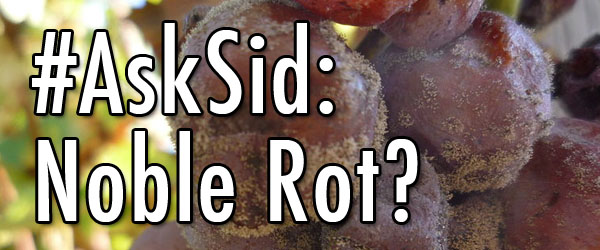
Ask Sid: Noble rot grapes wine

Question: How can rot ever be noble?

Answer: Good point! Rot in grapes is generally not noble but a bad thing resulting in decomposition of unhealthy grapes. Grey rot is often still an issue and we remember well the widespread sour rot problems in the Okanagan especially during the 2013 & 2004 vintages. However, healthy ripe grapes in hot misty conditions may be attacked by the fungus botrytis cinerea (particularly in Sauternes, Tokaj, Germany and other unique regions) miraculously turning the individual berries into raisins and concentrating their juice – a noble rot indeed!


You might also like:

Older Entries
Newer Entries
The object of the Society is to bring together and serve all who believe that a right understanding of good food and wine is an essential part of personal contentment and health and that an intelligent approach to the pleasures and problems of the table offers far greater rewards than the mere satisfaction of appetite.
Andre Simon Wine & Food Society Founder (1933)
© 2026 The International Wine & Food Society (IW&FS) IW&FS
Credits | Privacy | Accessibility