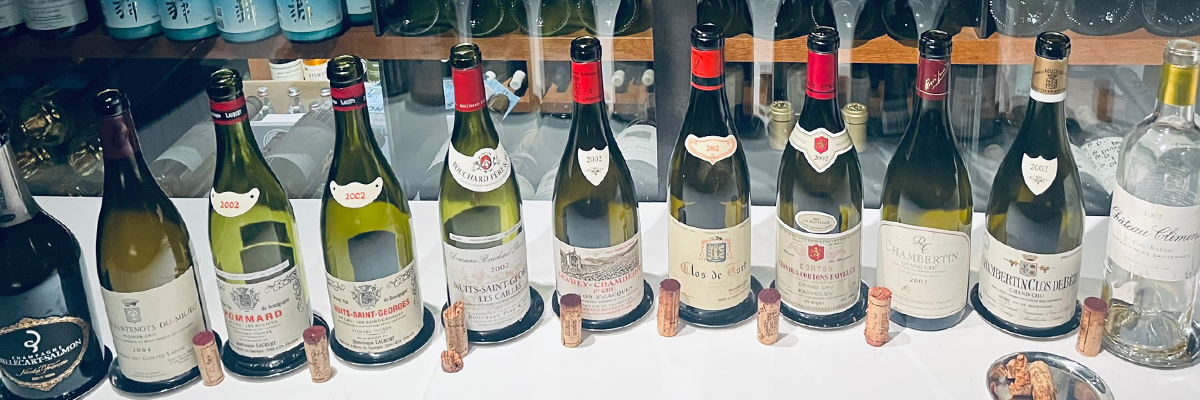
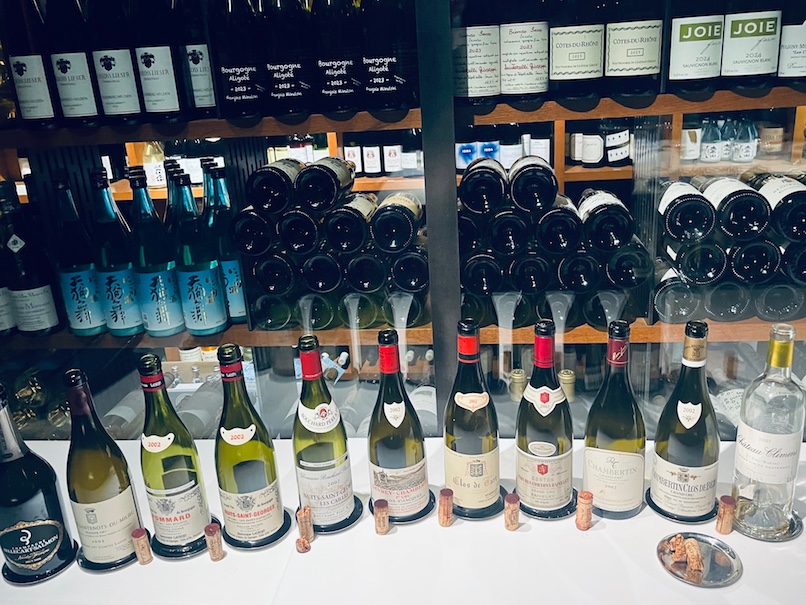
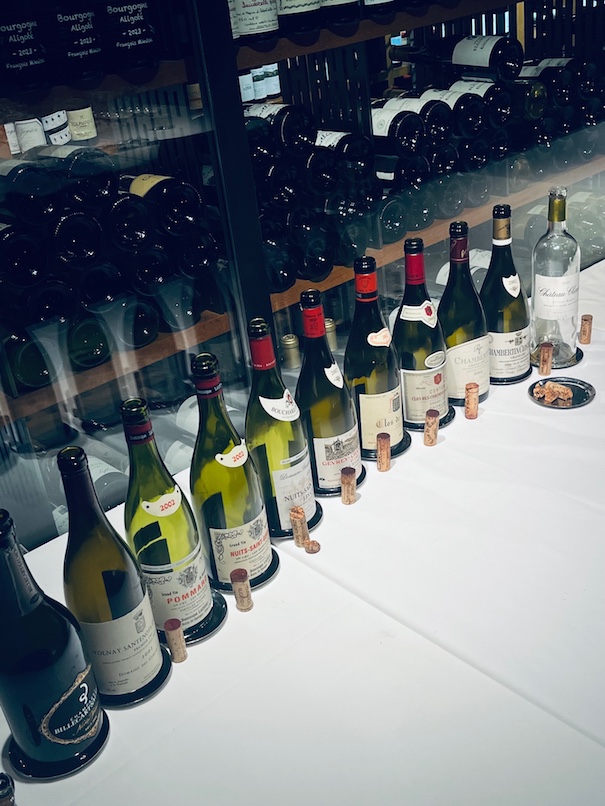
On March 31, 2026 the Vancouver Group of Eight event #140 at Blue Water Cafe took another in-depth look six years later at the underrated 2002 red Burgundies that we spotlighted in detail here on February 24, 2020. This vintage 2002 has often been erroneously compared with the more powerful 1999 and the riper 2003. It should be judged on its own merits for the light, delicate, and complex true Burgundy finesse it conveys. Also your scribe appreciates the delicious succulent minerally floral fruit with balanced acidity. All this, combined with the refined, precise, terroir-driven charm of the wines shows a vintage aging gracefully that deserves more respect. Another nine completely different 2002 wines to study this time with similar conclusions reached.
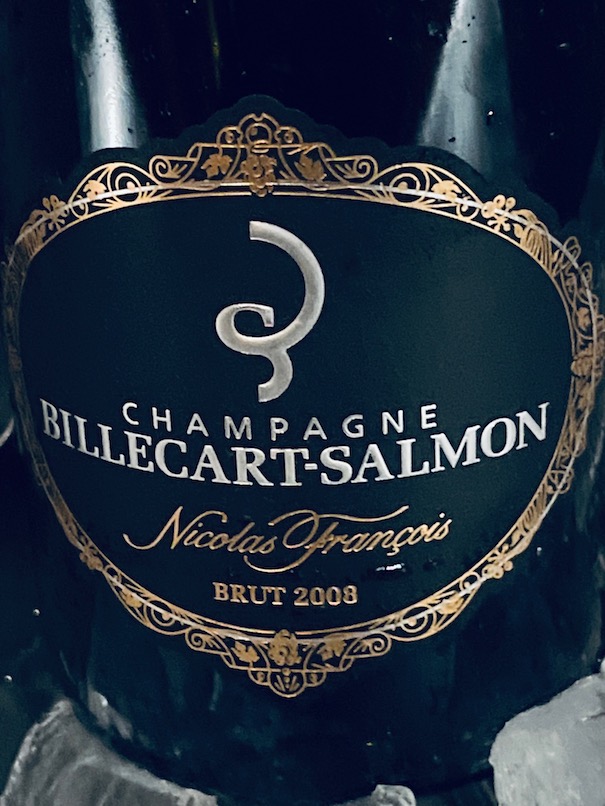
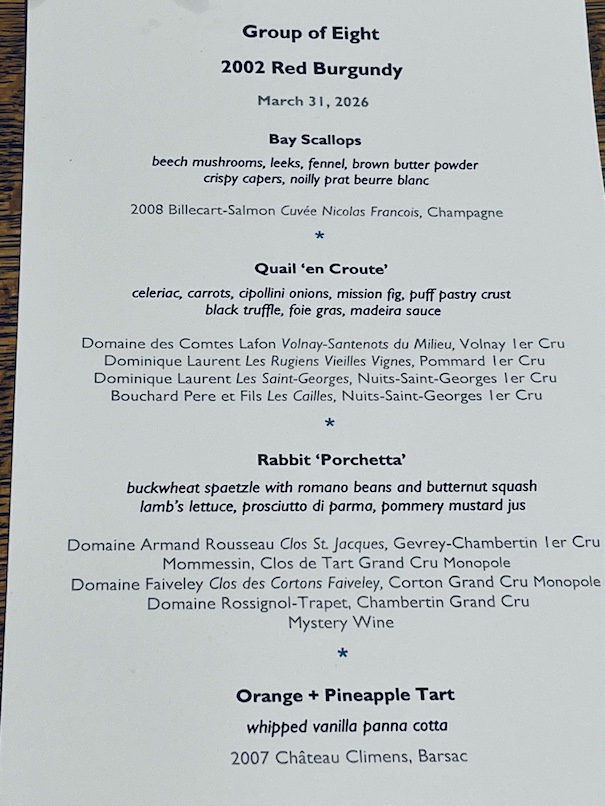
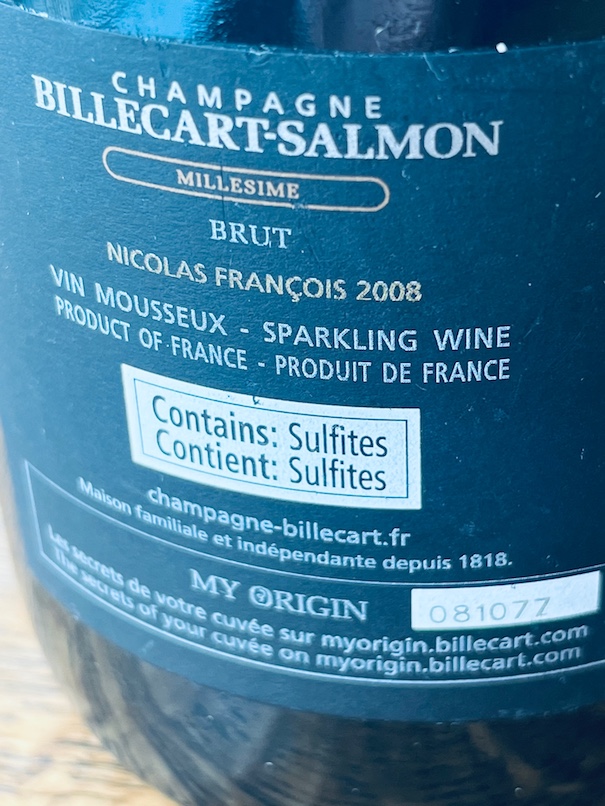
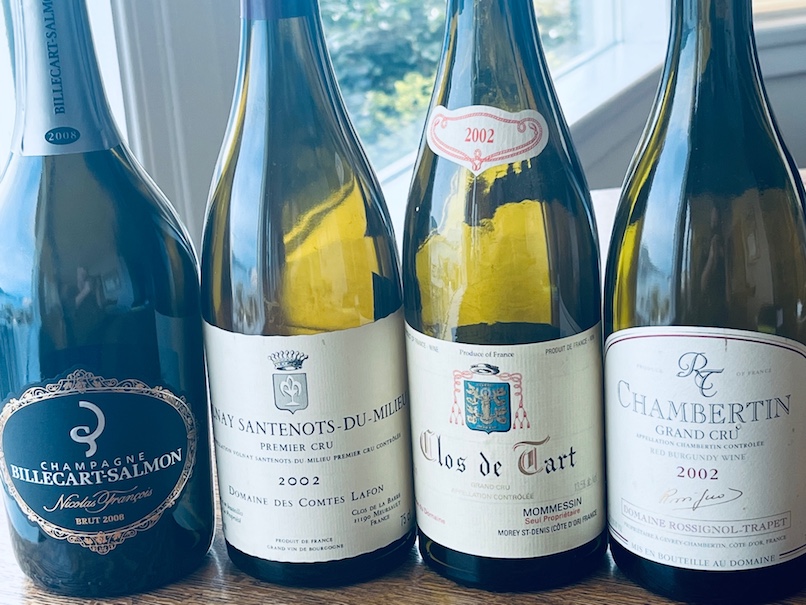
We started with the excellent 2008 BILLECART-SALMON CUVEE NICOLAS FRANCOIS BRUT from this independent family house, established in 1818. Wonderful richness with balance. Bottle contributor Nick Wright pointed out the valuable information available online by referencing myorigin.billecart.fr (081077) from the back label: top Pinot Noir 60% & Chardonnay 40% from 83% Grand Cru & 17% Premier Cru with partial malolactic conversion, only 2.9 g/l dosage (really Extra Brut) in early 2022 (13+ years on the lees). They describe there the aromas of nuts, stone fruits, and floral notes, along with the palate’s intensity, complexity and balance. The website includes an interesting Vintage Map of the 5 stages of Champagne development: Freshness, Blooming, Spices, Maturity, and Complexity.
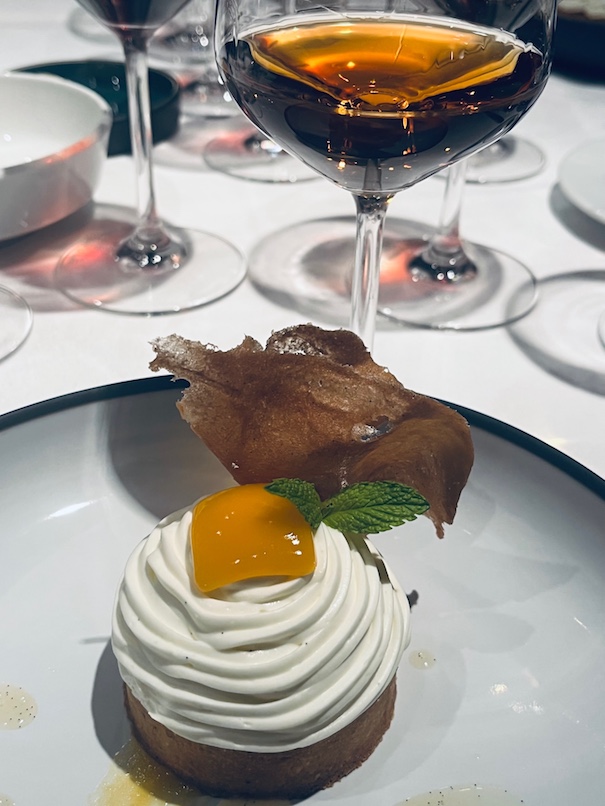
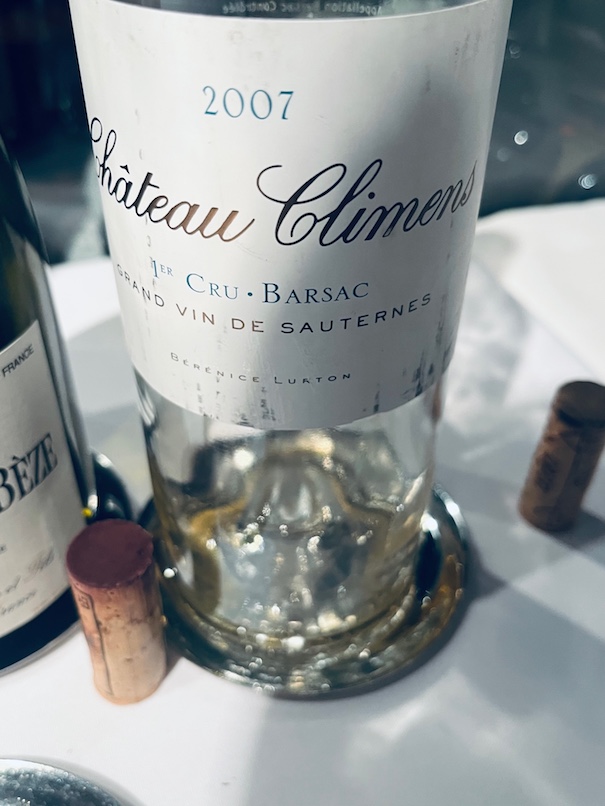
We finished with 2007 CHATEAU CLIMENS BARSAC, which had a golden look and was deliciously ready with ginger and spice for the appropriately paired Orange and Pineapple Tart.
A few comments on the main 2002 red Burgundy focus:
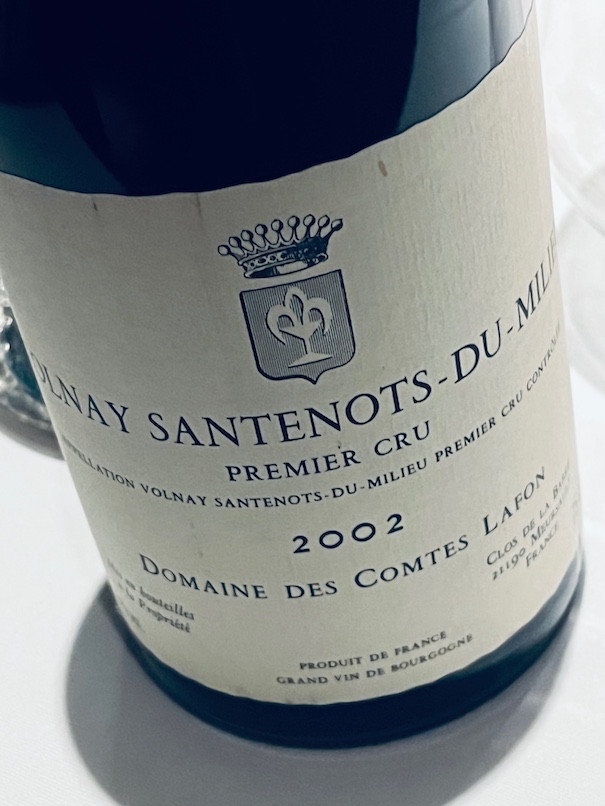
1. 2002 VOLNAY SANTENOTS-DU-MILIEU 1ER CRU DOMAINE DES COMTES LAFON: Admire the Lafon whites and this special Volnay Santenots vineyard of Du-Milieu, which spans only 8 hectares—nearly half of which they own—and usually requires aging. The fruit intensity is usually better than that of the regular Les Santenots, which is much larger at 29+ hectares on clay-heavy soils. Lafon has many older vines from the sixties and since 1989, they have been declassifying their younger vines into village AC Volnay. This is clearly the darkest of the first flight of four wines, offering a deep intriguing nose. It shows slightly more openness than it did a few years ago. It retains plenty of intense fruit, offering complex flavours that will continue to improve rounding out and developing further complexity with more aging. It isn’t charming presently but it is too young and needs time; allowing for more cellar aging is best. Like the 13% ABV. Your scribe voted it the best potential wine of this Flight but was outvoted 7-1.
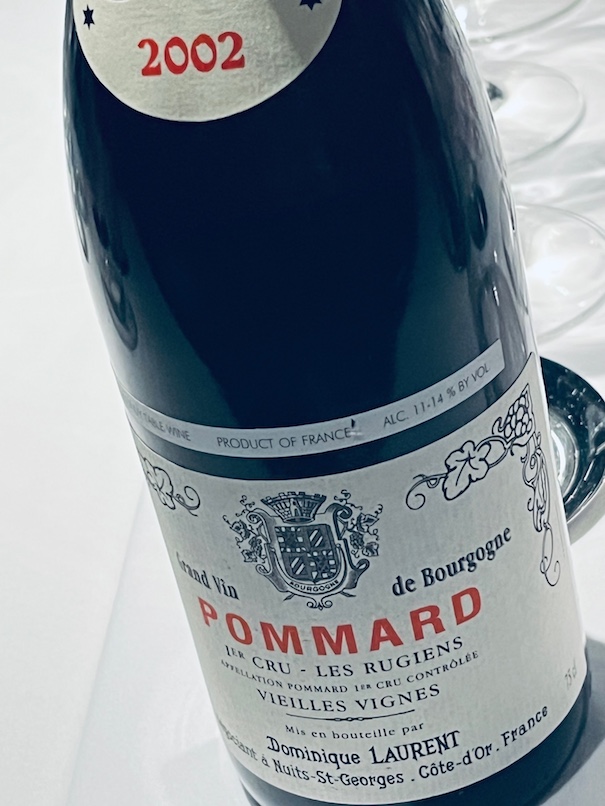
2. 2002 POMMARD LES RUGIENS 1ER CRU VIEILLES VIGNES DOMINIQUE LAURENT: This former pastry chef, who has been a negociant bottler since 1988 has the next two wines. Les Rugiens has two roughly similar parts of 6 hectares each. The lower section (Bas) is clearly the best featuring iron-rich soils (like Clos des Epeneaux) while the upper section (Haut) delivers less weight and flavours. DL bought grower-vinified juice and supplies his own oak (200% for early vintages). It is difficult to obtain the finest grapes from the Bas section which is shown here, as this Pommard has a lighter ruby rim and a less dense rustic character. Ready. Outclassed.
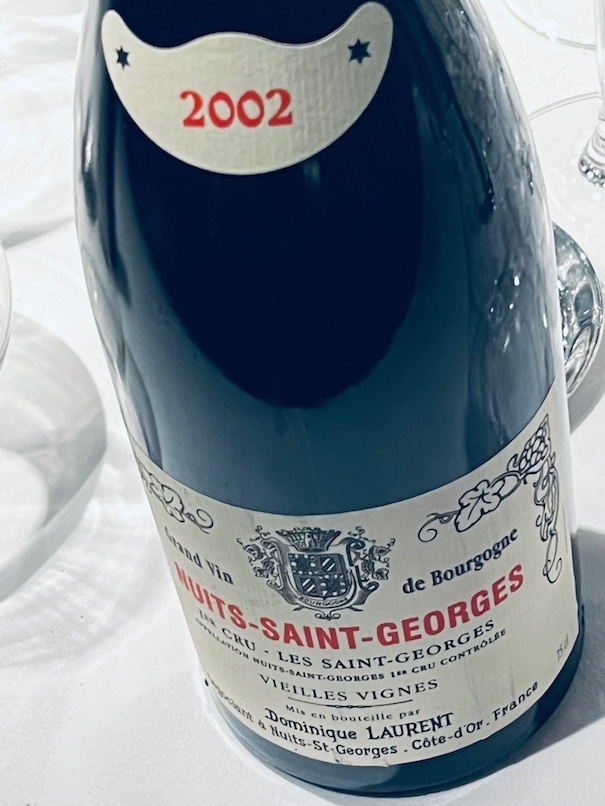
3. 2002 NUITS-SAINT-GEORGES LES SAINT-GEORGE VIEILLES VIGNES DOMINIQUE LAURENT: Another old school style from this prized NSG vineyard, grown on brown clay with small stones. Both Laurent wines use “Vieille Vignes” on the label for marketing. Lightest colour of the flight, but the best open bouquet of red cherries and fragrant roses. Attractive upfront, but the stewed fruit is coarser, lacking the typical charm and finesse of the 2002 vintage and it finishes tart. Nonetheless, everyone but me voted it the best of the first flight. Your scribe was clearly out of step.
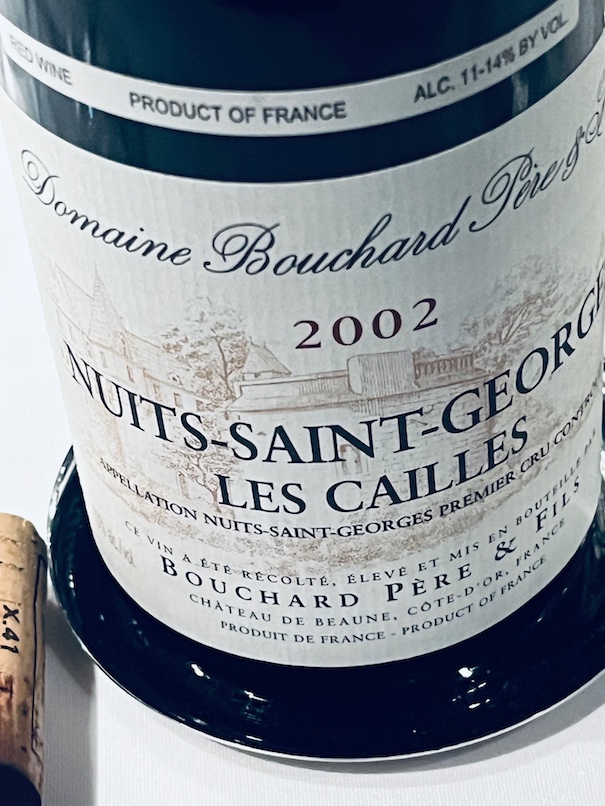
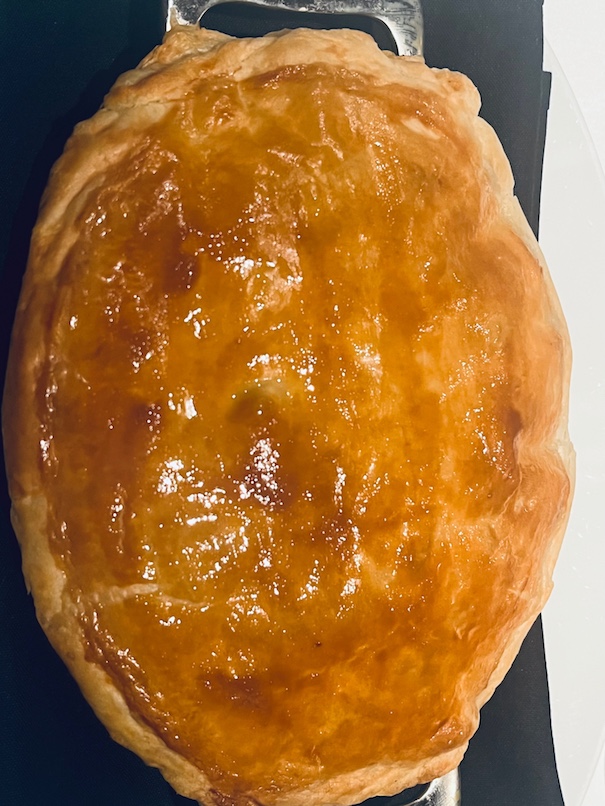
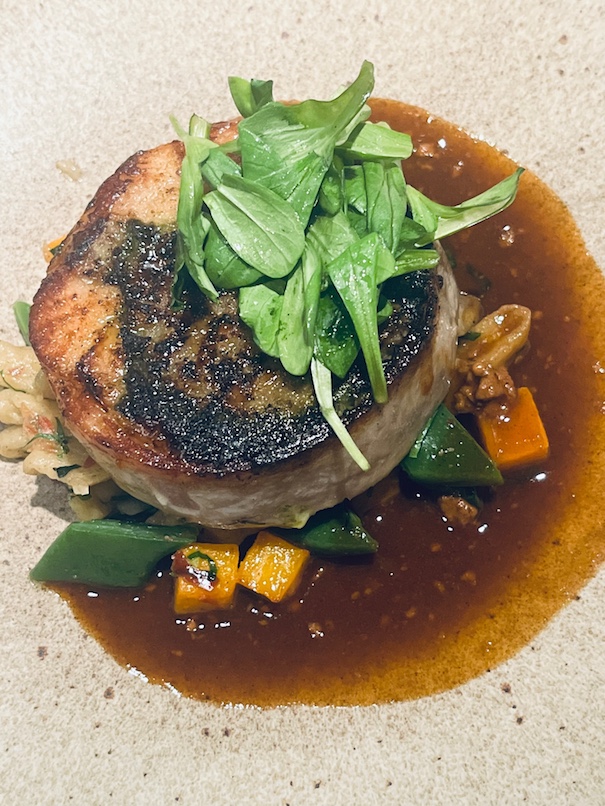
4. 2002 NUITS-SAINT-GEORGES LES CAILLES 1ER CRU BOUCHARD PERE & FILS: Les Cailles is a top vineyard similar in size (7 hectares) to the bordering Les St. Georges with Bouchard holding just over one hectare. Second darkest look, but with less depth than Lafon Volnay. Fresh, elegant, and stylish nose developing well with a balanced structure and spicy plummy fruit. Not the cleanest bottle I’ve had but this wine usually improves with time and is reasonable value. First flight of Premier Cru was overall a bit disappointing but the Quail course, served “en croute,” was spectacular and otherworldly delicious!
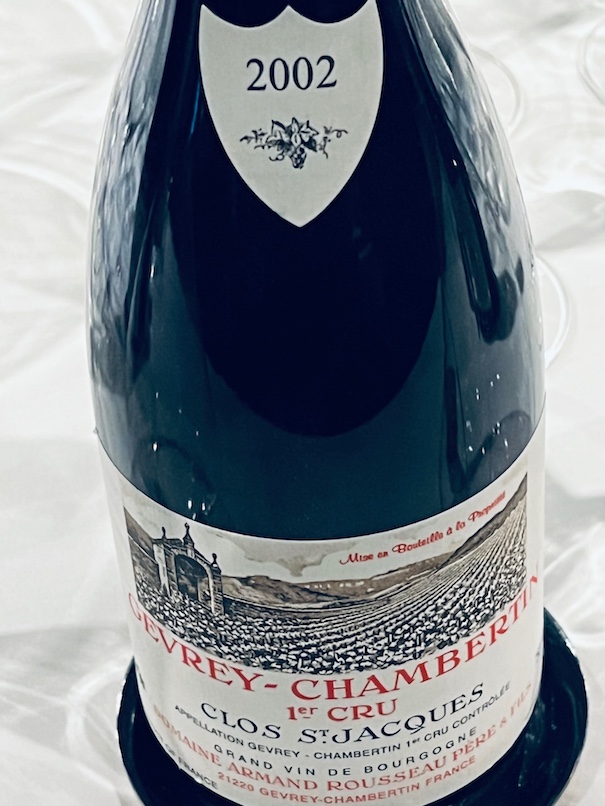
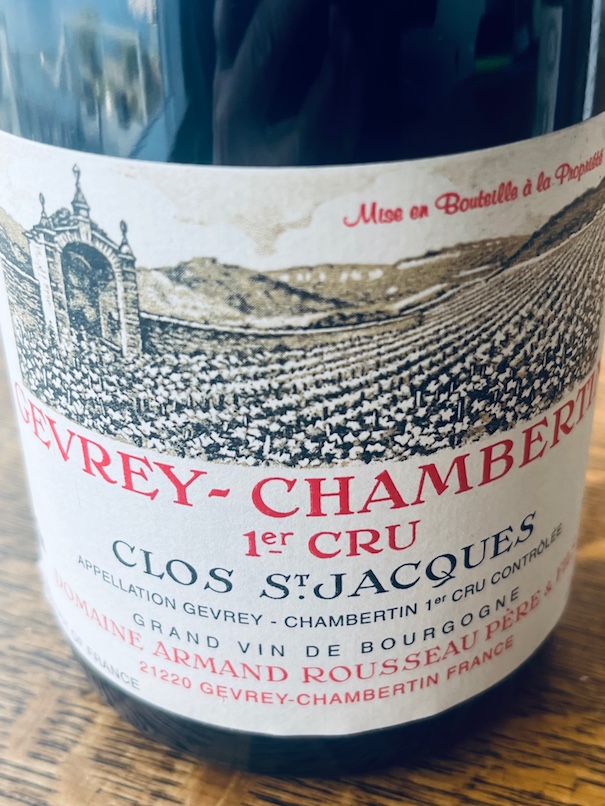
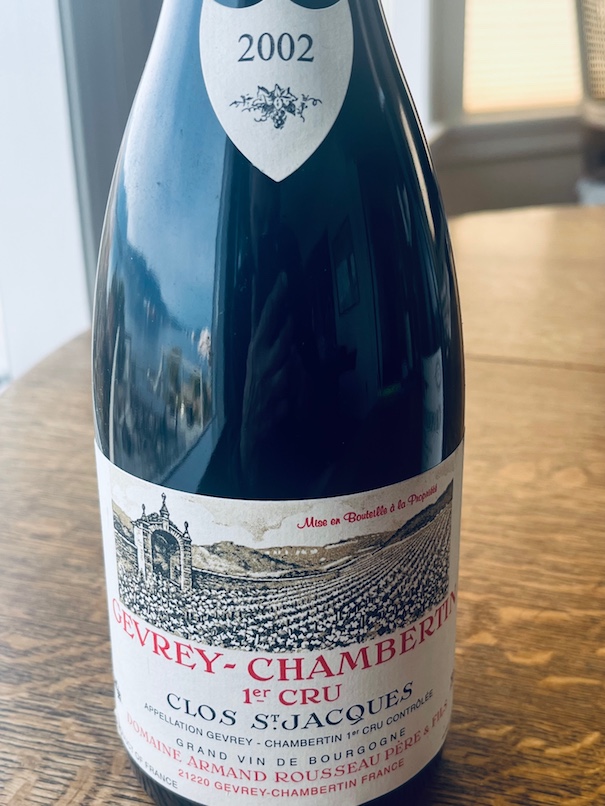
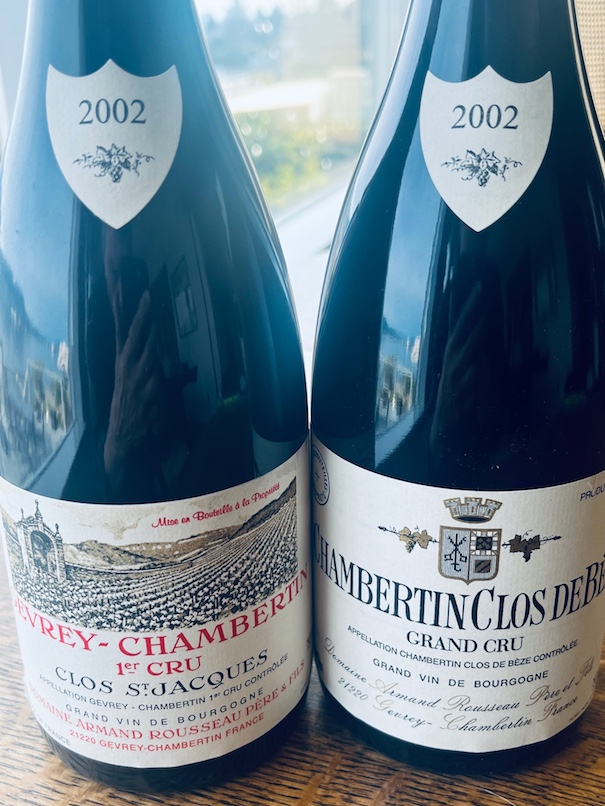
5. 2002 GEVREY-CHAMBERTIN CLOS ST. JACQUES 1ER CRU DOMAINE ARMAND ROUSSEAU PERE & FILS: Last of the Premier Crus, much better than those in the First Flight. Rousseau was very successful in 2002 and they rate their wines from this vintage highly. Only 5 owners possess Clos St Jacques with Rousseau owning the most westerly vineyard (steeper than Chambertin). All run up the hill with clay at the bottom and more white marl towards the top. On visits to Rousseau they always describe this outstanding vineyard as: “Fresh, very Harmonious & Tannins well integrated, Powerful, Intense, and lots of Delicacy.” Most appropriate with an exquisite bouquet but a more forward bottle than the last couple enjoyed. Remarkably pure smooth entry, harmonizing with charming elegant finesse. This was a miraculous match with the special rabbit course. Yes please.
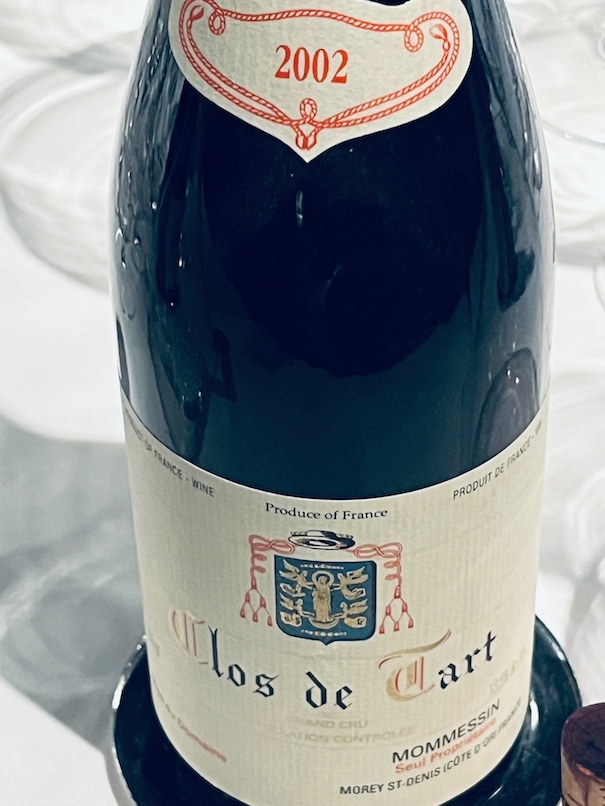
6. 2002 CLOS DE TART GRAND CRU MOMMESSIN SEUL PROPRIETAIRE: Clos de Tart dates back to 1141 and was a Mommessin monopole of 7+ hectares in Morey-Saint-Denis since 1932 acquired by Artemis Domaines (Francois Pinault of Chateau Latour) in 2107. This 2002 top wine was made by winemaker Sylvain Pitiot (who retired in 2015) and shows their trademark “Finesse & Elegance.” Mommessin always correctly stated that “Its balance underlines the rich & complex aromas” that are still showing fresh and youthful. At 13.5% ABV, it reminds me of the 1985 style, featuring refined balance and real depth. It’s already impressive, but it will still improve. Patience is required. A beauty.
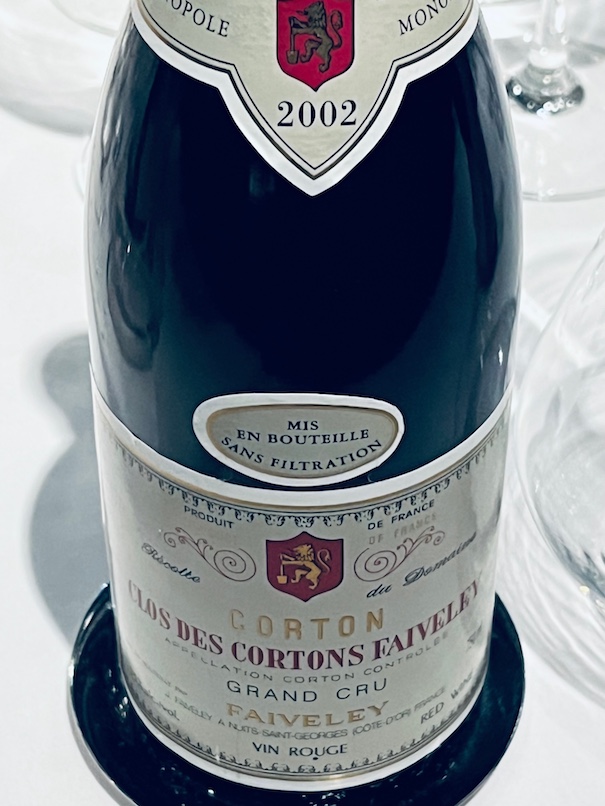
7. 2002 CORTON CLOS DES CORTONS FAIVELEY GRAND CRU DOMAINE FAIVELEY: Darkest deepest colour right to the edge. Big extract but Ewan Faiveley says it’s almost atypical: “As hard-edged, too structured, and too long macerations to get more colour – missing out on the refined charm that other producers found in this unique vintage.” It shows powerful backwardness with tight tannins, suggesting possible improvement far down the road. Not singing tonight. Question mark?
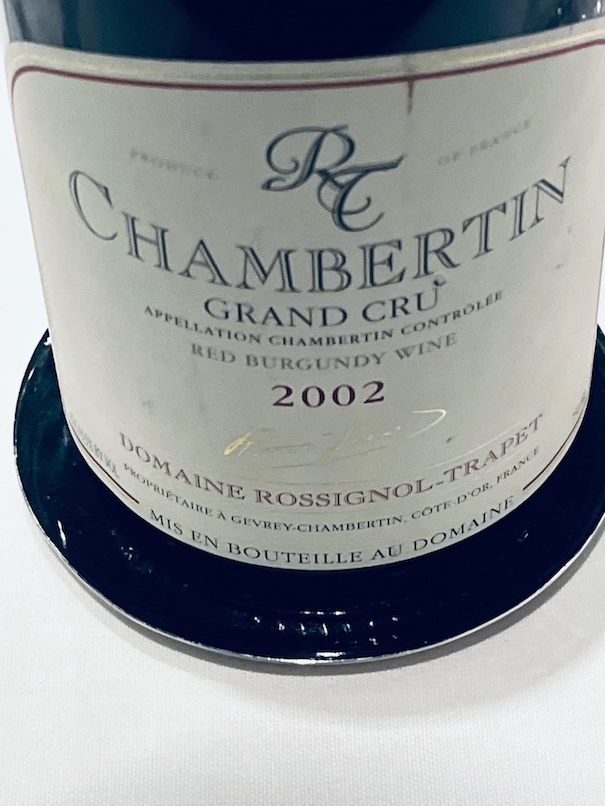
8. 2002 CHAMBERTIN GRAND CRU DOMAINE ROSSIGNOL-TRAPET: R-T combines the 1961 marriage of Rossignol (Jacques) from Volnay with Trapet (Mado) from Gevrey. Started Bio in 1990 and applied for certification in 2004. Great vineyard using measured extraction to highlight the outstanding terroir. At 13.5% ABV, it’s lighter than expected for this usually powerful style wine from a very top vineyard. Clean, firm, and classy, but it could be more precise and enchanting. However, still young and should put on more weight over time. Presently, it lacks definition, but it’s still early days. Expect more complexity with further bottle aging. An excellent special bottle on its own.
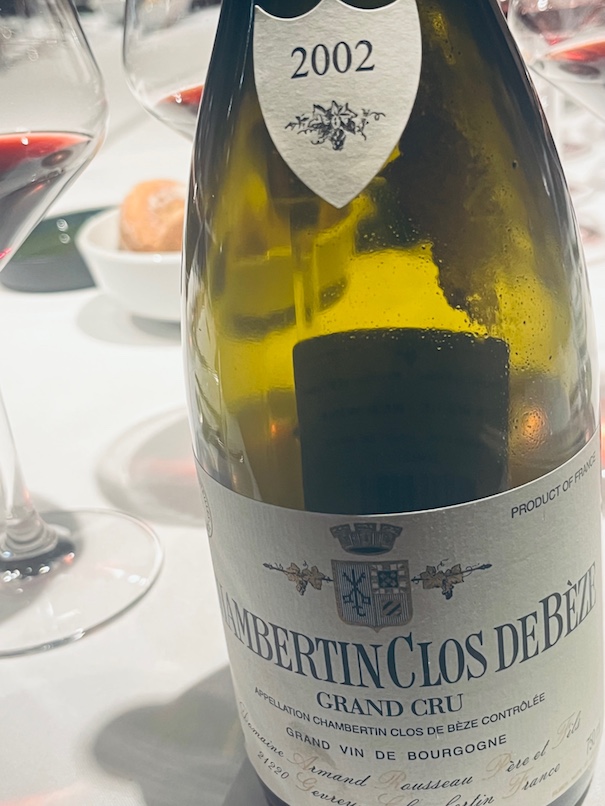
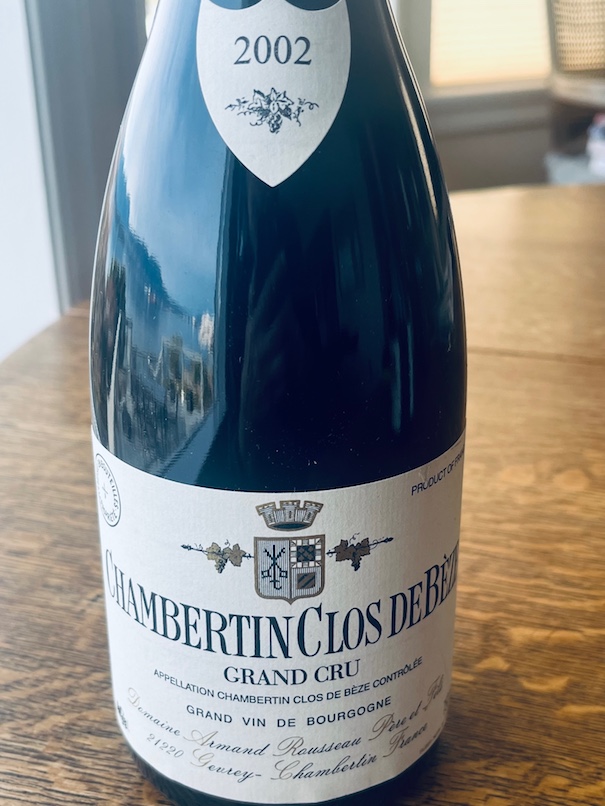
9. 2002 CHAMBERTIN CLOS DE BEZE GRAND CRU DOMAINE ARMAND ROUSSEAU PERE ET FILS: Served double blind as a Mystery wine. Good mid range young red look. Aromas are deep but closed in while opening slowly in the glass. Fresh, smooth, silky entry with outstanding balance and real length. Another 2002, though some speculated 2005 Chambertin. Very bright and classy but less evolved. Amazing combo of power with gentle finesse coming slowly together. Perhaps you expect the deeper subsoils of Chambertin will yield weightier, bigger, firmer wines with more spice than Clos de Bèze, which might be juicier, with more finesse and approachability. Clos de Beze is slightly steeper and warmer than Chambertin which benefits from cooler winds. It showed that way when both were Rousseau but here the Clos de Beze has a much greater, more intense quality than the R-T Chambertin. This was the clear winner for me at 14% ABV and it was educational: the mystery wine was the missing Clos de Bèze. It will eventually be an unbelievable treasure of enjoyment. Many thanks to Ian for letting us taste it along this remarkable journey.
You might also like:
 |
 |
 |