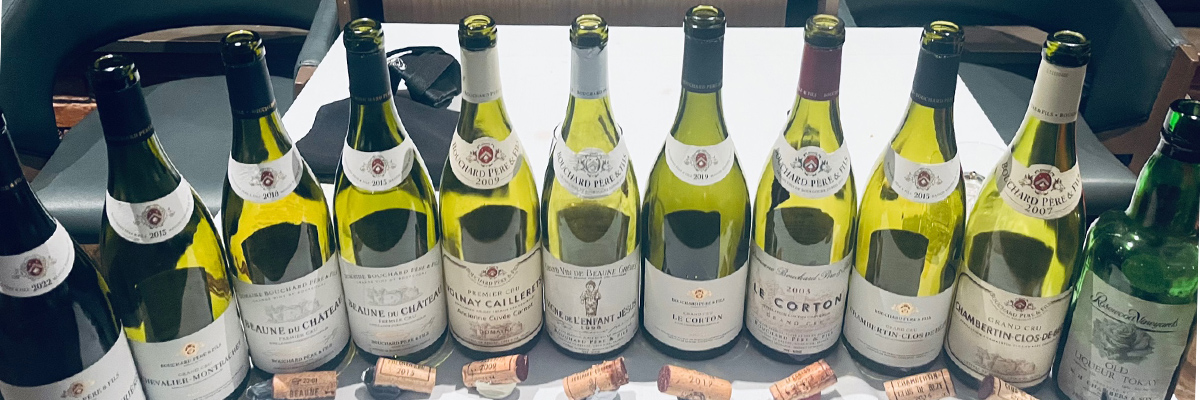
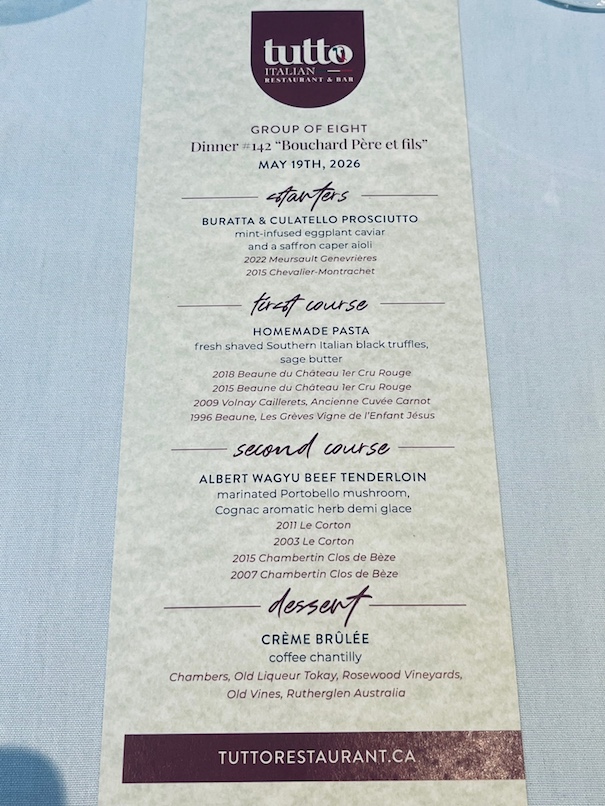
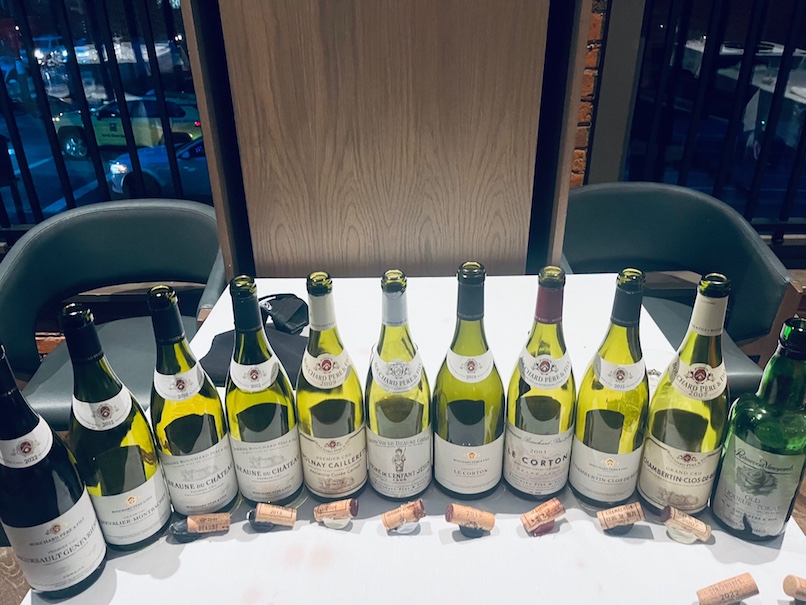
The Vancouver Group of Eight under the amazing leadership of Ian Mottershead continues its remarkable journey with memorable insightful tastings of top quality wines cleverly matched with food. Usually we focus on a vertical of nine wines to assess a property’s consistency and the ageability of its wines. This time for a change of pace, we spotlighted ten wines from Bouchard Pere et Fils (with roots dating back to 1731) on May 19, 2026, for #142 at Tutto Restaurant. For full disclosure your scribe has followed Bouchard Pere wines closely since the seventies—for over 50 years—including many visits to Beaune and educational seminars conducted in Vancouver with Luc Bouchard (eg. Blog linked here March 24, 2014). My respect and dedication grew following an early Heublein pre-auction tasting in San Francisco on May 27, 1980 where all their wines (directly from their Beaune cellars) shone brightly: maturing whites of balanced 1974 Corton-Charlemagne, young 1973 Chevalier-Montrachet, and super intense 1972 Montrachet. However, their long-aged reds were a true revelation: a spicy 1948 Clos de Vougeot, 1887 & 1875 Chambertins drying but lovely with complex fading flowers, and a youthful historic hot vintage of native ungrafted Pinot Noir 1865 Beaune Premier Cru (named Cuvee Grizot). Lots of postings here include insights from winemaker Philippe Prost followed by Frederic Weber (Link: April 26, 2015), the new owners since 2022 Groupe Artemis Domaines (Francois Pinault Family), following an earlier acquisition by Joseph Henriot in 1995 (Link: October 21, 2024), and a Meursault Perrieres vertical (Link: July 28, 2025).
BOUCHARD PERE owns 130 hectares of Burgundy vineyards, including 12 of Grand Cru & 74 of Premier Cru. Remember in Burgundy that the 33 Grand Cru only represent 2%, 570 Premier Cru 15%, 44 Village AC 30%, and the majority are 23 Regional at 53%. Artemis is clearly focusing on using only grapes from their best Domaine vineyards. The future is bright indeed. The whites have been outstanding for quite a while. Again, the two young white wine examples here are really stellar:
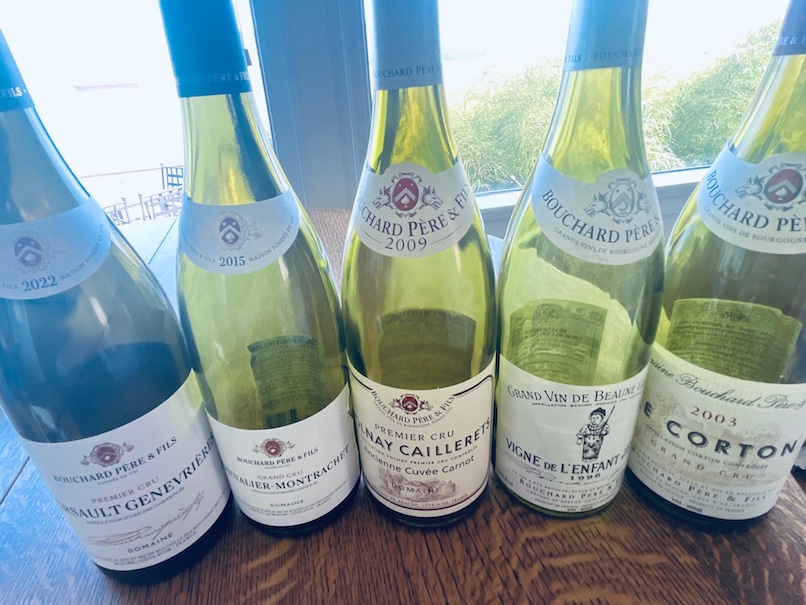
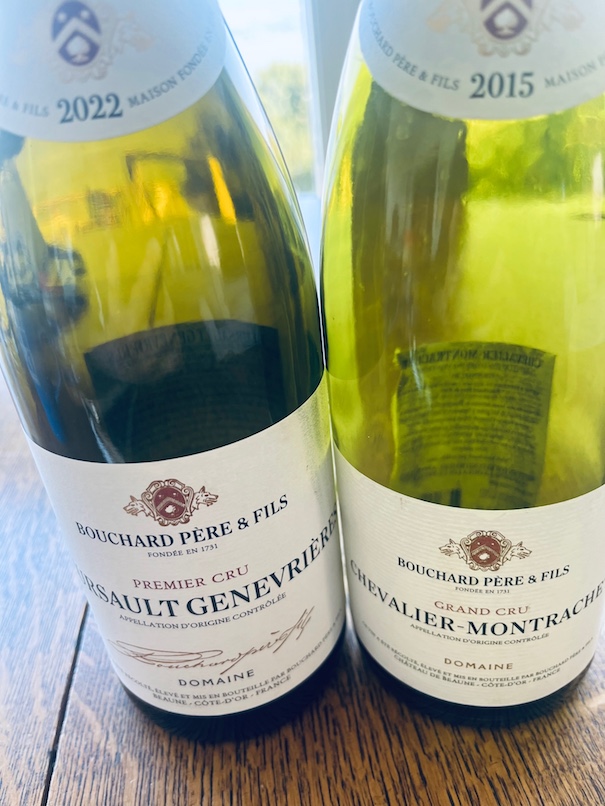
2022 MEURSAULT GENEVRIERES PREMIER CRU DOMAINE: Bouchard has the largest holding of 2.65 hectares followed by Latour-Giraud with 2.46 (total 16.48—compare the smaller, minerally Perrieres at 13.72 & the much larger creamy Charmes at 31.12) facing E/SE and often yields the first grapes harvested. This Genevrières style shows the typical terroir of full yet refined liveliness with less weight but a subtle elegant laciness. Just starting its development but already exciting and complex at 13.5% ABV. Impressive.
2015 CHEVALIER-MONTRACHET GRAND CRU DOMAINE: Bouchard is the largest holder at 2.24 hectares, followed by Leflaive at 1.72 and Les Demoiselles (in Le Cailleret), which is split with half a hectare each for Louis Jadot & Louis Latour (totaling 7+ hectares). This vineyard is higher up the slope from Montrachet on shallower stonier soils. A hot vintage but a cool wine at 13.5% ABV, showing fresh, refined, harmonious citrus plus a hint of brioche. Admire the balance, almost Corton-Charlemagne-like acidity. Perhaps their Chevalier-Montrachet La Cabotte (small stone building with a walled vineyard – really Montrachet) has more body with elegant sweet spices but I am satisfied with this one. Just starting on an exquisite, long, enjoyable drinking plateau. Outstanding!
The eight reds in two flights were interesting:
2018 BEAUNE DU CHATEAU PREMIER CRU: Antonin & Joseph Bouchard started this cuvée in 1907; it uses 17 vineyards (the white uses 5), which are vinified separately. This hot vintage typically shows the easy, riper, softer fruit characteristic of this blend’s style. It drinks fresh and true already. Lovely perfumed aromas.
2015 BEAUNE DU CHATEAU PREMIER CRU: Another hot year also deeply coloured but with a paler edge. It seems more intense due to lower yields and the creamy, concentrated, typical Beaune fruit is admirable. Good texture with some depth, showing more tertiary development for a wine over 10 years old. Enjoy.
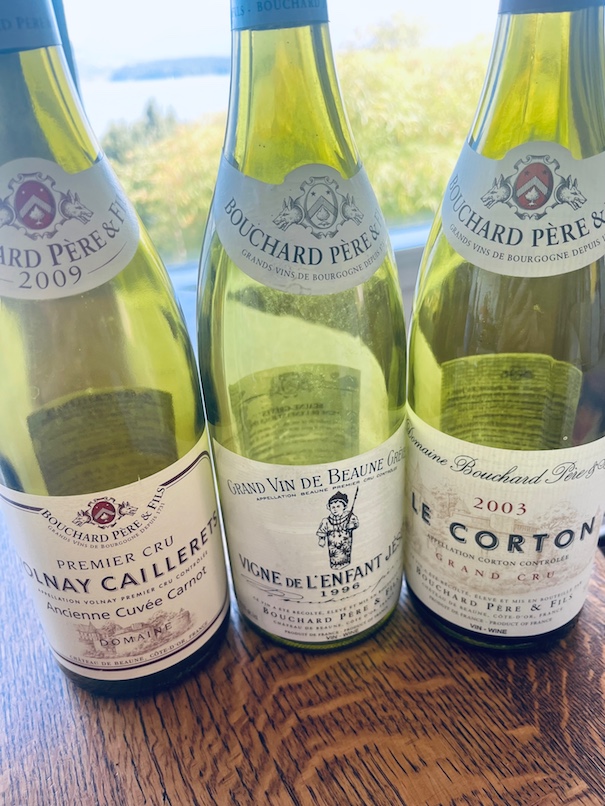
2009 VOLNAY CAILLERETS ANCIENNE CUVEE CARNOT DOMAINE: 3.76 hectares behind Pousse D’Or with 4.63 (totalling 14.36) on a moderate SE facing slope on rocky clay soil. Bouchard bought this old plot from the owner Carnot as their first vineyard in 1775. Grapes are harvested in smaller 13kg containers for a gentle press followed by 12-14 months in French oak (30-40 % new) at 13.5% ABV. I always admire how this rather spicy elegant wine is structured, developing into an exquisite, richer, complex, elegant, mature beauty with longer aging. From the voluptuous 2009 vintage, now at 17 years it is still very dark young looking but starting to show its class. Best of flight and vying for best of tasting.
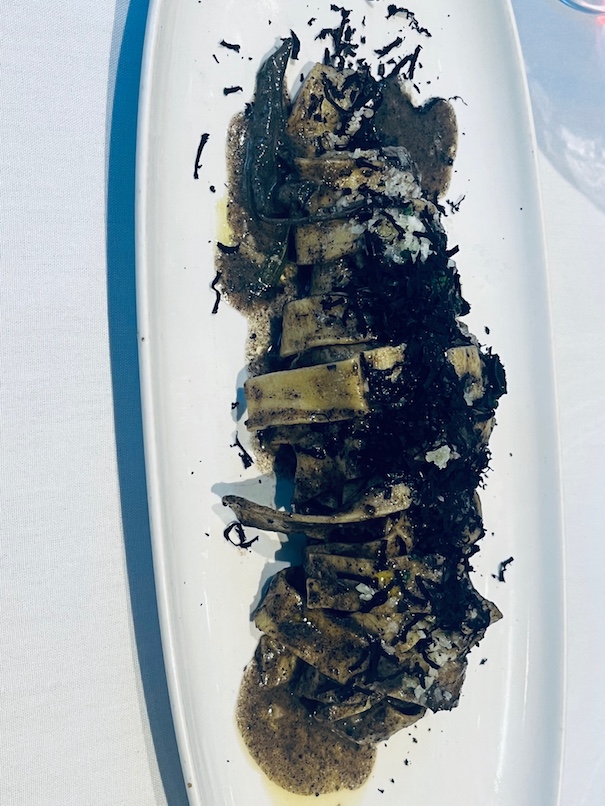
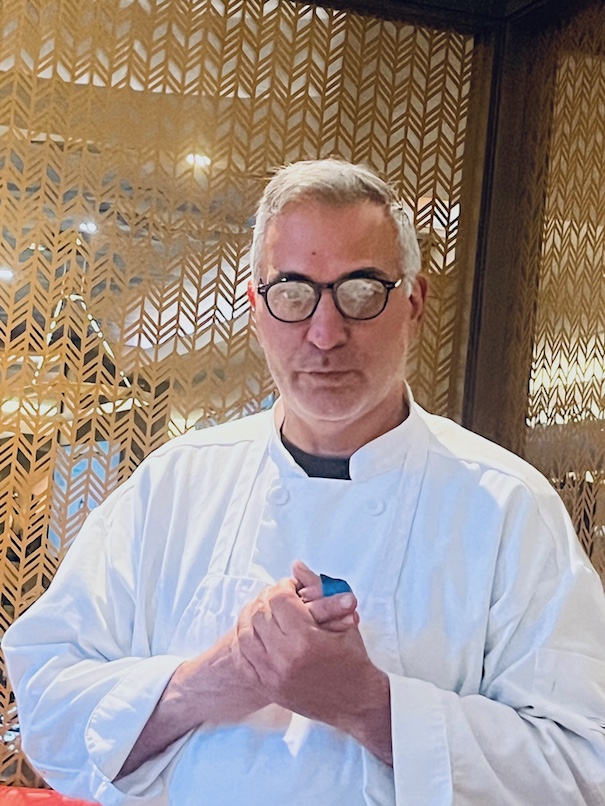
1996 GRAND VIN DE BEAUNE GREVES VIGNE DE L’ENFANT JESUS DOMAINE: Special cherished E/SE facing vineyard in the middle of Beaune Greves, situated on a steep slope of red soils with lots of iron oxide. There are no Grand Cru vineyards in Beaune, but there are 42 Premier Cru climats. IMHO, this is the richest most structured and longest-lived one. Full intensity with charm and some velvet texture is now appearing at 30 years old as it develops. Lovely fruit but a harder finish with higher acidity, typical of the 1996 vintage. No rush. Doug Loughran declared this “outstanding”. Even more delicious matched with the special truffled pasta course orchestrated by new Italian-focused Executive Chef Vahid Jafari and talented Wine Director/GM Leagh Barkley.
2019 LE CORTON GRAND CRU DOMAINE: This ancient property dates back to the 2nd century BC and was a favourite of Charlemagne. It is the only Grand Cru red in the Cotes de Beaune and is gaining more recent respect for long aging. The general Corton AC is 160 hectares of which 88.86 hectares were declared in 2018 as Corton Rouge Grand Cru (10% less than formerly due to replanting as Corton-Charlemagne). Bouchard’s holding in Le Corton is 3.55 hectares (out of a total of 11.67) at the top of the hill’s E/SE flank just below the woods on white marly thin soil (usually better for whites but Bouchard makes both). This is very young, pure, structured, concentrated spicy fruit admired by Nick Wright for its “modern approach”. It is still tight and tannic, with a bit of earthy acidity. It shows promising perfumes, and patience is required for it to come together.
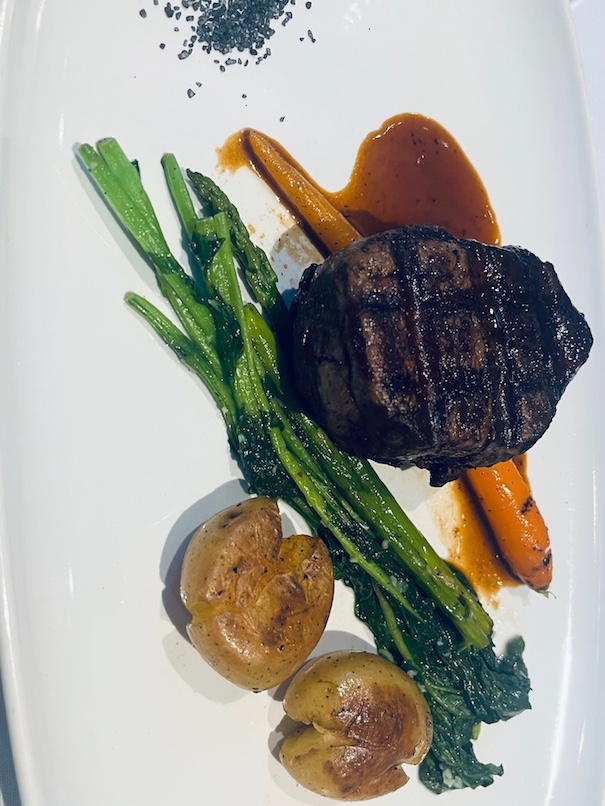
2003 LE CORTON GRAND CRU DOMAINE: Lots of dark, intense, young fruit is impressive. It has the rich extract of the hot year’s ripeness but is creamy and coming together at 20+ years. Nice balance and showing very well indeed. Favourite of the flight. It sang brilliantly paired with Wagyu beef and Portobello mushrooms.
2015 CHAMBERTIN CLOS DE BEZE GRAND CRU: Clos de Beze is 15.40 hectares (Chambertin 12.90) and often more delicate than its powerful sister, Chambertin. Bouchard accesses non-Domaine vines from less than a hectare just below the forest close to a house with a sign named “Clos de Beze”. Hot year was often helped by the Summer rains in Gevrey. However, the purchased grapes were picked late, which was not ideal. Last one for Bouchard was 2022; Côte de Nuits wines are now with Domaine d’Eugénie. It was quite robust but lacked the delicacy and complexity of, say, an outstanding Rousseau.
2007 CHAMBERTIN CLOS DE BEZE GRAND CRU: Not the best vintage; it started hot but went through a dismal Summer that also ended cool. Some developed maturity nearing 20 but the raw material wasn’t as choice as for Corton. It has power and coarse density but lacks ethereal depth. Better with food.
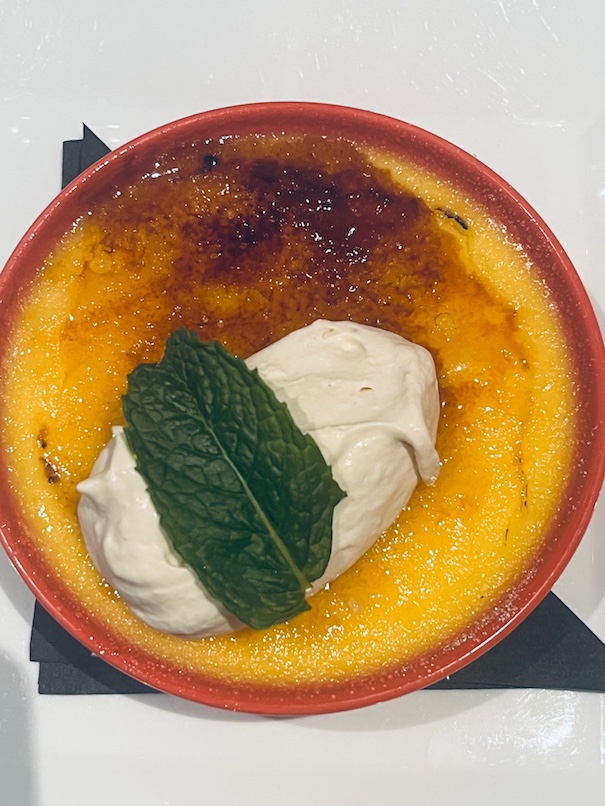
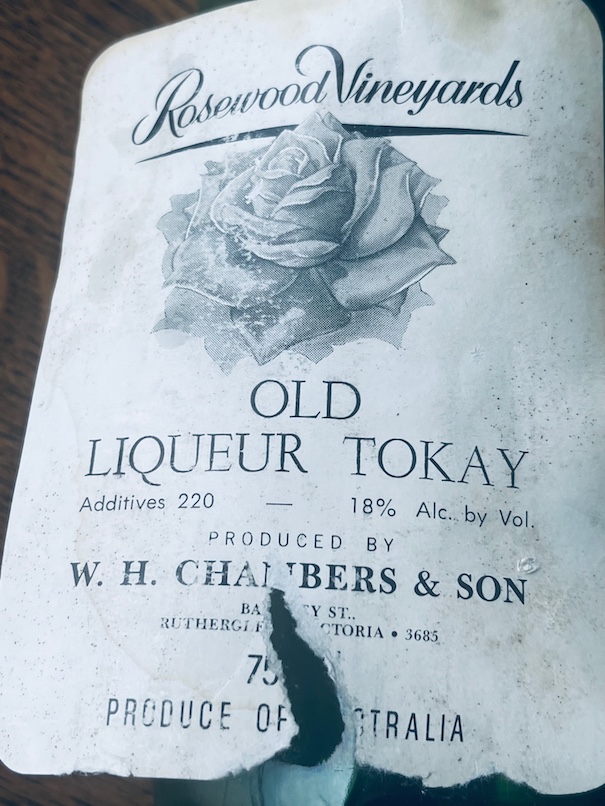
ROSEWOOD VINEYARDS OLD LIQUEUR TOKAY PRODUCED BY W.H.CHAMBERS & SONS RUTHERGLEN VICTORIA AUSTRALIA A word on our outstanding dessert wine acquired from a private collection by Acker Merrall & Confit. This fortified treasure at 18% ABV has vines first planted in the Rutherglen region in 1851. Remember that even in the nineteen fifties, fortified wines accounted for 86% of total wine production in Australia. Tokay name was confusing with Hungary but it was discovered in 1976 to be Muscadelle – so now it is often called Topaque. Chambers was established in 1858 and is now sixth-generation with Stephen Chambers. After Parker’s near perfect scores these old solera Tokay and Muscat world-class wines from Rutherglen are expensive and in high demand. What a glorious treat: this very dark, multi-dimensional wine concentrated notes of chocolate, espresso coffee beans, prunes, figs, nuts, toffee, and other delights. What acidity freshness to hold a long, complex finish. Ideal match to the coffee creme brulee. WOW.
You might also like:
 |
 |
 |