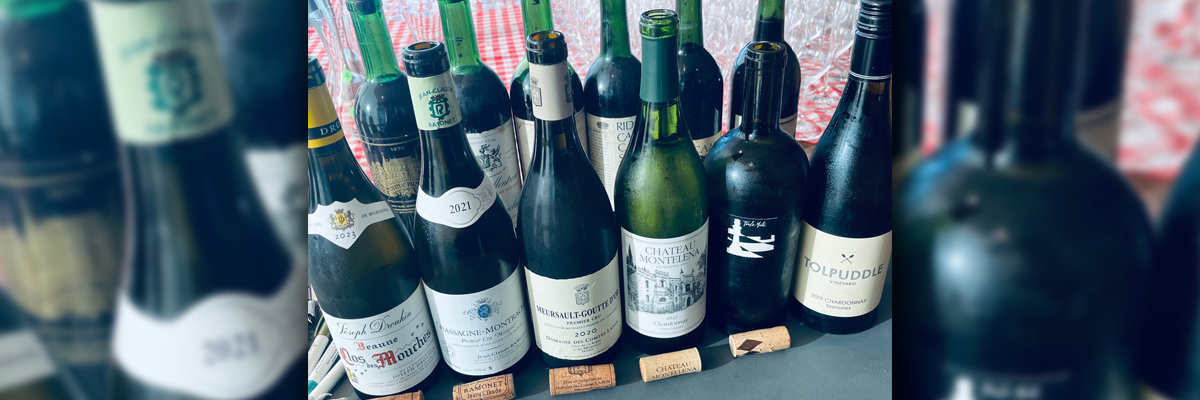
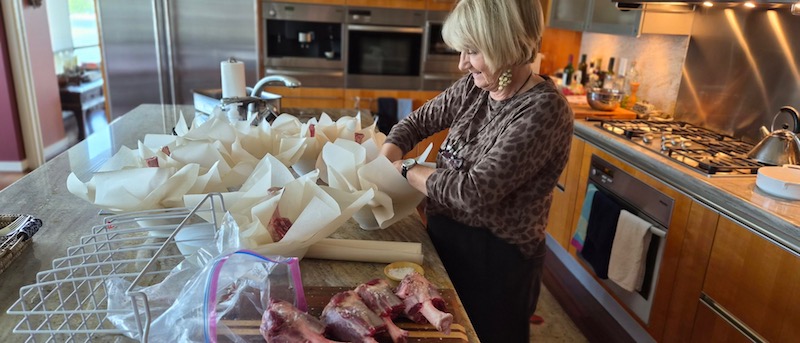
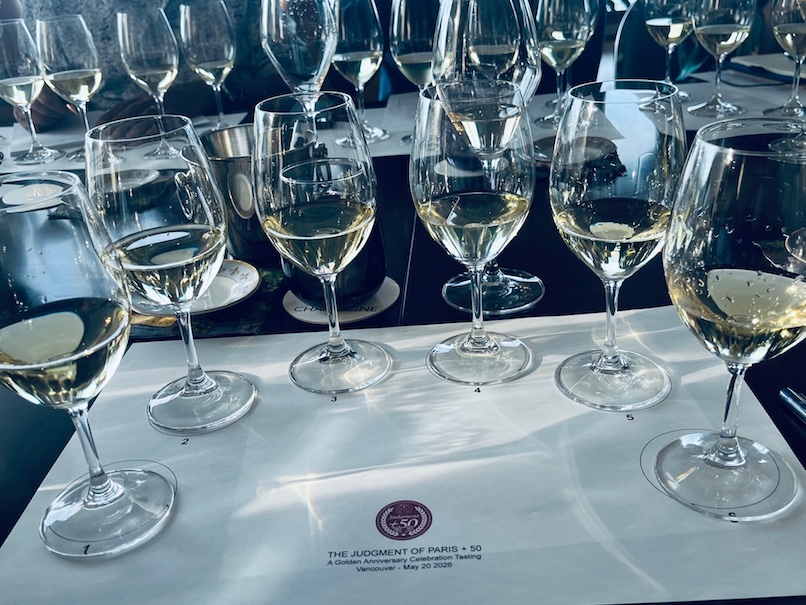
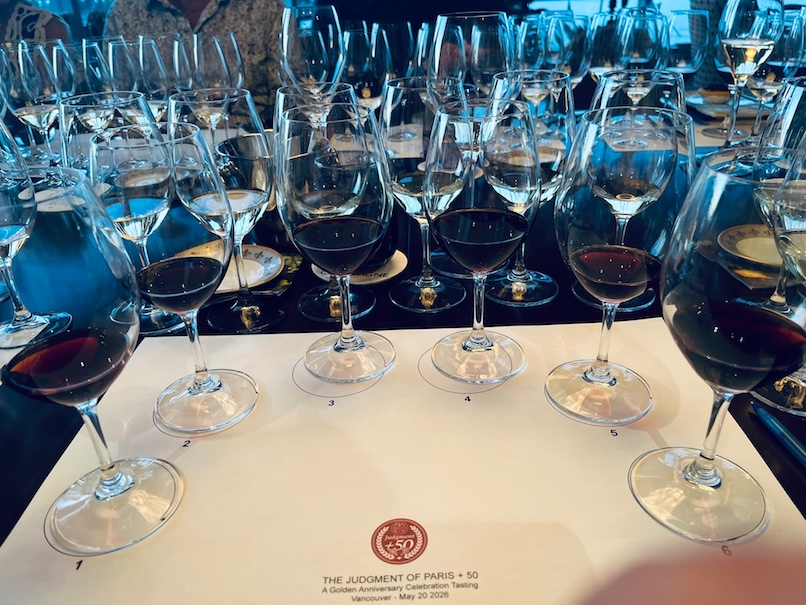
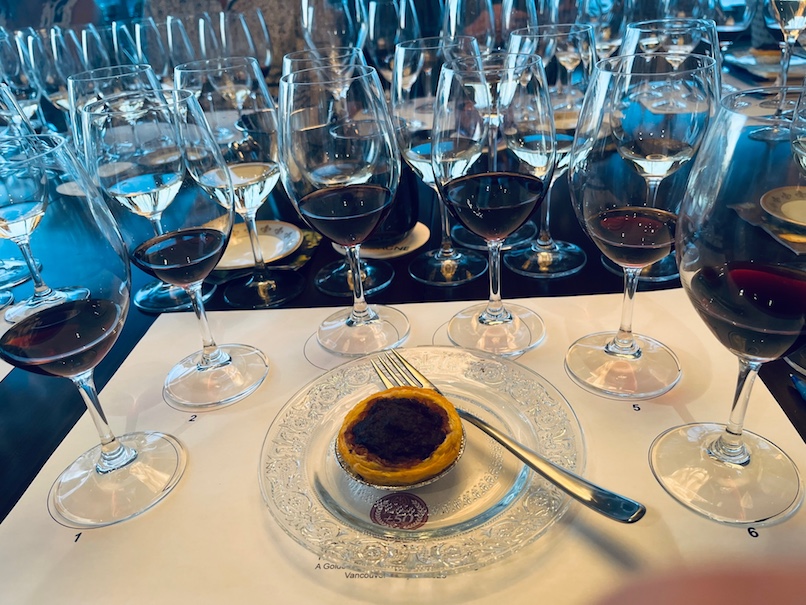
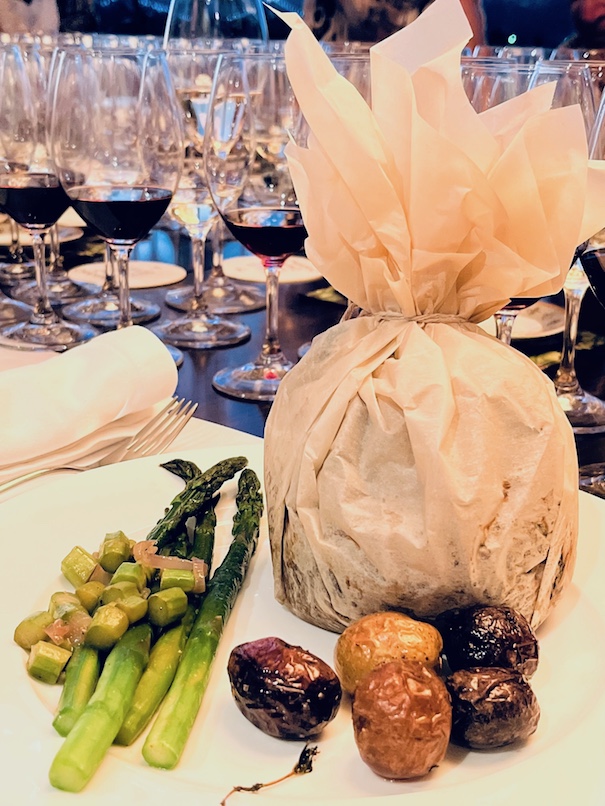
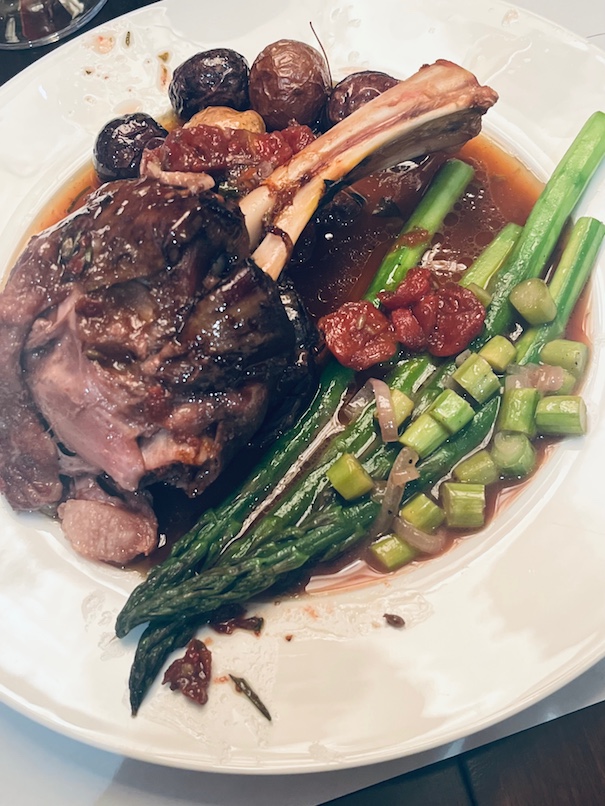
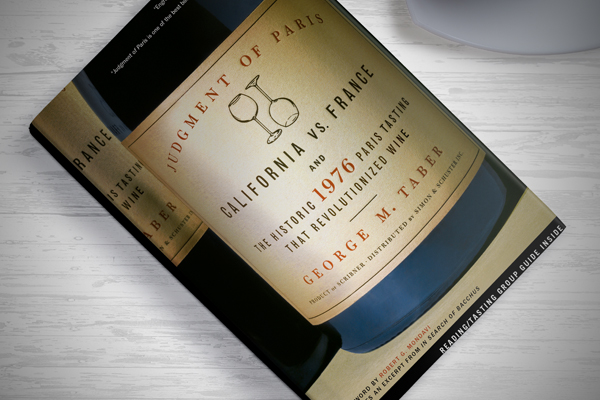
It has been a wonderful week of worldwide celebrations, coordinated by The International Wine & Food Society, recognizing the historic Steven Spurrier event held fifty years ago on May 24, 1976. Lots of current wine tasting results named “A Retrial of a Verdict that Changed History” are being posted on WWW.IWFSEA.ORG/JOP50. Check them out. Also consider your scribe’s thoughts on this historic tasting posted in the Wednesday Ask Sid feature on April 1, 2026 linked here. Our Vancouver Branch of IWFS held a commemorative wine tasting on May 20, 2026, featuring two single-blind flights—six whites and six reds—scored by eleven keen wine aficionados: James Robertson (and wife Milena, who was busy cooking a fantastic lamb shank and thus did not score the wines), Alvin Nirenberg, Kim Mead, Van Doren Chan, Leagh Barkley, Nellie & Vincent Tan, Dr. Bob Rothwell, Bob Vukovich, Joan Cross, & Sid Cross. The wine selections were brilliant and included some of the exact wines from the original 1976 event. It was a most interesting experience and the best wines rose to the top with a surprising consensus. However especially with the reds which were all over 50 years of age there was bottle variation—particularly for the 1970 Chateau Latour & 1970 Château Palmer, which were not in my opinion the very best bottles. The wines are listed below in the order they were served single-blind, along with a few of my comments:
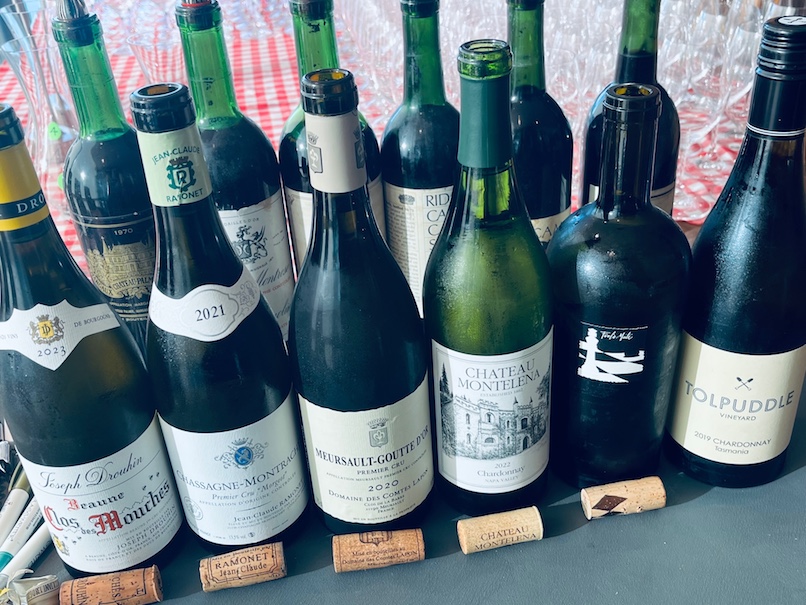
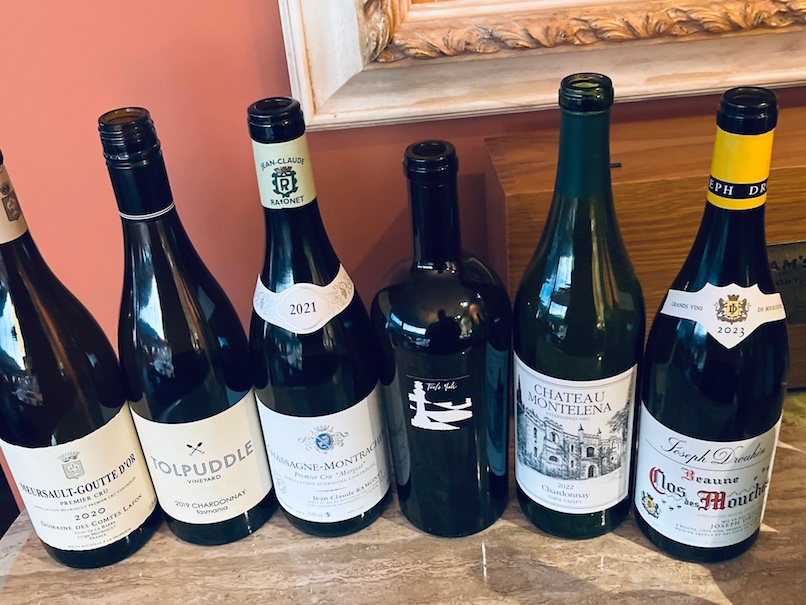
2020 MEURSAULT-GOUTTE D’OR PREMIER CRU DOMAINE DES COMTES LAFON FRANCE: Light green look. All the whites looked quite similar. This had the most reductive (“struck match”) nose as I expected from Lafon and Tolpuddle. Young, stylish, vibrant apple, pear, peachy fruit aromas. Pinch of sulphur. Restrained; not quite fully developed yet. Top quality but not singing. Postscript: IMHO it would have shown cleaner and better if it had been decanted and given more air to develop.
2019 TOLPUDDLE VINEYARD CHARDONNAY TASMANIA, AUSTRALIA: Also reductive but with greener fruit. More open, with grassy, floral notes and a good salty “cabbage” nose. High acidity with less ripe fruit. It stands out as a rather different Chardonnay from the others. PS: I have tasted later vintages including the outstanding 2024 that have much more balanced ripe spicy fruit to match the natural higher acidity levels and would have shown better here than the 2019.
2021 CHASSAGNE-MONTRACHET PREMIER CRU “MORGEOT” JEAN-CLAUDE RAMONET FRANCE: Bright shiny appearance. Best nose of pure agrumes (ripe citrus) – precise, classy aromas – very French white Burgundy. Stylish, well balanced, complex, and delicious. Leaner and less oaky than some, but it clearly showed the best minerality phenolics in this flight.
2020 CHECKMATE ARTISANAL WINERY FOOL’S MATE CHARDONNAY OKANAGAN VALLEY, BRITISH COLUMBIA: Fresh grapefruit but with softer sweeter tropical notes. Forwardly. Rather good but with less distinct varietal character. PS: It’s a blend of 5 vineyards and 11 clones, but it’s not as complex as their Little Pawn single vineyard from Jagged Rock Vineyard.
2022 CHATEAU MONTELENA CHARDONNAY NAPA VALLEY CALIFORNIA: Quite citrus and vegetal notes; delicate and less full-bodied. Still young with a lot of finesse. It doesn’t seem textbook Burgundy styled but is almost Chablis-like (though no Chablis was in the tasting). Will develop further. PS: More restrained elegant style than the first place 1973 winner in Paris but their balance-over-power philosophy for longevity is present.
2023 BEAUNE CLOS DES MOUCHES BLANC JOSEPH DROUHIN FRANCE: Interesting inviting herbal, honey, full-bodied, ripe pineapple fruit. Open and enticing. I found it round softer textured with some heat from the higher alcohol especially on the finish. Mixed feelings. PS: Later learned it was indeed 14.5% ABV compared to the other two French whites at a lesser 13.5
The Chardonnay group results showed a clear preference for France. The Beaune Clos des Mouches Drouhin received 5 of 11 first place votes for 208.5 points followed by the Chassagne-Montrachet from Ramonet at 199.5 with 3 first place votes.
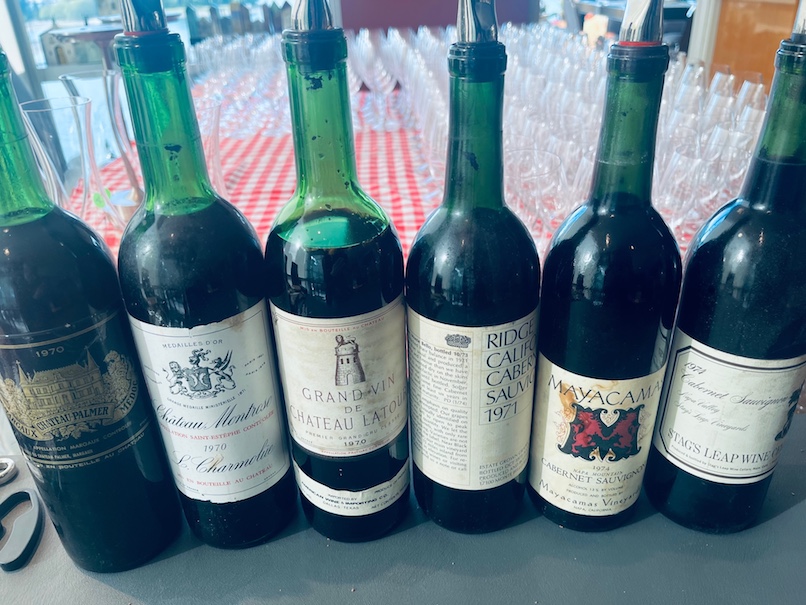
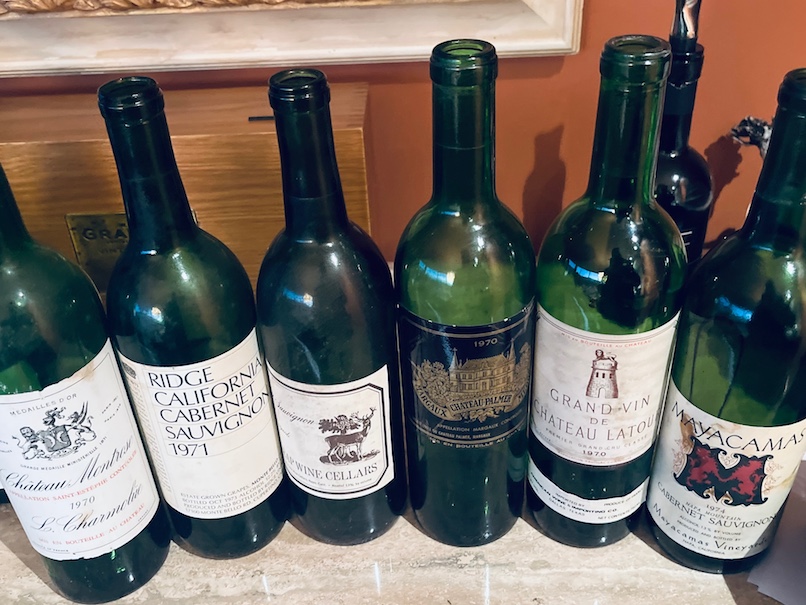
1970 CHATEAU MONTROSE AC SAINT ESTEPHE FRANCE: Darkest, deepest, and youngest-looking of the flight. It developed a fragrant bouquet with earthy sous bois forest floor, and leather characteristics. It had lots of powerful concentration with solid fruit and tannins still present. This must be Montrose from St. Estephe with that full, dry, less elegant signature. No rush. Better with food. Postscript: This Second Growth ranked third in the 1976 Paris tasting. It showed the typical depth of the first-ranked 1970 Montrose that Harry Waugh admired in Vancouver in 1982 at a 1970 horizontal suggesting it was the 1970 Latour (which came in second). It continues to hold and develop well. Good bottle here though some have TCA issues.
1971 RIDGE MONTEBELLO CABERNET SAUVIGNON CUPERTINO, CALIFORNIA: Also very dark but with less depth and a paler rim. Much more fruit is obvious here, both in the complex aromatic nose and the impressive intensity on the palate. It seemed quite a bit sweeter with herbal spices than the other wines. Was that the American oak used by Ridge, or the ripe plum concentration of Latour? Maybe too ripe, minty, and sweet for Chateau Latour 1970. Regardless this is an exciting, young wine for being 50 years old and clearly shows the best of this flight. PS: Your scribe provided this well stored bottle. Fifth in the 1976 event but even better here. Congrats to the Ridge team for this extraordinary 100% Cabernet Sauvignon at only 12.2 % ABV Estate Grown at 2300 feet on the Santa Cruz Mountains. Remarkable wine!
1974 STAG’S LEAP WINE CELLARS CABERNET SAUVIGNON STAG’S LEAP VINEYARD NAPA, CALIFORNIA: Quite a bit browner garnet look with a mature edge. It looked older, with a sweet tertiary bouquet. It was drying out, with insufficient fruit remaining on the palate. Needs drinking up. PS: See Photo: This bottle had the highest fill by far, so there are no excuses for its condition. Warren Winiarski won the 1976 Paris tasting with his 1973 wine from young vines planted in 1970. This 1974 was a better red vintage being richer and more elegant than 1973 with supple round flavours. But Stag’s Leap also used some of the best grapes from 1974 for their first reserve Cask 23. These great historic wines are past their peak and need drinking soon.
1970 CHATEAU PALMER AC MARGAUX FRANCE: Lighter red with more development. Nose not the cleanest bottle, showing some fading floral notes. Rather dry, with vegetal, oxidizing notes. Disappointing showing. PS: This Palmer 1970 usually shows much better with a distinctive, unique bouquet blending 44% Merlot, 31% CS, 9% CF, and a high 16% PV, offering fine elegance and harmony. Poor bottle. See Blog November 1, 2021 linked here for a better showing.
1970 CHATEAU LATOUR AC PAUILLAC FRANCE: Mid range colour. Less open with a deep briary black tea-like statement. There is depth and interest on the palate but some oxidation detracts overall. I’m not sure what this bottle is, but it wasn’t the best one. PS: See the photo of the full bottles; the 1970 Latour had a very low fill with lots of ullage. Not a typical bottle that might have given Ridge a closer battle. See Blog November 6, 2017 & Latour vertical April 4, 2022 both linked here. Bullish recent reviews in 2023 by Jancis Robinson 19.5/20 “no sign of fading fruit” and John Gilman 96/100 “still deserves a bit more time in the cellar just to allow it to blossom completely!” Bottle variation.
1974 MAYACAMAS VINEYARDS NAPA MOUNTAIN CABERNET SAUVIGNON NAPA, CALIFORNIA: Much younger looking deep red appearance. It showed black olives with minty geraniums as non-French aspects. It should likely be Mayacamas, given those eucalyptus notes characteristic of California. It was a bit edgy and lacked cohesion. Bottle variation again? PS: Bob Travers made some brilliant wines from 1968 to 1978 but they haven’t been quite as outstanding since. Good but better bottles exist.
The amazing Ridge Montebello 1971 received 7 of 11 first place votes and a total score of 207.5 – a dominating win! What a remarkable showing! Second at 197 was 1970 Latour and third at 193 was 1970 Montrose adding credibility to the long aging potential of Cabernet Sauvignon from Bordeaux. Bottle variation among 50+-year-old wines is inevitable and likely affected the results. Still an interesting overall exercise.
You might also like:
 |
 |
 |