Question: Want to serve a fun wine for the Chinese New Year on February 8 and would appreciate any recommendation you can make Sid.
Answer: Great idea to have something festive and to match well with Chinese food. Recommend from the Okanagan the Haywire 2016 Lunar New Year White $18.90 (gewurz & chardonnay with a touch of viognier and pinot gris showing floral spices) and 2016 Lunar New Year Red $19.90 (gamay & syrah shows juicy peppery fruit). Wonderfully designed symbol in red and gold colours with the symbol appropriately celebrating The Year of the Monkey! Great bottle shot at http://bit.ly/1OXlhBr to check out. Order through website www.okanagancrushpad.com or at http://bit.ly/1PR3A6k. Gung Hay Fat Choy!
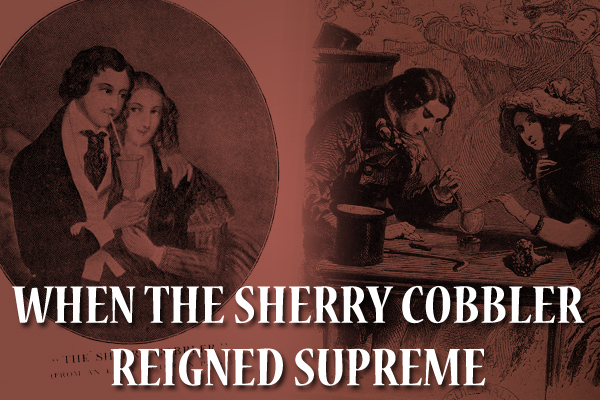
In the spring of 1867, French emperor Napoleon III offered a warm welcome to dignitaries arriving from around the world to witness the Exposition Universelle. Held at the picturesque Champ de Mars over a period of eight months, enthusiastic Parisians of the Second French Empire gladly followed suit by embracing the nearly seven million visitors who travelled to a city that was modernizing at a rapid pace. And of the over fifty thousand exhibitors who set up shop, one group of Americans simply dazzled French citizens with a drink so unique that it spread like wildfire.
It was called a Sherry Cobbler.
A simple recipe consisting of sugar, muddled citrus and Spanish fortified wine, it became so popular that the U.S. delegation went through approximately five hundred bottles of sherry a day in order to serve up this concoction to a mostly French clientele. Of course, British visitors knew all about the drink after reading the serialized novel The Life and Adventures of Martin Chuzzlewit by Charles Dickens. After the main character describes the cocktail in glowing terms, its popularity soared throughout England, surprising another famous author Mark Twain. “And it warmed my heart more than, I can tell, yesterday, when I witnessed the spectacles of an Englishman, ordering an American sherry cobbler of his own free will and accord,” described Twain. “With a common origin, a common language, a common literature, a common religion, and—common drinks, what is longer needful to the cementing of the two nations together in a permanent bond of brotherhood?”
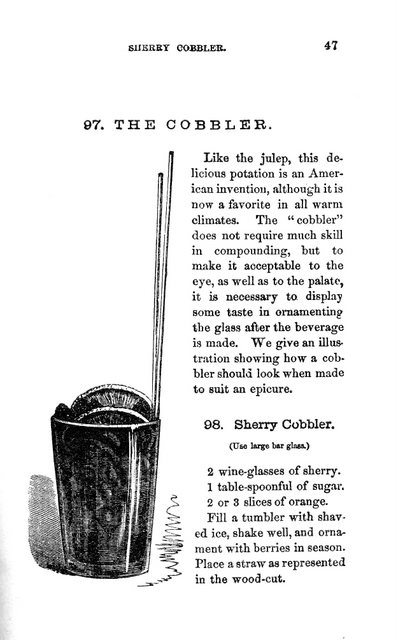
Invented sometime during the 1820s or 1830s, the Sherry Cobbler quickly democratized America’s drinking habits, being consumed by a wide cross-section of the country. Listed in his now-famous 1862 book How to Mix Drinks, bartender Jerry Thomas writes that while the cobbler “does not require much skill in compounding … to make it acceptable to the eye, as well as to the palate, it is necessary to display some taste in ornamenting the glass after the beverage is made.” Garnishing it with berries certainly didn’t hurt its popularity but two essential elements that made it so trendy was shaking it with crushed ice—and topping it off with … a drinking straw.
Today, we see nothing special about adding ice to a drink, but in the early nineteenth century, before the commercial ice trade and mass refrigeration, frozen water was described by Mark Twain as “jewelry, none but the rich could wear it.” Being such a novelty, it soon transcended classes. And being the first drink to popularize the straw, everyone from the upper class sherry drinker to the young college student could be seen sipping his or her ice-cold cobbler with this strange new device. What bartending legend Harry “The Dean” Johnson described as “without doubt the most popular beverage in the country” had bridged the gap between tavern and restaurant as the century came to a close.
So if you’re looking to indulge yourself in a sweet slice of American nostalgia, have a look at the recipe below to make your very own Sherry Cobbler and party like it’s 1839!
Sources:
Baiocchi, Talia. A Modern Guide to the Wine World’s Best-Kept Secret, with Cocktails and Recipes. Berkeley: Ten Speed Press, 2014. Beazley, Mitchell. GQ Drinks. Octopus, 2014.
Twain, Mark. Mark Twain’s Speeches: Easyread Super Large 18pt Edition. Sydney: ReadHowYouWant.com, 2008.
Question: We have a bottle of Château Haut Brion, 1985, Graves, Red Bordeaux Wine. When is the latest that it should be consumed?
Answer: What a treasure you have there! 1985 Bordeaux are underrated generally because they were so delicious right out of the gate and concerns were expressed that they would not last. Haut-Brion is a star in every vintage because of their unique special terroir providing wines with outstanding balance. Robert Parker in his Bordeaux book 4th edition (2003) gave your 1985 a solid 95 score and his stated “Anticipated maturity: now – 2012” but it will last a lot longer. Now at 30 years of age where well stored it still should be on a fantastic plateau of elegant charming enjoyment. I tried a bottle of 1985 Haut-Brion in 2015 that was mature but a pure stylish delight. Best vintages of Haut-Brion surprise you as they seem to go on forever. Last year at the Château I tried the 1945 (granted a fantastic concentrated vintage) that was still amazingly complex yet fresh and it is 40 years older than your 1985! Wonderful to drink the 1985 now but it will last at least several decades more. Impossible to give you a specific definite ending date. Another alternative you always have is to auction it off with current prices in the $400 US range and continuing to go up. Enjoy!
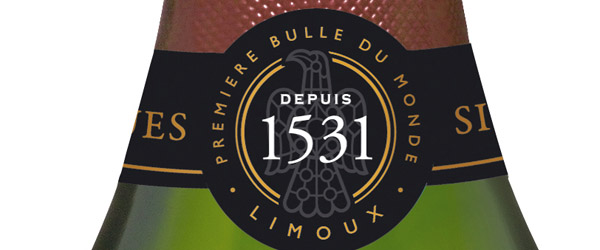
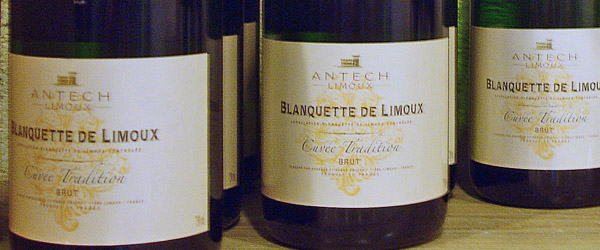
For anyone who thinks that a famous French monk invented sparkling wine–well, here’s some news for you! More than a century before Dom Pierre Pérignon began experimenting with bubbles on the chalky soil of Champagne, a small commune in the foothills of the French Pyrenees named Limoux was already producing its very own fizz. Back when Épernay and Reims were best known for their wool exports and the surrounding vineyards grew mostly red wine grapes, this small community on the river Aude became the birthplace for French bubbly.
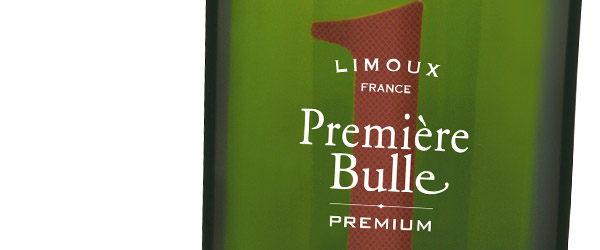
Today, Limoux is largely seen as sparkling wine’s redheaded stepchild when compared to the names Veuve Clicquot, Bollinger and Krug. However, with some experts predicting that the market for high-end Prosecco is about to chill, Limoux may experience a renaissance for those seeking out a competitively priced alternative to Champagne. So here are ten facts to get you up to speed on this French wine region.
1. According to the Limouxins, sparkling wine has been produced there since at least 1531. However, some historians believe it was first invented during the Middle Ages.
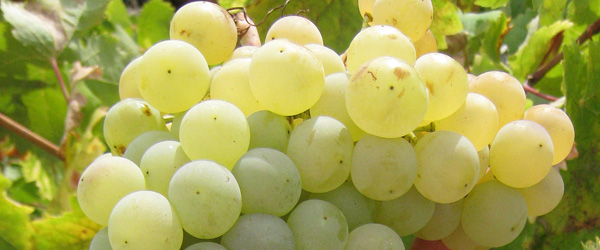
2. A mix between Atlantic and Mediterranean climates, Limoux is situated on a high altitude. The limestone slopes make it an ideal spot to grow Chardonnay.
4. Blanquette de Limoux must be made with 90% Mauzac grapes – a local variety also known as Blanquette and tastes similar to apple skins. The rest is made up of Chardonnay and Chenin Blanc.
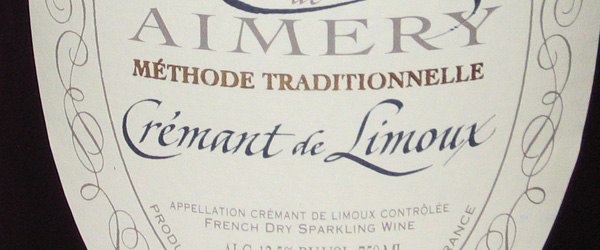
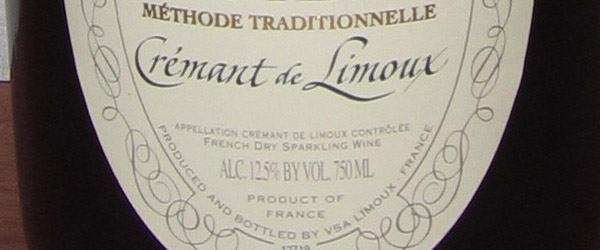
5. The more popular Crémant de Limoux only needs 10% Mauzac and/or pinot noir with the remaining 90% being Chardonnay and Chenin Blanc, resulting in a more refreshing taste.
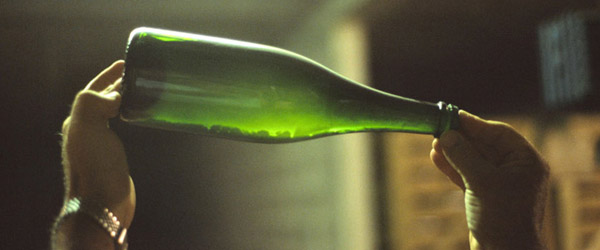
6. Crémant means French sparkling wine that is made outside the district of Champagne using the traditional method of secondary fermentation occurring inside the bottle.
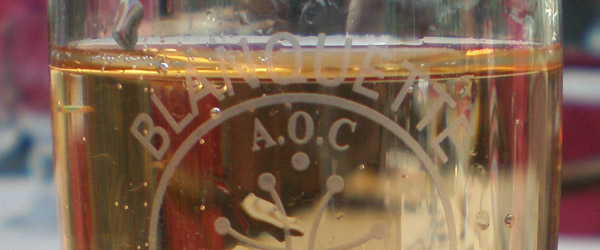
8. In 1938, an AOC was given to Blanquette de Limoux. But in 1975 and 1989 respectively, the rules were loosened to allow less Mauzac grapes and more international varieties such as Chardonnay.
10. Most sparkling wine from Limoux is dry and sold as a non-vintage.
Sources:
Coates, Clive. An Encyclopedia of the Wines and Domaines of France. Berkeley: University of California Press, 2000.
Gasnier, Vincent. A Taste For Wine: 20 key tastings to unlock your personal wine style. New York: Penguin, 2006.
Hammond, Carolyn. 1000 Best Wine Secrets. Naperville: Sourcebooks Inc., 2006.
Joseph, Robert. Eyewitness Companions: French Wines. New York: Penguin, 2005.
MacNeil, Karen. The Wine Bible. New York: Workman Publishing, 2015.
Question: More of my recent wine purchases have a screw-top closure. Should I be storing these in my cellar on their sides just like for my cork closure wines?
Answer: Cork closure wines should be stored horizontally in order to keep the natural cork moist so it doesn’t dry out and allow air to get in oxidizing the wine. With screw-top bottles you can follow the same procedure but you have other choices open to you because of their tightly fit closure. This is really a bonus because it provides you with versatility to not just put them lying down in racks but to utilize in any position every nook and cranny of open space available in your cellar or even upright on the cellar floor. Your choice.







 Loading ...