Wines from long-established, top-quality Burgundy classified vineyards have become unbelievably expensive. We all have been looking for alternatives from that region. Hautes-Cotes have benefited from regional higher altitude vineyards whose Chardonnay and Pinot Noir are ripening better due to climate change. Wines from Maranges village, at the southern tip of the Cote de Beaune, are evolving with often more rustic but solid red fruit. Resurgence of the Aligoté grape’s inherent good acidity now with increased ripeness is becoming more popular.
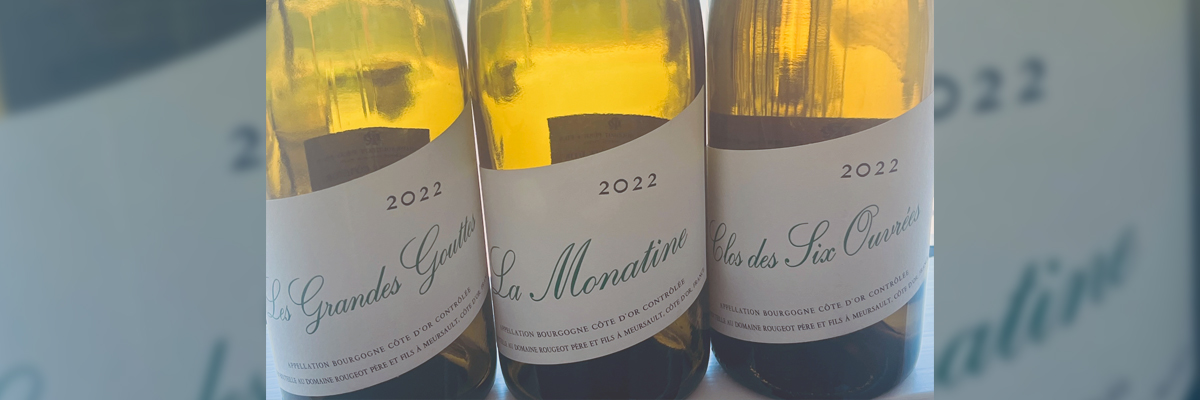
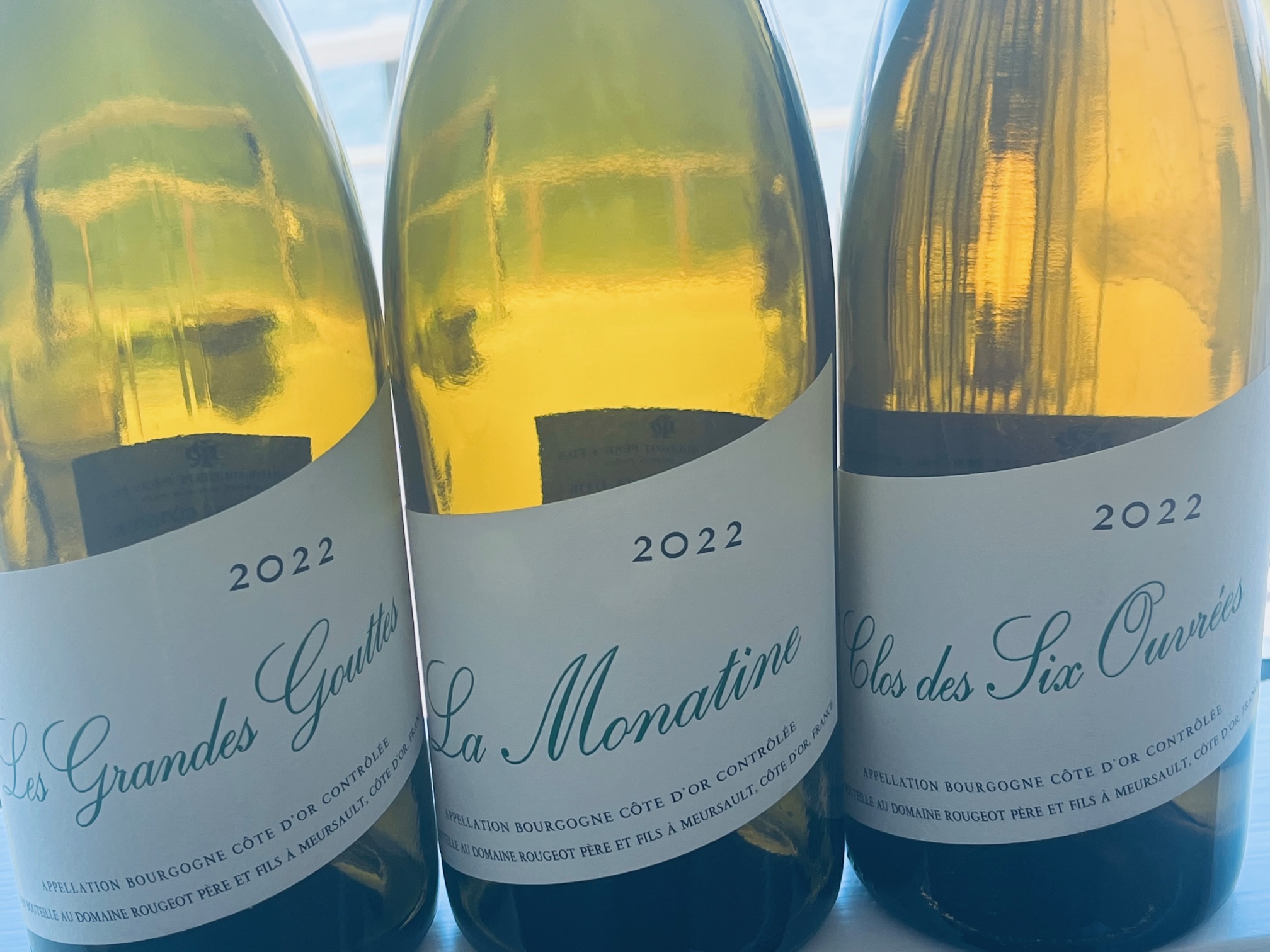
The whole Cote Chalonnaise is being discovered. Demand for the Mâconnais region has increased, especially the whites from Pouilly-Fuisse & Saint-Veran. However, several new Chardonnays grown near the hot white Burgundy regions of Meursault, Puligny, and Chassagne are worth exploring. Your scribe continues to enjoy more costly Saint- Aubin and has been impressed by recent vintages of Auxey-Duresses including Domaine Jean & Gilles Lafouge. Seek them out. Quite intriguing to me are the BOURGOGNE COTE-D’OR wines being produced by DOMAINE ROUGEOT PERE et FILS in Meursault. Last week, I tasted 3 different ones all 2022 vintage wines during home dinners; they were quite interesting. Especially the “sans sulfite ajoute” notification on the back label, meaning “no added sulphur”. This suggests the winemaker added no SO2 (sulphur dioxide), which usually aids in antimicrobial prevention and preservation of the bottled wine. Also, they are more vulnerable because of the long shipment from France to western Canada for these wines and possible temperature changes. However, this idea must excite wine consumers who are sensitive (and even allergic) to sulfites.
Here are some brief impressions of these three wines all priced in the $70 Canadian range:
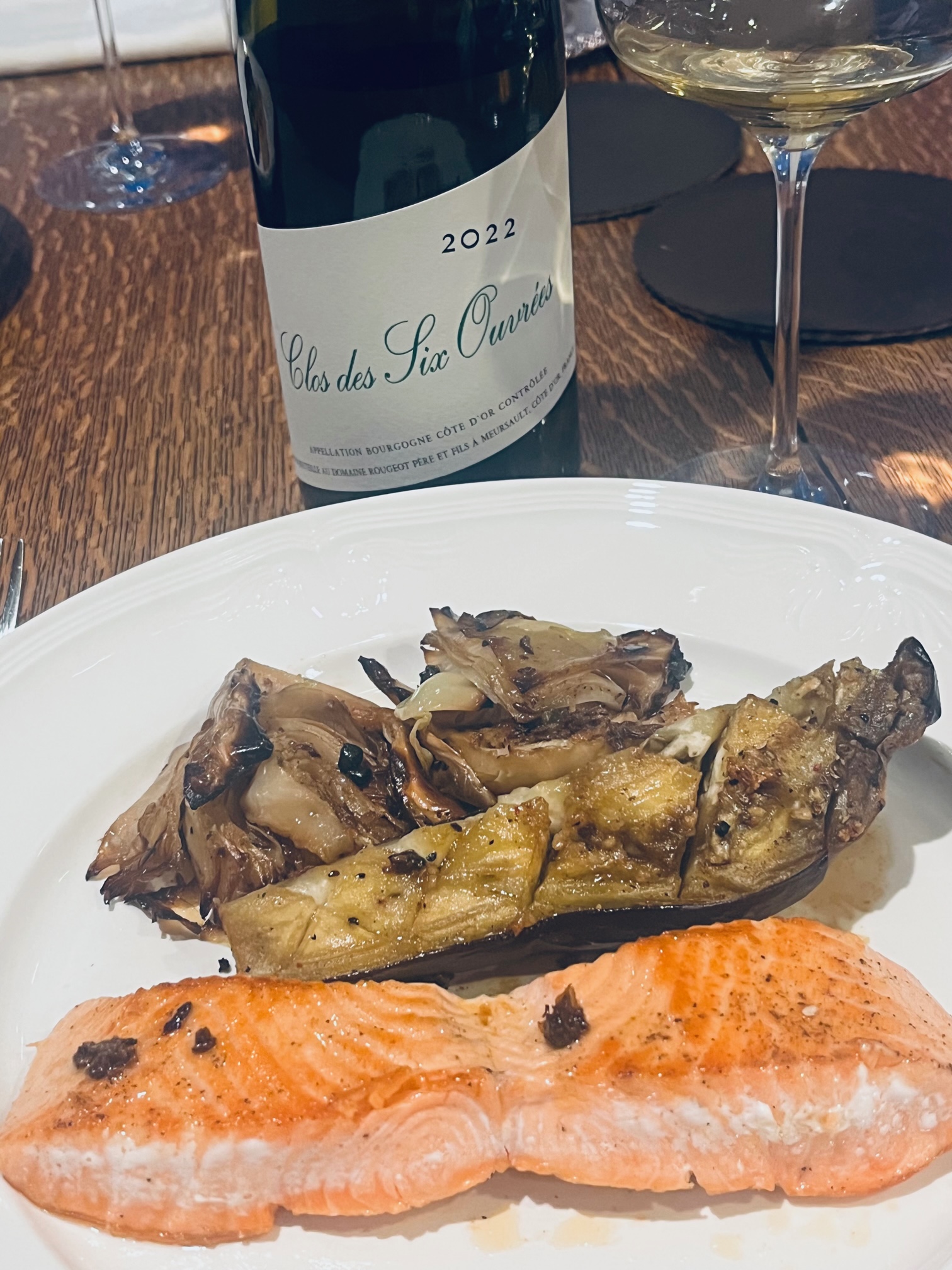
2022 CLOS DES SIX OUVREES: 50-year-old vines planted right at the Meursault village with the smallest production. April 2024 bottling of 3,265 bottles. This was the lightest and the most delicate, but it has some structure. Admired the lovely, pure freshness, which was typically citrusy (d’agrumes). Chardonnay definition and quality is surprisingly high. No rush. Delicious dish of Chinook salmon, eggplant, cabbage, and sauteed red onions paired well.
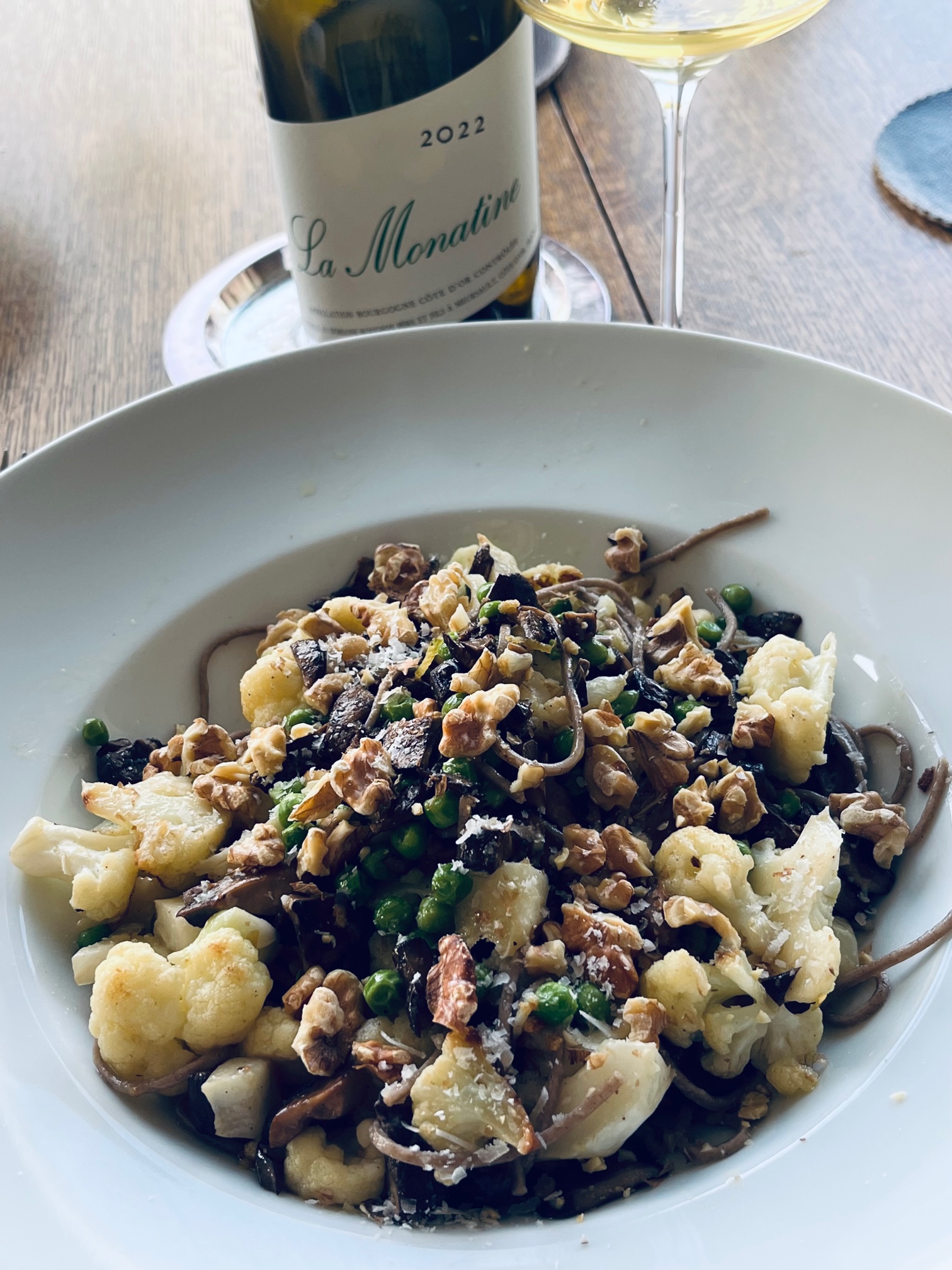
2022 LA MONATINE: 55-year-old vines in a heavier mix of clay-limestone immediately north of Sous La Velle – across from Chateau de Meursault. April 2024 bottling: 3,933 bottles (and 204 Magnums). Early-picked, smaller berries fermented in neutral barrels. It looks quite mature, with a deepening yellow colour. A much more generous Chardonnay with deep, full, smooth textures. Drinking quite openly now. Perhaps this bottle would have benefited from added freshness if some sulfites had been added. Will try another one. It stood up nicely to the fresh halibut filets with citrus.
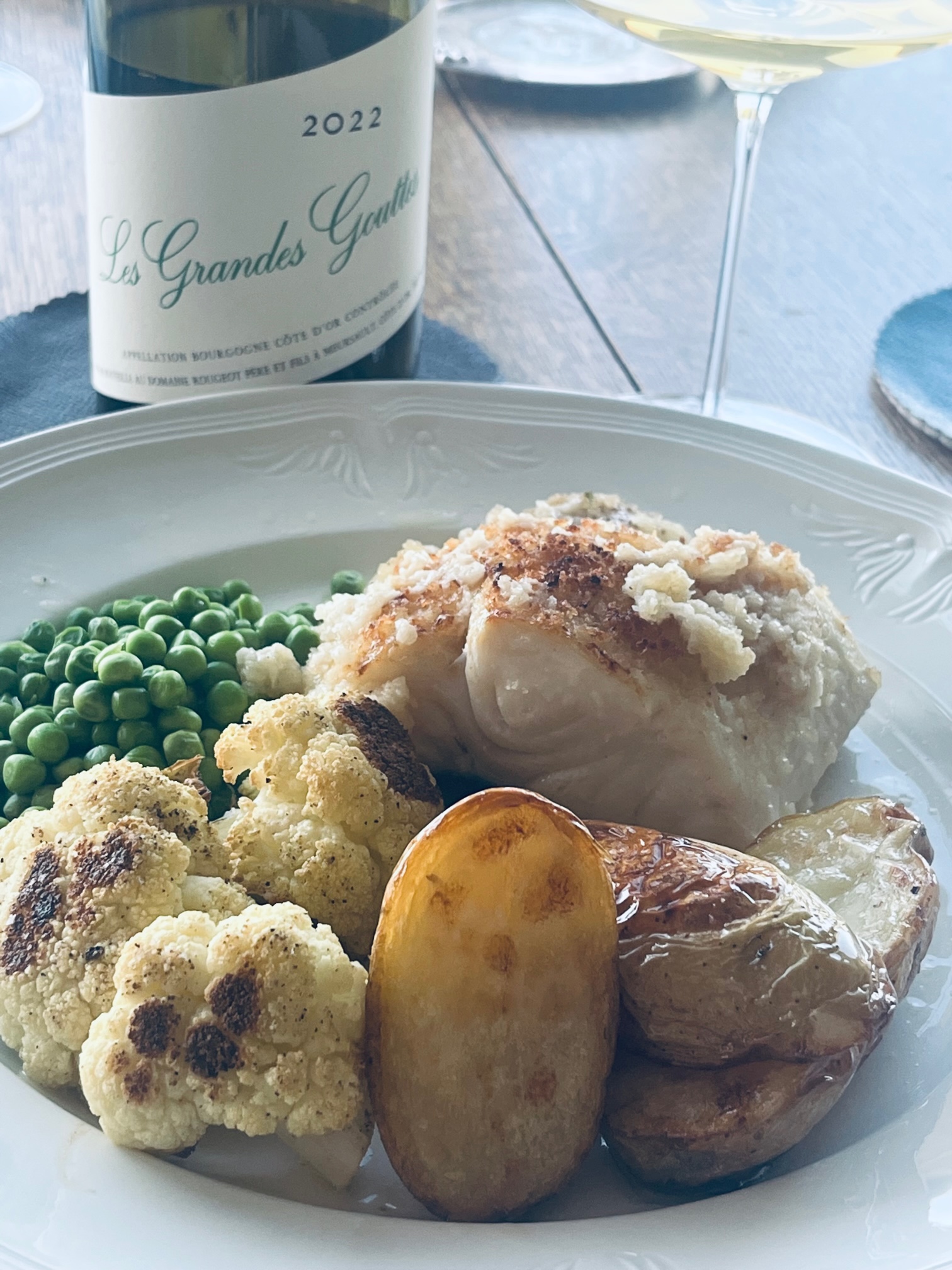
2022 LES GRANDES GOUTTES: 40-year-old vines, the last to be harvested, grow directly south below Meursault Les Charmes bordering Puligny. March 2024 bottling: 5,967 bottles (200 Magnums & 25 Jeroboams). This one has the best body depth with balanced fresh acidity. Quite vibrant and precise. Meursault-like character. Developing nicely on a perfect early plateau of enjoyment. Singing matched with amazing fresh wild Spring salmon filets.
These experimental beauties offer good value and are worth investigating, courtesy of Pierre-Henri Rougeot. Look for them to try. A web search yielded some more detailed comments on my wines, four of these are linked here: Burgundy Report: Rougeot Pere et Fils; Uncharted Wines; Juice Imports Domaine Rougeot; Winehog (Steen Ohman)
You might also like:
 |
 |
 |