Question: In a blind tasting can you learn anything from just looking at the appearance of a wine?
Answer: Good question. I rely mainly on my nose but of course also the taste. On score cards they often list lots of marks for colour and appearance but generally they are not as important as other factors.
However a few good tips to remember include:
Age – white wines get darker & red wines get lighter. Clarity – Bright or dull, clarity, un-fined or unfiltered, throwing a deposit or sediment. Region – usually younger yellow coloured whites (though there could be oxidation issues) and deep very dark reds are indicative from a warmer climate & a lighter colour from cooler regions (eg. Chablis). Glycerol – The so called legs or tears are indicative of the amount of glycerol in the wine with more alcohol giving you more legs (though this can vary depending on the glass and the cleanliness of it).
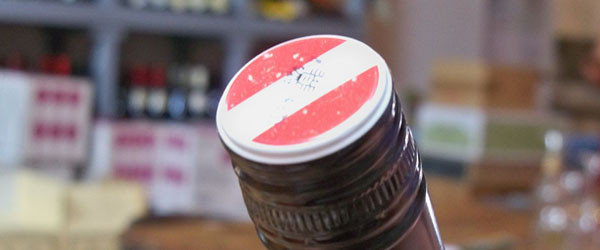
Dating back to the Celts who planted the first vines approximately 3000 years ago, Austria has a wine growing history that is rich in tradition. During the Middle Ages, monasteries situated along the Danube River played an invaluable role by introducing pinot noir and riesling grapes to the terroir. In fact, vineyards back then covered ten times the amount of soil that they do now. And just like the land of Austria, its wine industry has seen many peaks and valleys, overcoming plenty of obstacles to become one of the most prestigious producers of premium wine. Below are ten facts to keep in mind the next time you spot a bottle at your local store.
1. With an average annual yield that is less than half of Germany’s, Austria makes less than one percent of all the wine in the world – around 28 million cases per year. 75% of it is consumed locally. blank blank
2. Austrian wine law has 35 regulated grape varieties – 22 of them fall within the white wine category. blank
blank
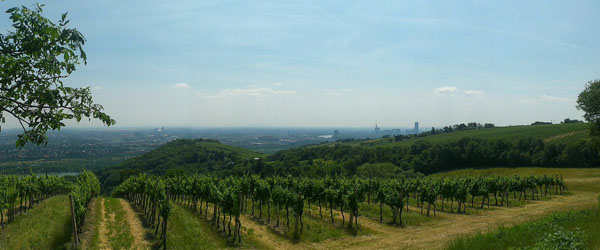
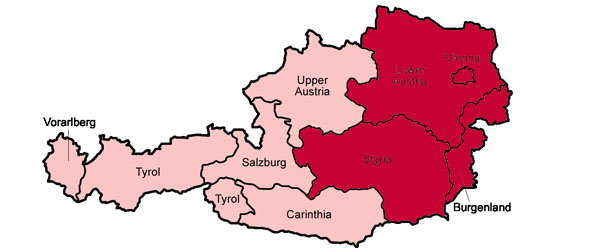
3. All commercial Austrian vineyards are located in the eastern part of the country, away from the Alps. Unlike most of Western Europe, the climate is known for colder winters and hotter summers. blank blank
5. After suffering from phylloxera and numerous harsh winters in the 19th century, an emphasis was placed on hardier grapes such as Grüner Veltliner, one of the most important varietals in Austria today – representing nearly a third of all the nation’s plantings. It produces a full-bodied and crisp wine with herbal and spicy/vegetable flavors such as green peppers, which can be excellent for food pairings. blank blank
6. While Riesling is grown mainly in the region of Lower Austria, Red wines come mostly from Burgenland, bordering on Hungary. blank blank
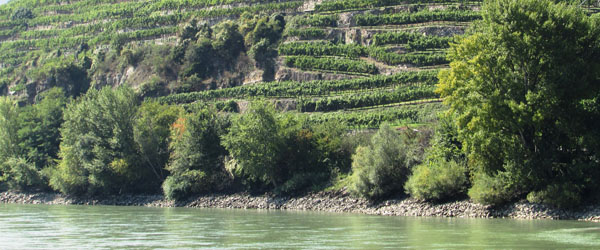
7. One of the most famous wine growing valleys in Austria is Wachau, a UNESCO World Heritage Site located west of Vienna on the Danube River. Consisting of just 3,500 acres of vines, the Danube helps to moderate the climate, resulting in some excellent Riesling. blank blank
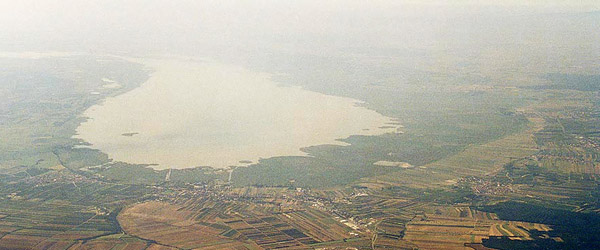
8. Austria’s best sweet wines come from near the Neusiedlersee area of Burgenland. The Neusiedlersee is a large shallow lake separating Austria from Hungary and benefits from outbreaks of noble rot, an essential component for the production of complex sweet wines. blank blank
9. Austria produces only a fifth as much wine as Australia – but has three times more bottling estates (6,000). The average estate covers less than seven acres. blank
10. In 1985, it was discovered that numerous Austrian wineries were adulterating their wines with diethylene glycol, giving them more body and sweetness. This resulted in a huge scandal and severely damaged the reputation of the country’s wine industry. In response, the country turned the corner by enacting vigorous quality standards. blank blank
Sources:
Brostrom, Geralyn G. & Brostrom, Jack. The Business of Wine: An Encyclopedia. Santa Barbara: ABC-CLIO, 2008.
McCarthy, Ed & Ewing-Mulligan, Mary. Exploring Wine For Dummies. West Sussex: Wiley, 2011.
Parker, Robert M. & Rovani, Pierre Antoine. Parker’s Wine Buying Guide. New York: Simon & Schuster, 2002.
Rapp, Alyssa. Bottlenotes Guide to Wine: Around the World in 80 Sips. Avon: Adams Media, 2008.
Slinkard, Stacy. Idiot’s Guides: Wine. New York: Penguin Books, 2013.
Question: I have two bottles of Cognac Grande Fine Champagne, 1811 Reserve, Imperatrice Josephine. Bottled in France 11/4/1934. Both bottles have leakage, one 1/2 way down the bottle, the other 1’’ from the neck. Both have damaged corks. I believe that they had been stored properly. Do you think they are still drinkable and do they have any value?
Answer: Lucky you! These are quite valuable despite the leakage issues. Once bottled Cognac won’t improve further but the high alcohol spirit will protect it against oxidation or deterioration. Josephine is named after Napoleon’s first wife and the bottles have a unique shape. One bottle of this 1811 sold at Christie’s New York about 5 years ago for over $7000. Check it out for a possible resale at auction or indulge by opening it enjoying an amazing example of the very best in Cognac.
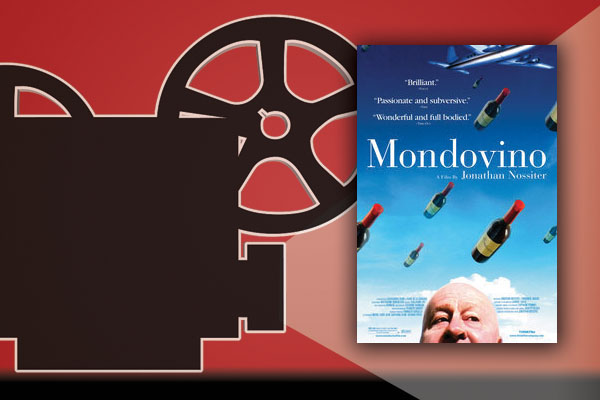
It is a controversial statement that makes filmmaker Jonathan Nossiter eager to find out why and how the business of wine is transforming at a rapid pace. The result is the Palme d’or nominated documentary Mondovino, shot entirely with an inexpensive handheld camera, proving that with interesting subject matter, substance can certainly trump style. Exploring how the industry is dealing with the impact of globalization as trade barriers are brought down and tastes are universalized, the film excels at giving viewers a candid look at a business dealing with a whirlwind of change.
The documentary begins by interviewing the key parties that went to war in the small village of Aniane, France. Back in 2000/2001, when mogul Robert Mondavi expressed interest in cultivating the land, the locals responded militantly by electing a communist mayor who pledged to stop the American from turning their community into the wine equivalent of EuroDisney. Brushed off as gullible “hicks” by prominent consultant Michel Rolland, the entire grassroots affair serves as a microcosm for what is going on in vineyards all over the globe, according to Nossiter.
Throughout the film, many local winemakers speak about a sort-of Wine Spectator/Robert Parker industrial complex that leads to a greater emphasis on marketing to a largely American audience. But as we see, this isn’t some pie in the sky conspiracy theory as numerous vineyards do enlist the help of scientists and consultants who instruct them on how to modify their wine to ensure a good score from mostly U.S. critics—who can make or break their entire business. This practice, of course, is an affront to generations of winemakers who take great pride in their exceptional terroir.
Described by many as the “Parkerization” of wine, Nossiter decides to speak to the man himself by visiting his secluded home on the outskirts of Baltimore. When asked pointedly about the enormous influence he has had on the industry, Parker responds with great pride about giving little-known winemakers a chance to be noticed while tearing down the caste system synonymous with the old world. The democratization of wine –what could be more American than that?
This is one of the film’s greatest strengths. From a visit to Christie’s legendary auction house in London to the Frescobaldi archives, which includes a letter from Henry VIII requesting their wine, oenophiles will soak up all the wonderful scenery. They’ll also recognize some of the industry’s biggest icons like Robert Mondavi and Michael Broadbent. Where Sideways, also released in 2004, attracted a wide crossover audience, Mondovino will mostly appeal to the aficionados.
More importantly, the film raises legitimate questions about potential conflicts of interest. Will the amount of advertising dollars that a winery spends result in a better score? Is too much power in the hands of a few? While many would argue that in 2015, the influence of wine critics is diminishing, especially now with the internet being so dominant amongst younger drinkers, there is no denying the enormous weight these people still have eleven years after the film was first released. And whether you agree or disagree with the arguments heard throughout Mondovino, there is little doubt that it’ll still provoke a passionate debate between serious wine drinkers.
Question: Just celebrated the Canadian Thanksgiving with a roast turkey dinner. Going to San Francisco for the US Thanksgiving on November 26 which probably will result in an encore. What is the best wine choice?
Answer: Turkey by itself is quite versatile for most wine pairings that work. It is all the other accoutrements served with it that brings in lots of other diverse flavours. No single choice is necessarily best though Andre Simon in Partners gave us a good one – Domaine de Chevalier Red from Bordeaux. Almost any white (riesling, chardonnay), rose, or red (except a too big and powerful one) should match well for you. Lots of correct choices. I usually choose a lighter pinot noir. Cop out by choosing a wine you really like drinking.





 By Rosenzweig (Own work (own picture)) [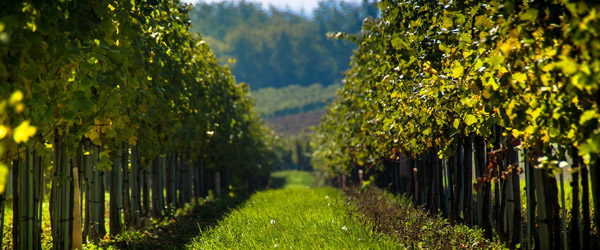
 Loading ...