menu
Member Sign In
  • IWFS Homepage
  • Blog Home
  • Forums Home
  • Global Forum
  • Contact Us
Close
  • IWFS Homepage
  • Blog Home
  • Forums Home
  • Global Forum
  • Contact Us
    Member Sign In
  • Blog Home
  • Forum Home
  • Global Forum

Follow Us

Recent Posts

  • OUR 2002 RED BURGUNDY VERTICAL IS AGING WELL, SHOWCASING REFINED PRECISION WITH TERROIR-DRIVEN CHARM
  • Ask Sid: Thoughts of Sid Cross on the Judgement of Paris historic wine tasting at the 50th Anniversary?
  • EDUCATIONAL #AUSSIEWINE SEMINAR “CLASSIC AND CONTEMPORARY AUSTRALIA” BY KNOWLEDGEABLE MARK DAVIDSON WAS A BIG HIT AT @VANWINEFEST
  • Ask Sid: Was it 50 years since California bested France in a Paris wine tasting?
  • HORIZONTAL TASTING OF RED BORDEAUX 2015 SHOWS FRUIT FLESHINESS WITH VARIABILITY + OUTSTANDING BENTO BOX

Archives

  • April 2026
  • March 2026
  • February 2026
  • January 2026
  • December 2025
  • November 2025
  • October 2025
  • September 2025
  • August 2025
  • July 2025
  • June 2025
  • May 2025
  • April 2025
  • March 2025
  • February 2025
  • January 2025
  • December 2024
  • November 2024
  • October 2024
  • September 2024
  • August 2024
  • July 2024
  • June 2024
  • May 2024
  • April 2024
  • March 2024
  • February 2024
  • January 2024
  • December 2023
  • November 2023
  • October 2023
  • September 2023
  • August 2023
  • July 2023
  • June 2023
  • May 2023
  • April 2023
  • March 2023
  • February 2023
  • January 2023
  • December 2022
  • November 2022
  • October 2022
  • September 2022
  • August 2022
  • July 2022
  • June 2022
  • May 2022
  • April 2022
  • March 2022
  • February 2022
  • January 2022
  • December 2021
  • November 2021
  • October 2021
  • September 2021
  • August 2021
  • July 2021
  • June 2021
  • May 2021
  • April 2021
  • March 2021
  • February 2021
  • January 2021
  • December 2020
  • November 2020
  • October 2020
  • September 2020
  • August 2020
  • July 2020
  • June 2020
  • May 2020
  • April 2020
  • March 2020
  • February 2020
  • January 2020
  • December 2019
  • November 2019
  • October 2019
  • September 2019
  • August 2019
  • July 2019
  • June 2019
  • May 2019
  • April 2019
  • March 2019
  • February 2019
  • January 2019
  • December 2018
  • November 2018
  • October 2018
  • September 2018
  • August 2018
  • July 2018
  • June 2018
  • May 2018
  • April 2018
  • March 2018
  • February 2018
  • January 2018
  • December 2017
  • November 2017
  • October 2017
  • September 2017
  • August 2017
  • July 2017
  • June 2017
  • May 2017
  • April 2017
  • March 2017
  • February 2017
  • January 2017
  • December 2016
  • November 2016
  • October 2016
  • September 2016
  • August 2016
  • July 2016
  • June 2016
  • May 2016
  • April 2016
  • March 2016
  • February 2016
  • January 2016
  • December 2015
  • November 2015
  • October 2015
  • September 2015
  • August 2015
  • July 2015
  • June 2015
  • May 2015
  • April 2015
  • March 2015
  • February 2015
  • January 2015
  • December 2014
  • November 2014
  • October 2014
  • September 2014
  • August 2014
  • July 2014
  • June 2014
  • May 2014
  • April 2014
  • March 2014
  • February 2014
  • January 2014
  • December 2013
  • November 2013
  • October 2013
  • September 2013
  • August 2013
  • July 2013
  • June 2013

Meta

  • Log in
  • Entries feed
  • Comments feed
  • WordPress.org

Author Archive

Older Entries
Newer Entries

Ask Sid: Best wine choice to suit many different food courses?

August 2nd, 2017 by Joseph Temple
Ask your question here

what wine pairs with everything?

Question: What is your recommendation Sid for picking one style of wine to go with all dishes being served during a meal from vegetarian to fish to meat to desserts?

Answer: IMHO no right or wrong answer to a tough question. Trendy these days to say that popular Rosé is your best choice. However I am not the biggest fan of pairing a charming dry (or sweeter) Rosé with red meat. Chilled Gamay (or Cru Beaujolais) or an aged Riesling sometimes is a good alternative for overall pairing with diverse dishes. However my go to choice is usually Sparkling (with Champagne preferred at the higher price point). Those fascinating bubbles seem to give fresh vibrancy and a welcoming refreshment to the palate between bites that makes the matching with most foods really quite magical. Enjoy.


You might also like:

 alt=

What wine do you think pairs with everything?

View Results

Loading ... Loading ...

Revisiting the glorious legacy of Constantia Wine

July 29th, 2017 by Joseph Temple

Constantia wyn wine south africa

By Joseph Temple

Way back in the late 18th and early 19th centuries, there was one wine that was all the rage. A wine so popular that some of its biggest fans included Frederick the Great of Prussia, King Louis Philippe of the French, and Catherine the Great of Russia. Novelist Jane Austen once remarked that it had magical healing powers that could even cure a broken heart. And Napoleon Bonaparte drank so much of this particular brand while living in exile on the island of Saint Helena that he refused any other wine as he lay on his death bed. With a plethora of endorsements from Europe’s most powerful monarchs and rulers, one might easily think that this wine came from a famous estate in Bordeaux or Burgundy. However, if that was your first guess, you would be wrong; this world famous wine was produced just outside of Cape Town on the estate known as Groot Constantia.

As mentioned in last week’s blog entry, South Africa’s wine industry was born in the 1650s as an outpost to fill the thirsty needs of Dutch sailors as they headed towards the Orient. But with the arrival of French Huguenots, a more sophisticated level of expertise arrived in Cape Town—and just in time as Simon van der Stal, an early Dutch governor had his 1,850 acre estate sold and divided. Named after van der Stal’s wife Constance, the vineyards that became Groot Constantia fell into the hands of a German named Hendrik Cloete, who eventually made a wine that became the Cape’s hottest export.

Planting a combination of Frontignac (Muscat Blanc à Petits Grains), Pontac and some Chenin Blanc, “Constantia Wyn” became a rare exception amongst the lackluster wines made around the Cape. Although records are sparse and incomplete, some speculate that Cloete left the grapes on the vines long after ripeness, which achieved a shrivelled but not botrytized concentration.

Whatever the secret may have been to Constantia’s success, there was no denying that it was a smash hit from London to Saint Petersburg. In The Oxford Companion to Wine, Jancis Robinson writes, “Their [Constantia’s] fame was never matched by any other New World wines and their height they commanded more prestige, more fabulous prices, and enjoyed more crowned patronage than the most celebrated wines of Europe (with the possible exception of Hungarian Tokaji).” While praised by author Charles Dickens and poet Charles Baudelaire, its most famous customer Napoleon had 297 gallons shipped in wooden casks to his home every single year.

Unfortunately, by the 1860s and into the 1870s, Constantia was no longer in vogue. Due to a number of reasons that included the collapse of the export market for Cape wines and the fact that sweet wines had become unfashionable in Europe, the vineyard fell on hard times. Along with low yields which drove up expenses, by 1885, the estate went bankrupt and was purchased by the government, bringing things to a painful end.

When looking back on the legacy and impact of Constantia, its stunning success proved that wines harvested in the New World could compete with the very best of France. One hundred and fifty years later as remarkable vintages from California, Argentina, and Chile are sold across the world, they all owe a debt of gratitude to this special fortified wine!

Sources:

Alexander, Patrick. The Booklovers’ Guide to Wine: A Celebration of the History, the Mysteries and the Literary Pleasures of Drinking Wine. Coral Gables: Mango Media Inc., 2017.
Estreicher, Stefan K. Wine: From Neolithic Times to the 21st Century. New York: Algora Publishing, 2006.
James, Tim. Wines of the New South Africa: Tradition and Revolution. Berkeley: University of California Press, 2013.
MacNeil, Karen. The Wine Bible. New York: Workman Publishing, 2015.
Robinson, Jancis. The Oxford Companion to Wine, 4th Edition. Oxford: Oxford University Press, 2015.
Schoonmaker, Frank. Encyclopedia of Wine. New York: Hastings House, 1964.


You might also like:

Ask Sid: What is the punt?

July 26th, 2017 by Joseph Temple
Ask your question here

punt wine bottle bottom

Question: What is a punt?

Answer: The word has various meanings from kicking the ball in football to a flat bottomed boat. However with reference to wine it is that indentation at the bottom of the bottle. Some old wine bottles and some heavy newer ones have very deep punts. It helps to collect the sediment and is a useful design for the pressure build-up in sparkling wines. Also is a place to put your thumb when pouring out the contents of the wine bottle.


You might also like:

 alt=

10 interesting facts about the wines from South Africa

July 22nd, 2017 by Joseph Temple

South African wine facts

By Joseph Temple

No non-European country has a greater winemaking past than the Republic of South Africa.  For hundreds of years after the first Dutch settlers arrived, the country has experienced both highs and lows, emerging as one of the biggest wine producers in the world.  So have a look below at ten interesting facts that have led to this modern era for South African wines.


vineyards in South Africa

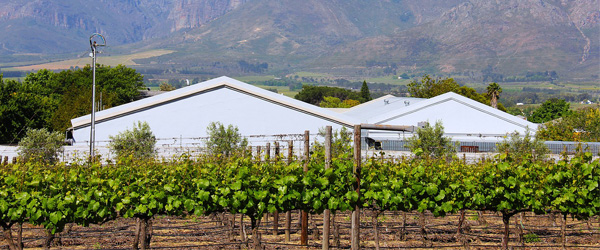
1. In 2015, with approximately 3,500 grape growers and 323,000 vineyard acres, South Africa was ranked the eighth world’s largest wine producer.

wine history of South Africa

2. The first vines were planted in the 1650s by Dutch colonists on the Western Cape. Looking to establish an outpost for ships sailing to towards the East Indies, they quickly discovered that native grapes were inferior and asked for French vines to be sent by the Dutch East India Company.

Constantia wine history

3. In 1685, using French Muscat, Simon van der Stel planted vines of what became known as Constantia – the most popular fortified wine of the late eighteenth century, consumed by Russian czars, British monarchs, Frederick the Great, and Napoleon Bonaparte.

wine history cooperatives South Africa

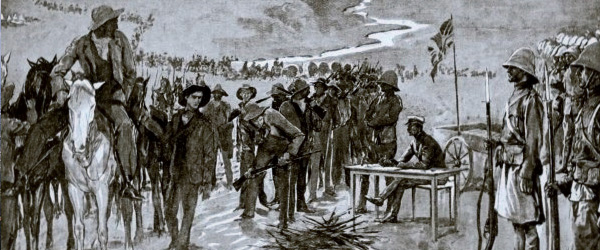
4. Following the devastation caused by both phylloxera and the Anglo-Boer War, a series of wine cooperatives that wielded enormous power for over a century were established throughout South Africa.

wine during apartheid South Africa

5. Despite over 300 years of winemaking, few in Europe and North America had tasted South African wine due to trade restrictions resulting from the country’s apartheid government. This all changed in the 1990s as democratic reform caused the sanctions to be lifted.

wine Coastal Region Western Cape
By Western_Cape_rural_education_districts [CC BY-SA 3.0 or GFDL], via Wikimedia Commons

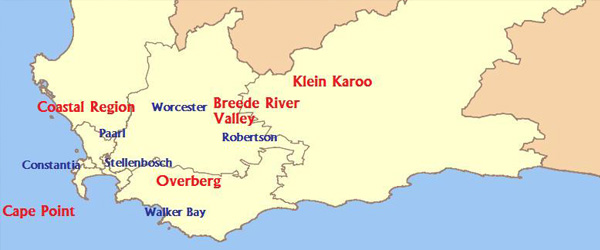
6. The finest wines in South Africa are produced in the Coastal Region, located within the Western Cape, one of the Republic’s five major wine zones.

popular wine grapes in South Africa

7. The five popular grape varietals are Cabernet Sauvignon, Chardonnay, Chenin Blanc, Sauvignon Blanc, & Syrah.

chenin blanc South Africa

8. For years, Brandy was such an important part of the South African economy that the vast majority of grapes were white. Currently, white grapes represent 55% of all grapes grown in 2011.

5 wine zones geography south african wine

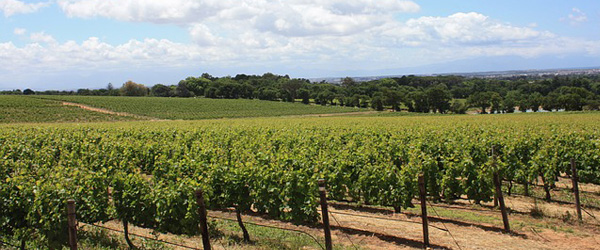
9. Most South African vineyards run parallel to the Atlantic and Indian Oceans, benefiting greatly from cooling deep waters and maritime breezes.

issues involving South African wine industry

10. Today, the South African wine industry is experiencing numerous problems that include labor abuses, inefficiencies, diseased vine stocks and outdated equipment.

Sources:

Clarke, Oz. The History of Wine in 100 Bottles: From Bacchus to Bordeaux and Beyond. London: Pavilion Books, 2015.
James, Tim. Wines of the New South Africa: Tradition and Revolution. Berkeley: University of California Press, 2013.
MacNeil, Karen. The Wine Bible. New York: Workman Publishing, 2015.
McCarthy, Ed & Ewing-Mulligan, Mary. Exploring Wine For Dummies. West Sussex: Wiley, 2011.
Parker, Robert M. Parker’s Wine Bargains: The World’s Best Wine Values Under $25. New York: Simon & Schuster, 2009.


You might also like:

Are you a fan of South African wines?

View Results

Loading ... Loading ...

Ask Sid: Why is Port usually served in a smaller wine glass?

July 19th, 2017 by Joseph Temple
Ask your question here

Port glass small

Question: Wondering why a Port wine served at the end of a meal usually comes in a smaller wine glass.

Answer: So do I. A couple of reasons often given are that the amount poured is usually less than for other wines and the higher alcohol would show more prominently if in a large glass. I don’t buy it. A smaller glass makes it more difficult to study both the colour tones and the bouquet of the Port. Therefore I usually pour it into my empty larger red wine glass from a previous course. Also helps to have the Port cooler rather than at room temperature served with cheeses (blue can work well) and roasted nuts (prefer walnuts & pistachios). Enjoy Port in a larger glass!


You might also like:

 alt=

Have you ever drank Port in a larger glass?

View Results

Loading ... Loading ...

Older Entries
Newer Entries
The object of the Society is to bring together and serve all who believe that a right understanding of good food and wine is an essential part of personal contentment and health and that an intelligent approach to the pleasures and problems of the table offers far greater rewards than the mere satisfaction of appetite.
Andre Simon Wine & Food Society Founder (1933)
© 2026 The International Wine & Food Society (IW&FS) IW&FS
Credits | Privacy | Accessibility