
There is some confusion among consumers about what is a second wine and what is a second label. Both are similar in that they are wines produced by top quality wineries (often classified Bordeaux) that are not included in their Grand Vin. Second wines usually use their own grapes mainly from a distinct part of the first wine’s vineyard. Clos du Marquis for Leoville Las Cases is a good example. One of your scribe’s earliest experiences with second wines was the memorable first 1966 Les Forts de Latour separate parcel by Château Latour.
Second labels on the other hand are usually wine produced from exactly the same sites as the Grand Vin but not selected for inclusion in it. This could be from younger vines or barrels with slightly lesser top quality balanced ripeness not chosen for the Grand Vin. Similarly in Burgundy look for top producers for declassified vineyard plots or regional Bourgogne Blanc & Rouge. Among many PYCM (Pierre-Yves Colin-Leger), ROULOT, COCHE-DURY, ROUMIER, SAUZET, DENIS BACHELET, BENJAMIN LEROUX, and others immediately come to mind. Nonetheless these days it is generally an excellent wine at a significantly lower price point.
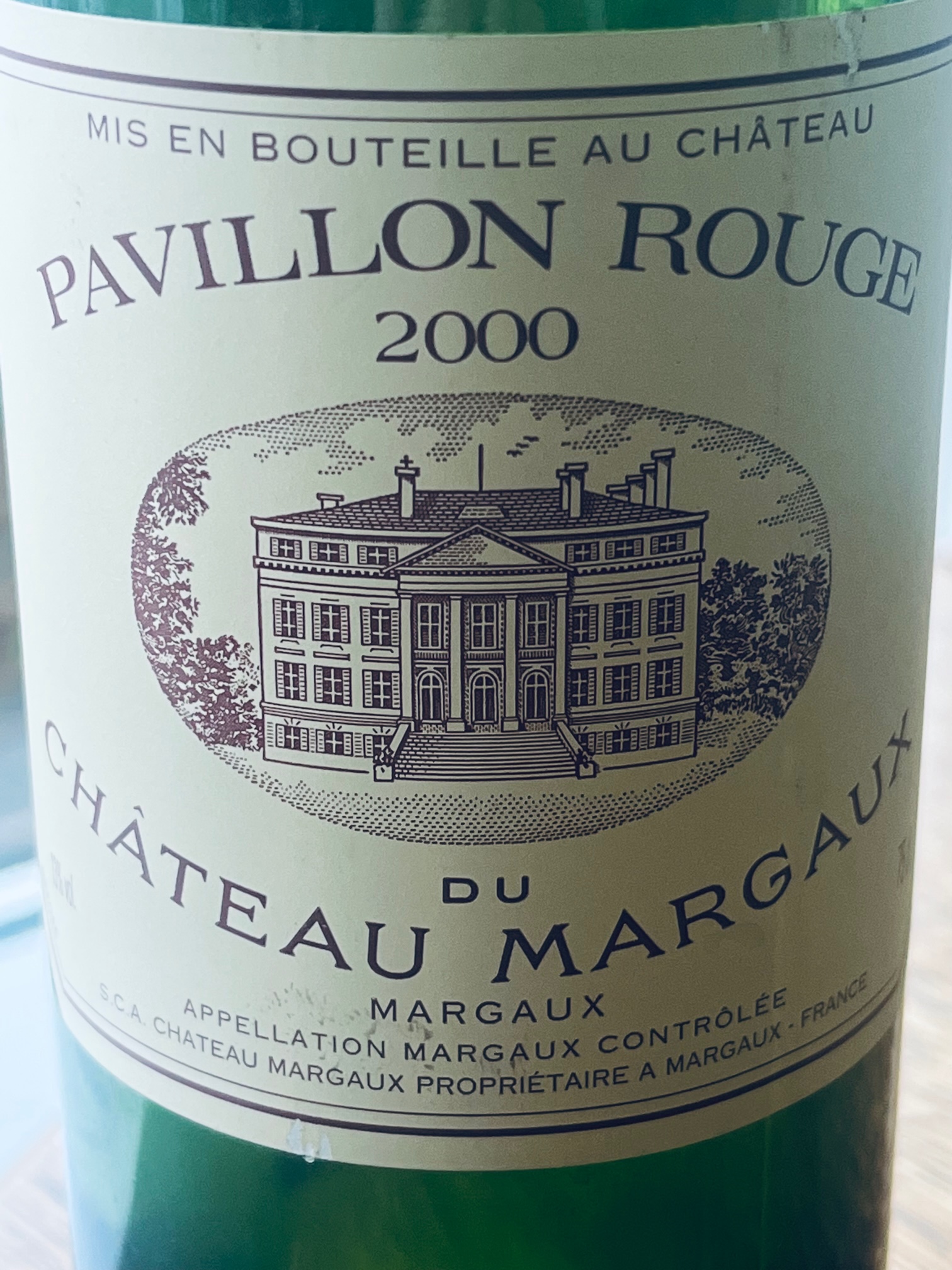
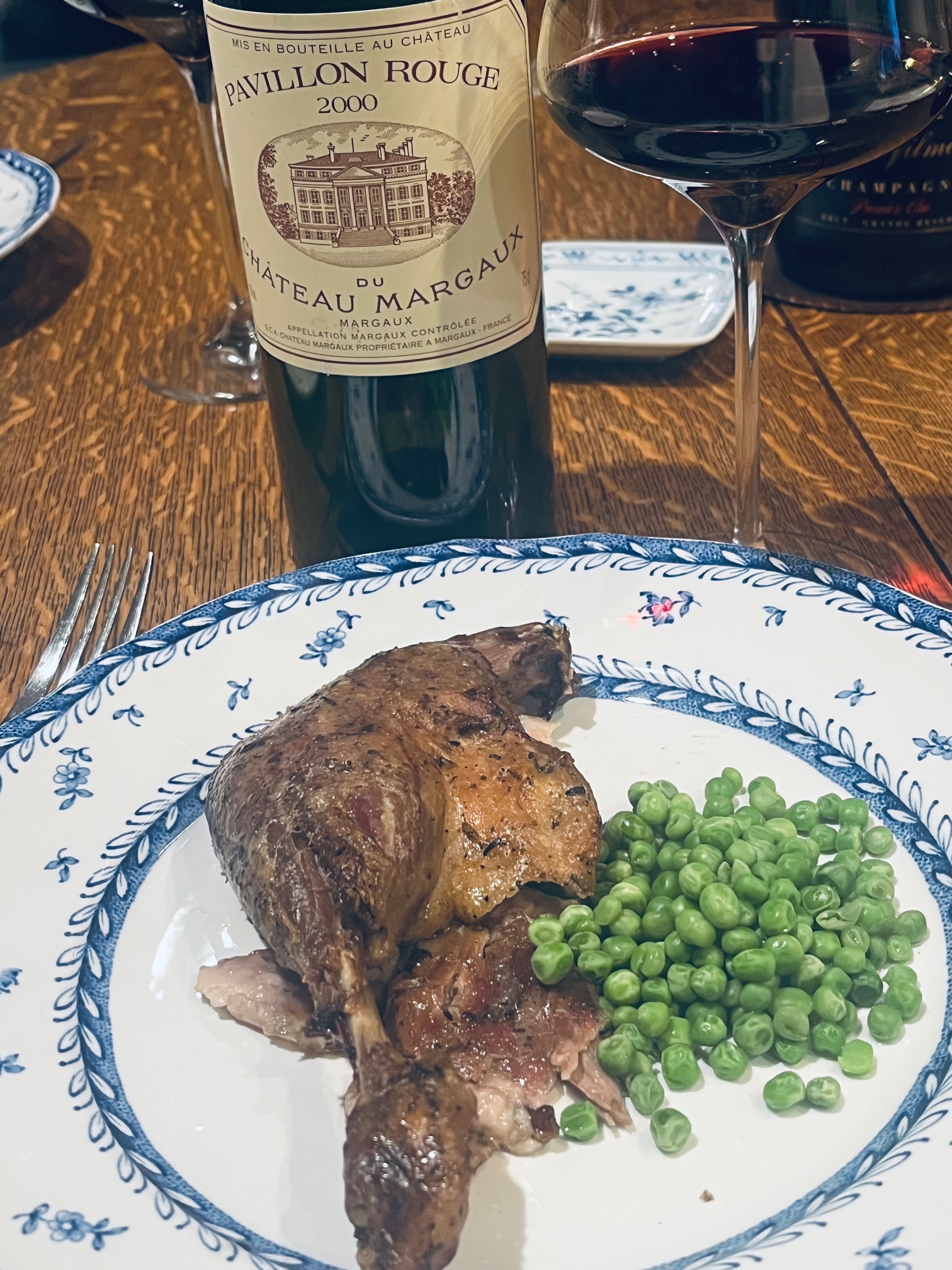
Important in these days of high wine prices. All this came rushing back to me last night as I enjoyed an at home dinner with a delicious duck leg confit paired to an amazing second label bottle of 2000 PAVILLON ROUGE DU CHÂTEAU MARGAUX produced by CHÂTEAU MARGAUX. They used the “second wine” label noted on some Chateau Margaux way back before 1906 when they first officially started with the specific name Pavillon Rouge. Now they produce a Third Label MARGAUX DE CHATEAU MARGAUX (first one so named in 2009) and Fourth Label MARGAUX AOC Generic so that Second Label is pretty choice juice.
On their website they have an interesting note dated October 2018 that states: “The exceptional concentration of the grapes in 2000 was not only achieved in the old vines, which produce the first wine; in fact, all the plots produced very ripe and concentrated grapes. The fabulous potential of this vintage led us paradoxically to make a strict selection at the blending so that Chateau Margaux 2000 would have the most perfect expression possible. Naturally, this very rigorous selection was also of direct benefit to Pavillon Rouge, which was made richer by very good wines which did not go into the Chateau Margaux. At the same time, it was not blended with the lesser wines which were reserved for the third wine. The 2000 Pavillon Rouge has the complexity and density of a first wine, and it certainly has the ageing potential. It has probably not reached its peak, although it is difficult to resist today.”
Yesterday on February 1, 2026 some 7+ years later than the note this bottle was showing dark young red colour, rich dense complex bouquet and flavours now mellowed out on a beautiful plateau for current enjoyment.
It was purchased at the BCLDB store in October 2003 for $85 Canadian while the perfect score 100 First Growth Grand Vin Chateau Margaux was way more expensive. In 2026, there are lots of second wines and second labels available for purchase. Don’t overlook them in the marketplace and buy some of those made by your favourite Bordeaux property from the well-structured vintage 2022 for ageing and earlier memorable drinking. Some recommended 2022 selections include: PAVILLON ROUGE DU CHÂTEAU MARGAUX, LES FORTS DE LATOUR, CARRUADES DE LAFITE, LE PETIT MOUTON, LA RÉSERVE DE LA COMTESSE, LA DAME DE MONTROSE, CLOS DU MARQUIS, LE CLARENCE DE HAUT-BRION, LA CHAPELLE DE LA MISSION, ALTER EGO DE PALMER, LE PETIT CHEVAL, and many more. Enjoy.
You might also like:
 |
 |
 |