menu
Member Sign In
  • IWFS Homepage
  • Blog Home
  • Forums Home
  • Global Forum
  • Contact Us
Close
  • IWFS Homepage
  • Blog Home
  • Forums Home
  • Global Forum
  • Contact Us
    Member Sign In
  • Blog Home
  • Forum Home
  • Global Forum

Follow Us

Recent Posts

  • Ask Sid: What is the difference between the two grapes of Blaufrankisch and Kekfrankos?
  • CHAMBOLLE-MUSIGNY WINES IMPRESS WITH DISTINCTIVE POWER COMBINED WITH SENSUAL ELEGANCE
  • Ask Sid: What is the new grape being used in Amarone?
  • OUR 2002 RED BURGUNDY HORIZONTAL IS AGING WELL, SHOWCASING REFINED PRECISION WITH TERROIR-DRIVEN CHARM
  • Ask Sid: Thoughts of Sid Cross on the Judgement of Paris historic wine tasting at the 50th Anniversary?

Archives

  • April 2026
  • March 2026
  • February 2026
  • January 2026
  • December 2025
  • November 2025
  • October 2025
  • September 2025
  • August 2025
  • July 2025
  • June 2025
  • May 2025
  • April 2025
  • March 2025
  • February 2025
  • January 2025
  • December 2024
  • November 2024
  • October 2024
  • September 2024
  • August 2024
  • July 2024
  • June 2024
  • May 2024
  • April 2024
  • March 2024
  • February 2024
  • January 2024
  • December 2023
  • November 2023
  • October 2023
  • September 2023
  • August 2023
  • July 2023
  • June 2023
  • May 2023
  • April 2023
  • March 2023
  • February 2023
  • January 2023
  • December 2022
  • November 2022
  • October 2022
  • September 2022
  • August 2022
  • July 2022
  • June 2022
  • May 2022
  • April 2022
  • March 2022
  • February 2022
  • January 2022
  • December 2021
  • November 2021
  • October 2021
  • September 2021
  • August 2021
  • July 2021
  • June 2021
  • May 2021
  • April 2021
  • March 2021
  • February 2021
  • January 2021
  • December 2020
  • November 2020
  • October 2020
  • September 2020
  • August 2020
  • July 2020
  • June 2020
  • May 2020
  • April 2020
  • March 2020
  • February 2020
  • January 2020
  • December 2019
  • November 2019
  • October 2019
  • September 2019
  • August 2019
  • July 2019
  • June 2019
  • May 2019
  • April 2019
  • March 2019
  • February 2019
  • January 2019
  • December 2018
  • November 2018
  • October 2018
  • September 2018
  • August 2018
  • July 2018
  • June 2018
  • May 2018
  • April 2018
  • March 2018
  • February 2018
  • January 2018
  • December 2017
  • November 2017
  • October 2017
  • September 2017
  • August 2017
  • July 2017
  • June 2017
  • May 2017
  • April 2017
  • March 2017
  • February 2017
  • January 2017
  • December 2016
  • November 2016
  • October 2016
  • September 2016
  • August 2016
  • July 2016
  • June 2016
  • May 2016
  • April 2016
  • March 2016
  • February 2016
  • January 2016
  • December 2015
  • November 2015
  • October 2015
  • September 2015
  • August 2015
  • July 2015
  • June 2015
  • May 2015
  • April 2015
  • March 2015
  • February 2015
  • January 2015
  • December 2014
  • November 2014
  • October 2014
  • September 2014
  • August 2014
  • July 2014
  • June 2014
  • May 2014
  • April 2014
  • March 2014
  • February 2014
  • January 2014
  • December 2013
  • November 2013
  • October 2013
  • September 2013
  • August 2013
  • July 2013
  • June 2013

Meta

  • Log in
  • Entries feed
  • Comments feed
  • WordPress.org

Archive for the ‘Uncategorized’ Category

Older Entries
Newer Entries

Comparing Bordeaux Twin Vintages 1989 & 1990

February 22nd, 2016 by Sid Cross

Comparing Bordeaux Twin Vintages 1989 & 1990

Over the past year I enjoyed 4 dinners each featuring 9 different 25 year old top Bordeaux organized into the left and right banks and from the vintages 1989 and 1990. The purpose was to see how the wines have developed and whether one vintage is clearly better than the other. Certainly the weather conditions were somewhat similar. The 1989 was initially heralded as vintage of the century when picking commenced in late August the earliest start since 1893. The 1990 was at the time one of the most sunny, dry and hot vintages in Bordeaux history. Both had big productions from smaller berries with quite low acid and higher tannins.

1989 Right Bank: All wines on an easy drinking fleshy plateau. Solid vintage for Pomerol. Slight nod to Trotanoy though Canon (St. Emilion) also shining brightly. Support for L’Angelus, Vieux Ch. Certan, La Fleur Petrus, La Fleur De Gay & the more unique Figeac. Underrated La Dominique lovely with La Grave Trignant de Boisset serviceable with food. Good showing group.

1989 Left Bank: Mouton the clear winner for me exhibiting power, structure and cedary class though others preferred Wine Spectator Wine of the Year intense flavourful Pichon Baron. Impressive solid fruit Montrose, lighter but more elegant seductive Palmer, and the plummy forwardly Latour all had supporters. Lynch Bages combined power with minty finesse while the Pape Clement showed more earthy. Leoville Barton and Gruaud Larose both good but drier and more angular in this company. Some outstanding wines.

1990 Right Bank: Canon showed well again as did Trotanoy and L’Angelus but the clear winner on the night was the outstanding Cheval Blanc. Troplong Mondot & Parker 100 pointer Beausejour D-L competing well while Vieux Ch. Certan & La Dominque showed better in 1989.  Mixed results.

1990 Left Bank: Montrose coming around with big fruit but more charm than I expected and maybe approaching that 100 point Parker rating. Lafite superb but still closed needing another 5-10 years to blossom out. Prefer the better depth of fruit and structure on the Pichon Baron over the also very good 1989 (noticed this before). Leoville Barton has that iodine noted deep fruit, Rauzan Segla creamy texture and long finish, and Lagrange classy with buckets of fruit and best value of all these wines. Palmer had that always astonishingly attractive nose but leaner and drier (1989 better), Pape Clement ripe and jammy, but the big expectations for Leoville Las Cases were unfounded as unfortunately it was corked. Mouton & Pichon Lalande not in this flight but have shown rather disappointing in other tastings compared to their 1989s.

Conclusion: Both 1989 and 1990 have developed well at 25 years of age on the right and left banks. As you would expect some properties have done better in one vintage than the other. My favourite group as a whole was the 1990 Left Bank wines (even with Las Cases corked!) but all four events had some treasures. Do you tend to prefer one vintage of the twins over the other?


You might also like:

Have you tasted any 1989 or 1990 Bordeaux?

View Results

Loading ... Loading ...

Champagne from Rheims … New York?

February 19th, 2016 by Joseph Temple

Great Western Champagne new york

By Joseph Temple

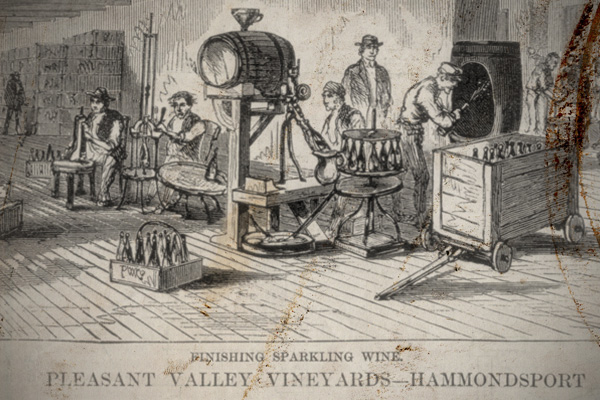
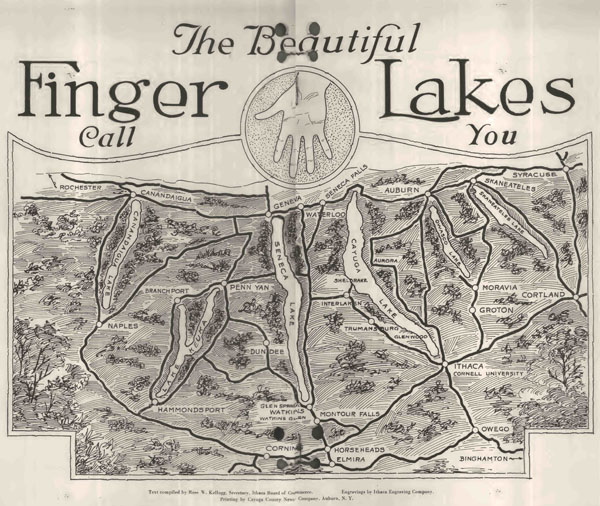
As some of the Finger Lakes were being connected to the Erie Canal, Judge Lazarus Hammond, realizing how prosperous this new trade route could be for the entire region, decided to develop a port on the southern tip of Keuka Lake. Also known as “Crooked Lake” due to its Y-shape, the area became home to a small village named Hammondsport in honor of its financier. And for several decades, this part of Upstate New York, which included numerous vineyards, was essentially German in character. With local winemakers such as Johann Weber, Hiram Maxfield and Mathias Freidell, it was no surprise that the Finger Lakes also became known as an “American Rhineland.”

Then came the Champenois!

The first to arrive in 1857 was Charles Davenport Champlin who quickly saw many similarities in climate, soil and drainage between his native land in France and the cool countryside of Western New York. With the hills near Keuka Lake providing shelter for the surrounding vineyards along with the late frosts, the prophetic Champlin thought the region was ideal for producing sparkling wine. Four years later as America began fighting a brutal Civil War, he and a dozen other men established U.S. Winery License No. 1—a company created “to produce native wines,” which soon became The Hammondsport and Pleasant Valley Wine Company. Unfortunately, the bubbles that Champlin created for the first couple of years were largely lackluster, requiring him to send in some reinforcements.

Over the next decade, two hired guns—Joseph and Jules Masson—were employed by The Pleasant Valley Wine Company to hopefully put them on the map. With their success in helping to create a sparkling empire in the state of Ohio for Nicholas Longworth, Champlin hoped the two French experts could replicate their accomplishments in Hammondsport. They would not disappoint.

Great Western Champagne advertisements

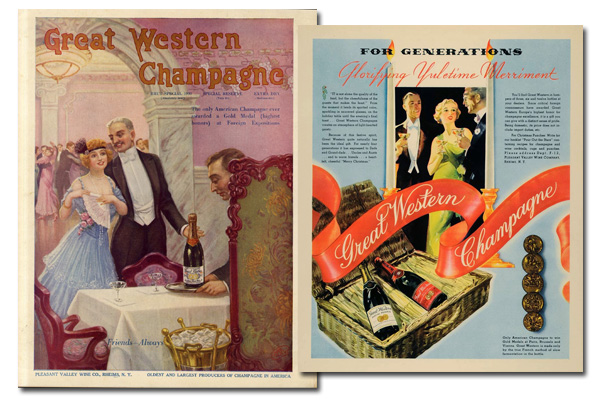
The first successful vintage came in 1870 by using a blend of Catawba and Delaware grapes. Taking this Vitis labrusca combination to Marshall Wilder, the head of a Boston agricultural society, Champlin asked for his opinion on what to call this sparkling wine. After sipping it at a dinner party, he declared it to be the greatest champagne in the entire Western continent and a legend was born! Three years later, a tidal wave of publicity occurred at the 1873 Vienna Exposition where the “Great Western Champagne” won first prize. This triumph, along with top honors in Brussels and Paris, allowed Pleasant Valley to market its sparkling wine as award winning for the next hundred years.

With Champlin blazing the trail, others followed suit and by the end of the nineteenth century, more than fifty wineries around the Finger Lakes were producing bubbles on a grand scale. At one point, historians estimate that over seven million bottles were being sold annually with an astonishing 90% of all American sparkling wine coming out the Hammondsport area. Great Western champagne was taking off!

Of course, this name infuriated the Champenois who to this day believe that no sparkling wine made outside the Champagne region can use that designation. Hoping to put a stop to what they considered to be a flagrant misuse, the French delegation at the 1919 Paris Peace Conference slipped in Article 275, which sought to protect Champagne from others who incorrectly used that name on their labels. But since the United States Senate failed to ratify the Treaty of Versailles, American winemakers were free to use the name champagne for the remainder of the twentieth century. And what must have been seen as rubbing salt in the wounds of the Champenois, The Pleasant Valley Wine Company successfully lobbied the U.S. Post Office to rename the hamlet where they were located. After that, they could now market their Great Western champagne as being from “Rheims, N.Y.”

Today, Hammondsport, New York is largely seen as the cradle of aviation, being the birthplace of Glenn Curtiss, an early pioneer in the history of American flight. But with the breakout success of Great Western champagne in the nineteenth century, Hammondsport should also be regarded as the cradle of American viticulture.


Sources:

Falk, Laura Winter. Culinary History of the Finger Lakes: From the Three Sisters to Riesling. Charleston: The History Press, 2014.
Figiel, Richard. Circle of Vines: The Story of New York Wine. Albany: SUNY Press, 2014.
Kladstrup, Don & Petie. Champagne: How the World’s Most Glamorous Wine Triumphed Over War and Hard Times. New York: HarperCollins, 2005.
Merrill, Arch. The Lakes Country. Rochester: Louis Heindl & Son, 1944.
Pellechia, Thomas. Over a Barrel: The Rise and Fall of New York’s Taylor Wine Company. Albany: SUNY Press, 2015.


You might also like:

Have you ever drank Great Western Champagne?

View Results

Loading ... Loading ...

Ask Sid: Why is Picasso on a wine bottle?

February 17th, 2016 by Joseph Temple
Ask your question here The International Wine & Food Society

Why is Pablo Picass on a wine bottle label?
By Gilbert LE MOIGNE (Collection personnelle) [GFDL or CC BY-SA 4.0-3.0-2.5-2.0-1.0], via Wikimedia Commons

Question: How did my 1973 Chateau Mouton Rothschild come to have a Picasso on the label?   Thanks!

Answer: The Mouton label has been an important truly unique one since the initial 1924 Jean Carlu marking the very first chateau bottling of the entire harvest. Mouton was classified as a Second Cru in the 1855 classification but in 1973 was officially proclaimed as a Premier Cru. Before the coat of arms stated “Premier ne puis, Second ne daigne, Mouton suis” (First I cannot be, Second I disdain, Mouton I am) but was changed to “Premier je suis, Second je fus, Mouton ne change” (First I am, Second I was, I Mouton do not change). To celebrate this promotion and “en hommage a Picasso (1881-1973)” they used one of his paintings “Bacchanale” they already had in the Mouton Museum to illustrate this special label.


You might also like:

Do you own a bottle of Mouton Rothschild?

View Results

Loading ... Loading ...

Riesling 10 Year Vertical – Tantalus Vineyards

February 15th, 2016 by Sid Cross

Riesling 10 Year Vertical - Tantalus Vineyards

The Riesling variety has shown good adaptability finding success in many cooler wine growing regions around the world expanding from its original home in the Rhine in Germany. One of these is British Columbia and more specifically the southwest facing slopes in Naramata of Tantalus Vineyards in the northerly Okanagan. Wonderful foresight in planting the Riesling variety originally in 1978 by both the Dulik family of Pinot Reach Cellars (sold in 2004 to proprietor Eric Savics and renamed Tantalus) and the nearby Sperling family vineyards.  Wise decisions. More plantings of Riesling has followed.

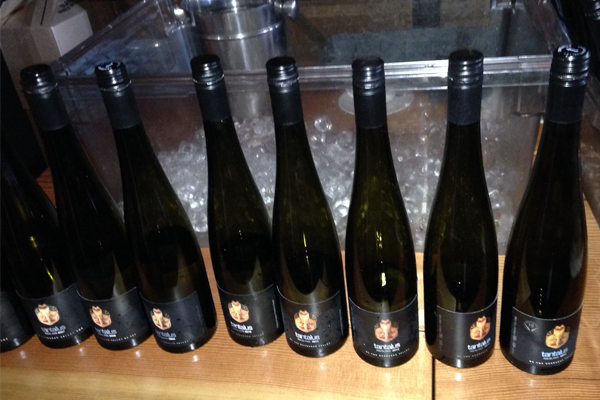
On February 9, 2016 Tantalus Vineyards held a vertical tasting of their Riesling back to the first one produced in 2005 by their first winemaker Matt Holmes from Australia using 4 blocks of Clone 21B old vines. Some impressions:

2005: 12 degrees alcohol. Maturing bouquet with complexity showing typical “petrol” (or preferred “marmalade”) notes. Smooth balanced flavours expressing easy drinking Riesling variety character.

2006: 13  More flowery herbal statement shows thick rich body with more length.

2007: 12.4  Floral more vibrant nose. Soft entry but lovely elegant delightful middle and seems fresher.

2008: 13.2 The start of using some of the younger vines. Deeper intense fresh fruit with better structure impresses. Lots of middle depth here. Super flavours in balance. Presently my favourite of the whole tasting.

2009: 13.3 Construction broke ground on a new winery and the talented David Paterson joined as their second and current winemaker. Frost, a very warm year and dominated by young vines coming on stream results in this less open highest alcohol quite soft very ripe flavoured ready for drinking Riesling.

2010: 12.2 Classy cooler aromas vibrant & lively. Leaner with more acidity. Like the delicacy & encouraging age ability promised. Tasting Room & Wine Shop opened with their first vintage of Old Vines fruit used in a Sparkling Brut.

2011: 12.4 Refined petrol yet greener with more floral minerals and a developing creamy texture.

2012: 12.3 Alsace-like statement with full impressive balanced fruit with thicker oily mouth feel.

2013: 12.8 Younger more backward vegetal fruit. Almost searing acidity on entry but lots of fruit underneath for potential depth with more time.

2014: 13 More floral grassy but full of verve. Undeveloped but fresh smooth and balanced. Impressive.

2015: Tank Sample. Possibly their best one yet. Classy in spite of the recent sulphur. Would bet on this vintage developing very well.

All 11 wines showed vintage differences I like but also a one property “terroir” commonality that is encouraging for producing top Riesling. Their commendable beehive program on the property with Arlo’s Honey Farm has grown to 52 hives and is typical of the total environment. Good work and please continue your passionate commitment to world class Riesling!


You might also like:

Have you tasted any wines from Tantalus Vineyards?

View Results

Loading ... Loading ...

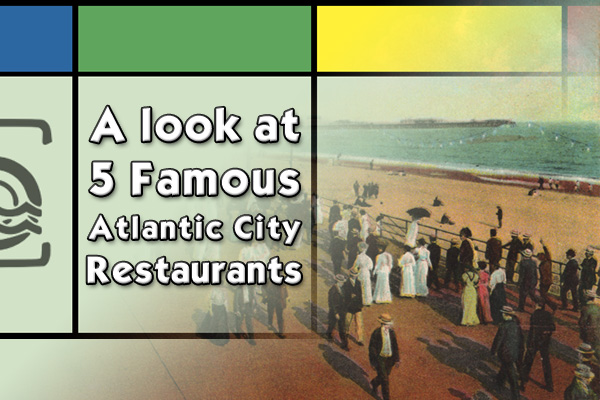
A look at 5 famous Atlantic City restaurants

February 12th, 2016 by Joseph Temple

A look at five famous Atlantic City restaurants

By Joseph Temple

From its humble beginnings as a small seaside village in the early nineteenth century to a powerful gambling mecca that dominated most of the 1980s, Atlantic City has seen many highs and lows as America’s playground. Images of Victorian style architecture, Miss America pageants and a world famous Boardwalk where visitors could observe the sandy beaches from the comfort of a rolling chair all made “AC” the top tourist destination of the Roaring Twenties. But with railroads being replaced by inter-state highways and cheap airfare, the city fell on hard times as the conveniences of post-war suburbia made Atlantic City seem hopelessly outdated.

New Jersey residents however, would give their resort town a second wind in 1976 when they voted to allow legalized gambling in Atlantic City. With that decision, the shore’s crumbling skyline was quickly replaced with lavish multi-billion dollar hotels and casinos, turning AC into the Las Vegas of the east coast. And unlike its competition that was tainted by the influence of organized crime, Atlantic City succeeded throughout the 80s with fresh faces that included real-estate mogul Donald Trump and a young pugilist named Mike Tyson who would have some of his biggest fights on the Jersey Shore.

Of course, beyond the bordellos, the carnival barkers and the casinos—both legal and illegal—there were also some outstanding restaurants, some of which are still in business to this day. So let’s look at five famous joints (it’s incredibly hard to name just five) that became part of Atlantic City’s unique culture and identity.
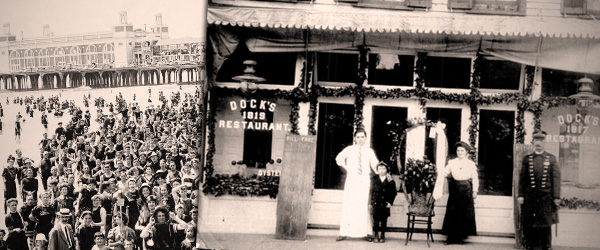


Dock's Oyster House Atlantic City restaurant
1. Dock’s Oyster House

Featured on the fifth season of CNN’s Parts Unknown, host Anthony Bourdain informs us that Dock’s Oyster House is one of the few restaurants in Atlantic City to survive “Prohibition, the Depression, two world wars, numerous declines—and rebirths.” Founded in 1897 by Harry “Dock” Dougherty when the popularity of oysters was at an all-time high, this classic seafood and steak restaurant is an Atlantic City institution with a wine list that has been recognized by the Wine Spectator. If you’re looking to soak in some AC nostalgia, try the lobster tail, fried oysters or crabmeat au gratin—they have never left the menu since the day Dock’s first opened its doors.
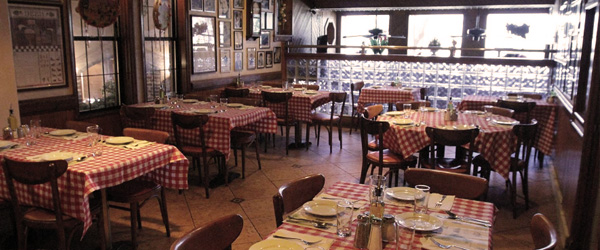
 

Angelo's Fairmount Tavern in Atlantic City
2. Angelo’s Fairmount Tavern
Photo credit: www.angelosfairmounttavern.com

When talking about authentic cuisine from Atlantic City, it’s impossible not to mention Italian food. In the late nineteenth century as laborers migrated north, mostly from neighboring Philadelphia, the town became much more ethnically diverse. Author Nelson Johnson, whose book inspired the HBO series Boardwalk Empire, writes, “Thousands of building tradesmen and laborers came to Atlantic City looking for work and many remained to make it their home … The Italians started local firms involving all the building trades and opened restaurants, food markets, and bakeries.”

One of these restaurants, founded in 1935 when Atlantic City had more debt per capita than any other city during the Great Depression, was Angelo’s Fairmount Tavern. Located on Fairmount Avenue near the convention center, this family-owned establishment is renowned for its Italian dishes served in larger-than-life portions, surrounded by an ambiance of sports memorabilia and framed photographs of its celebrity customers.
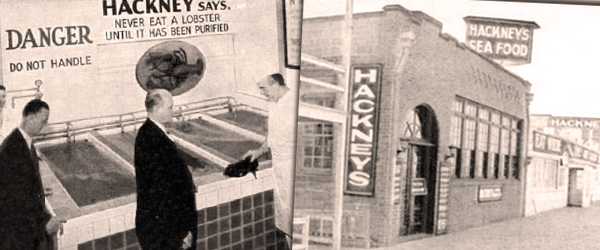
 

Hackney's Seafood Restaurant in Atlantic City
3. Hackney’s Seafood Restaurant

Being right next to the ocean, it’s no surprise that seafood became an integral part of AC. One of the city’s first carnival barkers, “Captain” John Young, simply wowed tourists with a “deep sea net haul” that was lowered onto the floor of the pier, where Young would then try to name up to 50 different species to a working-class clientele that kept coming back for more every weekend.

Continuing this theme, Harry Hackney, also known as the “lobster king” turned a small lunch wagon that he used to serve clams into a gigantic seafood restaurant that ended up seating over 3,000 patrons. With the slogan “Eat Them Where They’re Caught,” supposedly coined by New York Governor Al Smith, Hackney proved to be a true marketing genius! Building a pier next to his restaurant, he would invite guests to fish for themselves and while inside, they could pick their own lobster from a pool he had built – a gimmick that proved to be enormously successful and is still with us today.
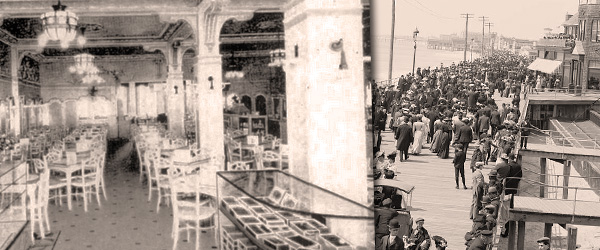
 

La Victoire Restaurant in Atlantic City
4. La Victoire Restaurant

During Atlantic City’s most lucrative run in the early twentieth century, its hubris was a Boardwalk that blurred the lines between rich and poor. “The working class craved opportunities to participate in festive occasions and the Boardwalk gave them just such a chance,” writes Johnson. “The Boardwalk created the illusion that everyone was part of a huge middle class parading to prosperity and social freedom. There were no class distinctions while strolling the Boardwalk; everyone was someone special.”

One specific restaurant on this landmark strip that catered to throngs of working class vacationers was La Victoire. Owned by Harry Katz, it became one of the hottest spots on the Boardwalk with a special blue-plate platter that contained a number of different seafood items that included a half lobster—all for just $1.50!
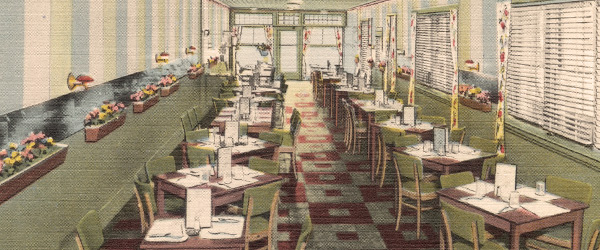
 

Wash’s Restaurant in Atlantic City
5. Wash and Sons’ Seafood Restaurant

Without the arrival of African-American workers from the Upper South, the history of Atlantic City would have been very different. Actively seeking cheap labor to help build and sustain a tourist economy, the black population in AC would grow from just under 200 in 1870 to nearly 11,000 by 1915 – making this group close to 25% of the city’s permanent residents and even more during the off season. Working in mostly menial jobs and with de facto segregation firmly in place, an area known as Northside took shape, becoming ground zero for the isolated African-American experience in Atlantic City.

And at 1702 Arctic Avenue in Northside, a popular spot for black hotel employees after a long day’s work, was Wash and Sons’ Seafood Restaurant, which began as a small sandwich shop in 1937. Recognized as the oldest black-owned establishment in Atlantic City, the restaurant catered to such stars as Red Foxx, Moms Mabley and Count Basie. Wash’s granddaughter, Turiyah Raheem, describes the cultural impact writing: “Wash’s probably employed at least one person from every black family in A.C. and became an unofficial social services agency by doing so. It was sometimes called the “black Cheers” — where everybody knew your name.”


Sources:

Johnson, Nelson. Boardwalk Empire: The Birth, High Times and the Corruption of Atlantic City. London: Ebury Publishing, 2011.
Legato, Frank. Atlantic City: In Living Color. Macon: Indigo Custom Publishing, 2005.
Miller, Jen A. Explorer’s Guide Jersey Shore: Atlantic City to Cape May: A Great Destination. New York: The Countryman Press, 2011.
Raheem, Turiya S. A. (2013, July 2). Wash’s, Not Just a Business. Atlantic City Weekly. Retrieved from http://atlanticcityweekly.com
Ristine, James D. Atlantic City. Mount Pleasant: Arcadia Publishing, 2008.
Schnitzspahn, Karen L. Jersey Shore Food History: Victorian Feasts to Boardwalk Treats. Charleston: The History Press, 2012.
Sokolic, William H. &  Ruffalo, Robert E. Atlantic City Revisited. Mount Pleasant: Arcadia Publishing, 2006.


You might also like:

Have you ever dined in Atlantic City?

View Results

Loading ... Loading ...
Older Entries
Newer Entries
The object of the Society is to bring together and serve all who believe that a right understanding of good food and wine is an essential part of personal contentment and health and that an intelligent approach to the pleasures and problems of the table offers far greater rewards than the mere satisfaction of appetite.
Andre Simon Wine & Food Society Founder (1933)
© 2026 The International Wine & Food Society (IW&FS) IW&FS
Credits | Privacy | Accessibility