menu
Member Sign In
  • IWFS Homepage
  • Blog Home
  • Forums Home
  • Global Forum
  • Contact Us
Close
  • IWFS Homepage
  • Blog Home
  • Forums Home
  • Global Forum
  • Contact Us
    Member Sign In
  • Blog Home
  • Forum Home
  • Global Forum

Follow Us

Recent Posts

  • OUR 2002 RED BURGUNDY VERTICAL IS AGING WELL, SHOWCASING REFINED PRECISION WITH TERROIR-DRIVEN CHARM
  • Ask Sid: Thoughts of Sid Cross on the Judgement of Paris historic wine tasting at the 50th Anniversary?
  • EDUCATIONAL #AUSSIEWINE SEMINAR “CLASSIC AND CONTEMPORARY AUSTRALIA” BY KNOWLEDGEABLE MARK DAVIDSON WAS A BIG HIT AT @VANWINEFEST
  • Ask Sid: Was it 50 years since California bested France in a Paris wine tasting?
  • HORIZONTAL TASTING OF RED BORDEAUX 2015 SHOWS FRUIT FLESHINESS WITH VARIABILITY + OUTSTANDING BENTO BOX

Archives

  • April 2026
  • March 2026
  • February 2026
  • January 2026
  • December 2025
  • November 2025
  • October 2025
  • September 2025
  • August 2025
  • July 2025
  • June 2025
  • May 2025
  • April 2025
  • March 2025
  • February 2025
  • January 2025
  • December 2024
  • November 2024
  • October 2024
  • September 2024
  • August 2024
  • July 2024
  • June 2024
  • May 2024
  • April 2024
  • March 2024
  • February 2024
  • January 2024
  • December 2023
  • November 2023
  • October 2023
  • September 2023
  • August 2023
  • July 2023
  • June 2023
  • May 2023
  • April 2023
  • March 2023
  • February 2023
  • January 2023
  • December 2022
  • November 2022
  • October 2022
  • September 2022
  • August 2022
  • July 2022
  • June 2022
  • May 2022
  • April 2022
  • March 2022
  • February 2022
  • January 2022
  • December 2021
  • November 2021
  • October 2021
  • September 2021
  • August 2021
  • July 2021
  • June 2021
  • May 2021
  • April 2021
  • March 2021
  • February 2021
  • January 2021
  • December 2020
  • November 2020
  • October 2020
  • September 2020
  • August 2020
  • July 2020
  • June 2020
  • May 2020
  • April 2020
  • March 2020
  • February 2020
  • January 2020
  • December 2019
  • November 2019
  • October 2019
  • September 2019
  • August 2019
  • July 2019
  • June 2019
  • May 2019
  • April 2019
  • March 2019
  • February 2019
  • January 2019
  • December 2018
  • November 2018
  • October 2018
  • September 2018
  • August 2018
  • July 2018
  • June 2018
  • May 2018
  • April 2018
  • March 2018
  • February 2018
  • January 2018
  • December 2017
  • November 2017
  • October 2017
  • September 2017
  • August 2017
  • July 2017
  • June 2017
  • May 2017
  • April 2017
  • March 2017
  • February 2017
  • January 2017
  • December 2016
  • November 2016
  • October 2016
  • September 2016
  • August 2016
  • July 2016
  • June 2016
  • May 2016
  • April 2016
  • March 2016
  • February 2016
  • January 2016
  • December 2015
  • November 2015
  • October 2015
  • September 2015
  • August 2015
  • July 2015
  • June 2015
  • May 2015
  • April 2015
  • March 2015
  • February 2015
  • January 2015
  • December 2014
  • November 2014
  • October 2014
  • September 2014
  • August 2014
  • July 2014
  • June 2014
  • May 2014
  • April 2014
  • March 2014
  • February 2014
  • January 2014
  • December 2013
  • November 2013
  • October 2013
  • September 2013
  • August 2013
  • July 2013
  • June 2013

Meta

  • Log in
  • Entries feed
  • Comments feed
  • WordPress.org

Author Archive

Older Entries
Newer Entries

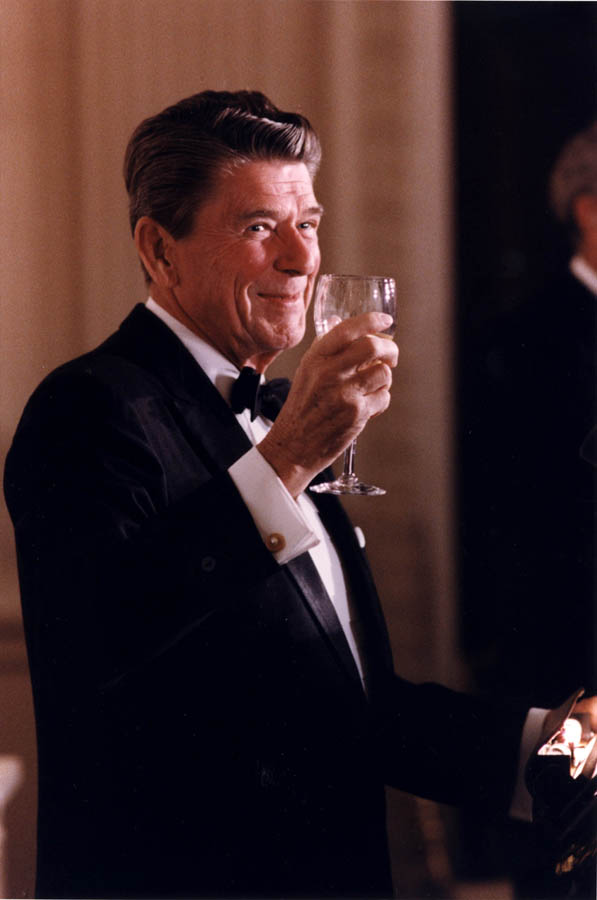
Ronald Reagan, Oenophile-In-Chief

April 4th, 2014 by Joseph Temple

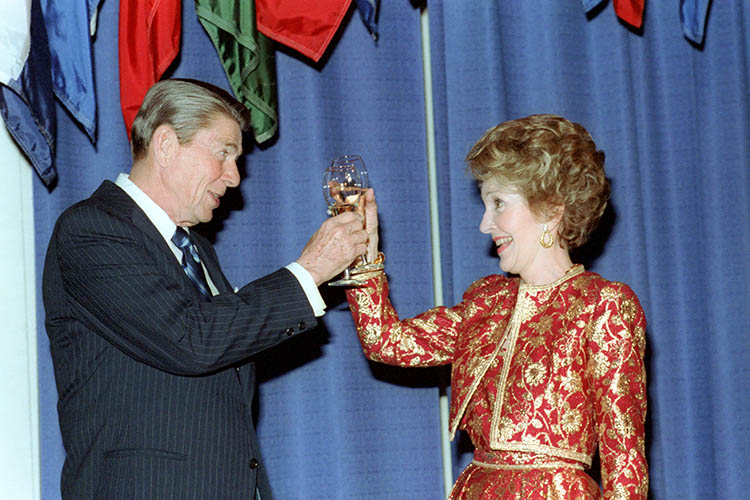
Ronald and Nancy Reagan toasting with a glass of winePresident Ronald Reagan & First Lady Nancy Reagan toast each other.

By Joseph Temple

Entering the oval office as president in 1981, Ronald Reagan assumed the role of not only the most powerful person on the planet, but as America’s ambassador-at-large.  Whatever he said, whatever he ate and whatever he drank at home or abroad would be in tomorrow’s newspapers for everyone to read.  And with this giant megaphone, the oenophile-in-chief was determined to promote the best vintages that the United States had to offer.

“They are the best informed administration on wine this century,” declared John DeLuca of the San Francisco Wine Institute.  Looking back, it is an education that began in 1947, when Reagan’s doctor recommended that he have a glass with dinner to help recuperate from a near-fatal bout with pneumonia.  While never much of a drinker, the Gipper’s fascination with wine grew by leaps and bounds as he transitioned from Hollywood actor to politician.

Beginning his collection in the early 1950s, Reagan’s wine cellar over time acquired many notable bottles including 1947 Lafite Rothschild, 1953 Mouton Rothschild, 1947 Haut Brion and 1962 LaTache.  Of course, hosting the General Electric Theater had its perks, including a state-of-the-art cellar with thermostatic controls installed at Reagan’s Pacific Palisades home by his bosses at GE.  But with his sights set on Sacramento, the focus of the actor’s wine collection shifted from the vineyards of France to a more local setting.
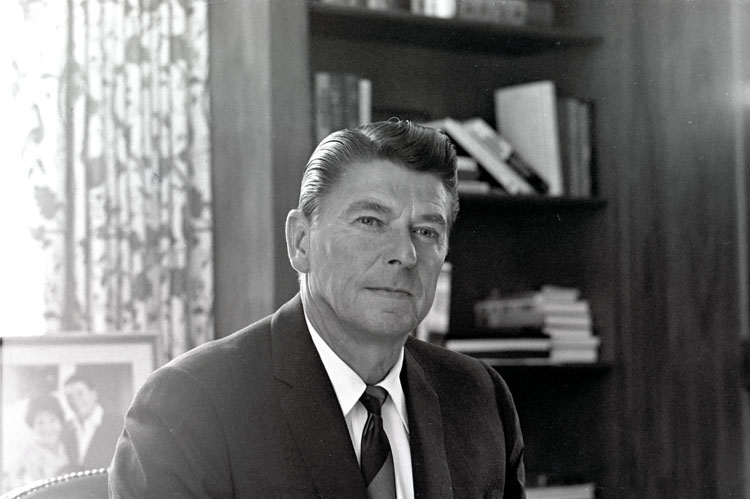
Governor Ronald Reagan  As Governor of California, Reagan enthusiastically promoted his state’s booming wine industry.

After becoming Governor of California in 1967, Reagan suddenly stood at the helm of a state experiencing a wine making renaissance.  After nearly four decades of producing mostly dreadful fortified and jug wines, a whole new generation of vintners began turning the corner.  And within a decade, the Golden State became one of the finest wine regions in the entire world, defeating the best France had to offer in numerous international competitions.  Adding to this new found sense of confidence was Governor Reagan, a key ally in promoting California terroir beyond the state’s borders.

One memorable story dates back to 1972, when the Oakland Athletics battled Cincinnati’s Big Red Machine at the World Series.  In a friendly wager against Ohio Governor John Gilligan over the fall classic, Reagan bet two bottles of California-produced chablis and burgundy against a bushel of Buckeye State corn.  After seven grueling games, the A’s emerged victorious, denying Gilligan the championship and more importantly, the opportunity to enhance his palate.

Eight years later, Californians rejoiced at yet another victory as Reagan won the keys to the White House, defeating President Jimmy Carter decisively in the Electoral College.  And to celebrate, on Election Day the Gipper told various media that he personally ordered four cases of Jordan Winery’s world-famous 1976 Cabernet Sauvignon.  It seemed that with the move from the Governor’s Mansion to 1600 Pennsylvania Avenue, Reagan’s victory put American winemakers center stage.

“He really considers himself to be a wine buff,” proclaimed his deputy chief of staff and wine consultant Michael Deaver.  Personally committed to bringing back the elegance of state dinners lost during the Carter years, it wasn’t uncommon for both the president and first lady to sample several suggested wines before the big night.  If ever unsatisfied with the choices, Reagan often made the executive decision to include one of his own personal favorites to the list.  During a state dinner honoring Prince Charles, one of the commander-in-chiefs preferred bottles – a 1970 BV Private Reserve was added at the last minute.  “The president literally made the final decision,” remembers Deaver.
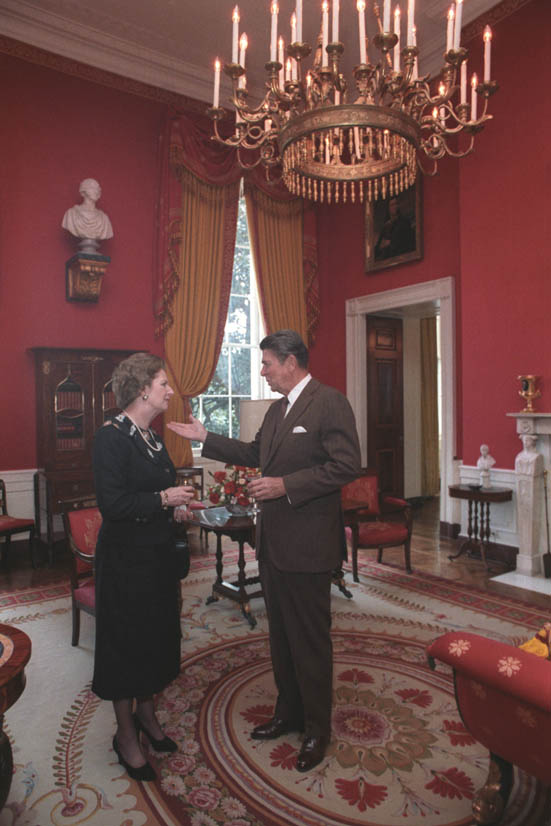
Ronald Reagan and Margaret Thatcher enjoying a glass of winec2746-10a
(Left) President Reagan enjoying a glass of wine with Prime Minister Margaret Thatcher in the White House Red Room. (Right) Photograph of President Reagan toasting at a State Dinner for Australian Prime Minister Malcolm Fraser.

And with every selection came millions of dollars in free publicity for that winery.  When Nancy Reagan admitted her fondness for Kendall Jackson Chardonnay in a newspaper interview, sales skyrocketed.  Likewise, when the president toasted Queen Elizabeth II at a dinner in San Francisco with 1976 Jordan Cabernet, it became all the rage in the wine tasting circles.  It was such a popular selection that even Canadian Prime Minister Pierre Trudeau ordered an entire case after sampling it at a White House state dinner.

Following the departure of Deaver in 1985, a new system of what wine to pair with each dish went into effect during the second term.  After receiving the menu from White House chef Henry Haller, a call from either the president or the first lady was made to wine consultant David Berkeley, who offered his personal recommendations.  The result can be seen in the menu for Ecuadorian President Febres Cordero that included “a Clos due Bois Calcaire 1984 served alongside salmon and sole mousse followed by a Carneros Creek Pinot Noir 1983 with the medallions of veal.”

Since leaving office in 1989, there has probably never been a more ardent supporter of American viticulture in the oval office since the Reagan administration.  Whether at home or abroad, his unique blend of diplomacy, humor and fine wine is illustrated in a toast he gave to the French President in Paris. “I hope you all realize that we know, of course, France has great appreciation for fine wines,” said the president, “and that’s why we decided to treat you to some California wine tonight.”

What wine(s) have you tried from this posting?

View Results

Loading ... Loading ...

The Sideways Effect 10 years later

March 28th, 2014 by Joseph Temple


The Sideways Effect

By Joseph Temple

In the fall of 2004, oenophiles everywhere arrived at their local movie theater to watch the Academy Award winning film Sideways.  The tale of Miles Raymond, a failed writer and wine-aficionado traveling through California wine country with his womanizing best friend Jack for an unforgettable week-long bachelor party became a certifiable smash hit, grossing over $100 million dollars in worldwide ticket sales.

With its enormous crossover appeal, anytime someone mentions “wine” and “movies” in the same sentence, Sideways is likely the first flick that comes to mind.  And an astounding number of columns, blog entries and even peer-reviewed academic journal articles have been written about the so-called “Sideways Effect.” Full of anti-Merlot sentiments, one of the movie’s most memorable lines is when Paul Giamatti’s character bluntly states, “if anyone orders Merlot I am leaving. I am not drinking f—–g Merlot!” Throughout the film, Pinot Noir is his clear preference, describing its flavors as “brilliant,” “thrilling,” and “subtle.”

Ever since audiences heard those words, wine geeks have tried to prove a correlation between Merlot’s decline and Pinot Noir’s rise based on the movie’s influence.  But in 2009, several academics writing for the Journal of Wine Economics concluded: “… Sideways did have a small negative impact on the consumption of Merlot while increasing the consumption of Pinot Noir.  However, far from having a “devastating” affect, the positive impact on Pinot Noir appears greater than the negative impact on Merlot.”

What do you think?  Ten years later, can you still feel the impact of that film whenever you attend an event?  Are you or somebody you know still hesitant to drink Merlot?  Share your thoughts by voting and/or posting a comment below.

Has "The Sideways Effect" impacted you?

View Results

Loading ... Loading ...

Peace through Sangria and Egg Rolls: A look back at the culinary impact of the 1964/65 New York World’s Fair

March 21st, 2014 by Joseph Temple

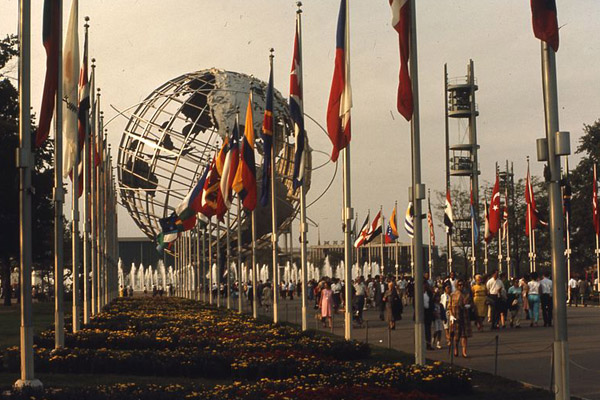
Peace through Sangria and Egg Rolls: A look back at the culinary impact of the 1964/65 New York World’s Fair

By Joseph Temple

Fifty years ago this April, millions of people came from across the globe to Flushing Meadows Park in Queens, NY for the experience of a lifetime.  Surrounded by Space-age domed theaters, roaring fountains and multi-colored cubed lighting, the 1964/65 World’s Fair came to symbolize both the optimism and innocence of a pre-Vietnam, pre-Watergate America where anything seemed possible.

And of course, who can forget the food!  Undoubtedly, the sweet aroma of the now famous Bel-Gem (later Belgian) waffles drew millions to the concessions. That’s because for just ninety-nine cents you could devour a thick and delicious waffle topped with juicy strawberries and billowy whipped cream.   Five decades later, this dessert alongside the 900,000-pound steel centerpiece known as the Unisphere are perhaps the fair’s two most recognizable legacies still with us to this day.

But what about all the other dishes served over this two-year period?  What impact did this expo have on the food and drink we serve in 2014?  The answer is quite a bit, but surprisingly, it was mostly by accident.

While most historians view the 1964/65 World’s Fair as a culturally significant event, it is also seen a monumental economic disaster.  With rules clearly stating that a country could host only one exposition in a ten-year period (Seattle hosted the 1962 World’s Fair), New York City planners went ahead without approval from the Bureau of International Expositions (BIE) – the governing body that sanctioned all world’s fairs.  Adding fuel to the fire, a slight by Robert Moses, one of the expo’s key architects against the BIE resulted in them asking all member-nations not to share in the festivities.

The resulting boycott by Canada, Australia, the Soviet Union and most of Europe sent organizers scrambling to find replacement attractions.  Additional problems of cost over-runs and financial mismanagement plagued organizers throughout the fair’s run, including the cancellation of an 86,000 square foot World of Food Pavilion only one month before the fair’s start.

Without this central location to purchase food and losing the participation from most major countries, smaller and more exotic nations that would have been overshadowed by France, Germany and Italy took center-stage.  And with the nearby restaurants fleecing tourists with over-priced meals, the resulting backlash led many fair goers to seek out cheaper – and as a result, more international alternatives offered by these exotic pavilions.

The final product turned out to be a far more diverse expo than anyone could have probably envisioned.  In his book The End of Innocence: The 1964/1965 New York World’s Fair Lawrence Samuel writes, “Of the 110 or so eating places at the Fair on opening day, 61 were in the International Area, creating an astounding multicultural buffet for the more adventurous fairgoer.”

For starters, the Spanish Pavilion offered its guests a drink that most Americans had never seen before: Sangria.  With its dark red color and refreshing taste, this fruity wine drink has now become a staple for backyard barbecues and summer parties across the United States.

Traveling from the rocks of Gibraltar to the Far East, Asian food also went mainstream after Middle America fell in love with it at the fair.  Most memorably, at the Chun King Inn, diners enjoyed an entire Chinese buffet, which included a beverage of their choice for just ninety-nine cents.  And if you wanted to cross over the Sea of Japan, beautiful kimono-clad waitresses were there to serve up the exotic dish known as sushi at the Japanese Pavilion.

Of course, for the meat and potatoes crowd afraid to fully bridge the cultural divide, a series of faux-ethnic foods were also made available.  The most popular of these dishes was a sort-of Asian Big Mac, consisting of a double-decker hamburger, cheese, lettuce, bean sprouts and a special sauce, known as the “Hong Kong Burger.”

And so the fair’s culinary legacy became a mix between the familiar and the unfamiliar.  For every hamburger sold at the Brass Rail, you could also try some authentic smoked reindeer from Sweden.  The person eating French fries could be seen next to someone trying Indian tandoori or a Lebanese falafel.  Like the fair’s popular “It’s a Small World” ride, many experienced a small taste of different cultures for the first time at an expo whose motto was “Peace through Understanding.”  Of course, with this new understanding came a plethora of new foods, many of which are now embedded in the palates of millions of Americans.

Were you or anybody you know at the World’s Fair during those two years?  Then tell us about your experiences by posting a comment below!

What was the most important culinary trend from the 1964/65 World's Fair?

View Results

Loading ... Loading ...

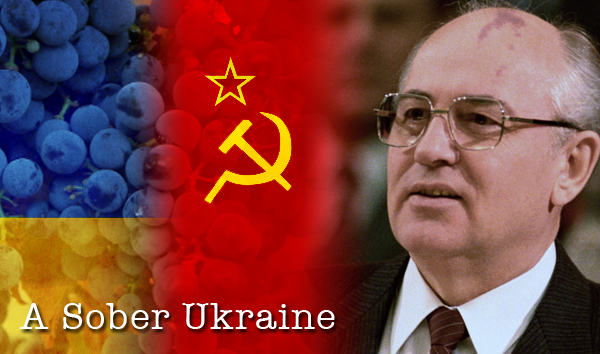
A Sober Ukraine

March 7th, 2014 by Joseph Temple

A Sober Ukraine
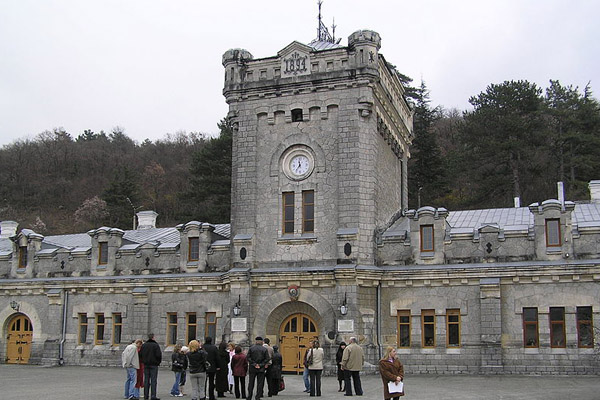
RIA Novosti archive, image #850809 / Vladimir Vyatkin / CC-BY-SA 3.0 [CC BY-SA 3.0], via Wikimedia Commons

By Joseph Temple

In the city of Odessa, tourists from around the globe arrive every year to enjoy its scenic beaches, an architecturally stunning opera house, and the Potemkin Steps, which take them directly from the city center to the beautiful shores of the Black Sea.  Rebuilt by Catherine the Great in the late eighteenth century, it has all the charms of Old Europe.  And of course, what would a visit to this coastal city be without having a glass of its famous sparkling wine.

As the largest wine-producing region in Ukraine, Odessa – like other areas in the Crimean Peninsula – benefits from a continental climate where its winters are moderated by the seas, making it an ideal spot to harvest grapes.   In fact, from its southern shores to the Carpathian Mountains, Ukrainians have been making wine since fourth century B.C.  Growing many varieties that include Rkatsiteli, Muscat, Aligoté and Riesling, perhaps the greatest structure honoring the country’s wine heritage is the Massandra estate.  Built by Czar Nicholas II in the late nineteenth century, this winery was renowned for producing some of the world’s best vintages by using the most modern operations of its time.

But even with this rich history, it is an industry that was almost wiped out nearly three decades ago.  Similar to how American wine barely survived the man-made disaster known as prohibition, Ukrainian wine also fell victim to deeply flawed social engineering.

Massandra winery main building, CrimeaThe Massandra Winery.  Located in the Crimea, it was built under the orders of
Czar Nicholas II so
he could enjoy the finest wines at his nearby castle on the Black Sea.

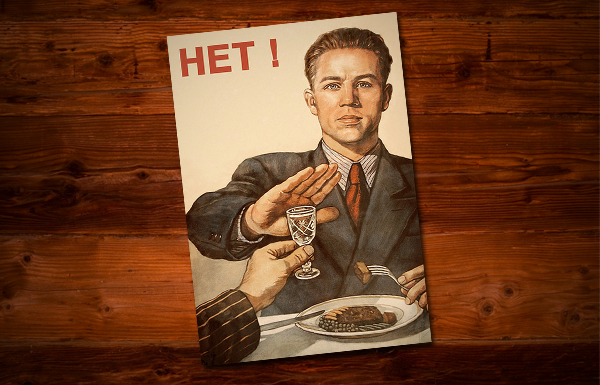
The story begins in May of 1985, two months after Mikhail Gorbachev assumed power of a declining Soviet Union.  Times were hard and the streets of Moscow were being overrun with alcoholism.  Running on a slogan that called for a “sober population,” Gorbachev tried to combat this epidemic by legislating morality.

And in true Communist fashion, extreme price fixing took place in order to make it financially impossible for the average citizen to drink.  By September of 1985, a bottle of sparkling wine increased by fifteen percent, while vodka and brandy shot up a staggering thirty percent.

Not confined to tackling just the demand, Gorbachev also went directly after the supply.  Seeing wine as a prime source of alcoholism, orders were given to not only reduce the output from Soviet wineries but to physically rip out the vines that produced this drink.  For nearly three years, field after field was systematically eliminated, reducing the total acreage by an entire third.

Gorbachev Anti-Alcohol PosterA Soviet poster during the Gorbachev led anti-alcohol campaign of the mid 1980s.

As author Brian Sommers writes, “in communist societies, wine producers are pretty low on the pecking order because they produce consumer goods that are associated with wealth.  For a time during the Gorbachev era, wine and all other alcohols were considered a societal evil.”

And nowhere was this new reality felt more than across Ukraine.  In 1985, along with other republics, the Soviet Union was the world’s third biggest producer of wine, behind only Italy and France.  One year later, nearly 800 square kilometers (almost half) of Ukrainian vineyards were wiped out as part of an edict that accomplished little in the long run.

Gorbachev’s policy played out almost the exact same way it did in the United States during the 1920s and early 1930s.  While alcohol-related crimes did indeed drop during this crackdown, many Soviet citizens went underground to satisfy their thirsts.  As home brewing and wine making exploded, the loss of taxable revenue took its toll on the economy.  Reformer Nikolay Shmelev observed in 1988 : “By giving away revenue to the bootlegger, the government in the last two years has sharply increased its budgetary imbalance.”

Nearly thirty years later in the vineyards of Ukraine, the ripple effects of its Soviet past are still being felt to this day.  Although production is at almost 400,000 tons of grapes annually, productivity is as low as 6.6 tons an acre.  Unable to keep up with their own domestic consumption, Ukraine must import wine from other countries just to meet the basic demand. However, there is a renewed hope that with increased access to western markets and investors, Ukrainian wines will experience a renaissance with its bottles being sold across North America and western Europe.

Have you tried any wine from Ukraine?

View Results

Loading ... Loading ...

Minnesota wines

February 27th, 2014 by Joseph Temple

Minnesota wines

By Joseph Temple

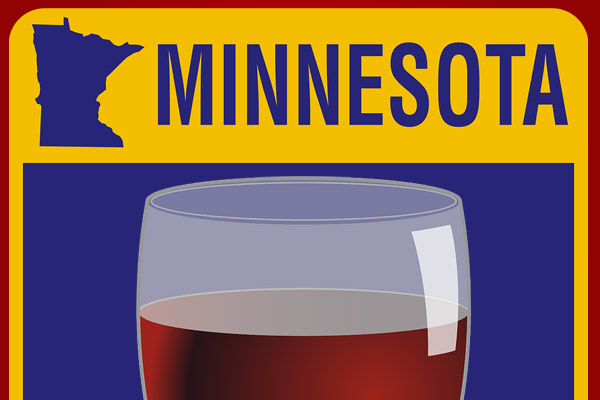
Wine and Minnesota.  Two words that few people living outside the North Star State would put in the same sentence.  With temperatures dipping to well below zero during the winter months, the land of ten thousand lakes appears to be an odd place for winemaking.  And yet, the state is one of America’s fastest growing regions for viticulture, with its wineries and vineyards producing over 90,000 gallons in 2009.

So how could a region synonymous with Vikings and frigid weather produce such quality wine usually associated with a lush Mediterranean climate?  The answer: working alongside state vintners, scientists at the University of Minnesota have created a series of grape varieties that are able to withstand harsh winters while producing truly exceptional wines.

Some of these include:

Marquette – descending from pinot noir grapes and offering tannins that most of the region’s grapes cannot, this is a dry red wine with a complex, spicy and fruity finish;

Frontenac Gris – similar to Riesling, this white wine has traces of honey crisp apple and tropical/citrus fruit flavors;

La Crescent – a sweet wine perfect for dessert, its intense apricot, citrus and pineapple aromas make it one of U of M’s best creations.

With two branches in Minneapolis/St. Paul and Rochester, the International Wine & Food Society is proud to be active in the region.  So please share your thoughts and experiences of Minnesota wine in the comments section.

Have you tried wine from Minnesota?

View Results

Loading ... Loading ...
Older Entries
Newer Entries
The object of the Society is to bring together and serve all who believe that a right understanding of good food and wine is an essential part of personal contentment and health and that an intelligent approach to the pleasures and problems of the table offers far greater rewards than the mere satisfaction of appetite.
Andre Simon Wine & Food Society Founder (1933)
© 2026 The International Wine & Food Society (IW&FS) IW&FS
Credits | Privacy | Accessibility