menu
Member Sign In
  • IWFS Homepage
  • Blog Home
  • Forums Home
  • Global Forum
  • Contact Us
Close
  • IWFS Homepage
  • Blog Home
  • Forums Home
  • Global Forum
  • Contact Us
    Member Sign In
  • Blog Home
  • Forum Home
  • Global Forum
FOLOW US

Recent Posts

  • ‘TIS THE SEASON FOR YOUR FAVOURITE HOLIDAY COOKIE!
  • Ask Sid: Best wine region for Sylvaner?
  • TOP QUALITY ST. JULIEN CHÂTEAU DUCRU-BEAUCAILLOU VERTICAL SHOWS MIXED RESULTS
  • Ask Sid: What does pigeage refer to in winemaking?
  • ANOTHER CHÂTEAU PICHON BARON PAUILLAC VERTICAL CONFIRMS TOP QUALITY AGEABILITY

Archives

  • December 2025
  • November 2025
  • October 2025
  • September 2025
  • August 2025
  • July 2025
  • June 2025
  • May 2025
  • April 2025
  • March 2025
  • February 2025
  • January 2025
  • December 2024
  • November 2024
  • October 2024
  • September 2024
  • August 2024
  • July 2024
  • June 2024
  • May 2024
  • April 2024
  • March 2024
  • February 2024
  • January 2024
  • December 2023
  • November 2023
  • October 2023
  • September 2023
  • August 2023
  • July 2023
  • June 2023
  • May 2023
  • April 2023
  • March 2023
  • February 2023
  • January 2023
  • December 2022
  • November 2022
  • October 2022
  • September 2022
  • August 2022
  • July 2022
  • June 2022
  • May 2022
  • April 2022
  • March 2022
  • February 2022
  • January 2022
  • December 2021
  • November 2021
  • October 2021
  • September 2021
  • August 2021
  • July 2021
  • June 2021
  • May 2021
  • April 2021
  • March 2021
  • February 2021
  • January 2021
  • December 2020
  • November 2020
  • October 2020
  • September 2020
  • August 2020
  • July 2020
  • June 2020
  • May 2020
  • April 2020
  • March 2020
  • February 2020
  • January 2020
  • December 2019
  • November 2019
  • October 2019
  • September 2019
  • August 2019
  • July 2019
  • June 2019
  • May 2019
  • April 2019
  • March 2019
  • February 2019
  • January 2019
  • December 2018
  • November 2018
  • October 2018
  • September 2018
  • August 2018
  • July 2018
  • June 2018
  • May 2018
  • April 2018
  • March 2018
  • February 2018
  • January 2018
  • December 2017
  • November 2017
  • October 2017
  • September 2017
  • August 2017
  • July 2017
  • June 2017
  • May 2017
  • April 2017
  • March 2017
  • February 2017
  • January 2017
  • December 2016
  • November 2016
  • October 2016
  • September 2016
  • August 2016
  • July 2016
  • June 2016
  • May 2016
  • April 2016
  • March 2016
  • February 2016
  • January 2016
  • December 2015
  • November 2015
  • October 2015
  • September 2015
  • August 2015
  • July 2015
  • June 2015
  • May 2015
  • April 2015
  • March 2015
  • February 2015
  • January 2015
  • December 2014
  • November 2014
  • October 2014
  • September 2014
  • August 2014
  • July 2014
  • June 2014
  • May 2014
  • April 2014
  • March 2014
  • February 2014
  • January 2014
  • December 2013
  • November 2013
  • October 2013
  • September 2013
  • August 2013
  • July 2013
  • June 2013

Meta

  • Log in
  • Entries feed
  • Comments feed
  • WordPress.org

Author Archive

Older Entries
Newer Entries

Ask Sid: Finding best temperature for white & rosé wine service

August 16th, 2017 by Joseph Temple
Ask your question here

ideal temperature for rose and white wine

Question: During this excessively hot Summer of 2017 I am finding it more difficult to obtain the ideal temperature for the dinner service of my whites & rosés. What are you doing?

Answer: Timely question. Yes it becomes more difficult for your wine service when the room temperature is quite high and quickly warms up your initially perfectly cool wine. Trial & error tactics seem to work best. Starting with a colder wine glass can help. In hot weather I prefer to serve the whites and roses rather colder than ideal and let them quickly warm up in the glass. I also pour a smaller amount initially and add to it from the colder bottle or decanter (held in the frig or in an ice bucket) to cool it down as you go along. Interesting routine too because you get a chance to try the wine at different temperatures – all on the cooler side – to find out exactly where you actually prefer it. Remember it always is easier to correct it if you start too cold rather than too warm. Experiment.


You might also like:


 alt=

Ten Tips & Pairings for the Ultimate Wine and Cheese Party

August 13th, 2017 by Joseph Temple

10 Tips & Pairings for the Ultimate Wine & Cheese Party
By Joseph Temple

Wine and cheese parties are a great way to experiment with new pairings and flavors.  They can be as formal or informal as you want.  This is a chance to explore!


storing cheese for a party1. PROPER STORAGE

Make sure your cheese is fresh and properly stored. Once cut, all cheese has a shorter shelf life – some fresh cheeses, for example, are optimal only within the first few days after opening – even in a container filled with brine or water. Also, avoid plastic wrap as is traps moisture, which can cause mold and an off taste.
blank

What temperature should I serve cheese at2. SERVE CHEESE AT ROOM TEMPERATURE

In order to experience the full flavor profile of a cheese, it shouldn’t be served straight out of the fridge. But don’t leave it out for more than a couple of hours or it could dry and oil-out. And remember to also serve wine at the correct temperature.
blank

Cheese cracker pairing baguette3. KEEP IT SIMPLE

Artisan breads and crackers are all the rage and just fine for a casual eating experience, but if you want to enjoy the complete complexity of specific wine and cheese together, plain crackers or a simple baguette is the best choice for a clean pallet.
blank

cheese1alt4. CUTTING BOARDS AND THE RIGHT KNIVES

Let guests slice their own portion – a trendy slate or classic wood board is a relaxed way to enjoy the offering and share in the experience. Make sure to use the right knife for the job to avoid an embarrassing mess.
blank

What to add with cheese to a platter5. HAVE FUN AND EXPERIMENT

Once all of the pairings are complete, bring out the rest of the accouterments – nuts, honey, fruit, conserves, meats, pickles, and those artisan crackers you’ve been dying to try – whatever you think might work. Have fun and see how the new additions change with the wines.


different types of cheese6. CATEGORIZING CHEESE

There are several ways to categorize cheese, but texture is the easiest to identify, especially for a novice at the market – soft, semi-soft, and firm. For a three course tasting, start with lighter cheeses and move towards heavier flavors. For a good variety, offer a soft, semi-soft, and firm for each course.
blank

Soft cheese wine pairings7. PAIRING SOFT CREAMY CHEESES

For a soft creamy cheese, such as Brie or Camembert, serve a fruity to medium red such as Gamay Noir or a weighty, but acidic and refreshing Riesling.
blank

What wine to pair with semi soft cheese8. PAIRING SEMI-SOFT CHEESES

For a semi-soft cheese, such as Havarti or Gouda, serve a lightly oaked Pinot Noir or Chardonnay.
blank

What wine to pair with firm cheeses9. PAIRING FIRM CHEESES

For a firm cheese such as an aged cheddar, serve an equally robust Cabernet Sauvignon or Cabernet Franc.
blank

Mixing up different cheeses with wine10. SWITCH IT UP

Remember to switch it up. There are thousands of different kinds of cheese. Try a full-flavored Merlot with salty Parmesan or a sweet and acidic Vidal Ice wine with strong blue cheese.


You might also like:

What's your favorite type of cheese to pair with wine?

View Results

Loading ... Loading ...

10 Great Summer Fruit Recipe Ideas

August 6th, 2017 by Joseph Temple

summer recipes involving fruit

By Joseph Temple

The hot days of summer bring us a bounty of fresh, local fruit.  Here are some tasty recipe ideas to inspire your summer table:


summerfruitelements1

1. Freeze watermelon for a naturally refreshing popsicle
blank

summerfruitelements1

2. Classic strawberries and cream – try soaking the berries in Champagne for an extra sparkle
blank

summerfruitelements1

3. Blueberries beautifully top a spinach and Chèvre salad finished with a honey almond vinaigrette
blank

summerfruitelements1

4. Blackberries, basil, and brie make a lovely crostini
blank

summerfruitelements1

5. Red currants – preserve these little gems in a jelly to bring sunshine to any winter day
blank

summerfruitelements1

6. Grilled plums pair well with grilled pork or poultry
blank

summerfruitelements1

7. Fill with walnut creme, top with a honey sweetened meringue, and torch just until toasted
blank

summerfruitelements1

8. Frozen blueberry and yogurt pops
blank

summerfruitelements1

9. A favorite for many: homemade strawberry ice cream
blank

summerfruitelements1

10. Simple, but classic and delicious: peach cobbler
blank


You might also like:

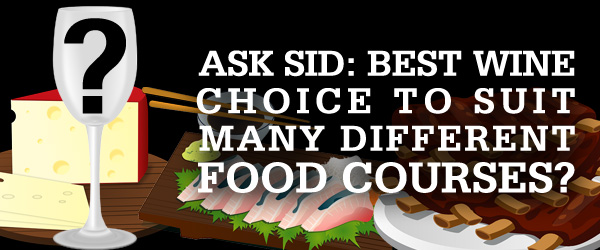
Ask Sid: Best wine choice to suit many different food courses?

August 2nd, 2017 by Joseph Temple
Ask your question here

what wine pairs with everything?

Question: What is your recommendation Sid for picking one style of wine to go with all dishes being served during a meal from vegetarian to fish to meat to desserts?

Answer: IMHO no right or wrong answer to a tough question. Trendy these days to say that popular Rosé is your best choice. However I am not the biggest fan of pairing a charming dry (or sweeter) Rosé with red meat. Chilled Gamay (or Cru Beaujolais) or an aged Riesling sometimes is a good alternative for overall pairing with diverse dishes. However my go to choice is usually Sparkling (with Champagne preferred at the higher price point). Those fascinating bubbles seem to give fresh vibrancy and a welcoming refreshment to the palate between bites that makes the matching with most foods really quite magical. Enjoy.


You might also like:

 alt=

What wine do you think pairs with everything?

View Results

Loading ... Loading ...

Revisiting the glorious legacy of Constantia Wine

July 29th, 2017 by Joseph Temple

Constantia wyn wine south africa

By Joseph Temple

Way back in the late 18th and early 19th centuries, there was one wine that was all the rage. A wine so popular that some of its biggest fans included Frederick the Great of Prussia, King Louis Philippe of the French, and Catherine the Great of Russia. Novelist Jane Austen once remarked that it had magical healing powers that could even cure a broken heart. And Napoleon Bonaparte drank so much of this particular brand while living in exile on the island of Saint Helena that he refused any other wine as he lay on his death bed. With a plethora of endorsements from Europe’s most powerful monarchs and rulers, one might easily think that this wine came from a famous estate in Bordeaux or Burgundy. However, if that was your first guess, you would be wrong; this world famous wine was produced just outside of Cape Town on the estate known as Groot Constantia.

As mentioned in last week’s blog entry, South Africa’s wine industry was born in the 1650s as an outpost to fill the thirsty needs of Dutch sailors as they headed towards the Orient. But with the arrival of French Huguenots, a more sophisticated level of expertise arrived in Cape Town—and just in time as Simon van der Stal, an early Dutch governor had his 1,850 acre estate sold and divided. Named after van der Stal’s wife Constance, the vineyards that became Groot Constantia fell into the hands of a German named Hendrik Cloete, who eventually made a wine that became the Cape’s hottest export.

Planting a combination of Frontignac (Muscat Blanc à Petits Grains), Pontac and some Chenin Blanc, “Constantia Wyn” became a rare exception amongst the lackluster wines made around the Cape. Although records are sparse and incomplete, some speculate that Cloete left the grapes on the vines long after ripeness, which achieved a shrivelled but not botrytized concentration.

Whatever the secret may have been to Constantia’s success, there was no denying that it was a smash hit from London to Saint Petersburg. In The Oxford Companion to Wine, Jancis Robinson writes, “Their [Constantia’s] fame was never matched by any other New World wines and their height they commanded more prestige, more fabulous prices, and enjoyed more crowned patronage than the most celebrated wines of Europe (with the possible exception of Hungarian Tokaji).” While praised by author Charles Dickens and poet Charles Baudelaire, its most famous customer Napoleon had 297 gallons shipped in wooden casks to his home every single year.

Unfortunately, by the 1860s and into the 1870s, Constantia was no longer in vogue. Due to a number of reasons that included the collapse of the export market for Cape wines and the fact that sweet wines had become unfashionable in Europe, the vineyard fell on hard times. Along with low yields which drove up expenses, by 1885, the estate went bankrupt and was purchased by the government, bringing things to a painful end.

When looking back on the legacy and impact of Constantia, its stunning success proved that wines harvested in the New World could compete with the very best of France. One hundred and fifty years later as remarkable vintages from California, Argentina, and Chile are sold across the world, they all owe a debt of gratitude to this special fortified wine!

Sources:

Alexander, Patrick. The Booklovers’ Guide to Wine: A Celebration of the History, the Mysteries and the Literary Pleasures of Drinking Wine. Coral Gables: Mango Media Inc., 2017.
Estreicher, Stefan K. Wine: From Neolithic Times to the 21st Century. New York: Algora Publishing, 2006.
James, Tim. Wines of the New South Africa: Tradition and Revolution. Berkeley: University of California Press, 2013.
MacNeil, Karen. The Wine Bible. New York: Workman Publishing, 2015.
Robinson, Jancis. The Oxford Companion to Wine, 4th Edition. Oxford: Oxford University Press, 2015.
Schoonmaker, Frank. Encyclopedia of Wine. New York: Hastings House, 1964.


You might also like:

Older Entries
Newer Entries
The object of the Society is to bring together and serve all who believe that a right understanding of good food and wine is an essential part of personal contentment and health and that an intelligent approach to the pleasures and problems of the table offers far greater rewards than the mere satisfaction of appetite.
Andre Simon Wine & Food Society Founder (1933)
© 2025 The International Wine & Food Society (IW&FS) IW&FS
Credits | Privacy | Accessibility