menu
Member Sign In
  • IWFS Homepage
  • Blog Home
  • Forums Home
  • Global Forum
  • Contact Us
Close
  • IWFS Homepage
  • Blog Home
  • Forums Home
  • Global Forum
  • Contact Us
    Member Sign In
  • Blog Home
  • Forum Home
  • Global Forum

Follow Us

Recent Posts

  • Ask Sid: What is the difference between the two grapes of Blaufrankisch and Kekfrankos?
  • CHAMBOLLE-MUSIGNY WINES IMPRESS WITH DISTINCTIVE POWER COMBINED WITH SENSUAL ELEGANCE
  • Ask Sid: What is the new grape being used in Amarone?
  • OUR 2002 RED BURGUNDY HORIZONTAL IS AGING WELL, SHOWCASING REFINED PRECISION WITH TERROIR-DRIVEN CHARM
  • Ask Sid: Thoughts of Sid Cross on the Judgement of Paris historic wine tasting at the 50th Anniversary?

Archives

  • April 2026
  • March 2026
  • February 2026
  • January 2026
  • December 2025
  • November 2025
  • October 2025
  • September 2025
  • August 2025
  • July 2025
  • June 2025
  • May 2025
  • April 2025
  • March 2025
  • February 2025
  • January 2025
  • December 2024
  • November 2024
  • October 2024
  • September 2024
  • August 2024
  • July 2024
  • June 2024
  • May 2024
  • April 2024
  • March 2024
  • February 2024
  • January 2024
  • December 2023
  • November 2023
  • October 2023
  • September 2023
  • August 2023
  • July 2023
  • June 2023
  • May 2023
  • April 2023
  • March 2023
  • February 2023
  • January 2023
  • December 2022
  • November 2022
  • October 2022
  • September 2022
  • August 2022
  • July 2022
  • June 2022
  • May 2022
  • April 2022
  • March 2022
  • February 2022
  • January 2022
  • December 2021
  • November 2021
  • October 2021
  • September 2021
  • August 2021
  • July 2021
  • June 2021
  • May 2021
  • April 2021
  • March 2021
  • February 2021
  • January 2021
  • December 2020
  • November 2020
  • October 2020
  • September 2020
  • August 2020
  • July 2020
  • June 2020
  • May 2020
  • April 2020
  • March 2020
  • February 2020
  • January 2020
  • December 2019
  • November 2019
  • October 2019
  • September 2019
  • August 2019
  • July 2019
  • June 2019
  • May 2019
  • April 2019
  • March 2019
  • February 2019
  • January 2019
  • December 2018
  • November 2018
  • October 2018
  • September 2018
  • August 2018
  • July 2018
  • June 2018
  • May 2018
  • April 2018
  • March 2018
  • February 2018
  • January 2018
  • December 2017
  • November 2017
  • October 2017
  • September 2017
  • August 2017
  • July 2017
  • June 2017
  • May 2017
  • April 2017
  • March 2017
  • February 2017
  • January 2017
  • December 2016
  • November 2016
  • October 2016
  • September 2016
  • August 2016
  • July 2016
  • June 2016
  • May 2016
  • April 2016
  • March 2016
  • February 2016
  • January 2016
  • December 2015
  • November 2015
  • October 2015
  • September 2015
  • August 2015
  • July 2015
  • June 2015
  • May 2015
  • April 2015
  • March 2015
  • February 2015
  • January 2015
  • December 2014
  • November 2014
  • October 2014
  • September 2014
  • August 2014
  • July 2014
  • June 2014
  • May 2014
  • April 2014
  • March 2014
  • February 2014
  • January 2014
  • December 2013
  • November 2013
  • October 2013
  • September 2013
  • August 2013
  • July 2013
  • June 2013

Meta

  • Log in
  • Entries feed
  • Comments feed
  • WordPress.org

Author Archive

Older Entries
Newer Entries

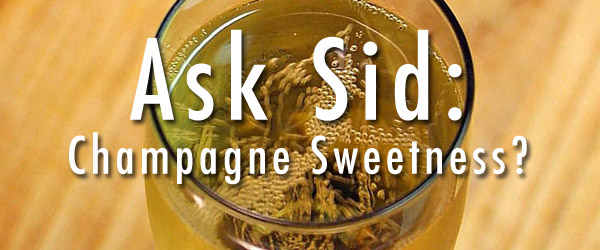
Ask Sid: Champagne Sweetness?

September 16th, 2015 by Joseph Temple
Ask your question here The International Wine & Food Society

Ask Sid: Champagne sweet or dry terms

Question: How can I tell the sweetness level from reading the label on a bottle of wine – especially Champagne?

Answer: Yes knowing the sweetness levels of wines is becoming an increasing problem without a compulsory ingredient labeling. Many labelled dry red table wines can actually be quite sweet. Riesling is a good example where the sugar level can be quite high but it seems less sweet because of the high levels of balanced acidity. Champagne is a bit easier because they usually help describe the level of sweetness by using code words:

Very Dry: Look for Brut or Natur

Dry: Usually say Extra Dry, Extra Sec, or Tres Sec

Medium Dry: Dry or Sec

Medium Sweet: Demi-Sec

Sweet: Doux, Demi-Doux, or Rich


You might also like:

Were you aware of these terms for Champagne?

View Results

Loading ... Loading ...

10 things you need to know about German Sekt

September 11th, 2015 by Joseph Temple

10 things you need to know about German Sekt wine
By gernhaex (Flickr: Sekt) [CC BY 2.0], via Wikimedia Commons
By fdecomite (German flagUploaded by tm) [CC BY 2.0], via Wikimedia Commons

By Joseph Temple

Step aside beer—sparkling wine is taking over in a big way! While sales of suds are falling flat, shipments of bubbly increased by 8% in 2014, according to the Wine Institute. Fueled largely by Prosecco, which saw an astonishing 30% increase over the past several years, sparkling is no longer for weddings and anniversaries as more and more millennials are uncorking it at their dinner tables with no special event in mind.

But besides Champagne, Prosecco and Cava, there is another sparkling wine you should definitely know about. German Sekt, much like its Spanish counterpart has suffered from a reputation for being cheap and lacking in quality—considered by many to be nothing more than carbonated fruit juice. However, these erroneous assumptions don’t tell the entire story about Sekt, which if purchased correctly, can be a real treat. And below are ten facts you need to know before buying this wine.


What does Sekt sparkling wine taste like?
By crosseye Marketing – Tourismus Marketing Online (Flickr: Uhudlersekt vom Weingut Bernhart) [CC BY 2.0], via Wikimedia Commons

1. Sekt is usually sweeter and lower in alcohol than Champagne and other sparkling wines. It can contain aromas of apples, pears and white flowers with alcohol levels as low as 6%.

blank

 Sekt wine and the Treaty of Versailles

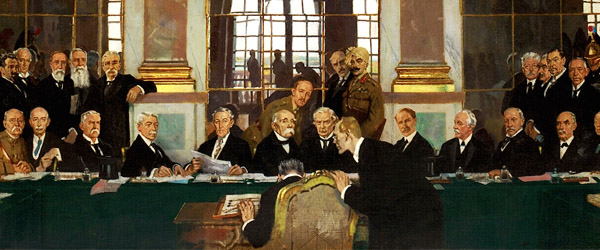
2. After the Treaty of Versailles was signed in 1919, Germany was forbidden from using the name “Champagne.” The generic term “sekt” was used instead.

blank

Germans consume the majority of sekt

3. In 2011, of the 420 million liters of Sekt that was produced, Germans drank nearly 80% of it.

blank

Grapes used to make sekt
By Rob & Lisa Meehan [CC BY 2.0], via Wikimedia Commons

4. Less expensive Sekt imports bulk wine and grapes from countries such as France, Spain and Italy. These bottles constitute approximately 95% of all sekt.

blank

fermentation process for sekt

5. Most Sekt uses the Charmat method for secondary fermentation, similar to Prosecco.

blank

cheap sekt won't show a vintage
By Ralf Roletschek (User:Marcela) (Own work) [GFDL, CC-BY-SA-3.0 or CC BY 2.5], via Wikimedia Commons

6. Cheap Sekt will not show the vintage or vineyard on the label.

blank

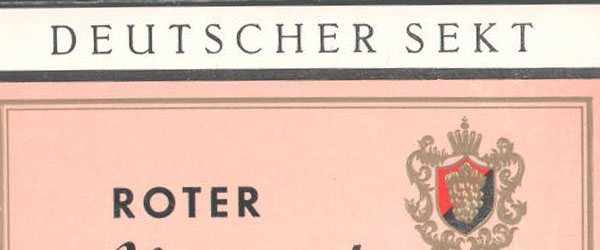
Deutscher Sekt

7. Deutscher Sekt means the wine was made using only German grapes such as Riesling. These are considered by many to be some of the best bottles to purchase.

blank

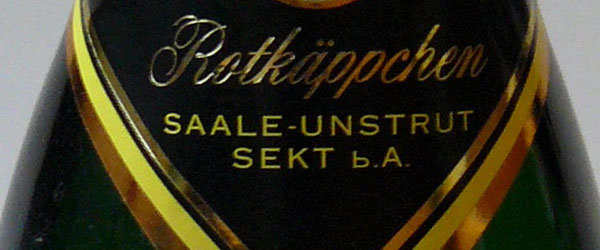
sekt b.a.
By SPBer (Own work) [CC BY-SA 3.0], via Wikimedia Commons

8. Sekt b.A. or Winzersekt (wine grower’s sekt) means it was made from grapes from one of Germany’s thirteen quality regions. Quantities are modest and usually made by smaller estates.

blank

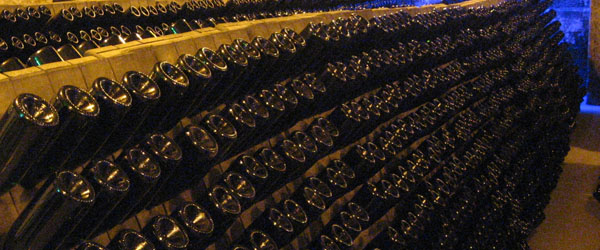
Premium sekt
By Lumu (Own work) [GFDL or CC BY-SA 3.0], via Wikimedia Commons

9. Premium sekt often uses Pinot blanc, Pinot gris and Pinot noir grapes. It is also very hard to find in the United States.

blank

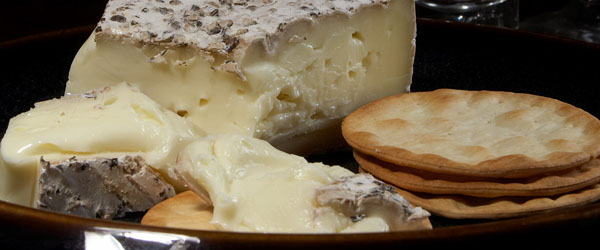
cheeses to pair sekt with

10. Some cheeses to pair Sekt with are ones with soft interior and mild notes such as Brie.


Sources:

Centamore, Adam. Tasting Wine and Cheese: An Insider’s Guide to Mastering the Principles of Pairing. Beverly: Quarry Books, 2015.
LaVilla, Joseph. The Wine, Beer, and Spirits Handbook: A Guide to Styles and Service. Hoboken: John Wiley and Sons, 2009.
Rathburn, A.J. Champagne Cocktails: 50 Cork-Popping Concoctions and Scintillating Sparklers. Boston: Houghton Mifflin Harcourt, 2010.
Simon, Joanna. Discovering Wine. New York: Simon & Schuster, 2003.
Consumers are in the Mood for Sekt. Wines of Germany. Retrieved from http://germanwinesusa.com.


You might also like:

Do you drink sekt?

View Results

Loading ... Loading ...

Ask Sid: Finding BC Wines in the USA?

September 9th, 2015 by Joseph Temple
Ask your question here The International Wine & Food Society

Finding British Columbia Wines in the USA

Question: I just read your article on BC wines and wondered if they are exporting any of them to the US. In the past I’ve found it very difficult to get any of their wines. I like their Pinot Noirs the best.

Answer: Yes until recently the BC wines have been in very limited production and that supply has been taken up by the local markets especially the Vancouver restaurants. Some wineries are now looking to broaden their horizons and are exporting to the US and other countries. A good list of wines to buy online directly from several Canadian wineries is available in the USA at www.winevip.com. Also look for them in an increasing number of US restaurants. For example the outstanding Foxtrot Vineyards (www.foxtrotwine.com) pinot noir is on the wine list of the top restaurant Cuistot in Palm Desert California. Meyer Family Vineyards (www.mfvwines.com) specializes in pinot noir & chardonnay and is focusing on increasing their export market with already 7 countries on board. Seek them out.


You might also like:

Do you plan on seeking out BC wines

View Results

Loading ... Loading ...

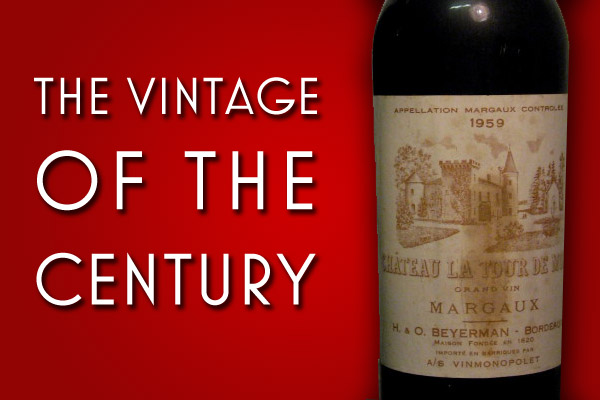
The Vintage of the Century: Revisiting the impact of 1959 Bordeaux

September 4th, 2015 by Joseph Temple

1959 Bordeaux: the vintage of the century

By Joseph Temple

“From the Golden Slope of Burgundy to the chateaux of Bordeaux, 1959 will be remembered not as the year of De Gaulle and Algeria but as the year of the Great Wine,” declared Time magazine. “A boon to the grapes, and not only has it been a great year in quality, but in quantity as year,” wrote the influential humorist Art Buchwald. With an exceptional summer, it appeared that nineteen fifty-nine was turning into something truly remarkable across the vineyards of Bordeaux. And brilliantly capitalizing on all of this free publicity, French winemakers ceremoniously dubbed it “The Vintage of the Century,” a title that unleashed a wine renaissance throughout the United States.

For the Bordelais, the good news couldn’t have come at a better time. The previous year had produced a small harvest and the year before was so bad that France was actually forced to import wine. In terms of quality, the vintages of the late 1950s were so awful that many in the newly created Fifth Republic chose beer instead of wine when visiting the local watering hole. Back in America, a young enthusiast named Robert M. Parker Jr. concurred when tasting a bottle of 1957 Château Lafite-Rothschild. Remarking it “tastes like cat piss,” Parker learned that with no rating system, first-growth Bordeaux’s like Lafite could easily coast on their reputation despite having such a subpar product.

But with news about the vintage of the century spreading like wildfire, American wine drinkers finally decided to enter the marketplace in a big way. During the 1950s, as oenophile culture started to gain steam on the east coast, the train of thought was that French wine was the undisputed gold standard. And with a devaluation of the franc ordered by Charles De Gaulle, U.S. dollars could now snatch up a sizable chunk of Bordeaux’s exports, which for seven and a half centuries had been dominated by the British.

For those who took advantage of the situation, they would not be disappointed. Michael Broadbent described the 1959 Château Lafite as “one of the best-ever Lafites … mammoth. And superb” while calling the Château Latour: “Glorious … perfect enough to keep on maturing for another quarter century.” According to Parker, “The wines do display the effects of having been made in a class, hot, dry year, with just enough rain to keep the vineyards from being stressed. They are full bodied, extremely alcoholic, and opulent, with high degrees of tannin and extract.”

So long before terms like ‘vintage of the century’ had been used ad nauseam, the marketing slogan proved to be a resounding success in places like New York and Washington D.C. By 1961, the price of first-growths had more than quadrupled with Americans for the first time becoming the principal buyers. Adding to these soaring prices was a futures market—something that would have been unheard of in the United States a decade before—making many British customers irate. Describing the mood in England during this time, author Elin McCoy writes, “The international market was now being built on these high prices, and if the Americans dropped out it would surely crash. Who else but the Americans would pay so much money for wine?”

Looking back at the craze over the vintage of the century, many wine writers believe that 1959 didn’t live up to its hype, especially when compared to 1961. However, no one can deny the impact that this vintage had on buying habits in the United States, signaling a seismic shift in the export market for French wines that is still felt to this day.

Sources:

Broadbent, Michael. Michael Broadbent’s Pocket Vintage Wine Companion. London: Anova Books, 2007.
Buchwald, Art. (1959, Oct 7). Buchwald, The Boor of Bordeaux Learns How To Swish And Spit. The Miami News. Retrieved from http://news.google.com.
Harding, Julia. The Oxford Companion to Wine. Oxford: Oxford University Press, 2015.
London Observer Service. (1959, Oct 9). 1959 – Century’s Best Vintage.
McCoy, Elin. The Emperor of Wine: The Rise of Robert M. Parker Jr., and the Reign of American Taste. New York: HarperCollins, 2005.
Parker, Robert M. Bordeaux: A Consumer’s Guide to the World’s Finest Wines. New York: Simon & Schuster, 2013.
Robards, Terry. (1982, July 11). Wine; A Vintage of the Century Revisited. The New York Times. Retrieved from http://nytimes.com.
Unknown Author. (1959, Oct 19). Business: A Votre Sant. Time Magazine. Retrieved from http://content.time.com.


You might also like:

Have you tasted 1959 Bordeaux?

View Results

Loading ... Loading ...
Ask Sid: What makes Madeira so unique?

September 3rd, 2015 by Joseph Temple
Ask your question here The International Wine & Food Society

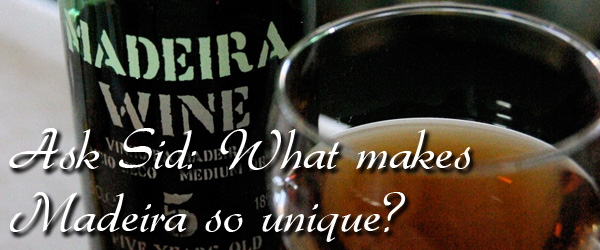
Ask Sid: What makes Madeira so unique?
“Madeira Wine” by y kawahara – originally posted to Flickr as Madeira Wine. Licensed under CC BY 2.0 via Wikimedia Commons.

Question: What are the main factors that make Madeira so unique from other wines?

Answer: Two main ones – the estufado system of heat maturation + the specific terroir of the volcanic soil on which the grapes are grown.


You might also like:

Do you like to drink Madeira?

View Results

Loading ... Loading ...
Older Entries
Newer Entries
The object of the Society is to bring together and serve all who believe that a right understanding of good food and wine is an essential part of personal contentment and health and that an intelligent approach to the pleasures and problems of the table offers far greater rewards than the mere satisfaction of appetite.
Andre Simon Wine & Food Society Founder (1933)
© 2026 The International Wine & Food Society (IW&FS) IW&FS
Credits | Privacy | Accessibility