menu
Member Sign In
  • IWFS Homepage
  • Blog Home
  • Forums Home
  • Global Forum
  • Contact Us
Close
  • IWFS Homepage
  • Blog Home
  • Forums Home
  • Global Forum
  • Contact Us
    Member Sign In
  • Blog Home
  • Forum Home
  • Global Forum

Follow Us

Recent Posts

  • Ask Sid: What is the difference between the two grapes of Blaufrankisch and Kekfrankos?
  • CHAMBOLLE-MUSIGNY WINES IMPRESS WITH DISTINCTIVE POWER COMBINED WITH SENSUAL ELEGANCE
  • Ask Sid: What is the new grape being used in Amarone?
  • OUR 2002 RED BURGUNDY HORIZONTAL IS AGING WELL, SHOWCASING REFINED PRECISION WITH TERROIR-DRIVEN CHARM
  • Ask Sid: Thoughts of Sid Cross on the Judgement of Paris historic wine tasting at the 50th Anniversary?

Archives

  • April 2026
  • March 2026
  • February 2026
  • January 2026
  • December 2025
  • November 2025
  • October 2025
  • September 2025
  • August 2025
  • July 2025
  • June 2025
  • May 2025
  • April 2025
  • March 2025
  • February 2025
  • January 2025
  • December 2024
  • November 2024
  • October 2024
  • September 2024
  • August 2024
  • July 2024
  • June 2024
  • May 2024
  • April 2024
  • March 2024
  • February 2024
  • January 2024
  • December 2023
  • November 2023
  • October 2023
  • September 2023
  • August 2023
  • July 2023
  • June 2023
  • May 2023
  • April 2023
  • March 2023
  • February 2023
  • January 2023
  • December 2022
  • November 2022
  • October 2022
  • September 2022
  • August 2022
  • July 2022
  • June 2022
  • May 2022
  • April 2022
  • March 2022
  • February 2022
  • January 2022
  • December 2021
  • November 2021
  • October 2021
  • September 2021
  • August 2021
  • July 2021
  • June 2021
  • May 2021
  • April 2021
  • March 2021
  • February 2021
  • January 2021
  • December 2020
  • November 2020
  • October 2020
  • September 2020
  • August 2020
  • July 2020
  • June 2020
  • May 2020
  • April 2020
  • March 2020
  • February 2020
  • January 2020
  • December 2019
  • November 2019
  • October 2019
  • September 2019
  • August 2019
  • July 2019
  • June 2019
  • May 2019
  • April 2019
  • March 2019
  • February 2019
  • January 2019
  • December 2018
  • November 2018
  • October 2018
  • September 2018
  • August 2018
  • July 2018
  • June 2018
  • May 2018
  • April 2018
  • March 2018
  • February 2018
  • January 2018
  • December 2017
  • November 2017
  • October 2017
  • September 2017
  • August 2017
  • July 2017
  • June 2017
  • May 2017
  • April 2017
  • March 2017
  • February 2017
  • January 2017
  • December 2016
  • November 2016
  • October 2016
  • September 2016
  • August 2016
  • July 2016
  • June 2016
  • May 2016
  • April 2016
  • March 2016
  • February 2016
  • January 2016
  • December 2015
  • November 2015
  • October 2015
  • September 2015
  • August 2015
  • July 2015
  • June 2015
  • May 2015
  • April 2015
  • March 2015
  • February 2015
  • January 2015
  • December 2014
  • November 2014
  • October 2014
  • September 2014
  • August 2014
  • July 2014
  • June 2014
  • May 2014
  • April 2014
  • March 2014
  • February 2014
  • January 2014
  • December 2013
  • November 2013
  • October 2013
  • September 2013
  • August 2013
  • July 2013
  • June 2013

Meta

  • Log in
  • Entries feed
  • Comments feed
  • WordPress.org

Author Archive

Older Entries
Newer Entries

Bill Koch’s wine cellar under the gavel

April 8th, 2016 by Joseph Temple

Bill Koch's wine cellar under the gavel

By Joseph Temple

Last week the wine world was abuzz after billionaire Bill Koch announced that he was auctioning off part of his massive collection to the general public. According to CNBC, approximately 20,000 bottles are up for grabs with Sotheby’s estimating that the entire collection will raise somewhere in the neighborhood of $10 to $15 million dollars. Oenophiles may know Koch as the man who (besides his last name) spent large sums of money battling counterfeiters, most notably in the case surrounding a series of bottles purportedly owned by Thomas Jefferson. Writing about his penchant for wine collecting, author Benjamin Wallace in the 2008 book The Billionaire’s Vinegar states, “He [Koch] started buying an average of 5,000 bottles a year, an acquisition rate he would maintain through the late 1980s. Systematically, Koch set out to assemble drop verticals of four iconic wines; eventually he would own 95 years of Petrus, 100 years of Latour, 120 years of Mouton, and 150 years of Lafite.”

With such an impressive selection of the rarest wines from Bordeaux and Burgundy, wealthy collectors from around the world are expected to bid top dollar when all these bottles go up on the auction block in May. “Even if you don’t like his family’s politics, Koch’s name alone on the wine list, is enough to entice the most discriminating buyer, “ said Adrien Falcon, wine director at two Michelin ranked restaurants. And below are just five lots that eager aficionados will surely fight tooth and nail over to acquire.
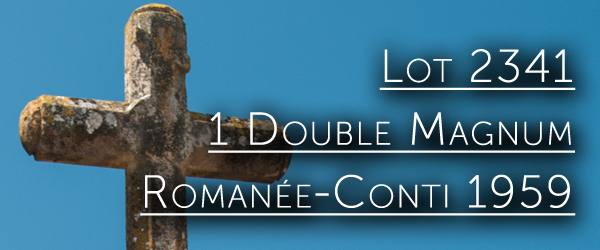

Romanee-Conti 1959 vintage
By Michal Osmenda from Brussels, Belgium (Domaine de la Romanée-Conti) [CC BY 2.0], via Wikimedia Commons

For Burgundy collectors, their mecca sits on just 4.46 acres of land in the region of Côte de Nuits. It is here where Romanée-Conti, a grand-cru owned by the legendary Aubert de Villaine gave the world some of the finest pinot noir ever made. Seeking out the very best from this iconic vineyard, many point to the 1959 vintage, which Michael Broadbent described as “faultless” with “excellent tannin and acidity.” Of course, the year also marked a turning point in wine collecting. With a devalued French franc, many Americans decided that it was the perfect time to enter the marketplace. Under this backdrop, Sotheby’s expects that just three precious liters of Romanée-Conti 1959 are likely to earn Koch up to forty thousand dollars.
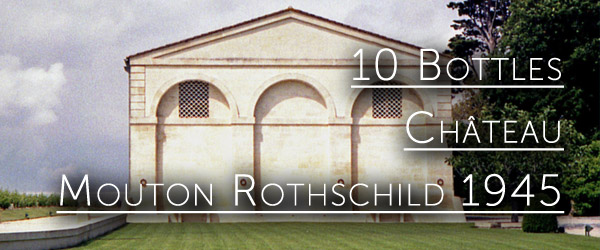
 

1945 mouton rothschild vintage
By Benjamin Zingg, Switzerland (Own work) [CC BY-SA 2.5], via Wikimedia Commons

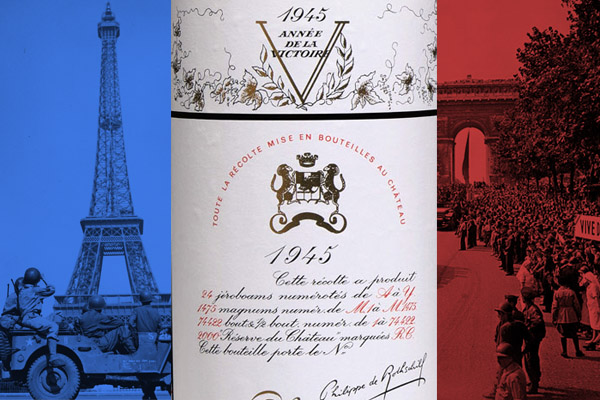
Another lot that’s guaranteed to sell quickly contains ten scarce bottles of Château Mouton Rothschild’s 1945 vintage—a vintage Decanter magazine called “the greatest claret of the 20th century” and that Robert Parker christened “a consistent 100-point wine (only because my point scale stops at that number).” But in addition to what’s inside the bottle is the iconic “V for victory” label design. Beginning in 1945 and signaling a bold new era in wine marketing, owner Baron Philippe de Rothschild would commission a different artist each year to design their now famous label. This decision, along with some exceptional harvests eventually led to Mouton Rothschild’s upgrade to a First Growth Bordeaux in 1973. Don’t be surprised if Sotheby’s receives several six-figure bids on this lot.
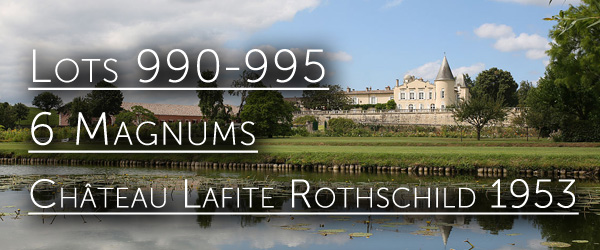
 

Chateau Lafite Rotschild 1953 vintage
By PA (Own work) [CC BY-SA 4.0], via Wikimedia Commons

With roots that date back to the Middle Ages, Château Lafite Rothschild, the largest of the First Growths experienced a tremendous run of outstanding vintages from about 1945 to 1962. While never quite as good as Latour, wine writer Oz Clarke identifies two years in which the famous Lafite towered over its competition before entering a period of malaise: 1976 and 1953. According to Michael Broadbent the latter is “… not a wine to describe. Words simply cannot do it justice. If you are ever fortunate to share a bottle, just let it speak for itself.” Unfortunately, this experience won’t be cheap; a lot of six magnums may cost you $35,000 at auction.
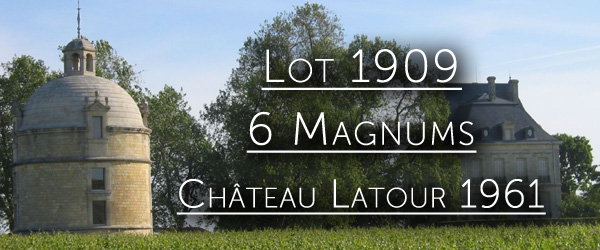
 

Chateau Latour 1961
By BillBl (originally posted to Flickr as Chateau Latour I) [CC BY 2.0], via Wikimedia Commons

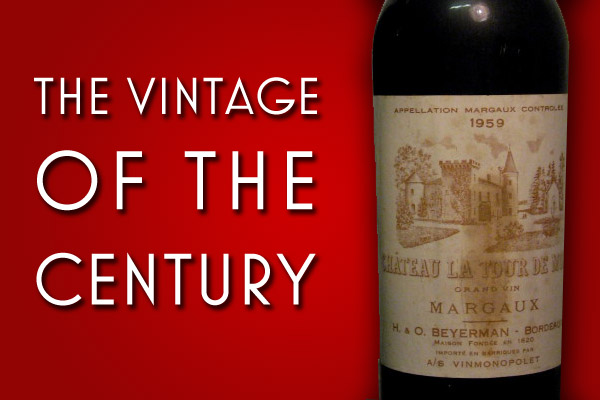
Today, many oenophiles tend to roll their eyes whenever a particular year is dubbed “the vintage of the century.” Just like overzealous boxing promoters who declare their next prizefight to be the battle of the century, its overuse has turned the description into a worn-out cliché. However in 1961, the public really took to the idea that two phenomenal vintages could occur in just three years. And right they were! In this case, the ’61 really did deserve the praise it received, especially at Château Latour, which The Wine Cellar Insider describes as “Powerful, full bodied, intense and deep … elegance meshed with power.” Praised universally by wine critics—including a 100-point score from Robert Parker, the six magnums for sale could collectively go as high as $60,000.

 

Chateau Petrus 1982
By Benjamin Zingg, Switzerland (Own work) [CC BY-SA 2.5], via Wikimedia Commons

Every fan of Bordeaux knows all about the magical year that was 1982. Possessing near-perfect grapes throughout the region, Robert Parker of The Wine Advocate declared it to be (yet again) the “vintage of the century”—a watershed moment that sparked unparalleled interest in wine collecting. Symbolizing the best of the best, Château Petrus, the undisputed king of Pomerol produced what Parker described as “the most perfect and symmetrical wine” that he had ever tasted. So expect six magnum bottles from this year to reach as much as $10,000 each.


Sources:

Broadbent, Michael. Michael Broadbent’s Pocket Vintage Wine Companion. London: Anova Books, 2007.
Broadbent, John Michael. Michael Broadbent’s Vintage Wine: Fifty Years of Tasting Three Centuries of Wine. Boston: Houghton Mifflin Harcourt, 2002.
Clarke, Oz. Oz Clarke’s Bordeaux: The Wines, the Vineyards, the Winemakers. Boston: Houghton Mifflin Harcourt, 2007.
Coates, Clive. The Wines of Bordeaux: Vintages and Tasting Notes 1952-2003. Berkeley: University of California Press, 2004.
Geier, Ben. (2016, March 30). Bill Koch is selling off his epic $15M wine cellar. Fortune. Retrieved from http://fortune.com.
Greene, Kerima. (2016, April 2). William Koch’s wine collection headed to auction. CNBC. Retrieved from http://cnbc.com.
McCoy, Elin. The Emperor of Wine: The Rise of Robert M. Parker Jr., and the Reign of American Taste. New York: HarperCollins, 2005.
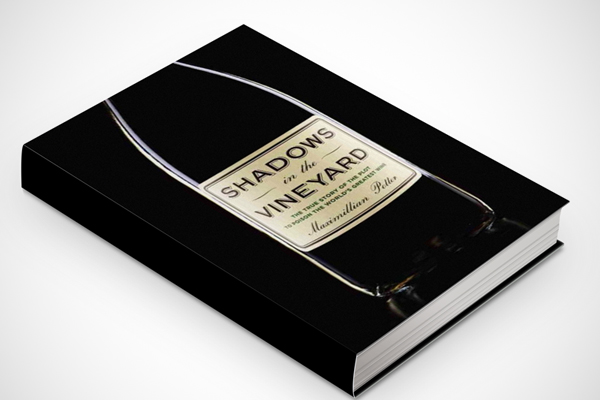
Potter, Maximillian. Shadows in the Vineyard: The True Story of the Plot to Poison the World’s Greatest Wine. New York: Grand Central Publishing, 2014.
Wallace, Benjamin. The Billionaire’s Vinegar: The Mystery of the Most Expensive Bottle of Wine. New York: Three Rivers Press, 2009.
Wine Legends of 2011: Château Mouton Rothschild 1945 . Decanter. Retrieved from http://www.decanter.com.


You might also like:
Have you tasted any of these vintages?

View Results

Loading ... Loading ...
Ask Sid: Wine match for grilled salmon?

April 6th, 2016 by Joseph Temple
Ask your question here The International Wine & Food Society

Ask Sid: Wine match for grilled salmon?

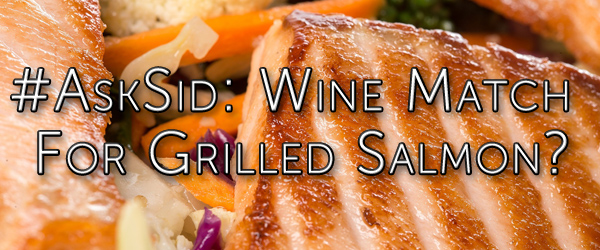
Question: What is a good wine match for a dinner where the main course is grilled salmon?

Answer: Lots of wines that will show your fish dish to best advantage. Salmon flavours can vary a lot from the rich oils of Spring (Chinook or King) to drier less oily deep coloured Sockeye or more trout like Steelhead. Andre Simon in “Partners” made a very specific recommendation of Batard-Montrachet but most white Burgundy should make a sublime pairing. Also popular these days is a lighter red – usually from the pinot noir variety. Experiment.


You might also like:

What wine would you want to pair with grilled salmon?

View Results

Loading ... Loading ...
Movie review: A Year In Champagne (2014)

April 1st, 2016 by Joseph Temple

A Year in Champagne Movie review

By Joseph Temple

*** WARNING: SPOILER ALERT ***

“Wines are generally known because they come from one special place, one appellation,” says Bollinger’s Ghislain de Montgolfier. “Champagne is known by the brand and the name of the owner. We transformed appellations into brands.”

This thought-provoking statement provides an excellent starting point for David Kennard’s 2014 film A Year In Champagne. Following the success of his previous documentary, A Year In Burgundy, Kennard heads north to a place where the wine is synonymous with wealth and prosperity. Interviewing six local winemakers over the course of 365 days, viewers are given a rare backstage pass to the 2012 harvest, seeing the trials and tribulations of a region that as one interviewee states, “understood very early how to connect to the spirit of celebration.”

It is ironic considering the images we see throughout the movie. In comparison to Bordeaux and Burgundy, which receive a decent amount of sunshine; Champagne—the most northerly wine growing region in continental Europe—appears to be cold and dreary. Torrential downpours can turn vineyards into mud baths while insects, rot and mildew represent a constant problem for the Champenois. With this sort of weather, it’s really no surprise that non-vintage champagne dominates the marketplace. “Our climate is right at the edge of what’s possible for winemaking,” declares Jean Pierre Palizon of the Corporation of Champagne Wine Makers.

Due to these conditions, the various houses are subject to rules—lots of rules. From pruning to cellaring, Champagne is governed by a rigid set of guidelines. Seeing row after row of vines that look almost identical, the film’s narrator jokingly describes them as “soldiers on parade.” Of course, failure to comply with this strict uniformity can result in the vineyard’s appellation status being taken away, leaving the vintner unable to sell his product. There is a zero tolerance policy on creativity or individuality here; a clear contrast to the jubilation we like to experience while sipping on millions of tiny little bubbles.

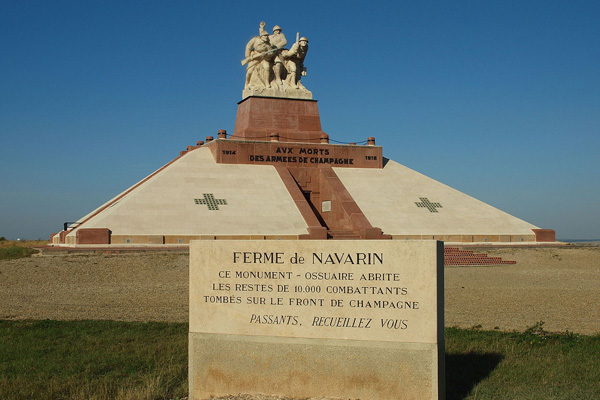
 The Navarin Ossuary Monument
The Navarin Ossuary Monument
By François GOGLINS (Own work) [CC BY-SA 4.0], via Wikimedia Commons

The region’s war-torn past also provides juxtaposition to the joy and happiness we often associate with champagne. Using black and white footage of the First World War along with some impressive shots of the Navarin Ossuary Monument, a pyramid-shaped structure containing the remains of 10,000 unknown soldiers, we learn how some of the bloodiest battles in history have been fought here. Since the time of Attila the Hun, Champagne has certainly seen its fair share of invading armies, which culminated during the summer of 1918 when the Second Battle of the Marne resulted in nearly 300,000 casualties.

While there are many riveting stories in this movie, a few key events were missed, such as the 1911 riots and the bitter feud between the Aube and Marne regions over what constitutes authentic champagne. So if you’re eager to fill in the gaps, Champagne: How the World’s Most Glamorous Wine Triumphed Over War and Hard Times by Don and Petie Kladstrup is a great book to complement this film.

Another aspect that was lacking had to do with the influence of marketing. Although there is some great footage mixed in with some iconic advertising posters, there were also plenty of missed opportunities. For example, while interviewing one of Bollinger’s barrel makers, we see several James Bond movie posters on the wall. This shot could have been a great segue into explaining how champagne houses were at one time at the cutting edge of product placement marketing. After all, was it all just one giant coincidence that the Bollinger label is distinctly shown in several 007 movies?

Thankfully, the film truly excels at pulling back the curtain on these six winemakers over the course of a year. From the big names to the small family-owned estates that produce only a couple thousand bottles a year, this behind-the-scenes tour of their operations is simply fascinating. From the harvesting and pressing of grapes to seeing hundreds of miles of underground cellars where bottles go through a tedious riddling process, there are quite a few gems we get to witness. So if you’re interested in how bubbles are made, then definitely watch this movie.


You might also like:

Have you seen A Year In Champagne?

View Results

Loading ... Loading ...
Ask Sid: Best corkscrew for older corks?

March 30th, 2016 by Joseph Temple
Ask your question here The International Wine & Food Society

Ask Sid: Best corkscrew for older corks?

Question: I recently have been having some difficulty removing the corks intact when opening my older wines. Any tips for me Sid?

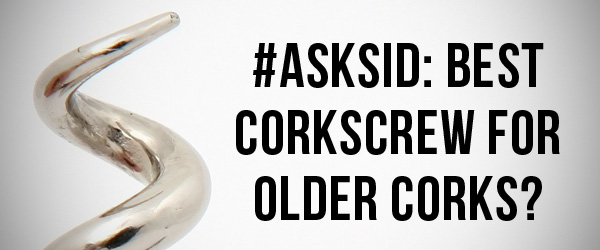
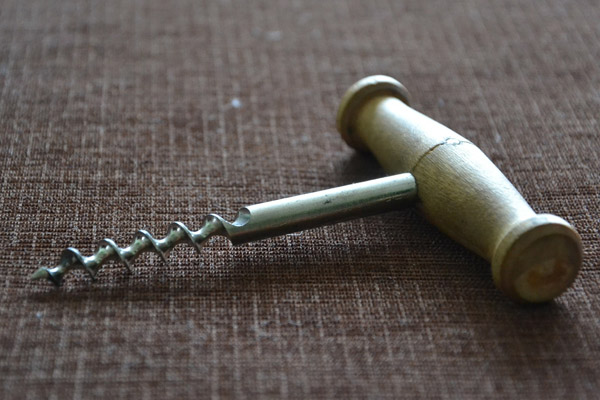
Answer: Switch to screwcaps? No I encounter the same issues. Used to be a big fan of the easy Screwpull type wine opener but having to go right through the bottom of the cork is not the best procedure for older more fragile ones. Also often like to use the handy double-hinged waiter’s corkscrew working it very slowly. However for older wines the Ah-So two pronged opener can work better though you have to be careful in inserting it not to push looser corks right into the wine. The safest bet for removing old corks with confidence and the one I now always use for old corks is The Durand (www.thedurand.com). The combination of both first a quality screw helix with stabilizer bar and then a two blade Ah-So style opener works marvellously! A wise investment for successfully removing your older corks.


You might also like:

Do you have problems with uncorking older bottles?

View Results

Loading ... Loading ...
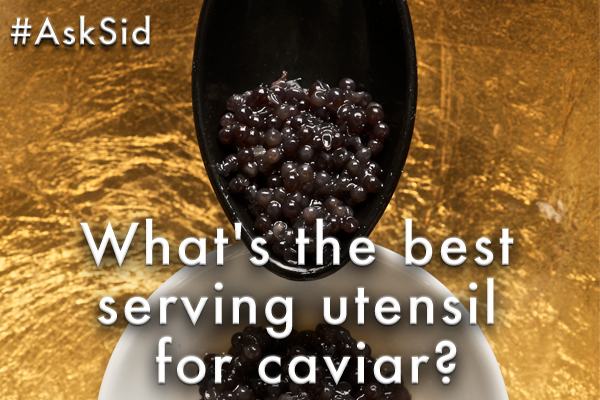
Book review: Caviar: The Strange History and Uncertain Future of the World’s Most Coveted Delicacy

March 25th, 2016 by Joseph Temple

Caviar roe eggs sturgeon fish volga caspian russia

By Joseph Temple

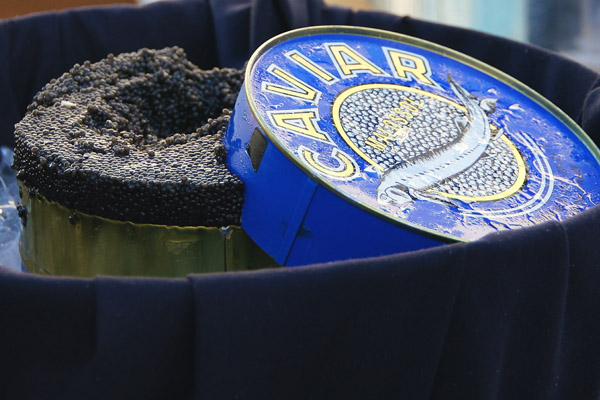
Alongside champagne, nothing has symbolized opulence and luxury more than the consumption of salty little fish eggs, better known as caviar. Long before Robin Leach first appeared on our TV sets, the bourgeois of London, Paris, and Berlin were simply enthralled by this exotic delicacy and the lavishness that surrounded it. When wealthy aristocrats from Central Russia demanded live sturgeon from Astrakhan—sturgeon that had to be transported in large tanks so they could indulge in only the freshest roe—many Europeans eagerly copied their culinary tastes, causing sales of caviar to go through the roof.  Arriving first in porous wooden barrels and later in small tins, this scarce product has continued to command extraordinarily high prices. Just nine ounces of Ossetra caviar can cost more than a thousand dollars online.

But over the past twenty-five years, a disturbing trend has wreaked havoc across the Caspian Sea, home to the very best sturgeon. Following the collapse of the Soviet Union in 1991, a power vacuum led to the dramatic rise of organized crime. With millions of dollars at stake in the lucrative caviar trade, inexperienced poachers, many of them financed by the mafia, began depleting the sturgeon population at a rapid pace. Environmental concerns had been pushed aside in attempting to squeeze every possible fish egg out of the Caspian. Working with corrupt customs officials and seemingly legitimate outfits in Europe and America, chances are that if you purchased Russian caviar in the early 1990s, it most likely passed through the hands of organized crime.

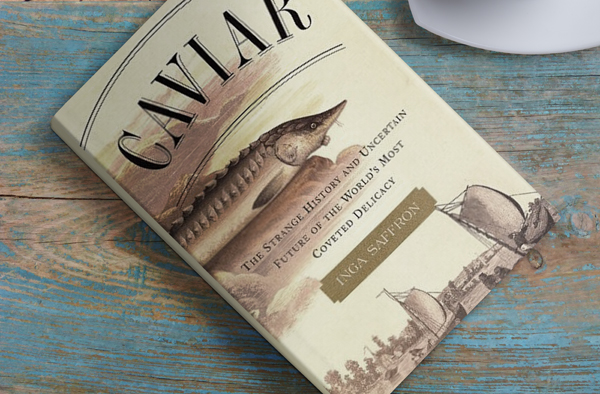
Writing in detail about this stark reality, author Inga Saffron explains why we need to start hitting the panic button in Caviar: The Strange History and Uncertain Future of the World’s Most Coveted Delicacy. Published in 2002, Saffron, a Pulitzer-Prize winning journalist for the Philadelphia Inquirer and the paper’s Moscow correspondent from 1994 to 1998 knows from firsthand experience just how truly dire the situation is. As we see during her research, it seems whatever regulations governments and international bodies put in place to protect the sturgeon, the criminals are always one step ahead of them.

A key problem is that the five countries—Russia, Iran, Kazakhstan, Turkmenistan and Azerbaijan—all share a perimeter around the Caspian Sea. So if the former two decide to crack down on over-fishing, one of the breakaway republics can easily offset it. “Notoriously corrupt, those republics became the center of the underground caviar industry,” writes Saffron. And as the sea became a Wild West for poachers, crude methods that are the antithesis to traditional sturgeon fishing quickly became the norm.

Sturgeon beluga caviar
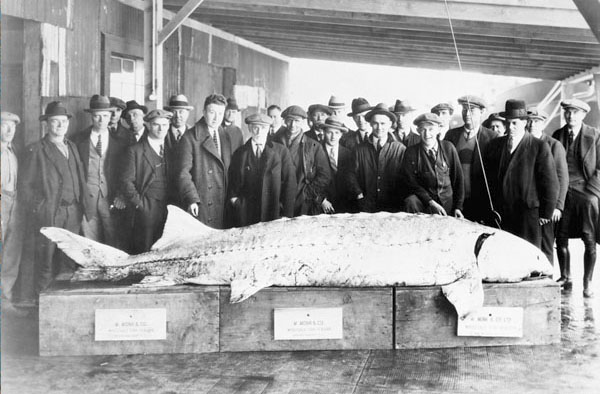
A sturgeon – weight 1020 lbs. – caught in New Westminster, British Columbia.
Image courtesy: Library and Archives Canada

One of the book’s greatest strengths comes from its in-depth look at the history of both the fish and its prized roe. Considered a living fossil by scientists, the sturgeon with their sloping heads and shark-like tails have existed for approximately 250 million years, even before dinosaurs roamed the earth. Consisting of twenty-seven different varieties, some like the beluga, have easily weighed over a ton while a female’s eggs can account for fifteen percent of the bodyweight. Of course, retrieving the eggs at the right age and during the right part of the spawning cycle is paramount. “Sturgeon are in no hurry to reproduce. They take almost as long as a human being to reach sexual maturity. While a single fish may carry million of eggs in its belly, the odds are that only a single hatchling will survive into adulthood,” according to Saffron.

These facts help to underscore just how much damage has been done in terms quality and quantity since the poachers—or brakanieri (buccaneers) as they’re called in Russia—took over. Netting any type of female sturgeon, no matter what age they are in order to meet a short-term quota has clearly done irreparable damage to the species; one report from 1996 estimates that there are only 1,800 mature sturgeon left in the Volga River. Compounding this travesty are the crude methods used to extract the eggs by inexperienced and unlicensed fishermen.

“Never make caviar from a dead sturgeon,” is one of the rules Saffron learns from the skilled masters known as the ikryanchik.

Being able to purchase this product in some run-of-the-mill grocery stores by the mid-1990s, American demand led to an explosion in counterfeit and smuggling operations. With a chapter titled “Caviar from a Suitcase,” there are some fascinating stories about Eastern Europeans arriving at JFK Airport with suitcases containing over $100,000 in caviar contraband. Even more revealing is one company that sold inferior paddlefish roe disguised as authentic caviar to American Airlines—whose customers and staff never noticed the difference. These illegal activities even went all the way up to reputable dealers like Hansen-Sturm, an offshoot of Dieckmann & Hansen, who along with Petrossian were the two most respected pillars of the international caviar trade.

It’s ironic that people would go to such lengths when for so many years caviar was considered to be simple peasant food. According to the book, Louis XV was so repulsed by it that he spit the eggs out onto the carpet at his Versailles palace. And when German entrepreneurs arrived in the United States to assess the Delaware River, which contained an abundance of sturgeon, they were shocked to see people using the roe as bait or to feed their livestock. Describing the early colonial experience, Saffron writes, “As these Europeans struggled to make their way in the wild land, it seemed that eating such a grotesque bottom-feeding fish as the sturgeon would be the equivalent of sinking into barbarism.” How times have changed.

Tracing this rich history, it appears that what is currently going on in the Caspian Sea is exactly what happened in both Germany and the United States. At one time, the port city of Hamburg on the River Elbe was rich in sturgeon. So was Penns Grove, New Jersey, who along with a nearby town aptly named Caviar, supplied more roe in the 1880s than any other place on earth. But due to a combination of overfishing and pollution, the caviar rush in both countries was very short lived. Could the Caspian Sea be next?

For many conservationists, the answer appears to be yes. Even though measures have been enacted to prohibit the importation of certain types of caviar (beluga caviar was banned outright in 2005), the future of sturgeon seems to be in North America and Western Europe where hatcheries have been established to prevent its extinction. In the decade following the book’s release, numerous facilities in Canada and the United States have sprung up in order to save the species. But the future in Russia seems very much in doubt. Despite surviving two world wars and a massive hydroelectric dam that once threatened their entire existence, the will to protect what was once a cherished part of Russian culture appears to be evaporating. Quoting one fisherman, he stated, “The U.S. couldn’t save the buffalo and we can’t save the sturgeon.”


You might also like:

Do you believe caviar originating from the Caspian Sea will go extinct?

View Results

Loading ... Loading ...

Older Entries
Newer Entries
The object of the Society is to bring together and serve all who believe that a right understanding of good food and wine is an essential part of personal contentment and health and that an intelligent approach to the pleasures and problems of the table offers far greater rewards than the mere satisfaction of appetite.
Andre Simon Wine & Food Society Founder (1933)
© 2026 The International Wine & Food Society (IW&FS) IW&FS
Credits | Privacy | Accessibility