Question: Where on the wine label does it tell you whether or not oak has been used?
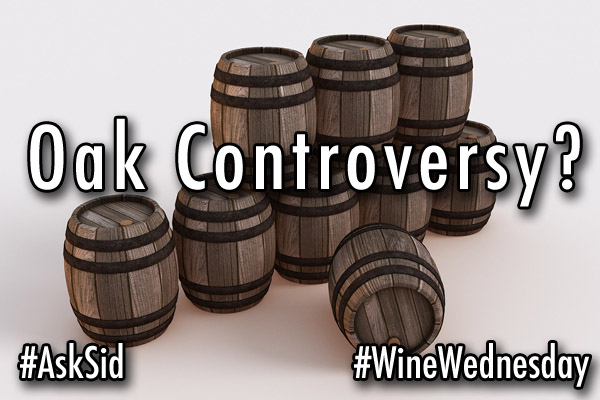
Answer: Good idea. Wish it was that simple. Usually it doesn’t tell you. There may be a specific word like unoaked or unwooded used – especially for chardonnay. There may be some helpful information on the back label including descriptors like crisp, fresh or vibrant that probably indicate no oak was used. Even those terms can be confusing though because say wines like Chablis Premier or Grand Cru are in that style but still may see some old oak barrels. It can be a difficult issue somewhat like the sugar one in a wine – though many producers now are providing more information about residual sugar on their back label. It really depends on the overall balance of the wine whether the oak or sugar seems prominent to you. Remember that new oak diminishes with bottle age. Best way is to smell and taste the wine for oak but you raise another good reason why I support ingredient labeling.
For a country known more for its tequila and cervezas, you may be surprised to learn that Mexico also has a rich history when it comes to winemaking. Dating back to the early 16th century when the first vines were planted in the New World, Mexican vintners have endured their fair share of peaks and valleys in order to produce some wines that have gained a very loyal following. And while their estimated annual output of 20 million liters is miniscule compared to their neighbors to the north, it appears that when it comes to quality, Mexico has clearly stepped up its game, moving beyond the watery grapes and poor vintages that were commonly associated with their nation. So to get you up to speed on the 25th largest wine producer in the world, here are ten interesting facts. Gracias!
1. The first Mexican wines were produced in the early 1500s after Hernán Cortés and his fellow Spanish Conquistadors overthrew the Aztecs. Quickly going through their own supply, he ordered each colonist to plant a minimum of 1000 grapevines.
2. Casa Madero, the first winery in the Americas was established in 1597 in the town of Santa Maria de las Parras and is still in existence to this day.
3. Surpassing Spanish wines in terms of quality while facing stiff competition from France, King Philip II in 1595 ordered that all production stop immediately. After this edict, only the Jesuits and other religious sects made wine on Mexican soil for sacramental purposes.
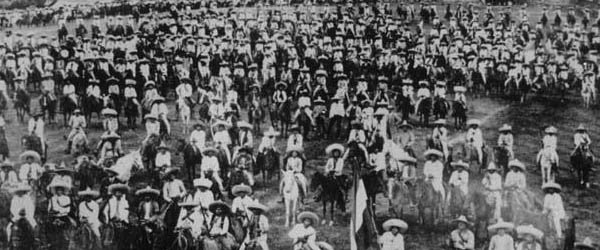
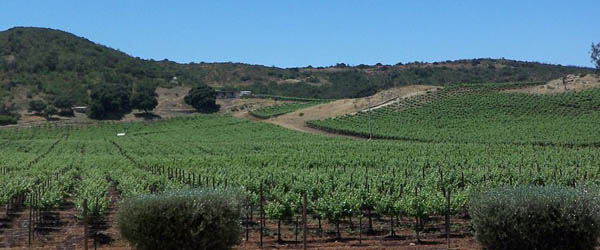
4. In the early 20th century, a group of pacifist immigrants from Russia known as the Molokans arrived in Mexico after escaping the Czar. With their knowledge of agriculture, they were able to revitalize the country’s wine industry in the Guadalupe Valley, which came to a halt during the Mexican Revolution.
By Gabriel Flores Romero from Tecate, México (originally posted to Flickr as viñedos) [CC BY 2.0], via Wikimedia Commons
5. Serious attempts to make quality wines again began during the 1980s using modern techniques and backed by Mexico’s National Viticulture Association.
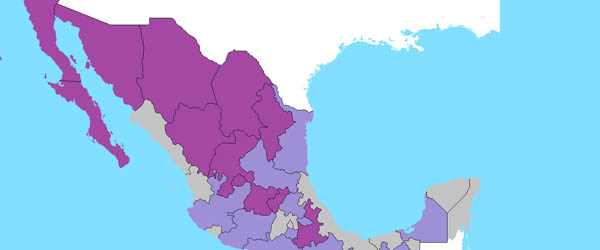
6. Today, Mexican wine is made in three main areas—in the Baja Peninsula, the states of Coahuila, Durango and Chihuahua that are south of Texas and New Mexico, and in the central states of Zacatecas, Aguascalientes, and Queretaro.
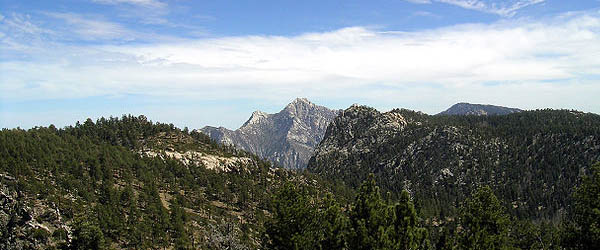
7. Of these three, the Baja Peninsula is where more than 90% of all Mexican wine is produced. Divided by the Sierra de Baja California mountain range, all vineyards in the peninsula are located west of these mountains where the climate is similar to the Mediterranean with the Pacific Ocean helping to cool the grapes.
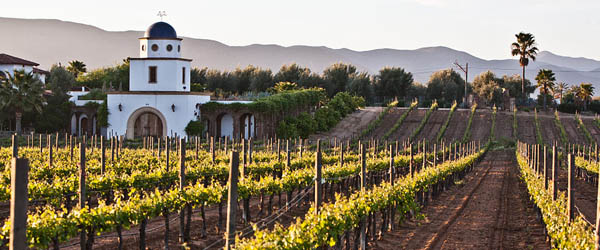
8. Along the Baja Peninsula, Guadalupe Valley is considered to be the Napa Valley of Mexico, being home to approximately half of the all the country’s wineries.
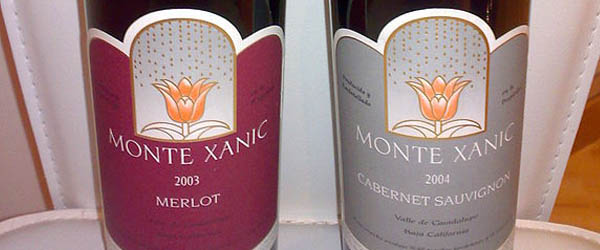
10. With no system of denominations of origin, all bottles simply need to be labeled “Product of Mexico.” (However, some may note the valley it was made in.) Also, the grapes listed may not be listed in the order in which they dominate the blend.
Sources:
MacNeil, Karen. The Wine Bible. New York: Workman Publishing, 2015.
Micallef. (2017, January 7). Wine Stories: Mexico’s Wine Renaissance. Huffington Post. Retrieved from http://www.huffingtonpost.com
Newton, James. Mexican Cookbook – Traditional Mexican Recipes: Recetas Mexicanas. Springwood EMedia, 2014.
Palmerlee, Danny. Baja California and Los Cabos. Oakland: Lonely Planet, 2007.
Question: I have collected quite a few Sauternes from different years starting with 2000 and onwards. Which vintages do you consider the top ones and best aging?
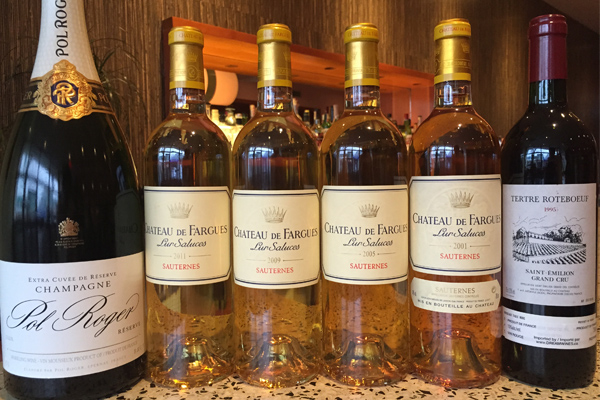
Answer: Discussed this issue last night at a dinner while sipping on the amazingly pineapple rich forwardly Chateau Coutet 1989. Middle year of the successful Sauternes trio with those early picked powerful 1990 and more botrytis with higher acidity 1988. Starting this century 2000 had a lot of rain from October 9th resulting in fragrant lighter Sauternes. The following year 2001 is so outstanding with their incredible balance! Also the 2005 has balance but less acidity though exceptional while the 2009 is ultra-rich with lots of botrytis. Some promising ones coming along from this decade to monitor. Expert Bill Blatch on his www.bordeauxgold.com is a good site to follow. Try some from your collection and make you own assessment.
Just an hour’s drive south of London, along a ring of chalk and limestone, it’s safe to say that the future is indeed looking very bubbly. After beating the Champenois at their own game in numerous international competitions (while reaping a whirlwind of publicity), English fizz has risen like a phoenix. In fact, across the counties of Kent, West Sussex, East Sussex, and Hampshire, nearly two thirds of all bottles produced today are sparkling. And experts predict that approximately six million bottles of British bubbly will be available for purchase by 2023. From a very niche product to one that is currently exported to a record 27 countries, some have even opined that English sparkling wine, arguably on par with the best Champagne houses in France, is greatly undervalued – especially given its geographical constraints.
Of course, for those of us who live on the other side of the pond and think the term ‘English wine’ is an oxymoron, it probably seems surreal that there are now over 500 commercial vineyards operating on British soil. Not only that, but these vineyards are giving the French a run for their money with their award-winning bubbles.
Simply put: How did this all happen?
In trying to identify a key turning point in the two thousand year history of English wine, one needs only to travel back to 1988. The same year that Margaret Thatcher became the longest serving British prime minister of the twentieth century also turned out to be the year that the first vines of Pinot Noir, Chardonnay, and Pinot Meunier were planted on a property recorded in the Domesday Book and once owned by Anne of Cleves, the fourth wife of Henry VIII. Ironically, it wasn’t even an Englishman who planted them.
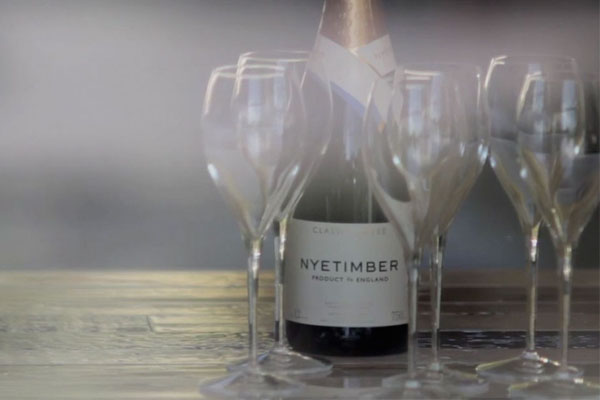
Noticing that the 438 acres that surrounded the 11th-century Nyetimber Manor shared an almost identical climate and geology with the region of Champagne, Sandy and Stuart Moss of Chicago decided to bring in French experts to assess the region’s potential. Realizing that the greensand soil was near perfect for sparkling wine, the American couple moved full steam ahead with their trailblazing vision. According to Oz Clarke, “Everybody told them they should plant apples—bureaucrats always say that; we’d have no Marlborough Sauvignon from New Zealand, no Oregon Pinot Noir, if the true believers believed them.”
Living up to its potential—and then some—Nyetimber’s 1992 Premiere Cuvee Blanc de Blanc, its very first vintage, ended up winning an international gold medal in 1996. But the estate proved it was no fluke when two years later, its Classic Cuvee 1993 won the trophy for best sparkling wine in the world. Given all the accolades, it was no surprise that Queen Elizabeth II chose Nyetimber for her fiftieth wedding anniversary, helping to solidify their brand as England’s most recognizable sparkling wine.
Fast forward to today and the vines that were first planted nearly three decades ago have grown to become a multi-billion dollar enterprise as hundreds of other vintners (including some French wineries) decided to follow in the footsteps of the Mosses. While Nyetimber’s Blanc de Blanc is described by one writer as “light and lithe with fabulous length,” the Classic is “breadier with bright acidity and a crisp clarity and pure zesty orange fruit to it.” So if you ever get a chance, try a glass of the wine that has redefined the world of bubbly!
Sources:
Clarke, Oz. The History of Wine in 100 Bottles: From Bacchus to Bordeaux and Beyond. London: Pavilion Books, 2015.
Harvey, David. Grape Britain: A Tour of Britains Vineyards. Castle Douglas: Neil Wilson Publishing, 2011.
Time Out. Time Out Kent & Sussex. London: Time Out Guides, 2011.
Question: Saw you across the room on Monday at the BC Sommelier of the Year competition finals. Wanted to get your thoughts about how they used a candle flame for the decanting service.
Answer: Sorry I missed speaking with you there. Wonderful very difficult competition organized by The Canadian Association of Professional Sommeliers BC Chapter. Really enjoyed the finals with the top 3 each being given 18 stressful minutes to orally give their impressions on 7 glasses served blind – 4 wine and 3 mixed drinks. Also only 3 minutes to point out the errors in a specially made-up many mistakes full wine list page with spelling, region and pricing etc. The decanting of the magnum of wine went well. Perhaps prefer using a magnum decanter rather than 2 smaller ones. Not a big fan of the candle use for decanting because of the resulting smells. My thoughts were that I didn’t think that lighting and especially extinguishing the candle flame right at the dining table was the best method to use. Prefer it to be lit and extinguished away from the table. Otherwise it leaves behind some smoky odours that may detract from your enjoyment of the bouquet of the wine. Prefer using a bright flashlight that avoids this issue.





 Loading ...