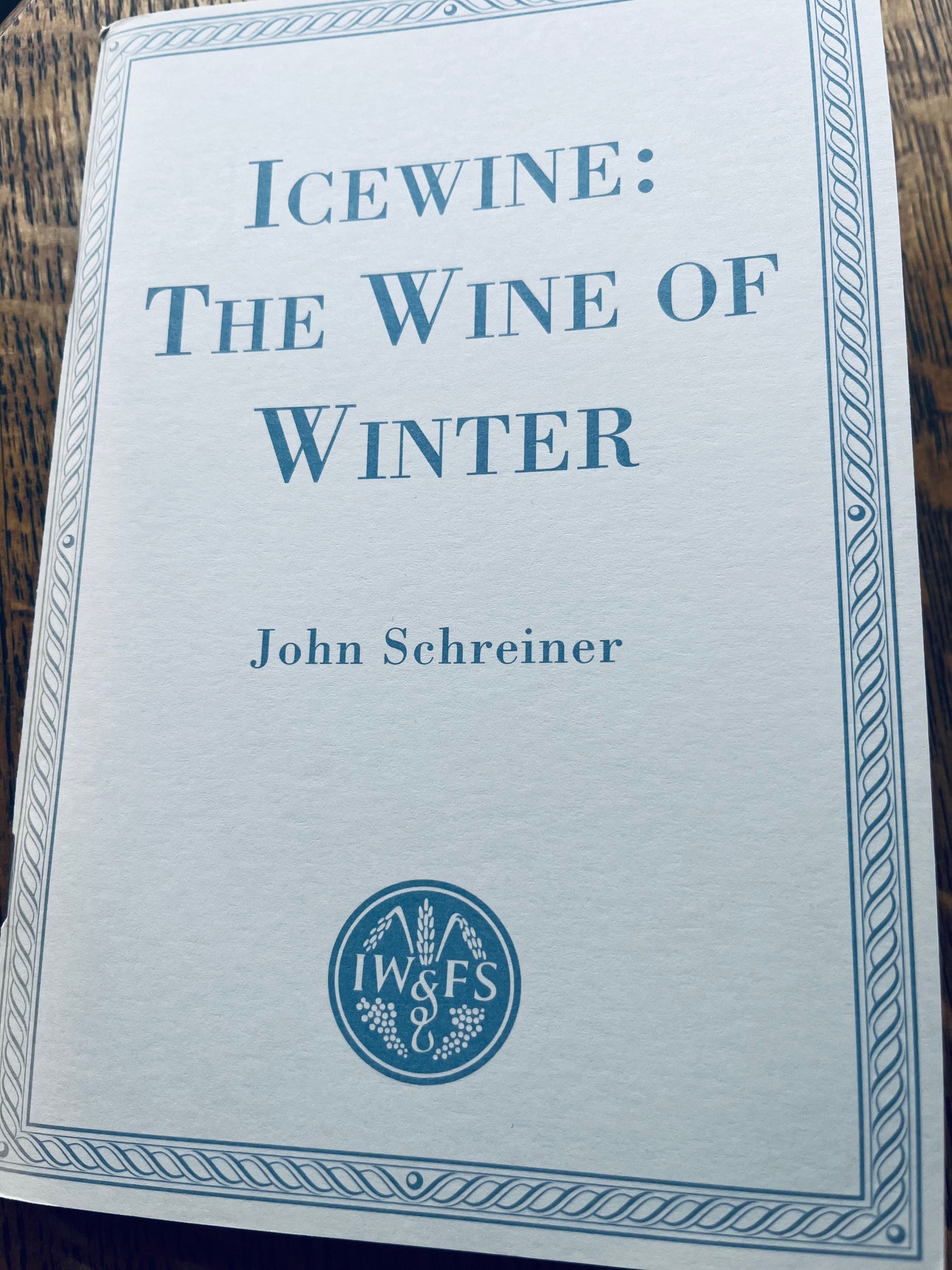
Your scribe has always been quite fascinated by Icewine. It is a unique wine that seems increasingly difficult with global warming to find the right conditions to produce it. John Schreiner wrote a Monograph in 2004 for IWFS titled as Icewine: The Wine of Winter. He opens by defining Icewine as follows: “Icewine is distinguished from all other dessert wines in that it is made from the juice pressed from frozen grapes. Authentic Icewine is made from grapes that have frozen naturally, on the vines, to be picked and pressed in a frozen state. It is bitterly cold work, since the temperature must be -8C (18F) or lower during picking.”
Those conditions around the world previously seemed to be easier to find than today and the wine was more popular resulting in counterfeit Icewines in the marketplace primarily from Taiwan & China. Now there are less Icewines produced and they are true treasures.
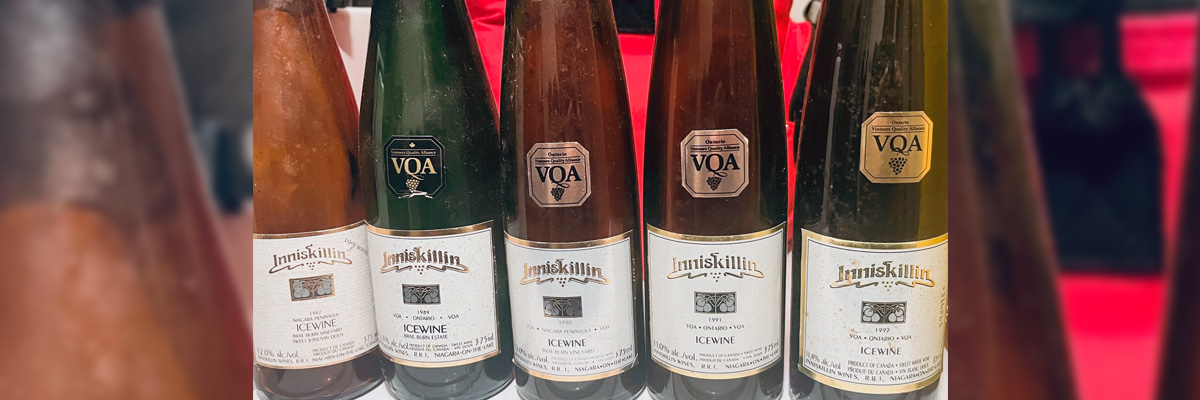
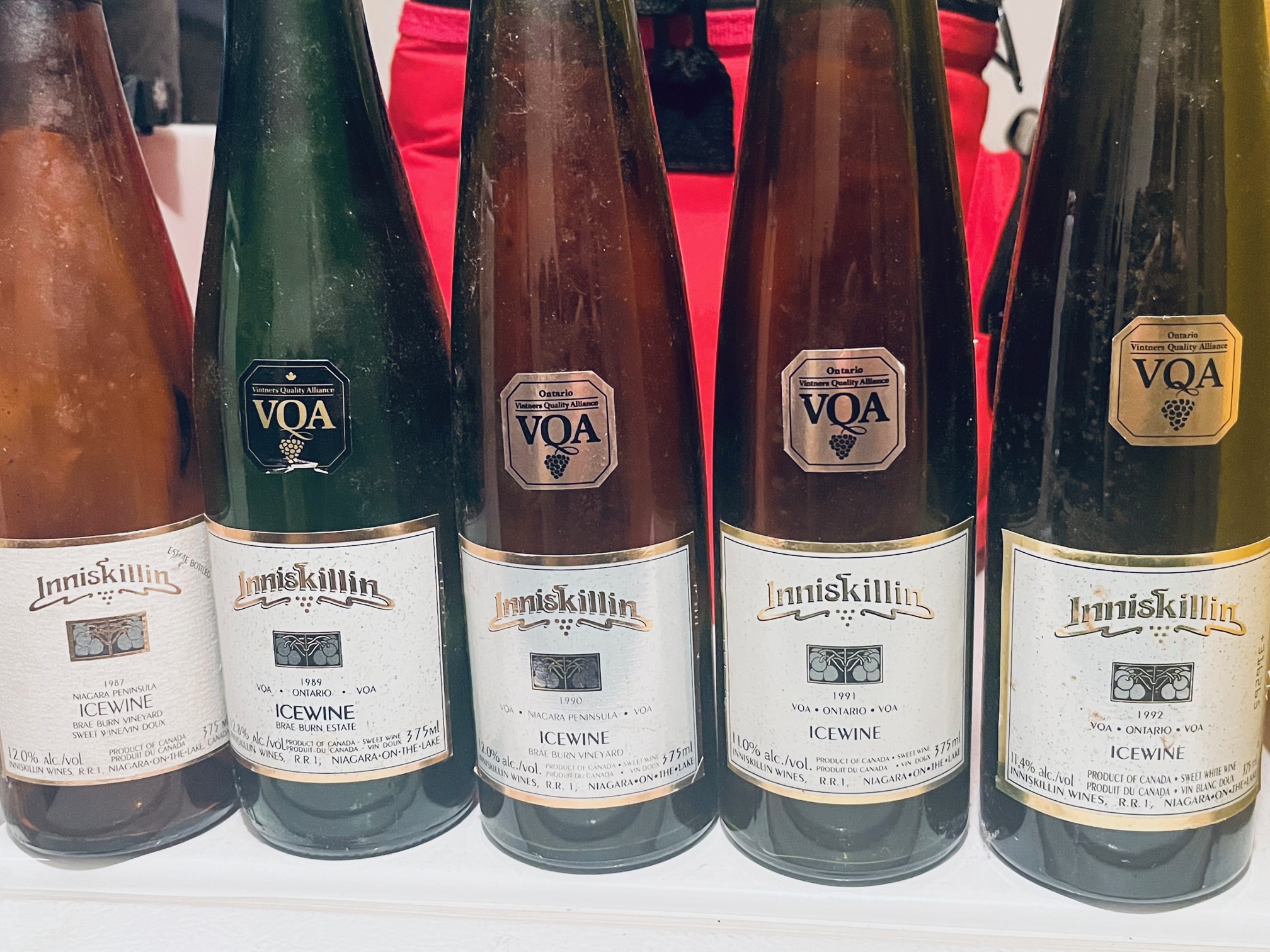
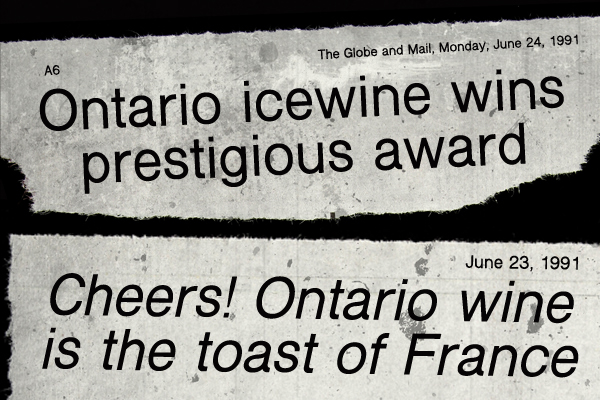
Reviewing the results of the 2025 National Wine Awards of Canada there is a good category summary by HJ Cha linked here. They note that in 2025 INNISKILLIN dominated the Icewines with the top wine of 2023 Riesling Icewine – “a textbook example of precision and balance.” Inniskillin has been a leader in this field since their 1989 Vidal Icewine surprised with excellent quality at the 1991 Vinexpo in Bordeaux. This consistency by Inniskillin got me thinking back to last year when to my delight five half bottles of Inniskillin Icewine (Brae Burn Estate) from Niagara-On-The-Lake, Canada were tasted. We tried over several evenings vintages 1992, 1991, 1990, 1989, and 1987 ranging from 11 to 12.8 abv. We believe from records at Brock University Library that Inniskillin moved to the Brae Burn Estate in the late seventies and early eighties with winemaker Karl Kaiser harvesting his first Icewine from Vidal grapes in 1984. Ther 1989 vintage that won the Grand Prix d’Honneur at Vinexpo was still showing lovely aged complexity. In fact all five vintages were still interesting because the high sugar content combined with enough lively acidity kept the wines together even in the smaller 375 ml. format. Using the Riesling grape would have better structure and even higher acidity for longer aging. What a bright future for their 2023 Riesling Icewine! Most notable from our tasting was that though all five vintages were now somewhat drier and softer than on release, nonetheless they provided amazing complex interest. Fine winemaking and high sugar were the key to longevity. The conclusion is that though Icewine is delicious early on release that it does in fact age better than the consumer recognizes into an amazing unique keepsake and more.
You might also like:
 |
 |
 |