menu
Member Sign In
  • IWFS Homepage
  • Blog Home
  • Forums Home
  • Global Forum
  • Contact Us
Close
  • IWFS Homepage
  • Blog Home
  • Forums Home
  • Global Forum
  • Contact Us
    Member Sign In
  • Blog Home
  • Forum Home
  • Global Forum
FOLOW US

Recent Posts

  • Ask Sid: Does sugar level in Sparkling wine affect ageability?
  • ‘TIS THE SEASON FOR YOUR FAVOURITE HOLIDAY COOKIE!
  • Ask Sid: Best wine region for Sylvaner?
  • TOP QUALITY ST. JULIEN CHÂTEAU DUCRU-BEAUCAILLOU VERTICAL SHOWS MIXED RESULTS
  • Ask Sid: What does pigeage refer to in winemaking?

Archives

  • December 2025
  • November 2025
  • October 2025
  • September 2025
  • August 2025
  • July 2025
  • June 2025
  • May 2025
  • April 2025
  • March 2025
  • February 2025
  • January 2025
  • December 2024
  • November 2024
  • October 2024
  • September 2024
  • August 2024
  • July 2024
  • June 2024
  • May 2024
  • April 2024
  • March 2024
  • February 2024
  • January 2024
  • December 2023
  • November 2023
  • October 2023
  • September 2023
  • August 2023
  • July 2023
  • June 2023
  • May 2023
  • April 2023
  • March 2023
  • February 2023
  • January 2023
  • December 2022
  • November 2022
  • October 2022
  • September 2022
  • August 2022
  • July 2022
  • June 2022
  • May 2022
  • April 2022
  • March 2022
  • February 2022
  • January 2022
  • December 2021
  • November 2021
  • October 2021
  • September 2021
  • August 2021
  • July 2021
  • June 2021
  • May 2021
  • April 2021
  • March 2021
  • February 2021
  • January 2021
  • December 2020
  • November 2020
  • October 2020
  • September 2020
  • August 2020
  • July 2020
  • June 2020
  • May 2020
  • April 2020
  • March 2020
  • February 2020
  • January 2020
  • December 2019
  • November 2019
  • October 2019
  • September 2019
  • August 2019
  • July 2019
  • June 2019
  • May 2019
  • April 2019
  • March 2019
  • February 2019
  • January 2019
  • December 2018
  • November 2018
  • October 2018
  • September 2018
  • August 2018
  • July 2018
  • June 2018
  • May 2018
  • April 2018
  • March 2018
  • February 2018
  • January 2018
  • December 2017
  • November 2017
  • October 2017
  • September 2017
  • August 2017
  • July 2017
  • June 2017
  • May 2017
  • April 2017
  • March 2017
  • February 2017
  • January 2017
  • December 2016
  • November 2016
  • October 2016
  • September 2016
  • August 2016
  • July 2016
  • June 2016
  • May 2016
  • April 2016
  • March 2016
  • February 2016
  • January 2016
  • December 2015
  • November 2015
  • October 2015
  • September 2015
  • August 2015
  • July 2015
  • June 2015
  • May 2015
  • April 2015
  • March 2015
  • February 2015
  • January 2015
  • December 2014
  • November 2014
  • October 2014
  • September 2014
  • August 2014
  • July 2014
  • June 2014
  • May 2014
  • April 2014
  • March 2014
  • February 2014
  • January 2014
  • December 2013
  • November 2013
  • October 2013
  • September 2013
  • August 2013
  • July 2013
  • June 2013

Meta

  • Log in
  • Entries feed
  • Comments feed
  • WordPress.org

Archive for 2015

Older Entries
Newer Entries

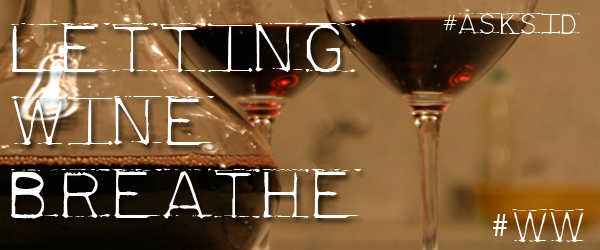
Ask Sid: Letting wine breathe?

January 14th, 2015 by Joseph Temple
Ask your question here The International Wine & Food Society

What's the best way to let wine breathe?
By Daryn Nakhuda (originally posted to Flickr as Delicious Cabernet) [CC BY 2.0], via Wikimedia Commons

Question: Any new tips on letting a wine breathe?

Answer: Still just to open the bottle and expose the wine to air. However, not much surface area is aerated and exposed to oxygen unless you pour it into a glass or better still a decanter. Seems to becoming more important than ever recently with more reductive wines out there and wines spending longer periods under screw cap closures. Many of these wines definitely need breathing to open up and show their best as of course do most young tannic reds. A key question is for how long. Best to experiment. Lots of new tools on the market to help you speed the process up. I just received a gift I am playing with called a Wine Breather Carafe (search on www.menu.as) a Danish design made in Turkey that claims to add 10 times more oxygen in just 2 minutes. They also say that “aerating white wine has the same taste-improving advantages as aerating red wine” and that it is “perfect for all young wines up to 10 years old.” Check it out.


You might also like:

Whats the best way to let your wine breathe?

View Results

Loading ... Loading ...

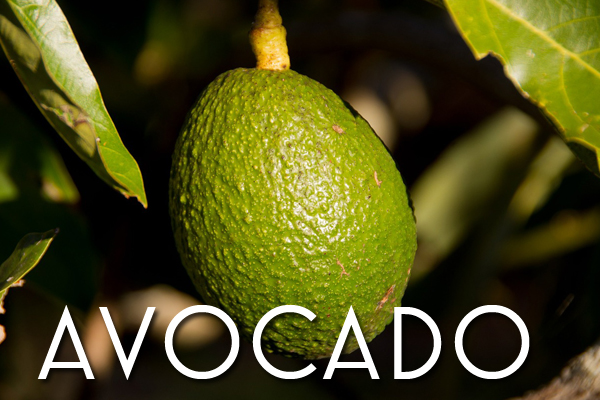
Avocado

January 12th, 2015 by Sidney Cross

Avocadoes

I am a big fan of avocado. So healthy with all those good tasty high in monounsaturated fats. So versatile too for use in salads, sandwiches, sauces and guacamole recipes. I prefer mine with only some sweet onion, a little garlic, lime or lemon juice, and ripe heirloom tomatoes when available in season. Sure many of you also want hot peppers or chiles or even cilantro added. Do you have a great guacamole recipe you would share?

Recently have participated in several avocado tastings. Most of us are familiar with the popular Hass variety smaller with the rougher pebbly shell that darkens quite black as it ripens. Also tried some from Mexico (more pear shaped smooth skinned with a smaller seed), Florida, Guatemala, Hawaii (nutty Sharwil larger rounder with a harder shell that remains green even when ripe & a butter variety as well) and even some useful puree from Chile. All uniquely delicious and like bananas they continue to ripen to consuming perfection at room temperature after being picked as mature on the trees. Note that avocado oil is being used more now.

Didn’t realize there are 1000s of varieties. Fun to seek out different varieties you might prefer just like with apples. See the University of California at Riverside Agriculture & Natural Resources website for more information.  Also check out plantithawaii.com/sample-page/avocado for some of the excellent Hawaiian examples worth seeking out to try.


You might also like:

Do you eat avacados

View Results

Loading ... Loading ...

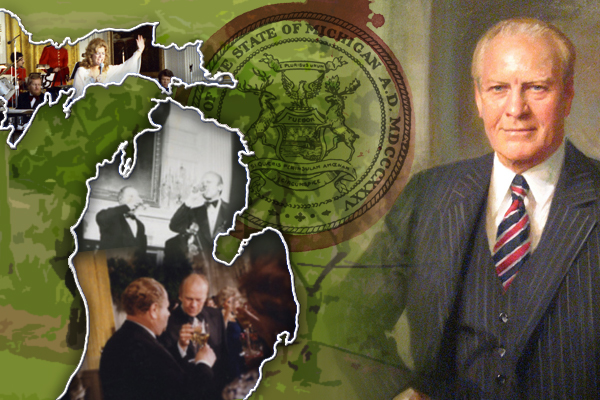
Wine & 5 Forgettable Presidents

January 9th, 2015 by Joseph Temple

lesser known presidents and wine

By Joseph Temple

Mention wine and the U.S. presidency in the same sentence and many oenophiles will respond with the name Thomas Jefferson.  Given his well-documented passion for viticulture and a huge scandal surrounding several counterfeit bottles that falsely bared his initials, its easy to see why Jefferson is such an important figure in the history of American wine.

But what about some other presidents – you know, the ones you’ll never see on the dollar bills?  For this week’s entry, have a look at some interesting anecdotes from five lesser-known chief executives of the nineteenth century and how this libation played a peculiar role in their administrations.
blank
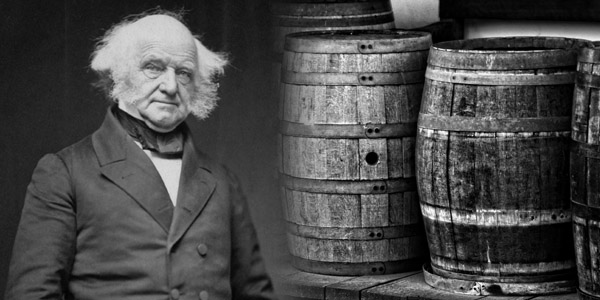

wine becomes Martin Van Buren's double edged sword
1. Martin Van Buren –
Wine becomes his double edged sword

Spending four years as Andrew Jackson’s vice president before his own election to the top spot, Martin Van Buren developed a taste for the finer things in life while living in Washington D.C.  One of those things was wine, spending nearly twice on this drink than what he paid in taxes.  “I want about fifteen or twenty gallons of table-wine,” he wrote to one of his subordinates. “Say prime Siciliy, Madeira, or some other pleasant, but light and low wine to drink with dinner.”

Unfortunately, Van Buren’s interest in wine also played a significant role in his downfall during the election of 1840.  As the United States struggled through a terrible recession following the Panic of 1837, his Whig opponent, William Henry Harrison successfully painted the president as an out-of-touch elitist. Despite this commander-in-chief’s humble beginnings in Upstate New York as “Old Kinderhook,” the charges stuck in part because of Van Buren’s known interest in wine – an aristocratic drink during a time when America was mostly an agrarian society that consumed whiskey and hard cider.  By using the facts that his opponent loved champagne and had a French chef, Harrison easily defeated Van Buren in the Electoral College with a political strategy that lives on to this day.
blank
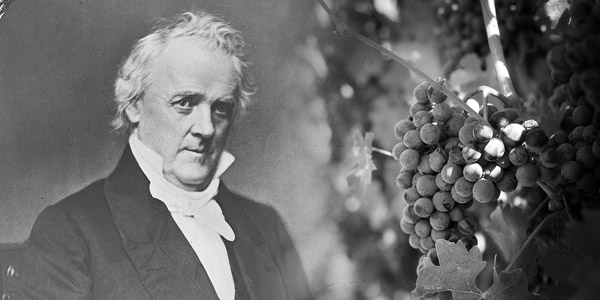
Pints are very inconvenient for James Buchanan
2. James Buchanan – Pints are very inconvenient

From the North, but sympathetic to the South, President James Buchanan is often criticized for supporting policies that caused the Civil War.  For this reason, Buchanan usually ends up near the bottom of historical rankings of Presidents of the United States.  But as historian Mark Will-Weber writes, “In vivid contrast to Buchanan’s marks as a leader, “Old Buck” warrants straight A’s when it comes to his ability to handle alcohol.”

Much like Thomas Jefferson, Buchanan served abroad as a diplomat and later as secretary of state, giving him the opportunity to sample some of Europe’s finest wines.  And after returning home to America, this life-long bachelor definitely knew how to throw a party, purchasing nearly three hundred bottles of wine and 150 bottles of champagne for just one event.  Later as president, Buchanan carried on this alcohol-fueled tradition, complaining once about the small size of bubbly that was sent to 1600 Pennsylvania Avenue.  “Pints are very inconvenient in this house,” Buchanan wrote.  “As the article is not used in such small quantities.”
blank
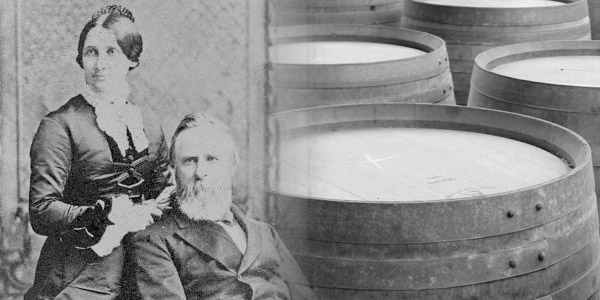
Lemonade Lucy and President Hayes
3. Rutherford B. Hayes –
Mostly dry with the rare wet spot

After winning the presidency, but losing the popular vote, President Rutherford B. Hayes came into office in 1877 owing a lot of favors.  One such group that was looking for a return on their investment was the temperance movement, still fifty years away from seeing their policies come to fruition.  Agreeing with their sentiments, Hayes pledged to set an example as president, banning alcohol from all White House functions.  And supporting him 100% was his wife, Lucy Hayes, nicknamed Lemonade Lucy for her staunch support of prohibition.

But when the sons of Czar Alexander II arrived at the Executive Mansion for an official visit, Hayes’s Secretary of State begged his boss to lift the ban, fearing that Americans would be viewed as uncultured for not serving wine with dinner.  Acquiescing, the president’s decision that night would cause a rift between him and his dry supporters after they found out about this act of treason.
blank
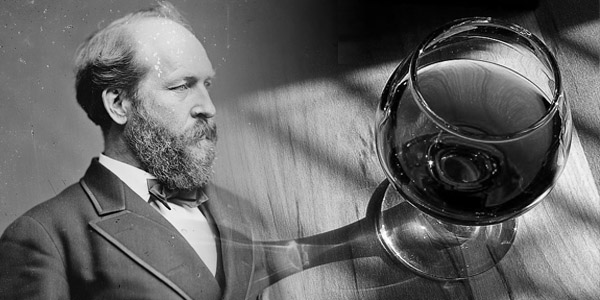
One last glass of port for President Garfield
4. James Garfield – One last glass of Port

James Garfield has the distinction of being one of only four presidents to die in office as a result of an assassination.  The only difference is that most historians and scientists now believe Garfield could have survived if only his doctors didn’t use such unsanitary methods, resulting in the spread of the infection and his untimely death nearly two months after being shot.

An interesting anecdote is that two days before assassin Charles Guiteau shot the president, Garfield wrote to his wife asking her to bring some port to their vacation home in New Jersey.  “For two nights I have taken a glass of port wine and conclude that it is one reason that I have slept better,” wrote Garfield who rarely drank and supported temperance.  “… If you can bring me a little more that you can trust as pure port, I think it may be of advantage to me.”
blank
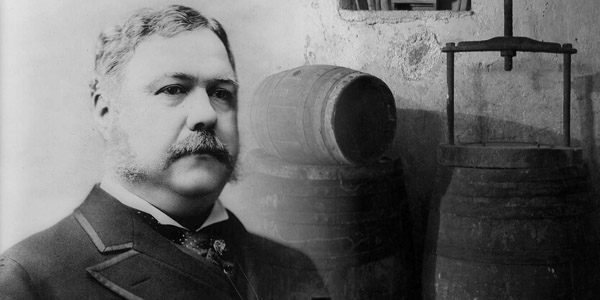
lobbying president arthur with rare wine
5. Chester A. Arthur – Lobbying with Wine

Thrust into the number one spot after Garfield’s death, President Chester A. Arthur was known to enjoy all the luxuries associated with the Gilded Age.  He loved eating at the famous Delmonico’s restaurant in lower Manhattan and while in office, Arthur would hire a prominent New York chef to work in the White House kitchen where pomp and circumstance became the new norm.  “President Arthur has far surpassed all his predecessors in the matter of entertaining at the White House,” wrote one newspaper.  And of course, what would a fabulous meal be without an excellent vintage?

Knowing Arthur’s weakness for fine wines, one lobbyist understood that the best way to get in good with the product of Tammany Hall machine style politics was to shower him with liquid gifts.  One present in particular was a collection of Madeira.  Only these bottles allegedly came from South Carolina’s Charleston Jockey Club, where wealthy southerners fearing General Sherman’s “March to the Sea” hid their best and rarest bottles from Yankee destruction.  Not a bad way to get in the good graces of an oenophile president!
blank

Sources:

Dehler, Gregory. Martin Van Buren: Chester Alan Arthur: The Life of a Gilded Age Politician and President. New York: Nova Science Publishers Inc., 2006.
Irelan, John. History of the Life, Administration and Times of Martin Van Buren. Chicago: Fairbanks and Palmer Publishing Co., 1887.
Kamp, David. The United States of Arugula: How We Became a Gourmet Nation. New York: Broadway Books, 2006.
McCullough, Noah. The Essential Book of Presidential Trivia. New York: Random House, 2006.
O’Brien, Daniel. How to Fight Presidents: Defending Yourself Against the Badasses Who Ran This Country. New York: Three Rivers Press, 2014.
Widmer, Ted. Martin Van Buren: The American Presidents Series: The 8th President, 1837-1841. New York: Henry Holt & Co., 2005.
Will-Weber, Mark. Mint Juleps with Teddy Roosevelt: The Complete History of Presidential Drinking. Washington DC: Regnery History, 2014.


You might also like:

What story did you find most interesting?

View Results

Loading ... Loading ...
Ask Sid: Cognac Napoleon

January 7th, 2015 by Joseph Temple

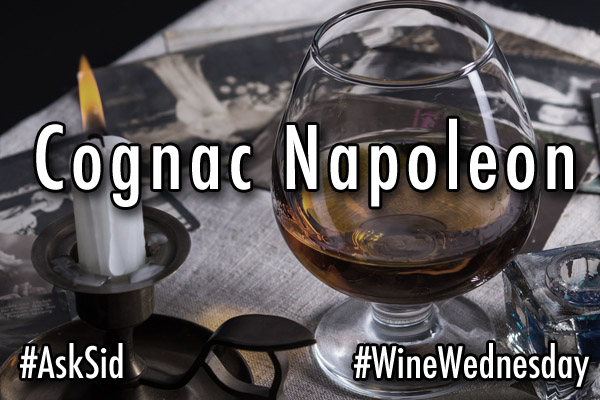
Cognac Napoleon

Question: Please advise about a bottle of cognac I received from my grandfather stating Cognac Napoleon Grande Fine Champagne Reserve L. Favert on front label & on the back Cognac Vieille Fine Champagne over 60 years old – bottled in 1910.

Answer: Lucky you. I am not a cognac expert but have been fortunate to try many old ones including some specific very old single vintages. This is not a specific vintage cognac but is a treasure nonetheless. You have a very rare treat probably worth a good penny. Obviously it was stored by Favert likely the whole time in wood for 60 years from 1850 until it was bottled in 1910. It is the top quality of Napoleon from the best Grande Fine Champagne region. It may even be nearly all made from the Folle Blanche grape as pre-phylloxera because now since replanting they are mainly made from the lesser Ugni Blanche grape. As you know once bottled cognac like whiskey doesn’t improve in bottle by further aging. It is ready to enjoy now. Before opening it I would suggest you take it to one of the main Wine & Spirit Auction Houses to get a reliable quote on the value! Please follow up and let us know what you find out.


You might also like:

Ask Sid Cross about wine and food

Did you enjoy Cognac?

View Results

Loading ... Loading ...
10 Memorable Older Wines in 2014

January 5th, 2015 by Sidney Cross

10 Memorable Older Wines in 2014

Cherish looking back on so many wonderful food and wine events from 2014. Certainly exciting that there is now so much young delicious fermented grape juice from all regions of the world out there in the marketplace for our earlier enjoyment. However, I still have a soft spot for the extra complexity and joy I get from experiencing a clean authentic more mature bottle of fine wine. Thought I might briefly highlight ten of these treasures that had at least 20 years of bottle age:

1991 CHABLIS LES CLOS FRANCOIS RAVENEAU displayed pure terroir from probably the greatest Grand Cru site in Chablis. Vibrant yet maturely rich. Their 1er cru 2005 Montee de Tonnerre also is excellent and more forwardly but these whites really can age forever.

1974 MAYACAMAS CABERNET SAUVIGNON is a masterpiece of intense old style mountain fruit especially in magnum. Still fresh and young. Other 1974 cabs at 30 years I respected included minty Heitz Martha’s Vineyard, classy Mondavi Reserve , solid Caymus, and concentrated Mount Eden Santa Cruz Mountains.

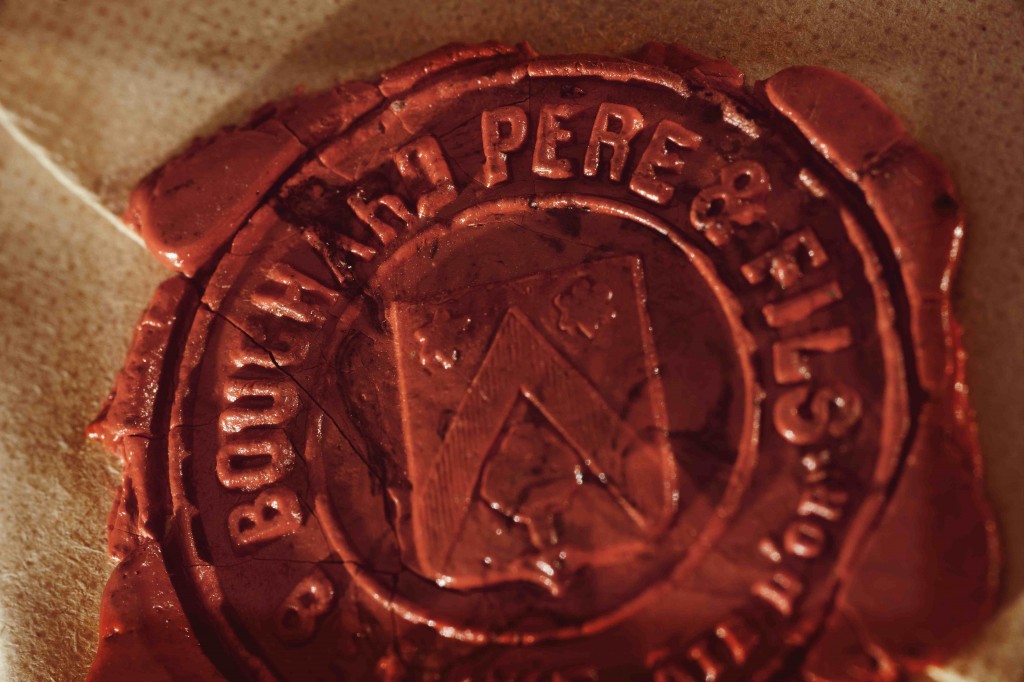
1961 LE CORTON BOUCHARD PERE was a surprise. A better collector vintage in Bordeaux but this really sang mineral bouquet & smooth entry finishing with long pinot noir silk. Great shape at over 50 years for this under rated region for aging the only Grand Cru red in the Cote de Beaune.

1986 CHATEAU GRUAUD LAROSE ST. JULIEN is always outstanding and is still a value. I promoted in the past 1986 Mouton Pauillac but this too shows depth and big cedar fruit still developing.

1986 OKFENER BOCKSTEIN RIESLING AUSLESE BLUE LABEL ST. URBANS-HOF shows this high acid year in the steep Saar slate vineyards (like 2002) but now so fresh, refined smoke with mineral balance at only 8.5 alcohol. Proprietor vintner Nik Weis told me he just had the 1952 which also is still fresh. Their 2002 Eiswein at 6.5 alcohol is also amazing!

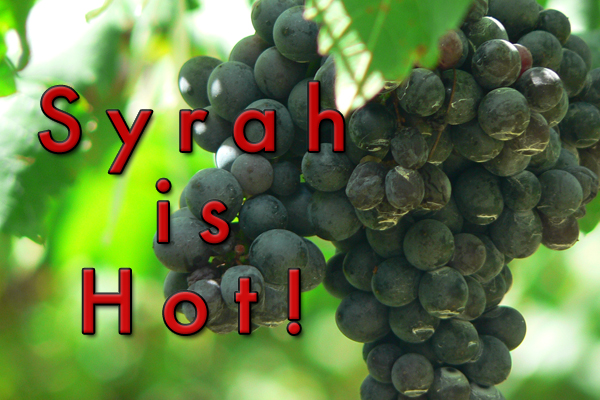
1978 HERMITAGE LA CHAPELLE JABOULET is their best vintage together with 1961 and 1990 and shows it on a beautiful plateau of ripe mature blackberry syrah.

1989 BOLLINGER VIEILLES VIGNES FRANCAISES from their pre phylloxera layered low yielding pinot noir vines in Ay is a rare and brilliant Champagne. So delicious even though from a usually softer more forwardly warmer vintage.

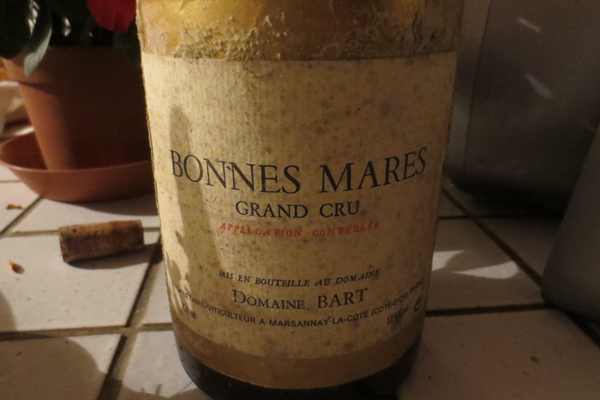
1985 CLOS DE TART GRAND CRU is a special plot monopole of Mommessin in Morey St. Denis now showing mature elegant flowers with earthy vibrancy. Like drinking Burgundy from that vintage presently as the Bonnes Mares Louis Jadot also shows outstanding and was the first inclusion of the fruit from the Clair Dau estate they purchased.

1982 CHATEAU LA MISSION HAUT BRION but could have been so many other 1982 Bordeaux all showing so great now when they have been well stored. Cheval Blanc, Mouton, Latour, Lafite, Margaux, Petrus and others like Grand Puy Lacoste are all excellent.

1914 CHATEAU COUTET BARSAC was such a treat to try this Sauternes at 100 years. High fill and supplied directly from the chateau property for an auction to celebrate the millennium showing ethereal bouquet still alive yet with sweet quince prunes and caramel crème brulee. So complex and stays on the palate a really long time. Also enjoyed 1967 & 1928 Chateau d’Yquem among others but a century is truly memorable!


You might also like:

Have you tried any of the wines on this list?

View Results

Loading ... Loading ...
Older Entries
Newer Entries
The object of the Society is to bring together and serve all who believe that a right understanding of good food and wine is an essential part of personal contentment and health and that an intelligent approach to the pleasures and problems of the table offers far greater rewards than the mere satisfaction of appetite.
Andre Simon Wine & Food Society Founder (1933)
© 2025 The International Wine & Food Society (IW&FS) IW&FS
Credits | Privacy | Accessibility