menu
Member Sign In
  • IWFS Homepage
  • Blog Home
  • Forums Home
  • Global Forum
  • Contact Us
Close
  • IWFS Homepage
  • Blog Home
  • Forums Home
  • Global Forum
  • Contact Us
    Member Sign In
  • Blog Home
  • Forum Home
  • Global Forum

Follow Us

Recent Posts

  • OUR 2002 RED BURGUNDY VERTICAL IS AGING WELL, SHOWCASING REFINED PRECISION WITH TERROIR-DRIVEN CHARM
  • Ask Sid: Thoughts of Sid Cross on the Judgement of Paris historic wine tasting at the 50th Anniversary?
  • EDUCATIONAL #AUSSIEWINE SEMINAR “CLASSIC AND CONTEMPORARY AUSTRALIA” BY KNOWLEDGEABLE MARK DAVIDSON WAS A BIG HIT AT @VANWINEFEST
  • Ask Sid: Was it 50 years since California bested France in a Paris wine tasting?
  • HORIZONTAL TASTING OF RED BORDEAUX 2015 SHOWS FRUIT FLESHINESS WITH VARIABILITY + OUTSTANDING BENTO BOX

Archives

  • April 2026
  • March 2026
  • February 2026
  • January 2026
  • December 2025
  • November 2025
  • October 2025
  • September 2025
  • August 2025
  • July 2025
  • June 2025
  • May 2025
  • April 2025
  • March 2025
  • February 2025
  • January 2025
  • December 2024
  • November 2024
  • October 2024
  • September 2024
  • August 2024
  • July 2024
  • June 2024
  • May 2024
  • April 2024
  • March 2024
  • February 2024
  • January 2024
  • December 2023
  • November 2023
  • October 2023
  • September 2023
  • August 2023
  • July 2023
  • June 2023
  • May 2023
  • April 2023
  • March 2023
  • February 2023
  • January 2023
  • December 2022
  • November 2022
  • October 2022
  • September 2022
  • August 2022
  • July 2022
  • June 2022
  • May 2022
  • April 2022
  • March 2022
  • February 2022
  • January 2022
  • December 2021
  • November 2021
  • October 2021
  • September 2021
  • August 2021
  • July 2021
  • June 2021
  • May 2021
  • April 2021
  • March 2021
  • February 2021
  • January 2021
  • December 2020
  • November 2020
  • October 2020
  • September 2020
  • August 2020
  • July 2020
  • June 2020
  • May 2020
  • April 2020
  • March 2020
  • February 2020
  • January 2020
  • December 2019
  • November 2019
  • October 2019
  • September 2019
  • August 2019
  • July 2019
  • June 2019
  • May 2019
  • April 2019
  • March 2019
  • February 2019
  • January 2019
  • December 2018
  • November 2018
  • October 2018
  • September 2018
  • August 2018
  • July 2018
  • June 2018
  • May 2018
  • April 2018
  • March 2018
  • February 2018
  • January 2018
  • December 2017
  • November 2017
  • October 2017
  • September 2017
  • August 2017
  • July 2017
  • June 2017
  • May 2017
  • April 2017
  • March 2017
  • February 2017
  • January 2017
  • December 2016
  • November 2016
  • October 2016
  • September 2016
  • August 2016
  • July 2016
  • June 2016
  • May 2016
  • April 2016
  • March 2016
  • February 2016
  • January 2016
  • December 2015
  • November 2015
  • October 2015
  • September 2015
  • August 2015
  • July 2015
  • June 2015
  • May 2015
  • April 2015
  • March 2015
  • February 2015
  • January 2015
  • December 2014
  • November 2014
  • October 2014
  • September 2014
  • August 2014
  • July 2014
  • June 2014
  • May 2014
  • April 2014
  • March 2014
  • February 2014
  • January 2014
  • December 2013
  • November 2013
  • October 2013
  • September 2013
  • August 2013
  • July 2013
  • June 2013

Meta

  • Log in
  • Entries feed
  • Comments feed
  • WordPress.org

Author Archive

Older Entries
Newer Entries

One man’s Madeira is America’s liquid treasure!

July 15th, 2017 by Joseph Temple

Liberty Hall 200 year old Madeira John Adams American revolution

By Joseph Temple

It looks like one man’s Madeira is now America’s liquid treasure!

While going through a six-month renovation project, Liberty Hall, a National Historic Landmark located on the campus of Kean University garnered headlines this week as it became the site of a great archaeological discovery. Originally built in the 1770s for Thomas Livingston, one of the founding fathers and New Jersey’s first governor, many important Americans have stayed there, including George Washington, Alexander Hamilton, and John Adams. But in addition to all its famous residents and guests, Liberty Hall can now add to its rich history by having the distinction of housing the oldest collection of Madeira in the United States.

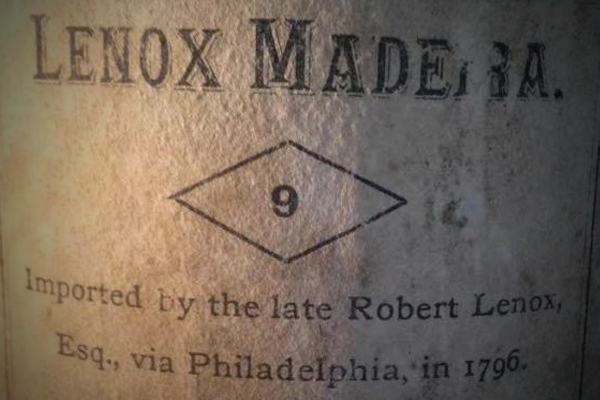
After dismantling a wall inside the wine cellar constructed during the Prohibition era, architects uncovered 50 bottles and 42 demijohns of rare fortified wine that is almost as old as the country itself. With some Madeira bottles dating back to 1796, Bill Schroh, a director at the Liberty Hall Museum, told ABC News that “we never could have imagined finding what we did.” According to their research, the bottles were imported by Robert Lenox, a major player in the New York city wine trade and the estimated value of each bottle could be in the neighborhood of $20,000. Tracing back the origins of their purchase, it is believed that they were imported in order to celebrate the inauguration of John Adams, America’s second president.

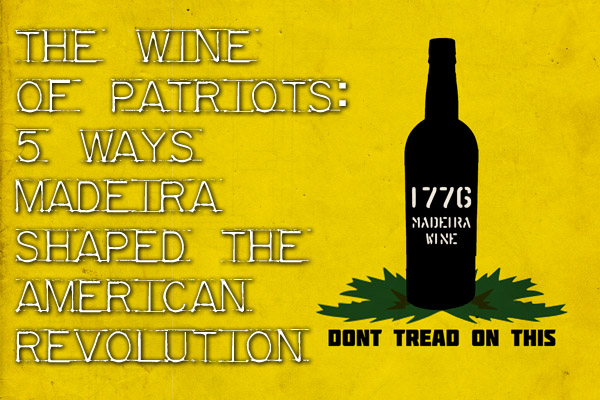
Considering that Madeira is no longer a fashionable drink in America, at first glance, it might seem like a strange choice. But during the revolutionary era, having a glass of this fortified Portuguese wine embodied the spirit of the Gadsden flag and its iconic message: DONT TREAD ON ME. Since the archipelago of Madeira was technically in Africa, its wines weren’t subject to harsh taxation like other European imports nor were they required to sail on British ships, making Madeira a symbol of what taxation with representation might look like. Historian John Hailman writes, “By the late eighteenth century it was considered patriotic to drink Madeira and thereby avoid taxes to the Crown, and Madeira thus became the veritable mother’s milk of the American Revolution.”

An added bonus was that unlike Bordeaux or Burgundy, Madeira was virtually indestructible. In fact, seamen quickly discovered that the intense heat and humidity on board the ships transporting it to the thirteen colonies actually made the wine improve—a fact that made it wildly popular in the South. So during the Revolutionary War and following America’s independence, Madeira was consumed by many future presidents, including George Washington and Thomas Jefferson.

Of course, John Adams was no exception. Back in 1768, when John Hancock tried to smuggle a cargo of Madeira into the Boston Harbor and was intercepted and charged by the British, he was represented by none other than the future commander-in-chief. Growing fond of this particular drink, which he enjoyed quite regularly, he once said that “a few glasses of Madeira made anyone feel capable of being president.”

And by ordering Madeira to celebrate his election victory, the people at Liberty Hall couldn’t have purchased a more symbolic wine—the wine of the revolution!

Sources:

Dubourcq, Hilaire. Benjamin Franklin Book of Recipes. London: Fly Fizzi Publishing, 2004.
Hailman, John R. Thomas Jefferson on Wine. Jackson: University Press of Mississippi, 2009.


You might also like:
Ask Sid: Wine Barrique

July 12th, 2017 by Joseph Temple
Ask your question here

what is a barrique barrel wine oak

Question: I often hear about wine being aged in an oak cask or barrique. Is there a difference in these terms?

Answer: Yes there is a difference. Barrique should only be used to describe a unique barrel shape of a specific size of 225 litres (59 gallons) long used in Bordeaux and now other wine producing regions. Other shapes and sizes have different names from hogshead (300 litres in USA) to Burgundy piece (230 litres) to the larger sizes used traditionally in Piedmont for nebbiolo grapes and becoming increasingly more popular everywhere. These can all be called casks but shouldn’t be called barriques.


You might also like:

 alt=

Did you know the difference between oak cask and barrique?

View Results

Loading ... Loading ...
How wine became a luxury?

July 8th, 2017 by Joseph Temple

arnaud de pontac chateau haut brion wine

By Joseph Temple

Ever since 1982 when Robert Parker enthusiastically described that year’s Bordeaux vintage as one that is “destined to be some of the greatest wines produced in this century,” the concept of wine as a lucrative financial investment continues to grow. Twenty-five years after Parker’s prophecy, one case of Château Latour has increased in value by a staggering 8,000 percent, making wine, according to CNBC, the single best collectible investment—even better than classic cars! Putting another exclamation mark on that statement, The Telegraph recently published a list of ten bottles that have given buyers a ROI of 150% and more in just five years.

With such a powerful bull market occurring before our very eyes, it makes you wonder how some wines went from mere alcoholic beverages to highly sought-after items of luxury?

To answer that question, you need to go back centuries, long before Robert Parker and even the 1855 Bordeaux classification. During the reign of Elizabeth I in the late 16th century, it’s safe to say that the English loved their wine, consuming approximately 40 million bottles annually at a time when the entire population was a little over 6 million. However, their interest had nothing to do with terroir or tannins; what attracted Britain was the idea of wine as an antiseptic. With contaminated water being a fact of life back then, many thought that the best way to relieve sickness was through the consumption of wine.

And back then, the wines of Bordeaux didn’t arrive in bottles with labels listing the sub-region or vintage. Simply labeled ‘Claret,’ there was no mention of the estate, making the casks that arrived on English soil as generic as possible. According to some historians, what most people drank was a light red made from white and red grapes (think Rosé) that arrived in either the late fall or early winter and needed to be finished by late summer at the latest. After that, the wine quickly turned into vinegar.

This all changed forever with the arrival of Arnaud de Pontac. Purchasing Haut-Brion in 1649, the Premier President of the Parlement of Bordeaux embarked on a revolutionary approach to both winemaking and wine marketing. Realizing that the most important market by the mid-17th century for Bordeaux was in London, he actively sought out the wealthy with an entirely new way of looking at wine. Dating back to when Edward II ordered the equivalent of a million bottles to celebrate his marriage to Isabella of France, the idea of wine as a luxury item was something that quickly caught on, especially during the Restoration.

What separated Pontac and Haut-Brion from the competition were concepts that are still in place to this day. By limiting the crop, rejecting unripe grapes, and allowing for a slow fermentation process, his focus of quality over quantity made his product superior in the eyes of the English elite. According to one historian, “Pontac carefully produced and named a wine that came from a small, circumscribed area of land in order to enhance its value on the palates and in the minds of English customers.” This can be seen in the cellar book of King Charles II who purchased 169 bottles of “Hobriono” in 1660. All of a sudden, the brand became more important than the wine.

Another advantage was that Pontac sent his son across the Channel to open up “Pontack’s Head”– a popular tavern where customers could buy Haut Brion directly. Needless to say, the other Bordeaux winemakers took note of Pontac’s brilliant marketing strategy and quickly followed suit. By the time of Queen Anne, luxury claret had arrived in a big way amongst royalty and wealthy English landowners. The whole idea of “the Château” took off as impressive buildings were built throughout the region in order to impress potential clients. Prestige and quality become the guiding principles for the Bordelais, etched in stone with the now famous 1855 classification.

So the next time you wonder why certain bottles are fetching record sums, you can thank Arnaud de Pontac and Château Haut-Brion for creating the first brand name wine of the modern era.

Sources:

Clarke, Oz. The History of Wine in 100 Bottles: From Bacchus to Bordeaux and Beyond. London: Pavilion Books, 2015.
Estreicher, Stefan K. Wine: From Neolithic Times to the 21st Century. New York: Algora Publishing, 2006.
Ludington, Charles. The Politics of Wine in Britain: A New Cultural History. New York: Springer Publishing, 2016.
Sander, Merton. Wine: A Scientific Exploration. Boca Raton: CRC Publishing, 2003.


You might also like:

Ask Sid: Russian Wines?

July 5th, 2017 by Joseph Temple
Ask your question here

russian wines which one to buy

Question: I am travelling to St. Petersburg on a cruise for a holiday this summer. What Russian wines to you recommend we should look for to taste while dining there?

Answer: Very topical question for me as I was just there this year too. Visited the wine cellars in the beautiful Constantine Palace in Strelna with their vast collection. Also had a wine tasting there with some tired white blends from 2012 of 50% Riesling & 50% Chardonnay, West Hill Blend limited production 2012 reds from the Black Sea coast of 50% Merlot & 50% Cabernet Sauvignon with some sweetish smokey spicy notes, and older Tokay from Hungary. The best Russian wines we found in restaurants in St. Petersburg were all from the Krasnodar southernmost region bordering the Ukraine to the west at about 45 degrees latitude. My favourite was Temelion Brut sparkling by Lefkadia a blend of chardonnay & pinot noir displaying drier refreshing citrus lemon flavours. Also served some simpler 2016 varietal Sauvignon Blanc & 2015 oaky Chardonnay. A unique almost Syrah-like red from the native vitis vinifera grape Saperavi 2015 called Fanagoria Vintage is worth investigating. Believe there are some of this variety also being grown in the Finger Lakes of New York state. This acidic grape variety native to Georgia though with thin skins produced an intense deep red colour wine with some interest. Check it out.


You might also like:

 alt=

Have you ever tasted any Russian wines?

View Results

Loading ... Loading ...
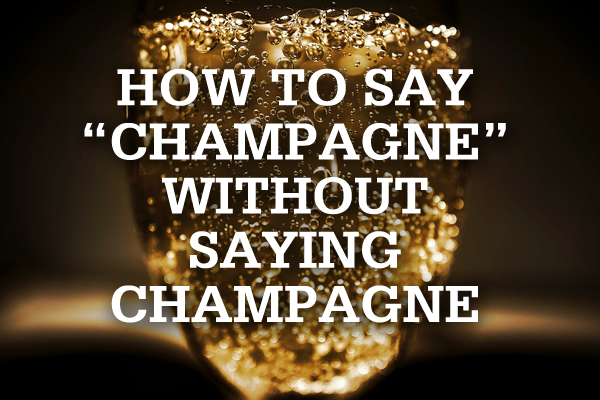
How to say “Champagne” without saying Champagne

July 1st, 2017 by Joseph Temple

american champagne

By Joseph Temple

It’s no secret that the French view their wine as sacrosanct. From Bordeaux and Burgundy to Champagne and Côtes du Rhone, the soil that has given us some of the finest vintages is deeply embedded in the culture of every citizen across the Fifth Republic. And when it comes to bubbly, the vineyards of Champagne are held in the highest regards, having survived numerous invasions and wars over the past two millennia.

So when someone erroneously asks for or praises a glass of “American Champagne” or “Italian Champagne,” you can see why both French winemakers and citizens would get upset. Fighting back against this mislabeling, the government of France has applied diplomatic pressure for centuries to stop the use of this word unless the sparkling wine is specifically made in the region of Champagne. As one famous example illustrates, the French delegation led by Prime Minister Georges Clemenceau successfully protected the Champenois during the 1919 Paris Peace Conference with Article 275, which stated that “the importation, exportation, manufacture, distribution, sale or offering for sale of products or articles bearing regional appellations inconsistent with such law or order shall be prohibited.”

But nearly a century later, the Champagne label is still being misused and abused. To understand the loopholes and clever tricks that have been employed for hundreds of years, have a look below to see how you can say “Champagne” without saying Champagne.


american champagne

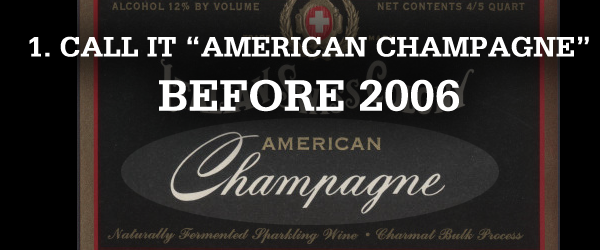
Although the United States signed the Treaty of Versailles, the Senate never ratified it, making America null and void from Article 275, which has led to many “American Champagnes” over the years. However, in 2005 the U.S. And European Union finally agreed that labels like this one would no longer be tolerated—with an important catch. If any winemaker used this term before March 10th, 2006, they would be grandfathered in, a decision that caused Korbel Natural Special Inaugural Cuvée California Champagne to be served at Barack Obama’s second inauguration in 2013.
blank

new york champagne

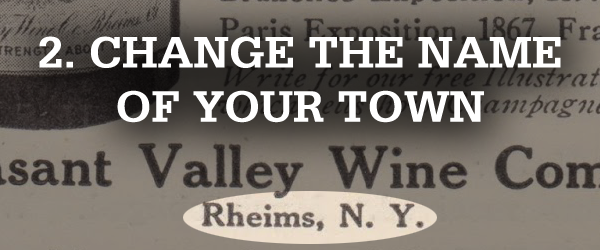
In addition to false labelling, the Pleasant Valley Wine Company took it one step further in the nineteenth century when they lobbied the federal government to change the name of their hamlet. So when people saw Great Western Champagne as being from Rheims, it’s because the wine was actually made in Rheims—New York!
blank

3. Deny its Champagne … over and over again.

If you’re a WWII veteran who fought during the Italian campaign, then you probably developed a taste for a sweet sparkling wine known as Asti Spumante. Unfortunately, its reputation has taken a nosedive in the years following the Second World War, with many producers dropping the name Spumante due to its negative perception for being a cheap wine. But here’s a great way to piggyback off of Champagne using a rhetorical device: a 1977 commercial where the viewer is told that it’s not Champagne—it’s Asti Spumante. Rinse and repeat.

HONORABLE MENTION: Champagne, Champale. Hey, they both rhyme.


You might also like:

Older Entries
Newer Entries
The object of the Society is to bring together and serve all who believe that a right understanding of good food and wine is an essential part of personal contentment and health and that an intelligent approach to the pleasures and problems of the table offers far greater rewards than the mere satisfaction of appetite.
Andre Simon Wine & Food Society Founder (1933)
© 2026 The International Wine & Food Society (IW&FS) IW&FS
Credits | Privacy | Accessibility