menu
Member Sign In
  • IWFS Homepage
  • Blog Home
  • Forums Home
  • Global Forum
  • Contact Us
Close
  • IWFS Homepage
  • Blog Home
  • Forums Home
  • Global Forum
  • Contact Us
    Member Sign In
  • Blog Home
  • Forum Home
  • Global Forum

Follow Us

Recent Posts

  • Ask Sid: What is the difference between the two grapes of Blaufrankisch and Kekfrankos?
  • CHAMBOLLE-MUSIGNY WINES IMPRESS WITH DISTINCTIVE POWER COMBINED WITH SENSUAL ELEGANCE
  • Ask Sid: What is the new grape being used in Amarone?
  • OUR 2002 RED BURGUNDY HORIZONTAL IS AGING WELL, SHOWCASING REFINED PRECISION WITH TERROIR-DRIVEN CHARM
  • Ask Sid: Thoughts of Sid Cross on the Judgement of Paris historic wine tasting at the 50th Anniversary?

Archives

  • April 2026
  • March 2026
  • February 2026
  • January 2026
  • December 2025
  • November 2025
  • October 2025
  • September 2025
  • August 2025
  • July 2025
  • June 2025
  • May 2025
  • April 2025
  • March 2025
  • February 2025
  • January 2025
  • December 2024
  • November 2024
  • October 2024
  • September 2024
  • August 2024
  • July 2024
  • June 2024
  • May 2024
  • April 2024
  • March 2024
  • February 2024
  • January 2024
  • December 2023
  • November 2023
  • October 2023
  • September 2023
  • August 2023
  • July 2023
  • June 2023
  • May 2023
  • April 2023
  • March 2023
  • February 2023
  • January 2023
  • December 2022
  • November 2022
  • October 2022
  • September 2022
  • August 2022
  • July 2022
  • June 2022
  • May 2022
  • April 2022
  • March 2022
  • February 2022
  • January 2022
  • December 2021
  • November 2021
  • October 2021
  • September 2021
  • August 2021
  • July 2021
  • June 2021
  • May 2021
  • April 2021
  • March 2021
  • February 2021
  • January 2021
  • December 2020
  • November 2020
  • October 2020
  • September 2020
  • August 2020
  • July 2020
  • June 2020
  • May 2020
  • April 2020
  • March 2020
  • February 2020
  • January 2020
  • December 2019
  • November 2019
  • October 2019
  • September 2019
  • August 2019
  • July 2019
  • June 2019
  • May 2019
  • April 2019
  • March 2019
  • February 2019
  • January 2019
  • December 2018
  • November 2018
  • October 2018
  • September 2018
  • August 2018
  • July 2018
  • June 2018
  • May 2018
  • April 2018
  • March 2018
  • February 2018
  • January 2018
  • December 2017
  • November 2017
  • October 2017
  • September 2017
  • August 2017
  • July 2017
  • June 2017
  • May 2017
  • April 2017
  • March 2017
  • February 2017
  • January 2017
  • December 2016
  • November 2016
  • October 2016
  • September 2016
  • August 2016
  • July 2016
  • June 2016
  • May 2016
  • April 2016
  • March 2016
  • February 2016
  • January 2016
  • December 2015
  • November 2015
  • October 2015
  • September 2015
  • August 2015
  • July 2015
  • June 2015
  • May 2015
  • April 2015
  • March 2015
  • February 2015
  • January 2015
  • December 2014
  • November 2014
  • October 2014
  • September 2014
  • August 2014
  • July 2014
  • June 2014
  • May 2014
  • April 2014
  • March 2014
  • February 2014
  • January 2014
  • December 2013
  • November 2013
  • October 2013
  • September 2013
  • August 2013
  • July 2013
  • June 2013

Meta

  • Log in
  • Entries feed
  • Comments feed
  • WordPress.org

Author Archive

Older Entries
Newer Entries

10 interesting facts about Japanese wine

May 13th, 2016 by Joseph Temple

10 interesting facts about Japanese wine

By Joseph Temple

With Tokyo being home to an unprecedented 226 Michelin-starred restaurants, it’s safe to say that Japan is, as wine writer Karen MacNeil states, “one of the most gastronomically sophisticated countries in the world.” Whether it’s a traditional kaiseki meal or European inspired dishes, the Japanese have without question turned their country into a culinary mecca. And when it comes to wine, the Land of the Rising Sun continues to be Asia’s most important market for exporters.

Helping to spark this interest was Shinya Tasaki who, in 1995, became the first Japanese winner of the Sommelier World Championship.  Since then, a plethora of wine schools combined with a taste for the finer things in life has caused wine consumption to more than double from 1990 to 2012. But in addition to importing Bordeaux and Burgundy, domestic labels represented nearly a third of all Japanese wine sales in 2010.

Given the volcanoes, monsoons and its high population density, it’s amazing that Japan even has a domestic wine industry beyond rice-based saké. Experiencing intense humidity during the summer months along with torrential downpours and Siberian winds, the 6,852 islands of this archipelago nation make it one of the least hospitable places in the world for practicing viticulture. Despite this, local vintners have continued to defy the odds, carving out a niche market for oenophiles. So have a look below at ten quick facts that will get you up to speed on this proud nation’s wine heritage.
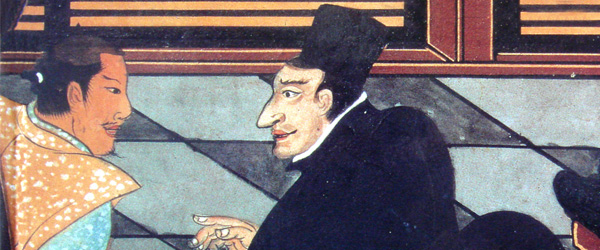

Japan's first wines
1. It is believed that Jesuit missionaries from Portugal gave Japan its first wines in the 16th century as gifts to the feudal lords of Kyushu.
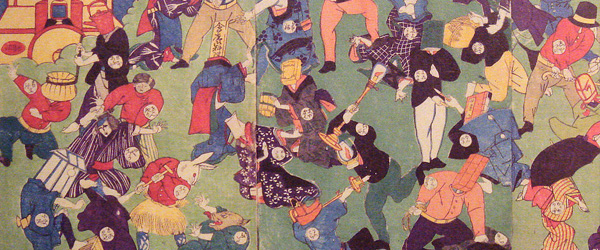
 

Meiji Restoration and Japanese wine
2. Japan’s modern wine industry began in the 1860s during the Meiji Restoration where the country opened itself up to western influences.
 

Grapes used in Japanese vineyards
3. The first plantings in the late 19th century were mostly Vitis labrusca varieties brought over from the United States that included Delaware and Niagara grapes.
 
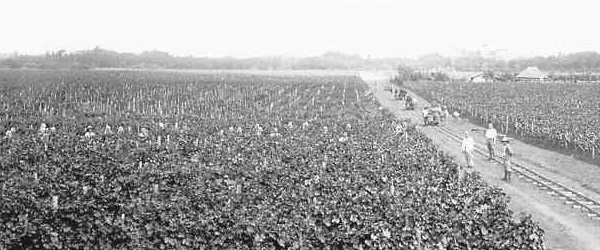
How many acres are dedicated to vineyards in Japan
By Sophie Jacquin (Own work) [GFDL or CC BY-SA 3.0], via Wikimedia Commons

4. Today, Japan ranks 47th in the world for vineyard land with approximately 45,000 acres of vines.
 

humidity Japan vineyard wine
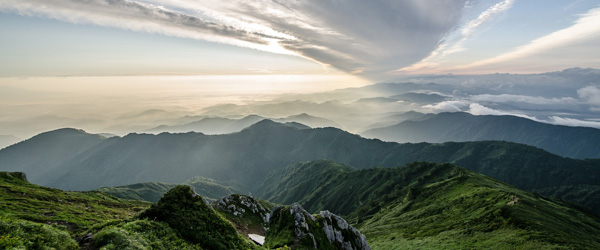
5. Humid weather makes it very difficult to grow vinifera grapes in Japan.
 
Koshu wine Japan
By genta_hgr (Grape) [CC BY 2.0], via Wikimedia Commons

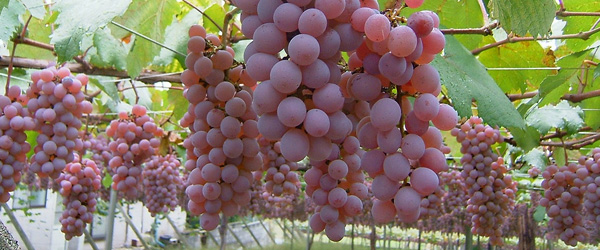
6. However, one of Japan’s most successful varieties is koshu, a humidity tolerant Vitis vinifera white grape with a pinkish hue.
 
Japanese wine grapes
By jetalone [CC BY 2.0], via Wikimedia Commons

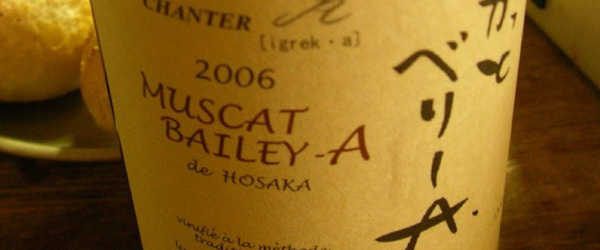
7. Another popular grape is “Muscat Bailey A” – a red wine hybrid created by Zenbai Kawakami by combining Bailey and Muscat Hamburg grapes together.
 

Winemaking in Japan
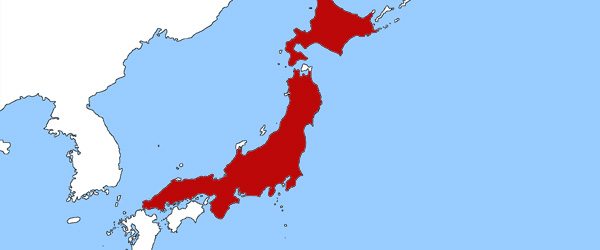
8. Most vines in Japan are planted on the islands of Honshu and Hokkaido.
 
Japanese vineyards

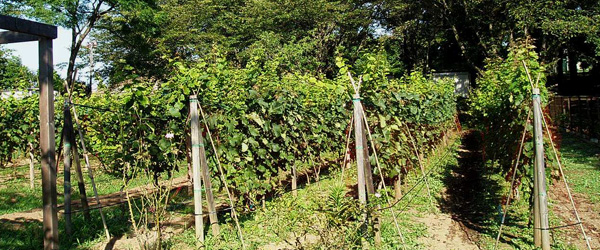
9. Small and independent growers own most of Japans’ vineyards with the average vineyard size being less than 1.2 acres.
 
Japanese wine growing techniques
By Aw1805 (Own work) [CC BY-SA 4.0], via Wikimedia Commons

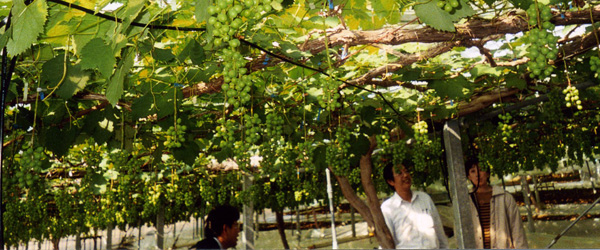
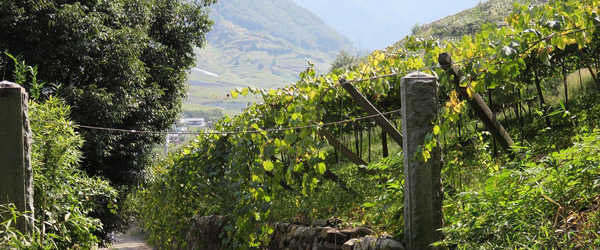
10. To achieve maximum sun exposure, vintners will use various techniques like planting their vines on steep mountain terraces or constructing trellises to keep the grapes as high as 10 feet.

Sources:

Bunting, Chris. Drinking Japan: A Guide to Japan’s Best Drinks and Drinking Establishments. North Clarendon: Tuttle Publishing, 2014.
Brostrom, Geralyn G. & Brostrom, Jack. The Business of Wine: An Encyclopedia. Santa Barbara: ABC-CLIO, 2008.
MacNeil, Karen. The Wine Bible. New York: Workman Publishing, 2015.
Robinson, Jancis. The Oxford Companion to Wine, 4th Edition. Oxford: Oxford University Press, 2015.


You might also like:

Have you ever tasted Japanese wine?

View Results

Loading ... Loading ...
Ask Sid: Lychee?

May 11th, 2016 by Joseph Temple
Ask your question here The International Wine & Food Society

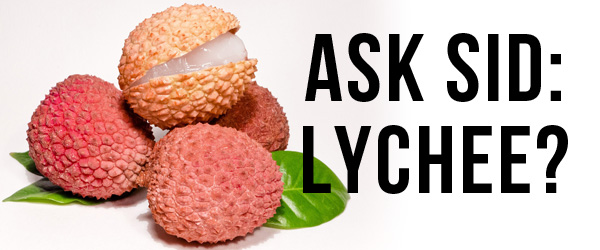
lychee aromas wine

Question: A friend is excited about a recent wine she ordered as being so much like fresh lychee fruit. What is she talking about?

Answer: Descriptive wine terms can be quite subjective. Wine drinkers often have different experiences on tasting the very same wine. However some wines have a distinctive signature. Lychee or litchi is a Chinese fruit with unique fragrant honey sweet aromas almost like smelling a really spicy rose. It is a good characteristic to remember for identifying in a blind tasting a wine made from the gewürztraminer grape variety. I believe your friend likes gewürztraminer wines!


You might also like:

Have you ever tried lychees?

View Results

Loading ... Loading ...

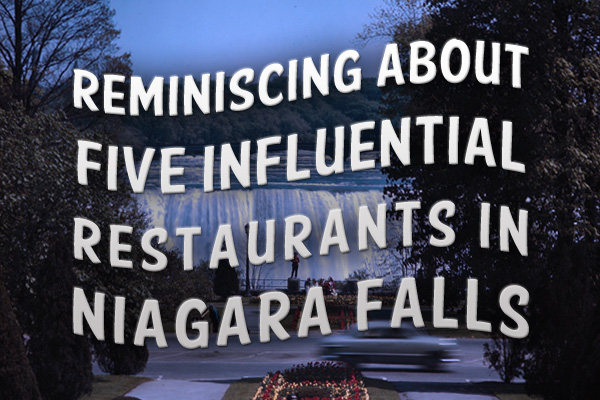
Reminiscing about five influential restaurants in Niagara Falls

May 6th, 2016 by Joseph Temple

Reminiscing about five influential restaurants in Niagara Falls

By Joseph Temple

For centuries, the scenic beauty of Niagara Falls has attracted scores of visitors from around the world like a magnet. With more than six million cubic feet of water going over its crest line every single minute during the peak of tourist season, the sheer volume of this natural wonder makes it one of the most photographed cataracts in history. “Few natural wonders have inspired the passions and the imaginations of so many as Niagara Falls, whose sublime beauty and awesome power have made it a magnet for statesmen and stuntmen, poets and poseurs, ordinary sightseers and exceptional visionaries,” writes historian Pierre Berton.

And during the immediate post-war period, the Falls became etched in stone as the “Honeymoon Capital of the World.” Publicized in popular Hollywood films like Niagara starring Marilyn Monroe, Horseshoe Falls provided the perfect backdrop for millions of couples celebrating their holy matrimony. Of course, with so many newlyweds around, there were also plenty of superb places to wine and dine in between snapping all those pictures.

While today many associate Niagara with casinos, wax museums and inexpensive all-you-can-eat buffets, it’s important to remember that there were (and still are) some excellent restaurants on both sides of the river. So travel back in time to the golden era of Niagara Falls tourism as we reminisce about five iconic establishments that helped to make the region a must-see destination.


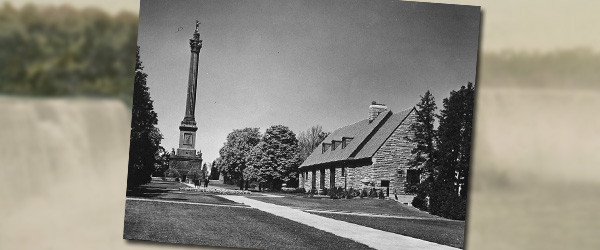
Queenston Heights Restaurant
1. Queenston Heights Restaurant

Situated next to a monument honoring General Isaac Brock from the War of 1812, Queenston Heights Restaurant is surrounded by gorgeous scenery and floral arrangements, making its rustic ambiance hard to beat. And once you sit down inside or on the outdoor patio, you’ll be given a breathtaking panoramic view of the Niagara River as you dine. Therefore, it’s no surprise that this upscale restaurant has entertained dignitaries from around the world, including Prime Minister Winston Churchill who ate here with his daughter Mary during the height of the Second World War before a strategy session with Franklin Roosevelt in Quebec City.


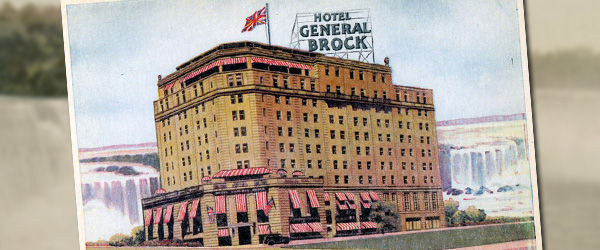
Hotel General Brock Niagara Falls
2. Hotel General Brock

Opening its doors in 1929, the Hotel General Brock is known by many as the place where Marilyn Monroe stayed while filming Niagara—the same hotel where she had a torrid love affair with future husband Bob Slatzer. But its crown jewel was the Rainbow Dining Room, which offered diners a spectacular view of the Falls. The view was so outstanding that in 1939 when the King and Queen of England visited Niagara Falls as part of their North American tour, they enjoyed a private and 100% Canadian dinner that included Filet of Lake Superior whitefish and Tenderloin of Northern Ontario beef.


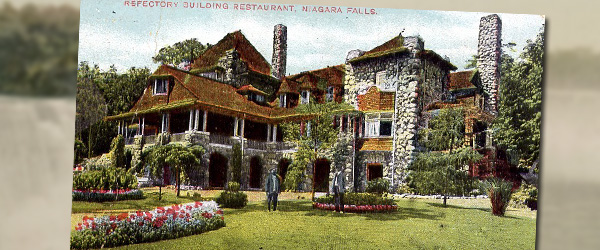
Victoria Park Restaurant Niagara Falls
3. Victoria Park Restaurant

Located on the Niagara Parkway and directly facing the Falls, Victoria Park Restaurant is as old as the city itself. Originally called the Refectory, this restaurant built in 1904 by the Niagara Parks Commission from boulder stone acquired from the bed of the Niagara River and modeled after a Swiss chalet quickly became one of the more posh places to eat for both locals and tourists. In fact, until 1926, the upstairs served as the quarters for the Parks Commission and has been home to numerous ghost sightings ever since.


revolving restaurant niagara falls
4. Skylon Tower Revolving Restaurant

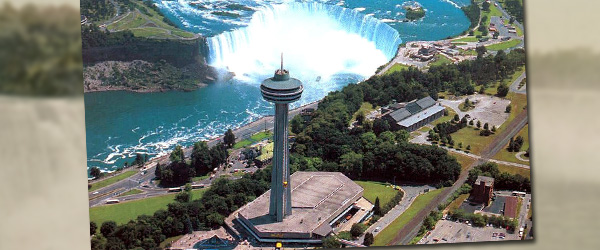
Soaring 775 feet above the Niagara River, the futuristic Skylon Tower, which opened for business in 1965 gave tourists a fantastic bird’s eye view of the Falls from its observation deck. Featuring state-of-the-art technology for its time that included Canada’s first outside elevators, the grand opening was attended by both New York Governor Nelson Rockefeller and Ontario Premier John Robarts. Adding to this sense of being on the cutting edge, a fairly new concept—the revolving restaurant—debuted in Niagara with Skylon diners being treated to a 360 degree look at all the scenic wonders as they sat down and enjoyed a formal meal.


Where to eat in Niagara Falls New York
5. The New York side

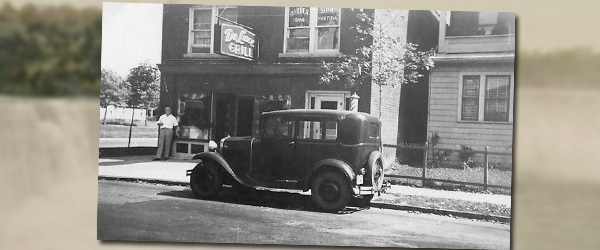
Niagara Falls has essentially become a tale of two cities. And when looking back at the New York side’s culinary history, we see a strong influence from Italian-Americans that lives on to this day. In fact, many travel guides recommend a stroll through Little Italy where you’ll find “authentic Italian restaurants and a sense of what the city was like at its zenith in 1950.” Two of the oldest establishments are The Como Restaurant and Fortuna’s, opened since 1927 and 1945 respectively.

Sources:

Berton, Pierre. Niagara: A History of the Falls. Toronto: Anchor Canada, 1992.
City of Niagara Falls Centennial Book Committee.  Images of a Century: The City of Niagara Falls, Canada, 1904-2004. Oshawa: Maracle Press, 2005.
Dombrowski, Joel A. Moon Niagara Falls. Berkeley: Avalon Travel, 2014.
Strand, Ginger. Inventing Niagara: Beauty, Power, and Lies. New York: Simon & Schuster, 2008.


You might also like:

Have you ever dined at one of these restaurants?

View Results

Loading ... Loading ...
Ask Sid: Why Salmon with Red Wine?

May 4th, 2016 by Joseph Temple
Ask your question here The International Wine & Food Society

Ask Sid: Why Salmon with Red Wine?

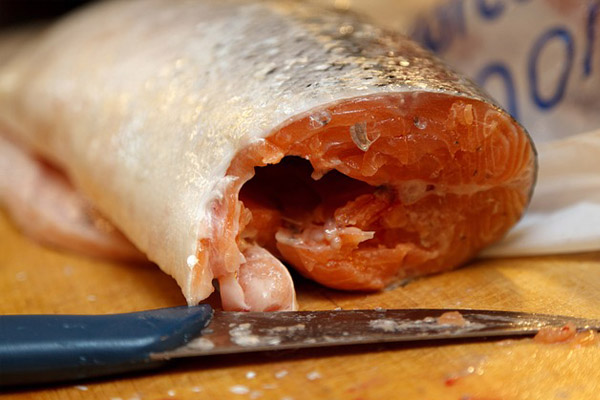
Question: There seems to be a growing trend for serving red wine with salmon. Why? I don’t get it.

Answer: I like your question. There are opinions out there that any colour wine goes with any dish – and to simply choose the wine you enjoy drinking. Certainly a lot of red wine doesn’t ideally suit salmon or any other seafood. However there is more to it than that. Traditionally it was always red wine with meat and white wine with fish. Too rigid. Salmon comes in many varieties from delicate trout-like to wild oily Spring or Chinook. Lots depends on how it is prepared and the sauce as well. I still enjoy a rich chardonnay with most salmon dishes. However a red wine can work very well if is not too heavy or tannic and has a good acid balance. A good variety choice is pinot noir. One of my all-time favourites combos was the 1972 La Tache red Burgundy with a soy BBQ salmon. Try some pinot noirs with salmon prepared in different ways and I believe you will see the magic of red wine with salmon.


You might also like:

What type of wine do you like to pair with salmon?

View Results

Loading ... Loading ...
5 ways to wine and dine like you’re Thomas Jefferson

April 29th, 2016 by Joseph Temple

5 ways to wine and dine like you're Thomas Jefferson

By Joseph Temple

Thomas Jefferson, America’s third president is renowned for being the country’s first oenophile-in-chief. Seeing wine as the compromise between prohibition and saloon-style intoxication, he fervently believed that “No nation is drunken where wine is cheap; and none sober where the dearness of wine substitutes ardent spirits as the common beverage.” From starting America’s first commercial vineyard venture with Philip Mazzei at Monticello to filling his many cellars with some of France’s finest vintages, Jefferson’s unbridled passion for wine is very well documented.

Less known however is the president’s strong devotion towards food and agriculture. Reportedly growing 300 varieties of vegetables at his Virginia estate, including 30 kinds of peas and cabbage, Jefferson was well ahead of the curve in terms of the whole farm-to-table movement that is currently gaining steam across the nation. And his dinners at the Executive Mansion (it wasn’t called the White House back then) were legendary, with the president spending enormous sums out of his own pocket to lavishly entertain both dignitaries and guests.

A new book by historian and IW&FS member James Gabler sheds new light on exactly what the president ate and drank, from his time living in Paris as the Ambassador to France to his post-presidency. Published in 2015, Dine with Thomas Jefferson and Fascinating Guests offers readers a candid view of what it was like to wine and dine with such a legendary head of state. So have a look below at five dishes and wines that Thomas Jefferson and his guests consumed as they discussed everything from the French Revolution to the Louisiana Purchase.


Thomas Jefferson liked macaroni with cheese
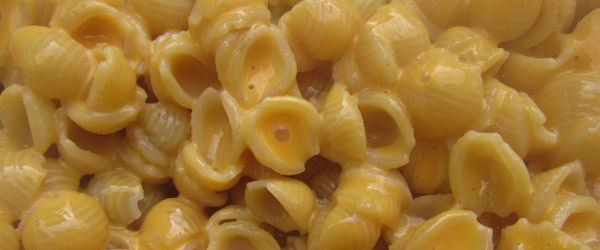
1. Macaroni with Cheese

In a large dining room overlooking the Champs-Élysées in June of 1788, Jefferson and his guests anxiously await the next dish. After finishing their oysters paired with Burgundy, an Italian meal that is very fashionable in France known as Macaroni with Cheese is served. “The best macaroni is made from a particular flour called semolina, from Naples, but in almost every shop a different sort of flour is used, but if the flour is of a good quality, it will always do well,” remarked Ambassador Jefferson.


Thomas Jefferson served bear at the white house
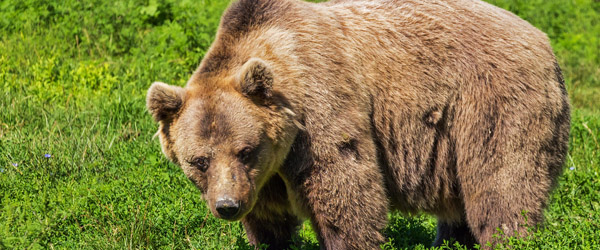
2. Bear

After discussing with his cabinet at length about the failed Monroe–Pinkney Treaty with Great Britain, a massive feast is prepared consisting of turkey, potatoes, bacon and sausages. But one dish stands out from the rest—a quarter-side of bear purchased in Georgetown by Étienne Lemaire, Jefferson’s second mâitre d’hôtel. “Is what you are carving what I think it is?” asks James Madison, Jefferson’s Secretary of State. “What is it that you think I’m carving?” says the president. “Bear,” for which Jefferson states: “That is correct.”


Dressed turtle season with Madeira Thomas Jefferson
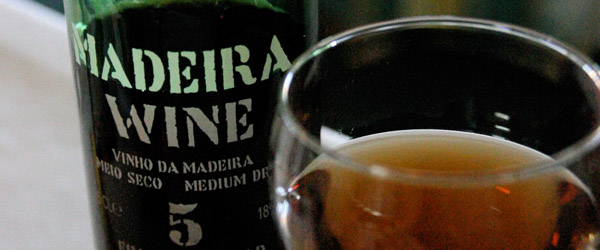
3. Dressed turtle seasoned with Madeira

Travelling from the temporary capital of Philadelphia to Annapolis in 1790, Secretary of State Jefferson and Congressman James Madison are waiting for a ferry on Maryland’s Eastern Shore. With a long delay, they both decide to try a state tradition of dressed turtle seasoned with Madeira. A huge fan of the fortified wine, he takes a bottle out of his travel box, tastes it and explains to everyone at the table what constitutes “silky” Madeira. “The silky Madeira we sometimes get in this country is made so by putting a small quantity of Malmsey into dry Madeira. The taste of the dry cashed with a little sweetishness is barely sensible to the palate.”


Thomas Jefferson preferred non sparkling Champagne
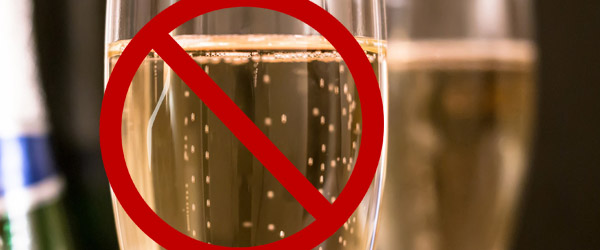
4. Non-sparkling champagne

At a 1792 meeting where President George Washington discusses policy with Jefferson, Alexander Hamilton and John Adams, each plate is ready to be filled with an assortment of broiled pork, goose, roast beef and muttonchops. But after Hamilton studies his glass and asks what type of wine is it, he is surprised when Jefferson tells him that it’s Champagne. “It can’t be Champagne. It doesn’t have a sparkle,” replies Hamilton. But according to Jefferson who has spent years in Paris, the French prefer non-sparkling Champagne. “Sparkling Champagne is never brought to a good table in France. The still or non-sparkling is alone drunk by connoisseurs.”


White Hermitage wines were Thomas Jefferson's favorite
5. Favorite wine?

As someone who drank nearly everything that Bordeaux and Burgundy had to offer, one might wonder what exactly was Jefferson’s favorite wine? Through primary source documents, we learn that Chambertin and Montrachet clearly topped the list. But nothing can compare to white Hermitage, which Jefferson called the “first wine in the world without exception.” So impressed by this region, he gladly purchased 550 bottles during his presidency.


You might also like:

What's your favorite dish from this posting?

View Results

Loading ... Loading ...
Older Entries
Newer Entries
The object of the Society is to bring together and serve all who believe that a right understanding of good food and wine is an essential part of personal contentment and health and that an intelligent approach to the pleasures and problems of the table offers far greater rewards than the mere satisfaction of appetite.
Andre Simon Wine & Food Society Founder (1933)
© 2026 The International Wine & Food Society (IW&FS) IW&FS
Credits | Privacy | Accessibility