menu
Member Sign In
  • IWFS Homepage
  • Blog Home
  • Forums Home
  • Global Forum
  • Contact Us
Close
  • IWFS Homepage
  • Blog Home
  • Forums Home
  • Global Forum
  • Contact Us
    Member Sign In
  • Blog Home
  • Forum Home
  • Global Forum
FOLOW US

Recent Posts

  • Ask Sid: Does sugar level in Sparkling wine affect ageability?
  • ‘TIS THE SEASON FOR YOUR FAVOURITE HOLIDAY COOKIE!
  • Ask Sid: Best wine region for Sylvaner?
  • TOP QUALITY ST. JULIEN CHÂTEAU DUCRU-BEAUCAILLOU VERTICAL SHOWS MIXED RESULTS
  • Ask Sid: What does pigeage refer to in winemaking?

Archives

  • December 2025
  • November 2025
  • October 2025
  • September 2025
  • August 2025
  • July 2025
  • June 2025
  • May 2025
  • April 2025
  • March 2025
  • February 2025
  • January 2025
  • December 2024
  • November 2024
  • October 2024
  • September 2024
  • August 2024
  • July 2024
  • June 2024
  • May 2024
  • April 2024
  • March 2024
  • February 2024
  • January 2024
  • December 2023
  • November 2023
  • October 2023
  • September 2023
  • August 2023
  • July 2023
  • June 2023
  • May 2023
  • April 2023
  • March 2023
  • February 2023
  • January 2023
  • December 2022
  • November 2022
  • October 2022
  • September 2022
  • August 2022
  • July 2022
  • June 2022
  • May 2022
  • April 2022
  • March 2022
  • February 2022
  • January 2022
  • December 2021
  • November 2021
  • October 2021
  • September 2021
  • August 2021
  • July 2021
  • June 2021
  • May 2021
  • April 2021
  • March 2021
  • February 2021
  • January 2021
  • December 2020
  • November 2020
  • October 2020
  • September 2020
  • August 2020
  • July 2020
  • June 2020
  • May 2020
  • April 2020
  • March 2020
  • February 2020
  • January 2020
  • December 2019
  • November 2019
  • October 2019
  • September 2019
  • August 2019
  • July 2019
  • June 2019
  • May 2019
  • April 2019
  • March 2019
  • February 2019
  • January 2019
  • December 2018
  • November 2018
  • October 2018
  • September 2018
  • August 2018
  • July 2018
  • June 2018
  • May 2018
  • April 2018
  • March 2018
  • February 2018
  • January 2018
  • December 2017
  • November 2017
  • October 2017
  • September 2017
  • August 2017
  • July 2017
  • June 2017
  • May 2017
  • April 2017
  • March 2017
  • February 2017
  • January 2017
  • December 2016
  • November 2016
  • October 2016
  • September 2016
  • August 2016
  • July 2016
  • June 2016
  • May 2016
  • April 2016
  • March 2016
  • February 2016
  • January 2016
  • December 2015
  • November 2015
  • October 2015
  • September 2015
  • August 2015
  • July 2015
  • June 2015
  • May 2015
  • April 2015
  • March 2015
  • February 2015
  • January 2015
  • December 2014
  • November 2014
  • October 2014
  • September 2014
  • August 2014
  • July 2014
  • June 2014
  • May 2014
  • April 2014
  • March 2014
  • February 2014
  • January 2014
  • December 2013
  • November 2013
  • October 2013
  • September 2013
  • August 2013
  • July 2013
  • June 2013

Meta

  • Log in
  • Entries feed
  • Comments feed
  • WordPress.org

Archive for 2015

Older Entries
Newer Entries

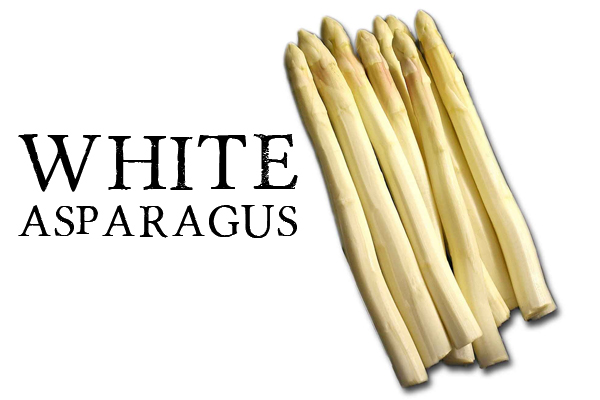
White Asparagus

April 6th, 2015 by Sidney Cross

differencet between White and green asparagus

Green asparagus is popular in North America but the milder more tender succulent white asparagus needs more love. More work to grow because the process requires mounding the earth around the stalk to deprive it of light which produces that green chlorophyll. Previously Germany had sent for a while their juicy Spargel to Canada but when the fresh quality of the shipments deteriorated the imports eventually stopped. Bigger size is better. Also tricky customs regulation hurdles to be able to bring in a product containing dirt from Europe. Nevertheless this didn’t worry the Dutch Consul General in Vancouver who rather than just celebrating the beautiful Spring tulips also held at his residence the First Dutch White Asparagus Festival in Vancouver in collaboration with Martens Asperges sponsor & the Confrerie de l’asperge Limbourgondie. Beautiful white thick impressive stalks imported for this event by Kuehne & Nagel and to be marketed in the future by www.ponderosa-mushrooms.com.  Chefs from the Hostellerie de Hamert in the Netherlands attended to prepare a wonderful 7 course lunch menu all matched well with a lively fresh 2014 Vivace Pinot Grigio by La Stella (www.lastella.ca) from the Okanagan Valley BC Canada. Thought you might appreciate knowing some of the diverse uses for this prized vegetable:

1. Cocktail Prince Willem-Alexander: Recipe created when King Willem-Alexander of the Netherlands was born  on April 27, 1967 making a white asparagus cocktail with chicken, fresh orange slices, and curry/ginger mayonnaise

2. Dutch Gin marinated wild salmon with a tagliatelle of white asparagus & herbs

3. Creamy veloute soup of white asparagus

4. Steamed white asparagus with scallops, wild mushrooms, and slow cooked pork belly “smoked bacon”

5. Stir fried white asparagus with garlic seasoned Canadian lamb

6. White asparagus “Comme il faut” (Proper – or the way it is supposed to be eaten) with Livar boiled ham, boiled egg, small potatoes & asparagus-butter sauce

7. Dessert Dutch “Haagse Bluf” (Hague Bluff  – joke that people from Hague are full of hot air) Iced coffee with caramelized white asparagus, currants, and egg foam


You might also like:

What type of asparagus do you prefer?

View Results

Loading ... Loading ...

10 facts about Prosecco – the sparkling wine that’s taking the world by storm!

April 3rd, 2015 by Joseph Temple

Want to lean about Prosecco
By Joseph Temple

You might have noticed over the past couple of years that more and more people are drinking bubbly Prosecco!  Whether as an aperitif or part of a Bellini cocktail, this crisp, refreshing and cost-friendly sparkling wine has taken the world by storm, outselling Champagne for the first time in 2013 with 307 million bottles!  In fact, Americans imported approximately 2.3 million cases in one year alone–up dramatically from just 500 cases less than a few decades ago.

So for this week’s entry, let’s have a closer look at this delightful Italian wine:


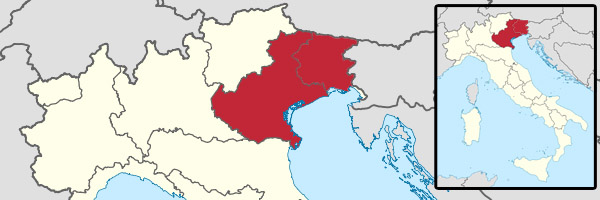
Prosecco is produced north of Venice
By TUBS [GFDL or CC BY-SA 3.0], via Wikimedia Commons

1. DOC & DOCG Prosecco is produced in the northeastern regions of Friuli-Venezia Giulia & Veneto.

blank

Valdobbiadene & Conegliano

2. The two towns known for Prosecco – Valdobbiadene & Conegliano – are both sheltered by the Alps, making the area near and between them ideal for growing Prosecco grapes.

blank

Prosecco wine pour
By Jeff Kubina [CC BY-SA 2.0], via Wikimedia Commons

3. Unlike Champagne’s secondary fermentation which takes place in the bottle, Prosecco is fermented in stainless steel tanks, which helps to make it more affordable.

blank

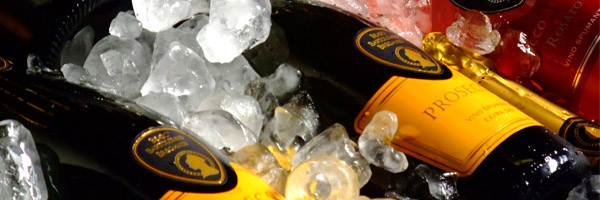
spumante or frizzante prosecco
By James Cridland (Flickr: Champagne on ice) [CC BY 2.0], via Wikimedia Commons

4. Prosecco comes in both lightly sparkling or frizzante & fully sparkling or spumante.

blank

What does Prosecco taste like?
By Jessica Spengler (Flickr: Prosecco with raspberries) [CC BY 2.0], via Wikimedia Commons

5. Prosecco is known for its lower alcohol content (usually 11-12%) and its fruity aromas/flavors that can include apple, peach and apricot.

blank

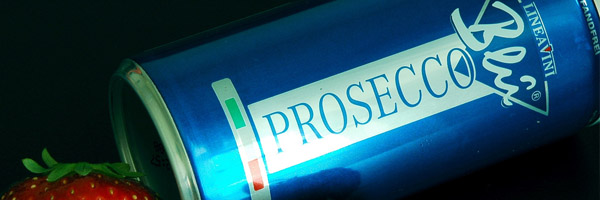
Prosecco made outside the traditional regions
By the_moment (Flickr: prosecco) [CC BY 2.0], via Wikimedia Commons

 6. By 2008, nearly 60% of all Prosecco was produced outside its traditional regions in northeastern Italy.

blank

Prosecco grapes
By paul Barker Hemings from seregno, 85 (P6130647) [CC BY-SA 2.0], via Wikimedia Commons

7. That’s because Prosecco was determined by the grape variety and not the place of origin, allowing other countries the right to use the name.

blank

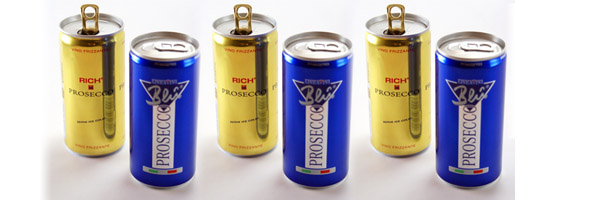
The cheapening of Prosecco
By Sandstein (Own work) [CC BY 3.0], via Wikimedia Commons

8. This worried Italian vintners, who were very concerned that the Prosecco brand was being exploited just as it was starting to take off internationally.

 blank

Rules for Prosecco changed in 2009
By John W. Schulze from Tejas (Prosecco vineyards) [CC BY 2.0], via Wikimedia Commons

9. So in 2009, the Italian government declared that in order for a wine to be labelled Prosecco, it would have to be produced in a designated region.  Because of this decision, the name of the grape was changed from Prosecco to Glera.

blank

Difference between DOCG and DOC prosecco
By Agne27 (Own work) [CC BY-SA 3.0], via Wikimedia Commons

10. When buying a bottle, check the label closely.  The absolute best Prosecco is made near the hills between Conegliano and Valdobbiadene and will be labelled DOCG (denominazione di origine garantita). Bottles with a DOC on the label mean that they were probably made on the surrounding flats.

Sources:

Cortese, Amy (2008, Dec 26). Italian Makers of Prosecco Seek Recognition. New York Times. Retrieved from http://www.nytimes.com
Ewing-Mulligan, Mary and McCarthy, Ed. Italian Wine for Dummies. Hoboken: Wiley Publishing Inc., 2011.
Faulkner, Jane (2012, Oct 1). Why prosecco is charming the world. Sydney Morning Herald. Retrieved from http://www.smh.com.au
Kapadia, Milanee (2014, Nov 24). Prosecco tops Champagne in bubbly sales. Yahoo Finance. Retrieved from http://finance.yahoo.com
Kinssies, Richard (2002, Jul 9). On Wine: Proseccos sparkle on their own terms. Seattle Post-Intelligencer. Retrieved from http://seattlepi.com
McCoy, Elin (2015, Feb 25). How to Find Prosecco That Isn’t Terrible. Bloomberg Business. Retrieved from http://www.bloomberg.com
Nowak, Barabara and Wichman, Beverly. The Everything Wine Book: From Chardonnay to Zinfandel, All You Need to Make the Perfect Choice. Avon: Adams Media, 2005.


You might also like:

Are you a fan of Prosecco?

View Results

Loading ... Loading ...

Ask Sid: Italian Wine Certifications

April 1st, 2015 by Joseph Temple
Ask your question here The International Wine & Food Society

Italian Wine DOC

Question: Thanks Sid for the useful information on French wine appellation “protegee”. Would you kindly please update as well on Italian wine classifications?

Answer: The latest stats at the end of 2014 shows 523 quality wines recognized as follows:

DOCG – 73 with Controlled Designation of Origin Guaranteed  These are the highest produced in specific geographic wine regions already classified under DOC for at least 5 years.

DOC – 332 with Controlled Designation of Origin. This certifies that the wine has been produced from grapes harvested from a specific delimited wine area in accordance with specific production protocol.

IGT – 118 for wines with Protected Geographical Indication. These are for quality table wines from wider wine regions with a less restrictive protocol. Note it is also interesting that Italy presently also has 269 food products with recognition:

DOP (PDO in English) – 161 Protected Designation of Origin. Produced, processed and prepared in a given geographical area using recognised
know-how.

IGP (PGI in English)   –  106 Protected Geographical Indication. Closely linked to the geographical area with at least one of the stages of production, processing or preparation taking place there.

STG (TSG in English) –  2 Traditional Specialities Guarantee. Traditional character. There is the European brand of the green leaf BIO symbol for Organic agro-food products for foods and since 2010 for wines.


You might also like:

Were you aware of these certifications?

View Results

Loading ... Loading ...
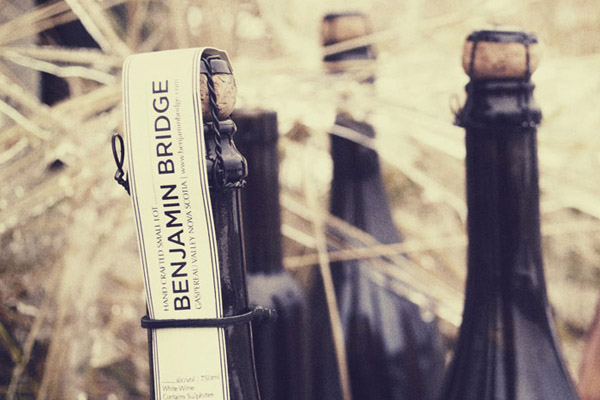
Benjamin Bridge Sparkling Wines

March 30th, 2015 by Sidney Cross

Sparkling wines in the Gaspereau Valley

Impressed by the increasing quality of sparkling wines available from around the globe. Champagne still remains the benchmark but lots of delightful different styles out there to try. One region the Gaspereau Valley in Nova Scotia Canada and one producer Benjamin Bridge (www.benjaminbridge.com/sparklings) have made amazing strides in the last decade.  I have been an enthusiastic supporter of them since my visit there on August 22, 2011 when I was blown away with this project and thought I would now alert you. I appreciated the passion, optimism and individual attention to cuvees shown by Winemaker Jean-Benoit Deslauriers and his team on that occasion. Couldn’t believe that such low Brix (18+), high acidity (14+), and low pH (around 3) aged some time on the lees would actually work so successfully. Tried the recently disgorged samples from the 2004 vintage which were eye openers. Blanc de Blancs 100% Chardonnay (only 200 bottles) with no malo & no dosage showed crisp citrusy verve and “lemon juice at the beginning but you have to wait for it” potential and now really coming into its own. 100% Blanc de Noirs with full malo was more open yeasty brioche from the lees and showing creamy softness warranting their optimism. Even a 2008 blend of 65 Chardonnay & 35 Pinot Noir showed the benefits of very late harvesting producing clean expanding mouth coating fruit.

Last week in Vancouver provided an update with the visiting Jean-Benoit showing his new releases including fun aromatic coastal Tidal Bay appellation 2014 whites and floral fresh big seller Nova 7 with the ever changing 11-12 grape varieties. The star among the current sparklers was his 2008 Brut Reserve (61% Chardonnay & 39% Pinot Noir disgorged June 2014) the favourite of now deceased (2013) oenologist consultant Raphael Brisbois (ex Piper-Heidsieck) showing incredible richness combined with freshness. There was structure, full volume and aromatic honey intensity from low yields & phenolic ripeness being the key. Already great but can age and still develop further nuances of complexity.  World class bubbles! Check it out.


You might also like:

Have you tried any sparkling wines from the Gaspereau Valley?

View Results

Loading ... Loading ...

Movie Review: Blood Into Wine (2010)

March 27th, 2015 by Joseph Temple

Movie review: Blood into Wine (2010)

By Joseph Temple

***WARNING – SPOILER ALERT***

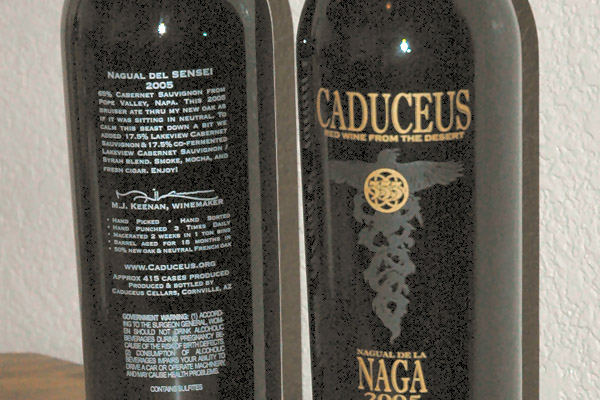
Back in the carefree 90s, if you were a fan of metal, then you definitely listened to Tool.  Formed in 1990, the band’s thundering guitar riffs combined with an avant-garde stage presence made its members into rock royalty with hit songs such as “Sober,” “Stinkfist” and “Schism.” So when I saw that a documentary had been produced about Tool’s eccentric front man, Maynard James Keenan and his second career as an amateur winemaker in northern Arizona, the subject matter definitely peaked my curiosity.

The 2010 film Blood Into Wine, directed by Ryan Page and Christopher Pomerenke sets out to show that Keenan is definitely not your typical celebrity vintner.  Today with everyone from Brangelina to Drew Barrymore buying up lavish vineyards, it has almost become a cliché in Hollywood to own one.  But Tool’s lead singer is clearly different from the rest in that he is no prima donna.  On the contrary, throughout the film, he is very eager to get down on his knees and plant grape vines in the blistering sun.  After all, as his business partner Eric Glomski tells us, the wine business is 90% labor.

Setting up Caduceus Cellars and Merkin Vineyards in the town of Jerome, Arizona, it’s easy to see that Keenan and Glomski are both passionate about being in what they describe as the “frontier of viticulture.”  While many associate the Grand Canyon State with cactus trees and cement that you could fry an egg on, much to my surprise, the situation north of Phoenix is very different.  In fact, during one wine tasting, Keenan tells us that the Verde Valley gets snow in the winter and that he has more problems dealing with the cold frost than he does with the summer heat.

Although a good portion of the film is dedicated to Tool’s front man and trying to figure out what got him so interested in wine, the real star of this film is Glomski. Being an ardent ecologist, he has a gift for telling great stories like how drinking wine furthered his sense of smell and comparing the fermentation process to making tea. Without question, his interviews are what takes the movie to the next level, making it much more than a celebrity-becomes-winemaker narrative.

However, during a tour to promote their latest vintage, we see that the biggest asset for Caduceus Cellars is clearly the star power of its co-owner.  Filming those waiting in line to get their bottles autographed, there appears to be no shortage of Gothic apparel and tattoos bearing the Tool name and logo–not the type of folks you usually associate with wine culture. Obviously with fans more excited to see their rock hero rather than his wine, Glomski jokingly refers to himself as “the guy sitting next to Maynard” during one autograph session at a local grocery store.

But that is what makes Blood Into Wine such a great documentary.  Maynard Keenan’s celebrity status acts as the hook to get people who may have little to no interest in wine to understand more about the subject.  During the film, Keenan willingly shares the spotlight, allowing us to hear from numerous Arizona winemakers about their trials and tribulations in getting the state noticed on the wine map.  And as the viewer gets to see the entire process from the first harvest to when James Suckling of the Wine Spectator judges the final product, you’ll learn a lot more about the industry through this film than a Wine for Dummies DVD.

With a hip soundtrack, colorful characters, excellent camera work and some surprise cameos from Patton Oswalt, Milla Jovovich and Bob Odenkirk, Blood Into Wine serves a great vehicle for getting a crossover audience interested in wine appreciation.


You might also like:

Have you seen Blood Into Wine?

View Results

Loading ... Loading ...
Older Entries
Newer Entries
The object of the Society is to bring together and serve all who believe that a right understanding of good food and wine is an essential part of personal contentment and health and that an intelligent approach to the pleasures and problems of the table offers far greater rewards than the mere satisfaction of appetite.
Andre Simon Wine & Food Society Founder (1933)
© 2025 The International Wine & Food Society (IW&FS) IW&FS
Credits | Privacy | Accessibility