menu
Member Sign In
  • IWFS Homepage
  • Blog Home
  • Forums Home
  • Global Forum
  • Contact Us
Close
  • IWFS Homepage
  • Blog Home
  • Forums Home
  • Global Forum
  • Contact Us
    Member Sign In
  • Blog Home
  • Forum Home
  • Global Forum
FOLOW US

Recent Posts

  • IWFS VANCOUVER BRANCH CHRISTMAS DINNER 2025 A SUCCESS YET AGAIN
  • Ask Sid: Does sugar level in Sparkling wine affect ageability?
  • ‘TIS THE SEASON FOR YOUR FAVOURITE HOLIDAY COOKIE!
  • Ask Sid: Best wine region for Sylvaner?
  • TOP QUALITY ST. JULIEN CHÂTEAU DUCRU-BEAUCAILLOU VERTICAL SHOWS MIXED RESULTS

Archives

  • December 2025
  • November 2025
  • October 2025
  • September 2025
  • August 2025
  • July 2025
  • June 2025
  • May 2025
  • April 2025
  • March 2025
  • February 2025
  • January 2025
  • December 2024
  • November 2024
  • October 2024
  • September 2024
  • August 2024
  • July 2024
  • June 2024
  • May 2024
  • April 2024
  • March 2024
  • February 2024
  • January 2024
  • December 2023
  • November 2023
  • October 2023
  • September 2023
  • August 2023
  • July 2023
  • June 2023
  • May 2023
  • April 2023
  • March 2023
  • February 2023
  • January 2023
  • December 2022
  • November 2022
  • October 2022
  • September 2022
  • August 2022
  • July 2022
  • June 2022
  • May 2022
  • April 2022
  • March 2022
  • February 2022
  • January 2022
  • December 2021
  • November 2021
  • October 2021
  • September 2021
  • August 2021
  • July 2021
  • June 2021
  • May 2021
  • April 2021
  • March 2021
  • February 2021
  • January 2021
  • December 2020
  • November 2020
  • October 2020
  • September 2020
  • August 2020
  • July 2020
  • June 2020
  • May 2020
  • April 2020
  • March 2020
  • February 2020
  • January 2020
  • December 2019
  • November 2019
  • October 2019
  • September 2019
  • August 2019
  • July 2019
  • June 2019
  • May 2019
  • April 2019
  • March 2019
  • February 2019
  • January 2019
  • December 2018
  • November 2018
  • October 2018
  • September 2018
  • August 2018
  • July 2018
  • June 2018
  • May 2018
  • April 2018
  • March 2018
  • February 2018
  • January 2018
  • December 2017
  • November 2017
  • October 2017
  • September 2017
  • August 2017
  • July 2017
  • June 2017
  • May 2017
  • April 2017
  • March 2017
  • February 2017
  • January 2017
  • December 2016
  • November 2016
  • October 2016
  • September 2016
  • August 2016
  • July 2016
  • June 2016
  • May 2016
  • April 2016
  • March 2016
  • February 2016
  • January 2016
  • December 2015
  • November 2015
  • October 2015
  • September 2015
  • August 2015
  • July 2015
  • June 2015
  • May 2015
  • April 2015
  • March 2015
  • February 2015
  • January 2015
  • December 2014
  • November 2014
  • October 2014
  • September 2014
  • August 2014
  • July 2014
  • June 2014
  • May 2014
  • April 2014
  • March 2014
  • February 2014
  • January 2014
  • December 2013
  • November 2013
  • October 2013
  • September 2013
  • August 2013
  • July 2013
  • June 2013

Meta

  • Log in
  • Entries feed
  • Comments feed
  • WordPress.org

Archive for 2015

Older Entries
Newer Entries

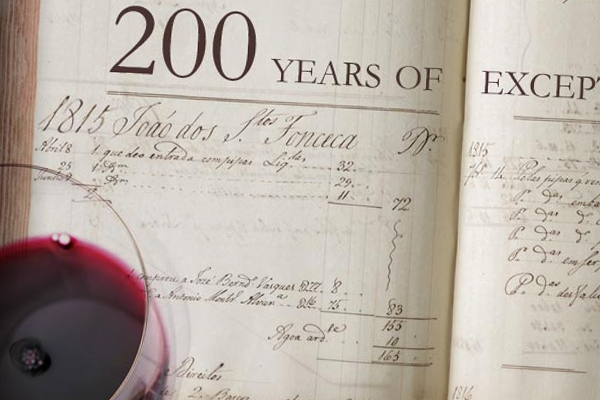
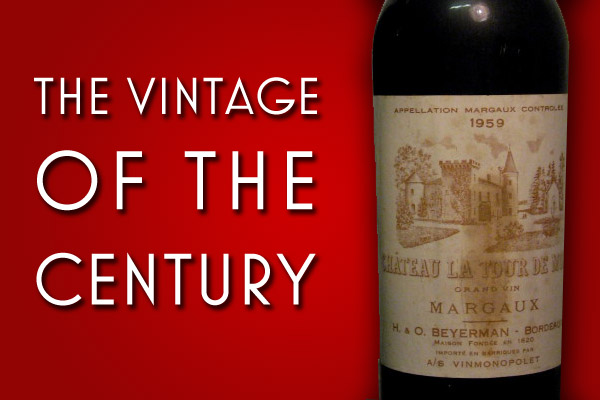
The Vintage of the Century: Revisiting the impact of 1959 Bordeaux

September 4th, 2015 by Joseph Temple

1959 Bordeaux: the vintage of the century

By Joseph Temple

“From the Golden Slope of Burgundy to the chateaux of Bordeaux, 1959 will be remembered not as the year of De Gaulle and Algeria but as the year of the Great Wine,” declared Time magazine. “A boon to the grapes, and not only has it been a great year in quality, but in quantity as year,” wrote the influential humorist Art Buchwald. With an exceptional summer, it appeared that nineteen fifty-nine was turning into something truly remarkable across the vineyards of Bordeaux. And brilliantly capitalizing on all of this free publicity, French winemakers ceremoniously dubbed it “The Vintage of the Century,” a title that unleashed a wine renaissance throughout the United States.

For the Bordelais, the good news couldn’t have come at a better time. The previous year had produced a small harvest and the year before was so bad that France was actually forced to import wine. In terms of quality, the vintages of the late 1950s were so awful that many in the newly created Fifth Republic chose beer instead of wine when visiting the local watering hole. Back in America, a young enthusiast named Robert M. Parker Jr. concurred when tasting a bottle of 1957 Château Lafite-Rothschild. Remarking it “tastes like cat piss,” Parker learned that with no rating system, first-growth Bordeaux’s like Lafite could easily coast on their reputation despite having such a subpar product.

But with news about the vintage of the century spreading like wildfire, American wine drinkers finally decided to enter the marketplace in a big way. During the 1950s, as oenophile culture started to gain steam on the east coast, the train of thought was that French wine was the undisputed gold standard. And with a devaluation of the franc ordered by Charles De Gaulle, U.S. dollars could now snatch up a sizable chunk of Bordeaux’s exports, which for seven and a half centuries had been dominated by the British.

For those who took advantage of the situation, they would not be disappointed. Michael Broadbent described the 1959 Château Lafite as “one of the best-ever Lafites … mammoth. And superb” while calling the Château Latour: “Glorious … perfect enough to keep on maturing for another quarter century.” According to Parker, “The wines do display the effects of having been made in a class, hot, dry year, with just enough rain to keep the vineyards from being stressed. They are full bodied, extremely alcoholic, and opulent, with high degrees of tannin and extract.”

So long before terms like ‘vintage of the century’ had been used ad nauseam, the marketing slogan proved to be a resounding success in places like New York and Washington D.C. By 1961, the price of first-growths had more than quadrupled with Americans for the first time becoming the principal buyers. Adding to these soaring prices was a futures market—something that would have been unheard of in the United States a decade before—making many British customers irate. Describing the mood in England during this time, author Elin McCoy writes, “The international market was now being built on these high prices, and if the Americans dropped out it would surely crash. Who else but the Americans would pay so much money for wine?”

Looking back at the craze over the vintage of the century, many wine writers believe that 1959 didn’t live up to its hype, especially when compared to 1961. However, no one can deny the impact that this vintage had on buying habits in the United States, signaling a seismic shift in the export market for French wines that is still felt to this day.

Sources:

Broadbent, Michael. Michael Broadbent’s Pocket Vintage Wine Companion. London: Anova Books, 2007.
Buchwald, Art. (1959, Oct 7). Buchwald, The Boor of Bordeaux Learns How To Swish And Spit. The Miami News. Retrieved from http://news.google.com.
Harding, Julia. The Oxford Companion to Wine. Oxford: Oxford University Press, 2015.
London Observer Service. (1959, Oct 9). 1959 – Century’s Best Vintage.
McCoy, Elin. The Emperor of Wine: The Rise of Robert M. Parker Jr., and the Reign of American Taste. New York: HarperCollins, 2005.
Parker, Robert M. Bordeaux: A Consumer’s Guide to the World’s Finest Wines. New York: Simon & Schuster, 2013.
Robards, Terry. (1982, July 11). Wine; A Vintage of the Century Revisited. The New York Times. Retrieved from http://nytimes.com.
Unknown Author. (1959, Oct 19). Business: A Votre Sant. Time Magazine. Retrieved from http://content.time.com.


You might also like:

Have you tasted 1959 Bordeaux?

View Results

Loading ... Loading ...

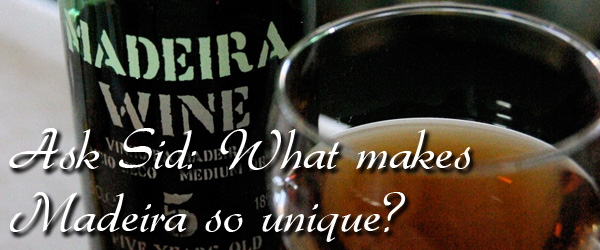
Ask Sid: What makes Madeira so unique?

September 3rd, 2015 by Joseph Temple
Ask your question here The International Wine & Food Society

Ask Sid: What makes Madeira so unique?
“Madeira Wine” by y kawahara – originally posted to Flickr as Madeira Wine. Licensed under CC BY 2.0 via Wikimedia Commons.

Question: What are the main factors that make Madeira so unique from other wines?

Answer: Two main ones – the estufado system of heat maturation + the specific terroir of the volcanic soil on which the grapes are grown.


You might also like:

Do you like to drink Madeira?

View Results

Loading ... Loading ...

B.C. Bottle Shock

August 31st, 2015 by Sidney Cross

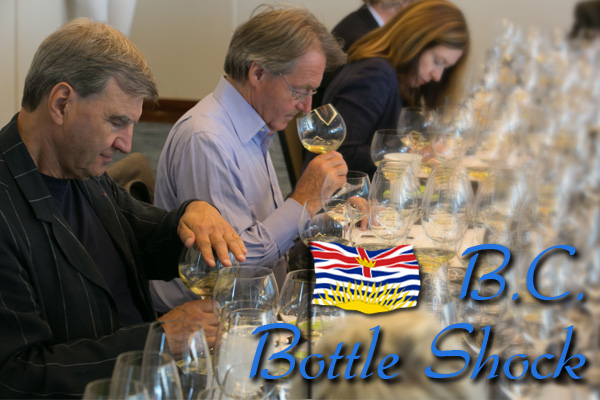
B.C. Bottle ShockPhotos Credit: Vision Events Photography
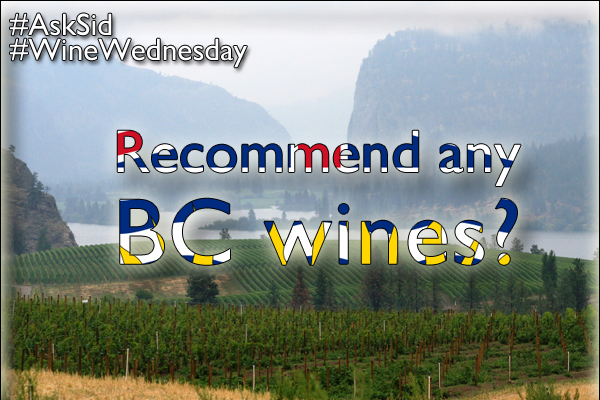
As regular readers of this Blog already know the British Columbia wines have improved by leaps and bounds in the last few years. Helped somewhat by global warming, winemaking experience and other vineyard factors there are current releases that are outstanding. The recognition of some unique key factors has contributed to this excellence and the distinct terroir that is evolving: good levels of natural acidity and tannins for the intense pure fruit flavours (including complex sage, tree fruits, herbs, earth) from long sunlight hours with dramatic swings between warm days and cool nights. Though far north at 49-50 degrees latitude many vineyards enjoy the benefits of this unusual hot dry desert short growing season which is so conducive to sustainable farming.

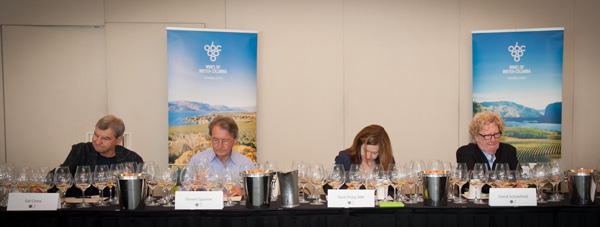
Therefore the timing was appropriate to test this theory on the visit this August for a week to the Okanagan Valley & Vancouver by world recognized wine expert Steven Spurrier consulting editor of Decanter and chair of their World Wine Awards with a “Judgment of BC” tasting. It also celebrated the 25th anniversary of BC VQA (Vintner’s Quality Alliance) a guarantee that the wine is made from 100% BC grown grapes. They now are promoting this with “BC VQA. Or You Could Call it BC DNA”. Back in 1976 Steven organized the historic “Judgment of Paris” comparing California wines against French. Seventeen acknowledged wine “pros” who know BC wines including your scribe accepted the invitation to rank blind 12 chardonnay and 12 syrah in separate flights each containing 6 from BC and 6 International benchmarks. Wine educator DJ Kearney (@djwines) the curator of this event together with Wines of British Columbia (www.winebc.com; @WineBCdotcom) did an outstanding orchestration of this tasting using the best wine glasses, serving at perfect wine temperatures, white table mats, natural light, adequate time to study the wine in the glass etc. Well done.

CHARDONNAY: A controversial choice because nearly every wine region is making international chardonnay but some regions are delivering a very special recognizable terroir. BC has some high quality examples but not enough distinct unique style to differentiate it from most other chardonnay around the world. Would prefer showing the success of Riesling (plantings from 1978), Chenin Blanc (plantings from 1968), Rhone blends (Viognier, Rousanne, Marsanne) or even the most planted variety Pinot Gris – which sometimes can be a little boring.  The results with no BC chardonnay in the top 5 was not a surprise to me.

SYRAH: A very good choice because certainly syrah is impressive from BC. Magically combines both characteristics of rich ripe intense fruit from warmer climate regions together with fresher, black pepper, gamey, floral, and the more balanced style of cooler regions. Not unexpected to me with the results ranking first, fourth & fifth and showing clearly that BC Syrah is world class among its peers. Cabernet Franc, Pinot Noir, Gamay Noir, or even the most planted variety Merlot would be good choices for hopefully the second edition of this event. Steven tried many pinot noir wines during his Okanagan Valley visit and was impressed with “the elegance and the true Burgundian style of this variety”.  Yes Foxtrot Vineyards 2012 and others are really singing. He also noted ” For me wine is the three “P’s”: the Place, the People, and the Product. British Columbia ticks all these boxes with exuberance, elegance and conviction”. BC Bottle Shock? Perhaps. For some yes. For me no. The results of both blind tastings are as follows:

CHARDONNAY RANKINGS:

  1. Soumah Single Vineyard 2013 Yarra Valley Victoria $27 – 12.7 degrees alcohol Bottled November 2013 Poured 4th
  2. Kumeu River Hunting Hill 2012 Auckland New Zealand $35 – 13.5 Poured 12th
  3. Hamilton Russell 2014 Hemel-en-Aarde South Africa $40 – 13. Poured 10th
  4. Jean-Marc Brocard Chablis 1er Cru Montmains 2012 France $45 – 13. Poured 1st
  5. Bouchard Pere Meursault 1er Cru Genevrieres 2011 France $86 – 13.5 Poured 5th
  6. Blue Mountain Reserve 2012 Okanagan Valley BC $30 – 13.5 Poured 2nd
  7. Tantalus 2012 $24 – 14. Poured 6th
  8. Robert Mondavi Reserve 2012 Carneros California $44 – 13.5 Poured 8th
  9. Mission Hill Perpetua 2012 Okanagan Valley BC $50 Poured 9th
  10. (Tie for 9th) Quails’ Gate Rosemary’s Block 2013 Okanagan Valley BC $30 – 13. Poured 11th
  11. Meyer Family Micro Cuvee 2012 Okanagan Valley BC $65 -13.5 Poured 3rd
  12. Haywire Canyonview 2013 $25 – 14. Poured 7th

SYRAH RANKING:

  1. CC Jentsch 2013 Okanagan Valley BC $30 – 13.8  Also just won Platinum at National Wine Awards 2015 Poured 5th
  2. Langmeil Orphan Bank 2012 Barossa South Australia $68 – 14.5 Vines 70 years old Poured 4th
  3. Domaine Vincent Paris Cornas Granit 60 2013 Rhone France $66 – 13. Poured 6th
  4. Nichol Okanagan Valley BC $40 – 12.8 Poured 1st
  5. Le Vieux Pin Cuvee Classique 2013 Okanagan Valley BC $50 14.1 Poured 11th
  6. Ojai 2011 Santa Barbara California $30 Poured 3rd
  7. Jackson-Triggs Sunrock 2010 Okanagan Valley BC $30 – 13.5 Poured 7th
  8. Orofino Scout Vineyard 2012 Similkameen Valley BC $29 – 14.7 Poured 12th
  9. JL Chave Crozes-Hermitage Silene 2012 Rhone France $40 – 13. Poured 2nd
  10. Tyrrell Vat 9 2011 Hunter Valley New South Wales $49 – 12.9 Poured 10th
  11. Laughing Stock 2013 Okanagan Valley BC $38 – 14.2 Poured 8th
  12. K Vintners The Beautiful 2012 Walla Walla Washington $70 – 14.5 Poured 9th

Judgement of BC wine tasting

(L-R) Sid Cross, Steven Spurrier, Barb Philip MW, David Scholefield.


You might also like:

Have you ever tasted B.C. wine?

View Results

Loading ... Loading ...

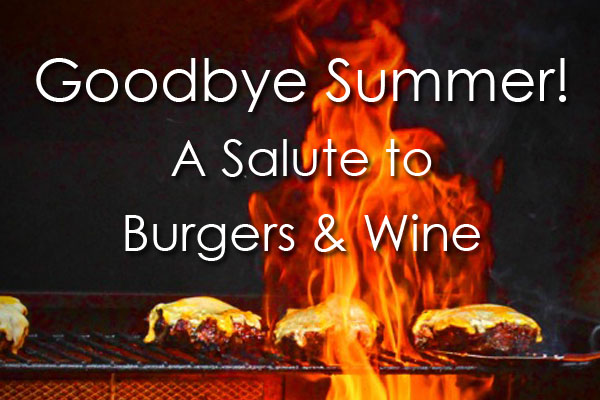
Goodbye Summer! A Salute to Burgers and Wine

August 28th, 2015 by Joseph Temple

6 wine and burger pairings

By Joseph Temple

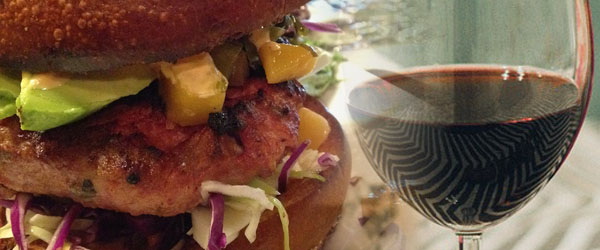
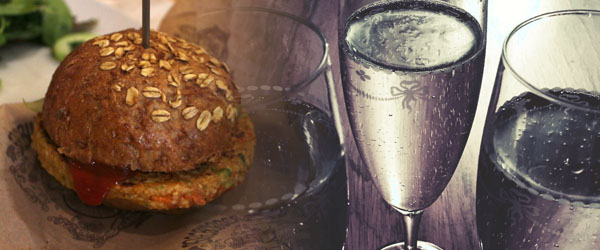
With the Labor Day weekend just around the corner, fellow foodies and BBQ aficionados alike will be flocking to get in their last big outdoor party off with a bang!  Beer might be the go-to beverage for the upcoming tailgating season, but why not celebrate the last days of summer with these wine and hamburger pairings?  Bon Appetit!


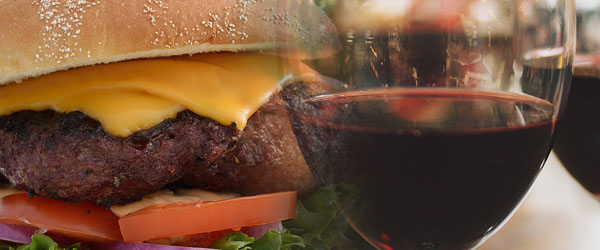
Beef Burger and Zinfandel

1. Beef Burger and Zinfandel
blank

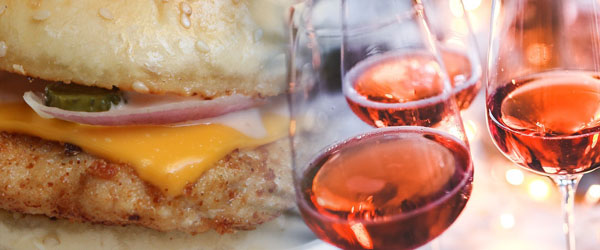
Chicken Burger and Rosé

2. Chicken Burger and Rosé
blank

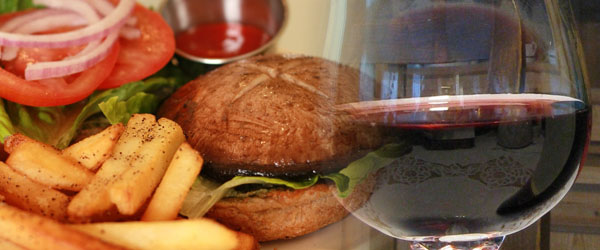
Portobello Burger and Pinot Noir
By SweetOnVeg [CC BY 2.0], via Wikimedia Commons

3. Portobello Burger and Pinot Noir
blank

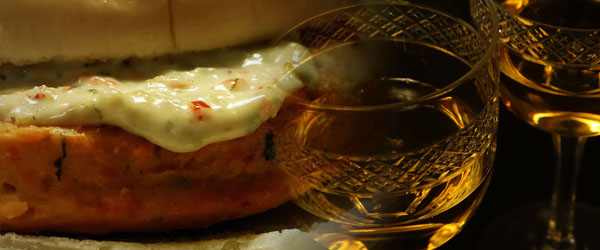
Salmon Burger and Chardonnay
By Kyle Lam [CC BY-SA 2.0], via Wikimedia Commons

3. Salmon Burger and Chardonnay
blank

Pork Burger and Beaujolais

5. Pork Burger and Beaujolais
blank

Pork Burger and Chardonnay

6. Quinoa Veggie Burger and Sparkling Wine
blank


You might also like:

What pairing do you like the best?

View Results

Loading ... Loading ...

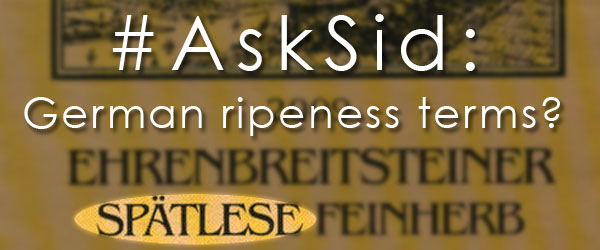
Ask Sid: German ripeness terms?

August 26th, 2015 by Joseph Temple
Ask your question here The International Wine & Food Society

Ask Sid: German ripeness wine terms

Question: I find the German sweetness levels confusing. Would you explain the simple meaning of the terms Spatlese, Auslese, Beerenauslese, and Trockenbeeranauslese on the label.

Answer: You are right there is an increasing sweetness level based on ripeness or must weight (Oechsle) but the terms really mean this:

Spätlese: Sweeter than Kabinett but made from late gathered grapes.

Auslese: Made from selected perfectly ripe bunches of grapes.

Beerenauslese: Made from selected grapes from the ripest bunches.

Trockenbeerenauslese: Made from single grapes which have been left on the vines until they have shrivelled to almost raisins.


You might also like:

Were you aware of these terms?

View Results

Loading ... Loading ...
Older Entries
Newer Entries
The object of the Society is to bring together and serve all who believe that a right understanding of good food and wine is an essential part of personal contentment and health and that an intelligent approach to the pleasures and problems of the table offers far greater rewards than the mere satisfaction of appetite.
Andre Simon Wine & Food Society Founder (1933)
© 2025 The International Wine & Food Society (IW&FS) IW&FS
Credits | Privacy | Accessibility