menu
Member Sign In
  • IWFS Homepage
  • Blog Home
  • Forums Home
  • Global Forum
  • Contact Us
Close
  • IWFS Homepage
  • Blog Home
  • Forums Home
  • Global Forum
  • Contact Us
    Member Sign In
  • Blog Home
  • Forum Home
  • Global Forum

Follow Us

Recent Posts

  • OUR 2002 RED BURGUNDY VERTICAL IS AGING WELL, SHOWCASING REFINED PRECISION WITH TERROIR-DRIVEN CHARM
  • Ask Sid: Thoughts of Sid Cross on the Judgement of Paris historic wine tasting at the 50th Anniversary?
  • EDUCATIONAL #AUSSIEWINE SEMINAR “CLASSIC AND CONTEMPORARY AUSTRALIA” BY KNOWLEDGEABLE MARK DAVIDSON WAS A BIG HIT AT @VANWINEFEST
  • Ask Sid: Was it 50 years since California bested France in a Paris wine tasting?
  • HORIZONTAL TASTING OF RED BORDEAUX 2015 SHOWS FRUIT FLESHINESS WITH VARIABILITY + OUTSTANDING BENTO BOX

Archives

  • April 2026
  • March 2026
  • February 2026
  • January 2026
  • December 2025
  • November 2025
  • October 2025
  • September 2025
  • August 2025
  • July 2025
  • June 2025
  • May 2025
  • April 2025
  • March 2025
  • February 2025
  • January 2025
  • December 2024
  • November 2024
  • October 2024
  • September 2024
  • August 2024
  • July 2024
  • June 2024
  • May 2024
  • April 2024
  • March 2024
  • February 2024
  • January 2024
  • December 2023
  • November 2023
  • October 2023
  • September 2023
  • August 2023
  • July 2023
  • June 2023
  • May 2023
  • April 2023
  • March 2023
  • February 2023
  • January 2023
  • December 2022
  • November 2022
  • October 2022
  • September 2022
  • August 2022
  • July 2022
  • June 2022
  • May 2022
  • April 2022
  • March 2022
  • February 2022
  • January 2022
  • December 2021
  • November 2021
  • October 2021
  • September 2021
  • August 2021
  • July 2021
  • June 2021
  • May 2021
  • April 2021
  • March 2021
  • February 2021
  • January 2021
  • December 2020
  • November 2020
  • October 2020
  • September 2020
  • August 2020
  • July 2020
  • June 2020
  • May 2020
  • April 2020
  • March 2020
  • February 2020
  • January 2020
  • December 2019
  • November 2019
  • October 2019
  • September 2019
  • August 2019
  • July 2019
  • June 2019
  • May 2019
  • April 2019
  • March 2019
  • February 2019
  • January 2019
  • December 2018
  • November 2018
  • October 2018
  • September 2018
  • August 2018
  • July 2018
  • June 2018
  • May 2018
  • April 2018
  • March 2018
  • February 2018
  • January 2018
  • December 2017
  • November 2017
  • October 2017
  • September 2017
  • August 2017
  • July 2017
  • June 2017
  • May 2017
  • April 2017
  • March 2017
  • February 2017
  • January 2017
  • December 2016
  • November 2016
  • October 2016
  • September 2016
  • August 2016
  • July 2016
  • June 2016
  • May 2016
  • April 2016
  • March 2016
  • February 2016
  • January 2016
  • December 2015
  • November 2015
  • October 2015
  • September 2015
  • August 2015
  • July 2015
  • June 2015
  • May 2015
  • April 2015
  • March 2015
  • February 2015
  • January 2015
  • December 2014
  • November 2014
  • October 2014
  • September 2014
  • August 2014
  • July 2014
  • June 2014
  • May 2014
  • April 2014
  • March 2014
  • February 2014
  • January 2014
  • December 2013
  • November 2013
  • October 2013
  • September 2013
  • August 2013
  • July 2013
  • June 2013

Meta

  • Log in
  • Entries feed
  • Comments feed
  • WordPress.org

Author Archive

Older Entries
Newer Entries

10 tips for cleaning wine glasses and decanters

June 27th, 2014 by Joseph Temple

10 tips for cleaning wine glasses and decanters
By Joseph Temple

After inviting friends and family over for a special occasion, no task can be more daunting than having to clean all of your dishes, especially glassware.  Whether it’s tumblers, beer mugs or your best crystal, each style seems to have its own set of rules – especially when it comes to wine glasses.  Some are dishwasher safe and some are not. Many have narrow necks, making them a challenge to keep spotless and residue-free.  And if you decant your wine, cleaning the odd-shaped vessel is a formidable task all by itself.

But if you follow these ten helpful tips, you can keep your glasses and decanters sparkling and odor-free for all future dinner parties:

FOR DISHWASHERS:
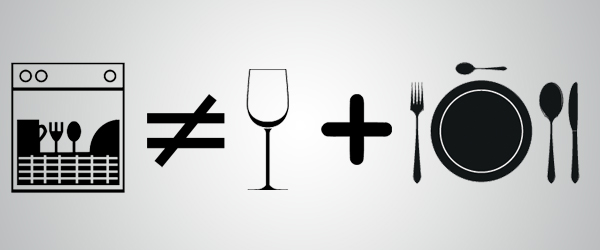
Don't wash wine glasses with tableware

1.  If the wine glasses you use are dishwasher safe, clean them separately from all plates, knives, forks, spoons and any other tableware.  With their own wash, you’ll prevent tiny food particles from sticking to the glass.  And set it to the shortest possible cycle without adding detergent.  The use of cleansers will leave both residue and a small odor impacting the wine’s taste over time.
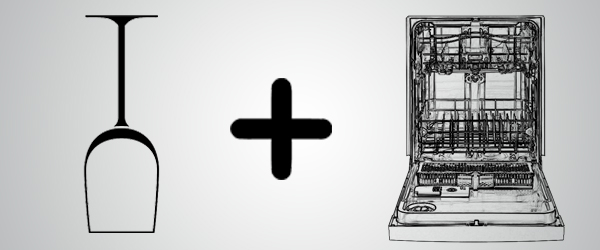
Wash wine glasses upside down

2.  Place the bowl of the glass upside down so that it doesn’t collect any water during the rinse cycle.  Once completed, open the door of the dishwasher to let out all of the humidity, which can tarnish your glasses over time.
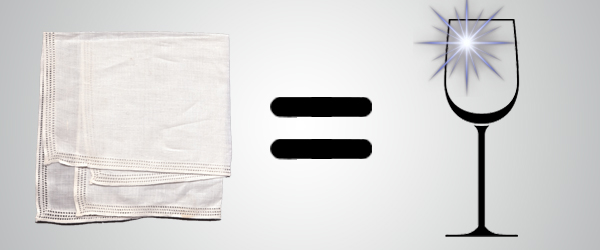
Dry wine glasses with a lint free linen cloth

3.  Dry each glass with a lint-free linen cloth.  Letting them drip-dry will smear it with water spots.

FOR WASHING BY HAND:
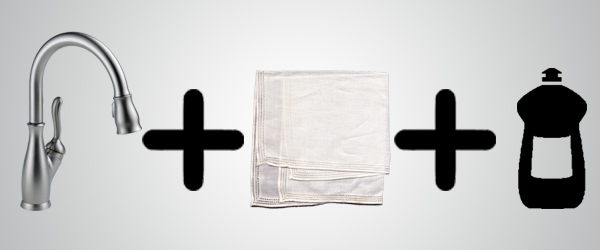
Washing wine glasses by hand

4.  First, fill your sink with warm water and apply soap to a lint-free cloth to wash.  Rinse each glass under lukewarm water and smell the bowl after to make sure all the detergent has been removed.

Put your wine glass over boiling water

5.  If you want to take it one step further and make your glasses shine like they’re in a TV commercial, try steaming them by placing the glass over a pot of boiling water before drying.

Never wash a wine glass by holding the stem

6.  When drying a wine glass, never hold it by the stem.  Doing so cannot only break the glass but also severely cut your hand.  Instead, hold it by the bowl and use a wooden spoon wrapped in a linen cloth to clean the bottom as needed.  Forcing the cloth to the bottom by hand can break the glass as well.

FOR DECANTERS:
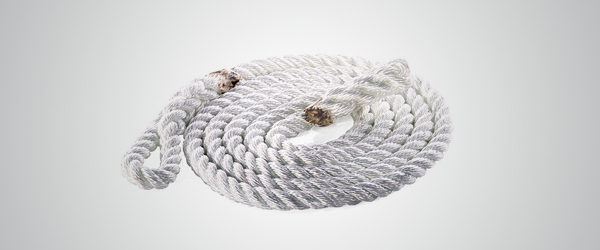
Feed a nylon rope down a decanter to clean it

7.  After rinsing it out with warm water, wrap a damp linen cloth around a nylon rope and feed it inside the decanter to clean out the bottom.  For drying, make sure the cloth you use is also arid.
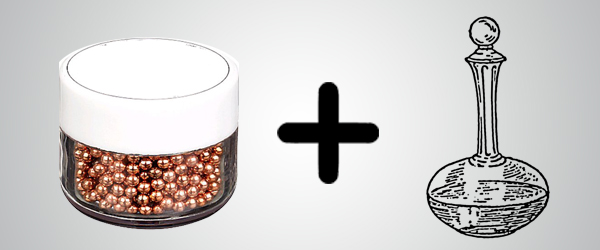
Use copper balls to clean decanters

8.  To remove those stubborn stains, place copper balls or lead shots into the decanter and shake them around.

PROPER STORAGE:

Avoid storing wine glasses in cupboards and cardboard boxes

9.  Avoid storing your wine glasses in cardboard boxes or inside closed cupboards.  Glasses can absorb all sorts of smells that alters the taste of the wine so keep them upright and on an open shelf or rack so air can circulate around them.

Use cold water on a wine glass to eliminate odor

10.  If you think your glasses have picked up any odors, either rinse them in cold water or pass them through the air quickly several times.

How do you clean your wine glasses?

View Results

Loading ... Loading ...

Ask Sid: What is a long finish?

June 25th, 2014 by Joseph Temple

In wine, what is a long finish?

Question: What is a “long finish”?

Answer: Easy. A long finish is just what it says – lingering flavours of food or especially wine that you can still savour for some time after tasting. That distinct aftertaste stays with you. I know people who like eating garlic and tuna but don’t like the strong or fishy lingering aftertaste of those foods. For wine this is usually an admirable thing because it indicates that there is some special intensity and depth there. A long finish is a particularly important factor in assessing the potential for aging of a young fine wine before all the elements are matured together. Generally this is a good characteristic to appreciate and admire but can also be overrated sometimes. For example if you are wanting a light elegant refreshing wine the overall balance will be a more important factor than a long finish. However, for quality more expensive wines from lower yields a long finish is something you are paying extra dollars for so be sure to take the time to enjoy it.

Do you prefer a wine with a long finish?

View Results

Loading ... Loading ...

Ask Sid Cross about wine and food

Going Viral in the 19th Century: Champagne Mercier and the 1889 World’s Fair

June 20th, 2014 by Joseph Temple

Champagne Mercier and the 1889 World's Fair

By Joseph Temple

The year is 1889 and you are strolling down the streets of Paris for the historic Exposition Universelle.   Looking up, you see the Eiffel Tower, the largest man-made structure on the planet making its grand debut at the fair.  Further down the Champ de Mars, you enter the magnificent Galerie des Machines, the world’s largest vaulted building.  You’re thinking that nothing could top this…

Then suddenly, a massive 20-ton champagne barrel is being hauled through the streets by 24 bulls and 18 horses.  It’s so big that five nearby buildings had to be demolished just so it could get through.  A gigantic crowd has gathered around this barrel that contains the equivalent of 200,000 bottles of bubbly.  And plastered across this entire event is the name: Champagne Mercier.

In an era before cell phone cameras and YouTube, it is a spectacle that truly goes viral.  Across the globe, newspaper after newspaper covers the event, giving Eugene Mercier, the mastermind behind it all millions of dollars in free publicity.  With approximately thirty million potential customers attending the exposition and some stiff competition from the other champagne houses, both his name and his brand stands out from the crowd.

Little do people know that this marvel has been in the works for nearly twenty years.  Beginning in 1870, Mercier conducts studies on the feasibility of this mammoth project with the first of 150 oak trees needed to make the barrel being cut down in 1872.  Adding to its visual appeal, it is decorated with customized sculptures by Gustave Navlet, a famous French artist. And finally, 1,600 hectoliters of champagne fills the barrel in 1887, marking the end of its construction.

Champagne Mercier barrel

Moving it from Mercier’s headquarters in the Champagne region of France to the streets of Paris takes an exhausting three weeks but the payoff is enormous.  Historian Kolleen M. Guy writes, “the transportation of this barrel … received coverage in newspaper from Hungary to San Francisco.  For three weeks, press reports focused on the progress of the barrel, keeping “champagne” and “Mercier” in the public eye.  Even those who could not afford champagne could delight in these stories and participate through name identification and popular imagery.”

And for its grand arrival, the streets are crowded with factory employees leaving work early and Parisian children given an hour off school to watch this historic event.  With the whole world mesmerized by this daunting structure, Eugene Mercier succeeds in pulling off perhaps the greatest publicity stunt in the history of advertising.

Ask Sid: Why are high acidity wines so good with food?

June 18th, 2014 by Joseph Temple

Why are high acidity wines so good with food?

Question: Why are high acidity wines so good with food?

Answer: Not all high acid wines are everyone’s piece of cake especially if you enjoy a softer style to one that is quite tart and vibrant. However, you are correct in my opinion that they generally work very well when matched with food. Probably the most important reason is that they cleanse the palate brilliantly and refresh it every time before your next bite. This is particularly so when paired with heavier, oily or fatty foods. Compare lemon with fish. They also seem to work better with more acidic items like tomato, asparagus, or even artichoke, vinegar and salad dressings. Less acidic wines can be overwhelmed by highly acidic foods. Oysters with Chablis or Muscadet please! Sparkling wines including Champagne usually have good acidity and therefore work well with many food dishes. So do sauvignon blanc or chenin blanc especially from the Loire or German riesling but all those varieties work from other regions too. Barbera with high acidity is a lovely food wine as are many other lighter reds. As a general rule of thumb a wine produced in a cooler climate is likely to have more natural acidity than one from a hotter climate.

Ask Sid Cross about wine and food

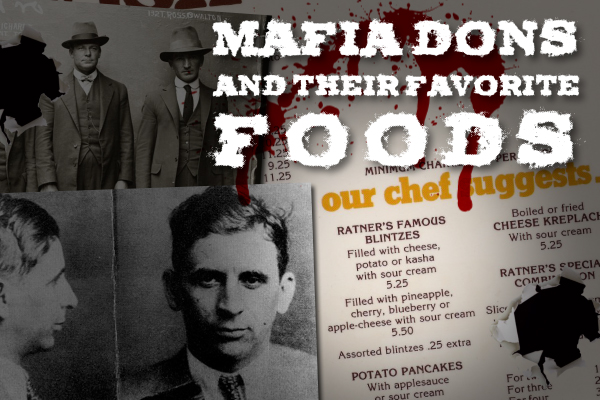
Mafia Dons and their favorite foods

June 13th, 2014 by Joseph Temple

Mafia favorite food
By Joseph Temple

For most of us, our knowledge of organized crime comes largely from movies and television.  Films like The Godfather and HBO’s The Sopranos are etched in stone as pop-culture landmarks while terms such as Consigliere, Capo and La Cosa Nostra are now in the lexicon of wise guys and civilians alike.

And of course, an element that runs constant through all of these mafia flicks is food.  Who can forget Paul Sorvino’s character in GoodFellas slicing garlic cloves razor-thin in preparation for a big prison meal alongside Ray Liotta?  Or how about all those big family dinners at the Soprano household?

But what dishes did the real crime bosses enjoy?  Was it more than just a stereotypical straw-wrapped Chianti bottle served with some macaroni and gravy (i.e. spaghetti and tomato sauce)?  Below are five dons and their favorite foods–some of which may surprise you.

Al Capone Spaghetti and Walnut Sauce
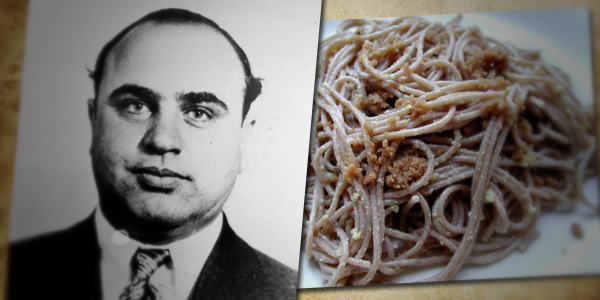
1.    Al Capone – Spaghetti with Walnut Sauce

Al Capone, the most iconic and ruthless gangster or the 1920s and early 1930s loved his spaghetti.  At his Prairie Avenue home on Chicago’s South Side, he gladly traded his fedora hat for an apron, preparing extra long noodles with a glass of prohibition-era wine in his hand.  However, his favorite dish wasn’t served with traditional tomato gravy, but with walnut sauce – a simple oil and bread [crumb] base with toasted nuts and a smattering of cheese.  Interestingly it was a more traditional recipe that, after Capone’s death, his sister Maffie sold to Ragu, who used it to make their very first spaghetti sauce.

Lucky Luciano Kosher Pickles
2.   
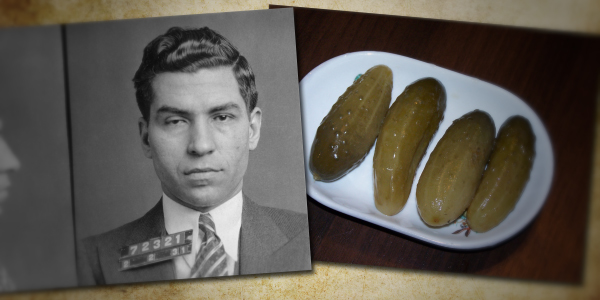
Lucky Luciano – Kosher Green Pickles

Charles “Lucky” Luciano, the architect of today’s modern-day mafia differed from the old-school bosses known as “Mustache Petes” by welcoming both Jews and the Irish into the world of organized crime.  Battling against a strict 100% Italian organization with a centralized command, the resulting Castellammarese War of the early 1930s drastically changed the mob’s structure into a council of decentralized families with Luciano at the helm.

Having a close relationship to Jewish gangsters like Meyer Lansky and Benjamin “Bugsy” Siegel, its no surprise that Luciano’s favorite food were Kosher Green Pickles – a Jewish delicacy served alongside corn beef sandwiches on the mean streets of New York City.  In fact, when Lansky and U.S. Naval Intelligence visited Luciano’s prison cell to enlist his help in the war effort by monitoring NYC’s ports for any possible sabotage (and later, assisting with the Allied invasion of Sicily), they brought him a hamper of food containing, among other things, his favorite pickles.

Meyer Lansky Cheese Blintzes
3. Meyer Lansky – Cheese Blintzes

Meyer Lansky, the mafia kingpin who transformed Cuba into a gambling and tourist mecca during the 1950s began his criminal career in the crowded ghettos of New York City.  During his time in the Big Apple, Lansky was a well-known patron at Ratner’s, a kosher dairy restaurant on the lower east side.  Along with Luciano and Siegel, the three plotted together while “The Little Man” would chow down on his favorite dish – Cheese Blintzes – usually a sweet cheese mixture wrapped in a thin delicate pancake, often served with fruit.

Carlos Marcello Spaghetti
4.   
Carlos Marcello – Spaghetti and Meatballs

Carlo Marcello, the ruthless New Orleans mafia chieftain who confessed to having President John F. Kennedy assassinated liked to fuse his Sicilian culinary heritage with some iconic Crescent City cuisine.  Among his preferred dishes were oysters, shrimp, fettuccine and his personal favorite – spaghetti and meatballs.  What many might not know is that Marcello’s personal chef was Provino Mosca, who worked exclusively for Al Capone during his time as the undisputed crime boss of Chicago.  According to historian Stefano Vaccara, the Southern Mafioso hired him on the exact day that Capone was arrested and sentenced for tax evasion.

John Gotti Cracker Barrel
5.   
John Gotti – Cracker Barrel

John Gotti, the “Dapper Don”, earned a reputation for being both ruthless and stylish during his tenure as boss of one New York’s most powerful crime families.  But while he enjoyed wearing only the finest Italian suits in front of the cameras, his favorite food will surprise you, as it doesn’t live up to the high standards with which he is often associated.

According to Jeffrey Goldberg of Slate.com, Gotti enjoyed dining at the Cracker Barrel restaurant chain, chowing down on chicken, biscuits and chicken-fried steak.  Confirming the story, a source close to Gotti replied, “Look, how much Italian food can you eat?”


You might also like:

Favorite food from this posting?

View Results

Loading ... Loading ...
Older Entries
Newer Entries
The object of the Society is to bring together and serve all who believe that a right understanding of good food and wine is an essential part of personal contentment and health and that an intelligent approach to the pleasures and problems of the table offers far greater rewards than the mere satisfaction of appetite.
Andre Simon Wine & Food Society Founder (1933)
© 2026 The International Wine & Food Society (IW&FS) IW&FS
Credits | Privacy | Accessibility