menu
Member Sign In
  • IWFS Homepage
  • Blog Home
  • Forums Home
  • Global Forum
  • Contact Us
Close
  • IWFS Homepage
  • Blog Home
  • Forums Home
  • Global Forum
  • Contact Us
    Member Sign In
  • Blog Home
  • Forum Home
  • Global Forum

Follow Us

Recent Posts

  • OUR 2002 RED BURGUNDY VERTICAL IS AGING WELL, SHOWCASING REFINED PRECISION WITH TERROIR-DRIVEN CHARM
  • Ask Sid: Thoughts of Sid Cross on the Judgement of Paris historic wine tasting at the 50th Anniversary?
  • EDUCATIONAL #AUSSIEWINE SEMINAR “CLASSIC AND CONTEMPORARY AUSTRALIA” BY KNOWLEDGEABLE MARK DAVIDSON WAS A BIG HIT AT @VANWINEFEST
  • Ask Sid: Was it 50 years since California bested France in a Paris wine tasting?
  • HORIZONTAL TASTING OF RED BORDEAUX 2015 SHOWS FRUIT FLESHINESS WITH VARIABILITY + OUTSTANDING BENTO BOX

Archives

  • April 2026
  • March 2026
  • February 2026
  • January 2026
  • December 2025
  • November 2025
  • October 2025
  • September 2025
  • August 2025
  • July 2025
  • June 2025
  • May 2025
  • April 2025
  • March 2025
  • February 2025
  • January 2025
  • December 2024
  • November 2024
  • October 2024
  • September 2024
  • August 2024
  • July 2024
  • June 2024
  • May 2024
  • April 2024
  • March 2024
  • February 2024
  • January 2024
  • December 2023
  • November 2023
  • October 2023
  • September 2023
  • August 2023
  • July 2023
  • June 2023
  • May 2023
  • April 2023
  • March 2023
  • February 2023
  • January 2023
  • December 2022
  • November 2022
  • October 2022
  • September 2022
  • August 2022
  • July 2022
  • June 2022
  • May 2022
  • April 2022
  • March 2022
  • February 2022
  • January 2022
  • December 2021
  • November 2021
  • October 2021
  • September 2021
  • August 2021
  • July 2021
  • June 2021
  • May 2021
  • April 2021
  • March 2021
  • February 2021
  • January 2021
  • December 2020
  • November 2020
  • October 2020
  • September 2020
  • August 2020
  • July 2020
  • June 2020
  • May 2020
  • April 2020
  • March 2020
  • February 2020
  • January 2020
  • December 2019
  • November 2019
  • October 2019
  • September 2019
  • August 2019
  • July 2019
  • June 2019
  • May 2019
  • April 2019
  • March 2019
  • February 2019
  • January 2019
  • December 2018
  • November 2018
  • October 2018
  • September 2018
  • August 2018
  • July 2018
  • June 2018
  • May 2018
  • April 2018
  • March 2018
  • February 2018
  • January 2018
  • December 2017
  • November 2017
  • October 2017
  • September 2017
  • August 2017
  • July 2017
  • June 2017
  • May 2017
  • April 2017
  • March 2017
  • February 2017
  • January 2017
  • December 2016
  • November 2016
  • October 2016
  • September 2016
  • August 2016
  • July 2016
  • June 2016
  • May 2016
  • April 2016
  • March 2016
  • February 2016
  • January 2016
  • December 2015
  • November 2015
  • October 2015
  • September 2015
  • August 2015
  • July 2015
  • June 2015
  • May 2015
  • April 2015
  • March 2015
  • February 2015
  • January 2015
  • December 2014
  • November 2014
  • October 2014
  • September 2014
  • August 2014
  • July 2014
  • June 2014
  • May 2014
  • April 2014
  • March 2014
  • February 2014
  • January 2014
  • December 2013
  • November 2013
  • October 2013
  • September 2013
  • August 2013
  • July 2013
  • June 2013

Meta

  • Log in
  • Entries feed
  • Comments feed
  • WordPress.org

Author Archive

Older Entries
Newer Entries

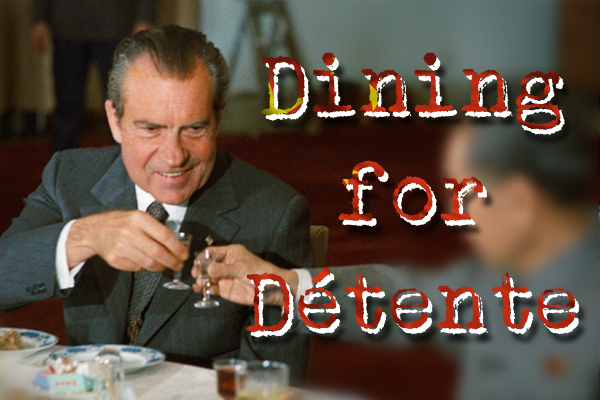
Dining for Détente: The role food played during Nixon’s trip to China

July 18th, 2014 by Joseph Temple

Dining for Détente: The role food played in Nixon's trip to China
By Joseph Temple

In preparation for Richard Nixon’s groundbreaking trip to the People’s Republic of China in 1972, an enormous amount of classified material was created for the U.S. diplomatic team traveling with the president.  National Security Advisor Henry Kissinger briefed Nixon extensively during the months leading up to the visit, going over every detail in this high stakes game of diplomatic chess with Premier Chou En-lai.  And while the biggest issues during these talks would be over Taiwan and Indochina, in retrospect, the most important briefings the president and his team received were the ones regarding the food they were about to eat.

“The Chinese take great pride in their food,” declared one memo.  Another recommended that Nixon stroke their egos at the dinner table as “they react with much pleasure to compliments about the truly remarkable variety of tastes, textures and aromas in Chinese cuisine.”  In terms of what to expect, nothing was left off the table.  Although Kissinger and Alexander Haig had been served delicious Peking duck in their preliminary meetings with the Communist Chinese, anything from shark fins to bird’s nests could appear on the president’s plate.

Knowing that the trip would either make or break him, Nixon left nothing to chance.  Always one to brush up on an important subject, the president carefully studied the Chinese and their customs.  “You should not be offended at the noisy downing of soups, or even at burping after a meal,” one document warned.  For months, he, his wife Pat and Dr. Kissinger all took lessons on how to properly use chopsticks, even practicing on the flight over. Of course, all this preparation was not just for his gracious hosts but for the American people watching on their television sets back home.
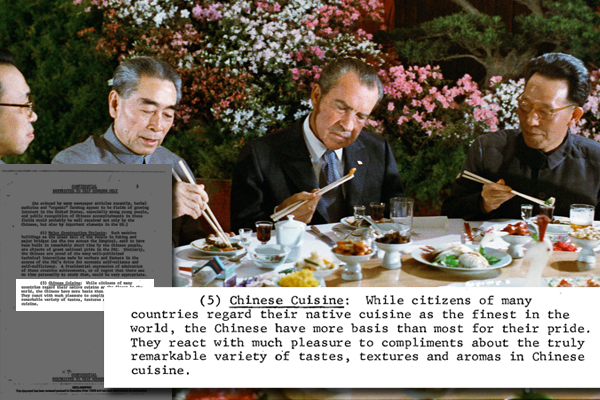
Nixon visits china secret memo
A document prepared for the Nixon team advising them to compliment their hosts.

Scheduling this visit during an election year was a risky move to say the least.  In the suburbs of middle America, the patriotic anti-Communist “Silent Majority” that Nixon needed to secure his re-election was apprehensive about easing relations with the Chinese – the same Chinese that the United States battled just twenty years earlier on the Korean Peninsula.  And with all of the official discussions being held in strict secrecy, Americans needed a visual aid to act as their own diplomatic barometer.

Of course, Richard Nixon made sure they got one.

Realizing the enormous power of a photo-op, the administration stressed the superficial aspects of the visit.  It was no coincidence that Air Force One landed at the Capital Airport at 11:32 A.M. Beijing time.  Across the United States, it was prime time when the president and Chou shook hands, giving millions of Americans the chance to watch this symbolic act live via satellite.   It also wasn’t a coincidence that of the one hundred journalists accompanying the commander-in-chief to China, those in television were given preference over their colleagues in print.  While personally despising most of the media, the president also knew that a carefully controlled press parroting the administration’s narrative through stunning visuals could sway public opinion over to Nixon.

For the next stunning a visual, an extravagant banquet had been prepared for nearly six hundred guests at the Great Hall of the People.  With giant American and PRC flags towering over the captivated audience, a series of congratulatory toasts were made by Nixon and Chou to usher in a new era of understanding.  It was here where food and drink played perhaps the most important role in convincing the American people that Nixon had pulled off the greatest foreign policy coup in a lifetime.


A video prepared for the U.S. diplomatic team
outlining the differences in the American and Chinese diets.

For beverages, each guest at the banquet was given three glasses: one for orange juice, one for wine and one for a Chinese drink with over 50% alcohol known as Maotai.   Worried that this intoxicating spirit would take its toll on a president who needed to be flawless throughout the entire evening, Deputy Assistant to the President for National Security Affairs Alexander Haig cabled the White House in January to warn them of this drink.  In the book Nixon in China: The Week that Changed the World, historian Margaret MacMillan writes that Haig stressed “UNDER NO REPEAT NO CIRCUMSTANCES SHOULD THE PRESIDENT ACTUALLY DRINK FORM HIS GLASS IN RESPONSE TO BANQUET TOASTS.”  Nixon, seeking a middle ground did drink form his glass but in very small sips.

Next came the food that each guest would enjoy with his/her own personally inscribed chopsticks.  On the menu were dumplings, fried rice, three colored eggs, shark fins, and duck slices garnished with pineapples, among others.  Eating next to Chou En-lai, Nixon fared much better with chopsticks than CBS anchorman Walter Kronkite who accidentally shot an olive at a neighboring table.  Careful not to lay it on too thick, the president was warned  “not to say a particular dish is ‘good’ or ‘interesting’ when in fact you do not like it, as your hosts, in an effort to please, may serve you extra portions to your embarrassment.”

Covered for four hours straight without commentary by the big three U.S. networks, the entire banquet proved to be the ultimate combination of dining and diplomacy.  Nixon, the once ardent anti-Communist ironically quoted Chairman Mao by asking both countries to “Seize the Day.  Seize the hour.”  And as the two sides clinked their glasses in friendship, the Chinese Red Army band performed a rendition of both “America the Beautiful” and the U.S. National Anthem to an audience of millions watching live on TV.  This in addition to a close-up shot of the president using chopsticks had undoubtedly convinced a majority of Americans that the visit was a rousing success. Despite being just the first night of a seven-day trip, the symbolic image of two former adversaries breaking bread proved to be more powerful than any treaty, agreement, or communiqué signed later on.

Writing in his diary the next day, H.R. Haldeman, the president’s trusted chief-of-staff was more than pleased with how the media presented the entire evening.  “The network coverage … of the banquet period was apparently very impressive and they got all the facts the P (President Nixon) wanted, such as his use of chopsticks, his toasts, Chou’s toast, the P’s glass-clinking,” wrote Haldeman.  According to Nixon biographer Conrad Black, his trip had registered the highest U.S. public recognition of any event in the history of the Gallup poll.  And in the days and months after Nixon’s visit, Chinese restaurants in the U.S. were mobbed by foodies seeking out “authentic” Chinese cuisine like the Peking duck they saw the president eating on TV, writes Andrew Coe, author of Chop Suey: A Cultural History of Chinese Food in the United States.

Call it “chopstick diplomacy,” “Maotai statecraft” or “dining for Détente,” but in the end, Richard Nixon had proved that the power of food could win over the public at large as he tore down the Bamboo Curtain.

Favorite food from this posting?

View Results

Loading ... Loading ...

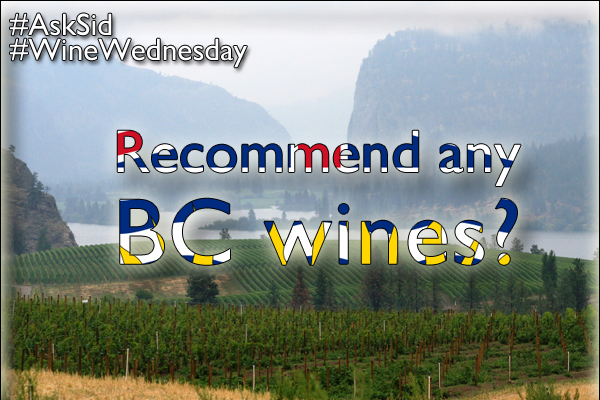
Ask Sid: Recommend any BC wines?

July 16th, 2014 by Joseph Temple

Recommend any BC wine

Question: I have tried some of those sweet Ice Wines from Canada but now am hearing encouraging things from wine friends about the much improved unique dry table wines from the Okanagan Valley in British Columbia. Any helpful information or recommendations for me?

Answer: Yes there is an explosion of new wineries with the last count being 232 grape wine wineries licensed in British Columbia and rapidly growing. Presently the most grown grape varieties are merlot for red and pinot gris for white. However, syrah, pinot noir, cab franc, gamay, and red blends all show great potential as do old vine riesling (planted 1978), chenin blanc (1968), sparkling, and Rhone grape blends for whites. The best is still yet to come. Follow all developments at www.winebc.com

For recommendations here are the top 12 BC wines recently chosen by the 2014 Lieutenant Governor’s Awards For Excellence judges (myself included) out of 436 wines submitted from 119 wineries:

8TH GENERATION RIESLING 2012

These 27 year old vines in their Estate Okanagan Falls Vineyard show a complex clearly defined riesling variety with just the right balance between the lively acidity and the attractive residual sweetness. Delicious!

BONAMICI MERLOT CABERNET FRANC 2012

Very charred toasty French oak barrels used for this distinctive wine from a good vintage makes a ripe softer big fruit easy to enjoy statement

FORT BERENS RIESLING 2012

Dutch owners Rolf & Heleen have a “hankering” for their unique Lillooet peachy lime terroir which delivers stylish petrol aromas and attractive layers of flavour

HESTER CREEK MERLOT BLOCK 2 RESERVE 2011

Choice grapes from Golden Mile show juicy rich plums open aromas and palate with lovely drinking accessibilty now but no rush to drink up as will age well.

HOWLING BLUFF SAUVIGNON BLANC/SEMILLON 2013

Outstanding white Bordeaux blend by my old friend winemaker Luke Smith specializing in pinot noir yet here displaying so well fresh tomato plants aromas of sauvigonon blanc with lanolin weight of semillon.

KRAZE LEGZ CHARDONNAY SKAHA VINEYARD 2013

Stylish round apple and cinnamon notes are fresh and subtle expressing the pure expression of the chardonnay grape itself without any oak interference.

LAUGHING STOCK PORTFOLIO 2011

David & Cynthia Enns celebrate a 10th vintage from a cooler but successful year for their red Bordeaux blend of the 5 grapes in French oak for 19 months showing deep concentrated smooth structured fruit.

OKANAGAN CRUSH PAD HAYWIRE PINOT NOIR CANYONVIEW 2011

Pure lighter cherry fruit shows elegance from clever seasoning by the passionate winemaking team using 3 year old French oak barrels and custom made egg shaped concrete tanks.

PENTAGE SYRAH RESERVE 2010

Paul & Julie’s special lot of ripe spicy peppery syrah jumps from the glass with these inviting aromas and entices the palate with soft smooth flavours of this successful Okanagan variety.

QUAILS’ GATE CHARDONNAY STEWART FAMILY RESERVE 2012

A leading winery in the Okanagan celebrating 25 years by the Stewart family with some emphasis on pinot noir but they always produce truly outstanding chardonnay too. Full rich oaky expression but still fresh and inviting matching well with so many full flavoured food dishes.

RUBY BLUES VIOGNIER 2013

Prudence & Beat yet again show their skills in producing this fragrant lively subtle apricot notes wine with excellent balance all at an attractive lower alcohol level.

WAYNE GRETZKY OKANAGAN THE GREAT RED 2011

Rather charming juicy easy fruit/oak balance using a unique blend of syrah, malbec, and petit verdot with a mix of French and American wood by talented winemaker Stephanie so well trained by Howard Soon.

Ask Sid Cross about wine and food

Have you tried wine from British Columbia?

View Results

Loading ... Loading ...

Ask Sid: Drinking responsibly at an event where wine is being served

July 9th, 2014 by Joseph Temple

Drinking responsibly at an event where wine is being served
By Sarah Stierch (Own work) [CC BY 4.0], via Wikimedia Commons

Question: When going to an event where there will be a lot of wine, and having to drive home afterwards, I like to have something in my stomach to slow down the effects of alcohol entering my bloodstream.  I have been using about a cup of milk and some crackers coated with peanut butter at least one hour before the event, but no more than one an a half hours prior.  I am hoping the milk will coat my stomach and intestine.   Same with the food.  It works OK, and is much better than nothing.  I am wondering if you or your readers have any suggestions on what they do.  Any scientific findings on what slows down the effects of alcohol?  Once at the event, I drink about as much water as wine.

Answer: Quite a few issues raised here by this question. First it is definitely not wise or recommended to drive home after an event serving a lot of wine regardless of whether you have or have not coated your stomach. There is  support for taking some complex carbs (say sweet potato or brown rice) and good fats just before as those items take a while to digest thereby slowing the absorption of the alcohol. That is why your trick of milk, crackers and peanut butter works OK for you. Grainy bread and cheese is a natural. Try potato chips and banana. Small dishes of whole wheat pasta, beans or lentils with a big dash of quality olive oil will work well. I don’t prepare or coat my stomach before-hand. I prefer to always try and match food with my wine from the starting aperitif – with some hors d’oeuvre, toasted nuts: almonds, walnuts, pecans, peanuts etc., gougere and the like – continuing this strategy right through the meal or event. Study and sip your wine slowly at first – don’t knock back too quickly two or more glasses without food right at the start. Good idea to not mix too many different types of drinks – stick with table wines. Note that carbonated drinks including sparkling bubbles accelerate the alcohol absorption. I drink lots of water and green tea all day long to keep me well hydrated. If you wait until the wine event to start drinking water you may find yourself bloated from consuming too much total liquid in a fairly short period of time.

Ask Sid Cross about wine and food

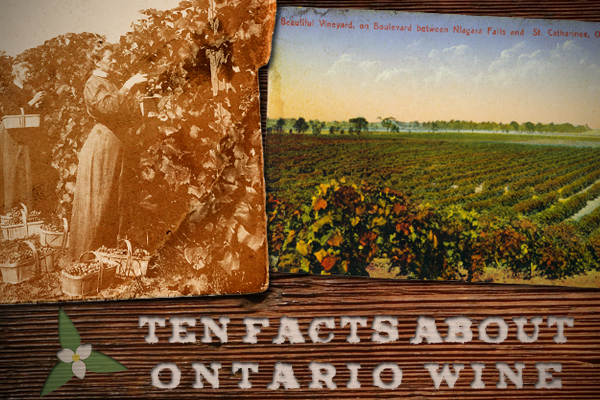
10 facts about Ontario wine

July 4th, 2014 by Joseph Temple

10 facts about Ontario wine
By Joseph Temple

Ontario, Canada’s most populous province can trace its winemaking roots back more than two hundred years – a history older than the country itself.  And after many trials and tribulations, its wines now compete with the best of Europe and the Americas, winning numerous international awards.

Below are ten interesting facts about the province’s wine industry and how it came to be.  Special thanks to Library and Archives Canada for providing many of the photographs and Tony Aspler’s talk at the Empire Club of Canada for much of the information in this posting.


Ontario wine starts in Mississauga

1. An unusual beginning

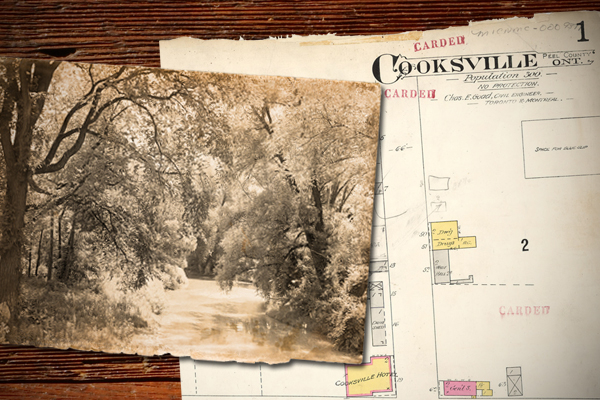
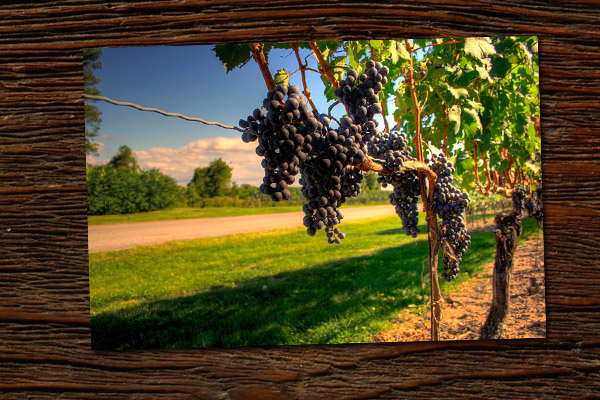
When most people think of Ontario wine, they usually associate it with the Niagara Peninsula, Canada’s largest viticultural area.  So it might come as a surprise that the province’s fist vineyard was further up the Golden Horseshoe in Cooksville – what is now Mississauga, a suburb just west of Toronto.

Johann Schiller, a German corporal awarded land hear for his military service, is considered by many to be the father of Canadian wine.  Harvesting labrusca grapes near the Credit River, Schiller created the province’s first vineyard in 1811 by selling wine to his thirsty neighbors in Upper Canada.


Ontario wine debuts at the 1867 world's fair

2. Praise at the fair

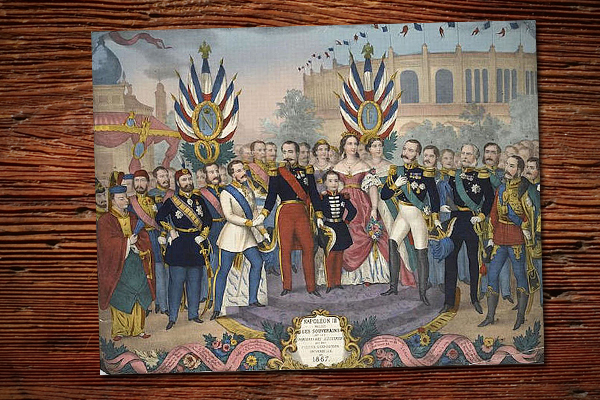
Count Justin de Courtenay, a Frenchman from Lower Canada who purchased Schiller’s property had high hopes of making Ontario wine internationally renown.  The year was 1867 – the year of Canada’s birth and across the ocean, the World’s Fair was taking place in Paris, France.  So what better time and place to showcase Ontario wine for the entire world? Sending several bottles to Paris for a tasting, the lackluster wine was surprisingly well received at the fair, with some comparing it to Beaujolais.


wine on pelee island

3. Everybody wants an island

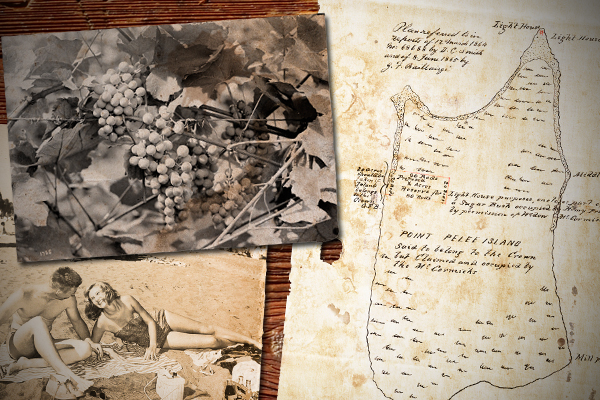
In a nation known as “the Siberia of the British Empire,” finding an area with a suitable climate to make wine can be difficult.  So if you’re looking at a map of Ontario, what better place than the country’s southernmost point to start a vineyard?

Pelee Island – located northwest of Cleveland, Ohio on the Canadian side of Lake Erie–proved to be the ideal spot in 1866 when three Kentucky farmers started the Vin Villa Winery.  Being on the same geographical parallel as Northern California and benefiting from the lake’s cooling effect, Pelee, along with Lake Erie North Shore continues to be one of the province’s most important wine growing regions.


prohibition makes ontario wine

4. Prohibition makes Ontario a province of wine drinkers

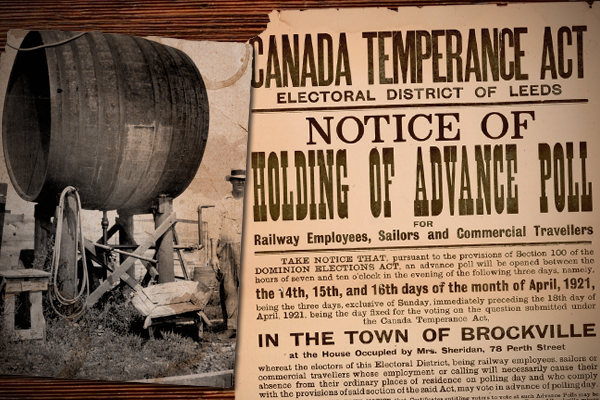
Whereas the Volstead Act applied to every state in the union, Canada’s Prohibition laws differed on a province-by-province basis (except briefly as part of the War Measures Act). While Quebec opted out early in 1919, Prince Edward Island defied the wets until 1948 – almost twenty years after the rest of Canada ended the “noble experiment.”

And in Ontario, the political clout of its farmers resulted in wine being exempt from any restrictive legislation.  So with liquor and beer relegated to the underworld, the province’s wine industry thrived like never before, going from over 200,000 gallons of domestic consumption in 1921 to 2.2 million gallons a decade later.


Ontario wine bad reputation

5. Quality? Two words: Baby Duck

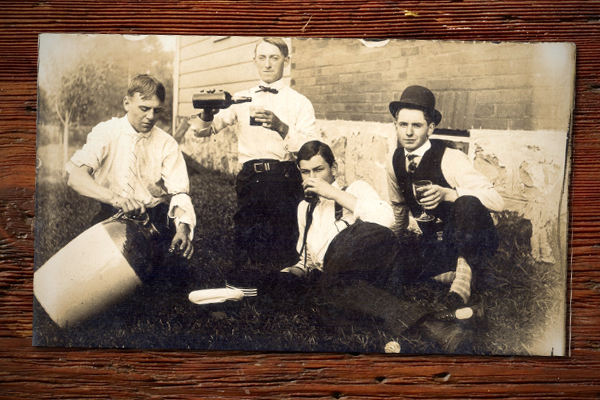
Before the Vintners Quality Alliance, when North American labrusca varieties reigned supreme across the province, Ontario wine had a reputation for being the choice of ‘winos looking to come alive for a dollar five.’  With alcohol rates in excess of 20%, native Concord and Niagara grapes offered the perfect taste to those looking for little more than a cheap buzz.  According to wine writer Tony Aspler, Ontario became known for producing “block and tackle wines.”  “You drank a bottle, walked a block and you could tackle anyone,” said Aspler.


Building a wine dynasty in Ontario
By Graham (Flickr: Wine Country) [CC BY 2.0], via Wikimedia Commons

6. Creating a dynasty

If Ontario wine were a hockey team, then the mid 1970s was their rebuilding period.  It all started in 1975 when Inniskillin was granted a license by the province to create an estate winery – the first since prohibition.  Moving away from the high-alcohol port and sherry style wines, this new breed of vintners turned the corner by growing vinifera vines that could hopefully compete with Europe.  The result was that by 1986, these vines had increased by 500 percent across the province.


ontario wine free trade

7. Free trade forces Ontario vineyards to change for the better

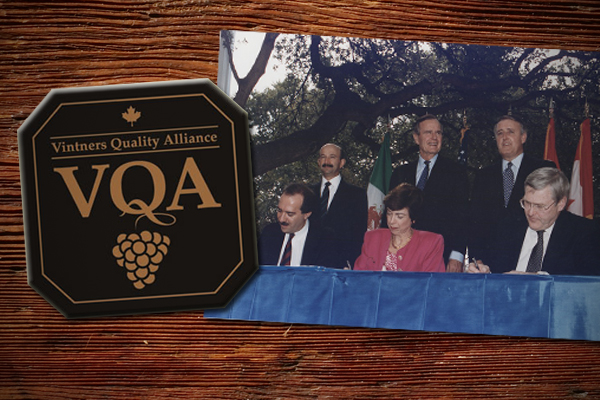
Under the government of Brian Mulroney, trade barriers came crashing down as Canada signed both the FTA with the United States (later NAFTA) and GATT.  So with tariffs being phased out, Ontario’s winemakers were no longer sheltered by protectionist policies and forced to compete with the wines of Europe and America on a more level playing field.  Softening the blow, the Canadian government invested $100 million dollars to replace undesirable labrusca grapes with vitis vinifera varieties more popular with consumers.  And to ensure quality standards, a new organization – the Vinters Quality Alliance (VQA) – was established in 1988 to regulate the industry and to certify that growing and production methods were up to par with the other wine regions of the world.


ontario ice wine vidal 1989
By Dominic Rivard from Bangkok, Thailand (icewine grapes3) [CC BY-SA 2.0], via Wikimedia Commons

8. Ontario wine goes mainstream

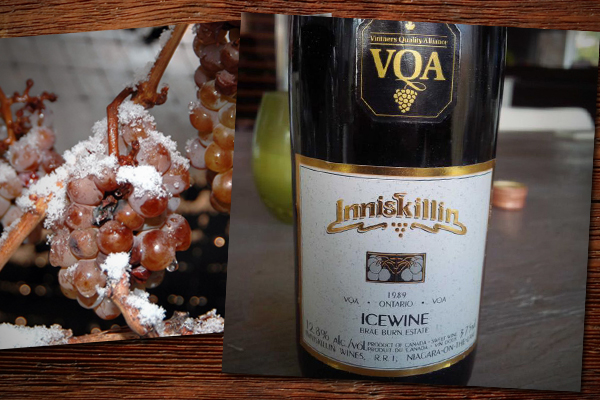
In what can be described as Canada’s “Bottle Shock” moment, Inniskillin’s 1989 Vidal ice wine wins the prestigious Grand Prix d’Honneur at the 1991 Vinexpo in Bordeaux, France.  After more than a decade of trial and error, Ontario’s ice wine industry is thrust onto the world stage with this upset over the dominant German Eiswein.  More than twenty years later, ice wine exports reach over 200,000 liters per year and is valued at $15.5 million annually.


ontario prince edward county wine

9. The east wants in!

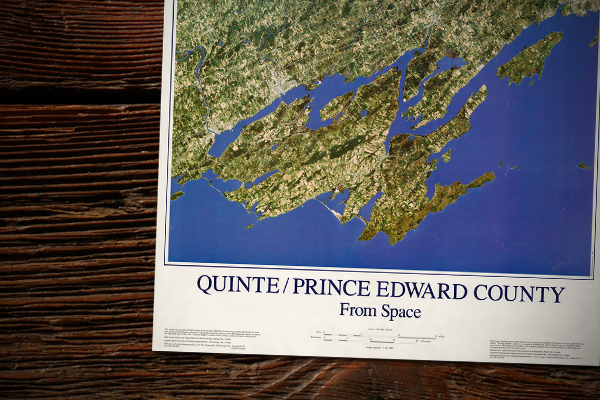
Roughly a two-hour drive from Toronto, the picturesque island known as Prince Edward County has come a long way since being labeled the “Canning Capital of Canada.”  Beginning in the 1990s, the wineries there have grown by leaps and bounds with PEC being certified a Designated Viticultural Area in 2007.

As you cross over the Bay of Quinte into this scenic eastern Ontario getaway, you’ll understand why so many make the pilgrimage each year to taste their wines.  With a relatively mild climate thanks to Lake Ontario, the thirty wineries on the island have flourished, growing a variety of grapes that include Chardonnay, Pinot Noir, and Cabernet Franc, to name just a few.


Celebrities who own vineyards in Ontario
By Richard Wayne Photography (Flickr) [CC BY-SA 2.0], via Wikimedia Commons
By tonyshek (Flickr) [CC BY 2.0], via Wikimedia Commons
Kris Krüg [CC BY-SA 2.0], via Wikimedia Commons

10. Celebs get in on a piece of the action

Today, it seems as if every actor, musician and professional athlete has their own winery–’Brangelina’, Dave Matthews, Arnold Palmer and NASCAR’s Jeff Gordon just to name a few.  But what about Ontario?

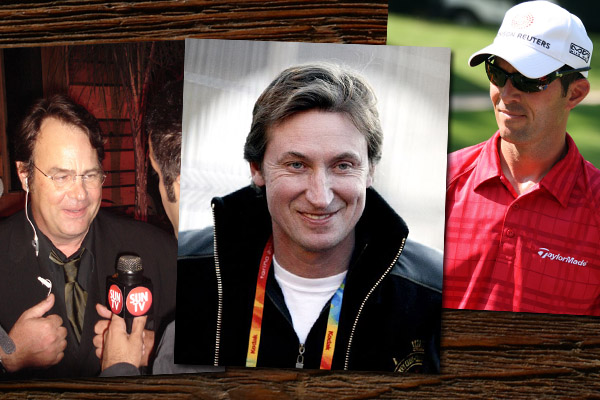
Looking at the list of celebrities who own wineries, the province clearly has not been left out in terms of star power.  Ghostbusters star Dan Aykroyd, 2003 Masters winner Mike Weir and “The Great One” Wayne Gretzky have all put their names on Ontario’s flourishing wine industry.


At the International Wine & Food Society, we have a solid presence across the province, with branches in Toronto, Oakville, Kitchener-Waterloo, and Niagara.  Perhaps these locals can tell you which Ontario wine(s) they would recommend?

Have you tried wine from Ontario?

View Results

Loading ... Loading ...


Ask Sid: What wines go best with BBQ?

July 2nd, 2014 by Joseph Temple

What wines go best with BBQ?

Question: I’m hosting a barbecue over this holiday weekend including lots of hamburgers and hot dogs. What wine should I serve?

Answer: Very topical question generated by the celebrations for the July 1 Canada Day & July 4 Independence Day holidays! A little bit of a semantics issue on the use of the word “barbecue” because many people think this means simply to use a barbecue sauce while others use it in a wider connotation to include all grilling. Further complicated by so many of us now using propane gas rather than the traditional wood or charcoal. The flavours on your food – including hamburgers and hotdogs – will be quite different depending on these choices as will your preferred wine selections. Difficult to make a single recommended wine choice. The usual cop out answer of the wine and budget you like best works well for a barbecue. However, spicy California Zinfandel, Australian Shiraz, Argentina Malbec, Chilean Carmenere, Italian Negroamaro and others in that style should work well as your foods should have some rich, smoky, chargrilled sweet spicy caramelized flavours. Don’t forget that a wider selection could include Sparkling (aperitif – maybe with a syrah dosage for colour and sweetness), Rose (versatile – dry and sweet styles – for pulled pork), Sauvignon or Fume Blanc (vegetables like asparagus & tomatoes – other veg like peppers, onion, eggplant, zucchini can be enhanced with Rioja), New World Chardonnay (Chicken), Unoaked crisper Chardonnay or Chablis (Seafood), Languedoc-Roussillon (Mediterranean herbs), Syrah, Cab or Merlot (charred meats). I generally avoid pinot noir and Piedmont as being too delicate and subtle for the bold assertive barbecue foods. My wife Joan and I are judging on July 12 the Similkameen British Columbia 2014 BBQ King or Queen competition but they will be serving a very wide selection of BC Okanagan grape varieties and blends to serve with this barbecue.

What wine do you prefer to drink at a BBQ?

View Results

Loading ... Loading ...

Ask Sid Cross about wine and food

Older Entries
Newer Entries
The object of the Society is to bring together and serve all who believe that a right understanding of good food and wine is an essential part of personal contentment and health and that an intelligent approach to the pleasures and problems of the table offers far greater rewards than the mere satisfaction of appetite.
Andre Simon Wine & Food Society Founder (1933)
© 2026 The International Wine & Food Society (IW&FS) IW&FS
Credits | Privacy | Accessibility